

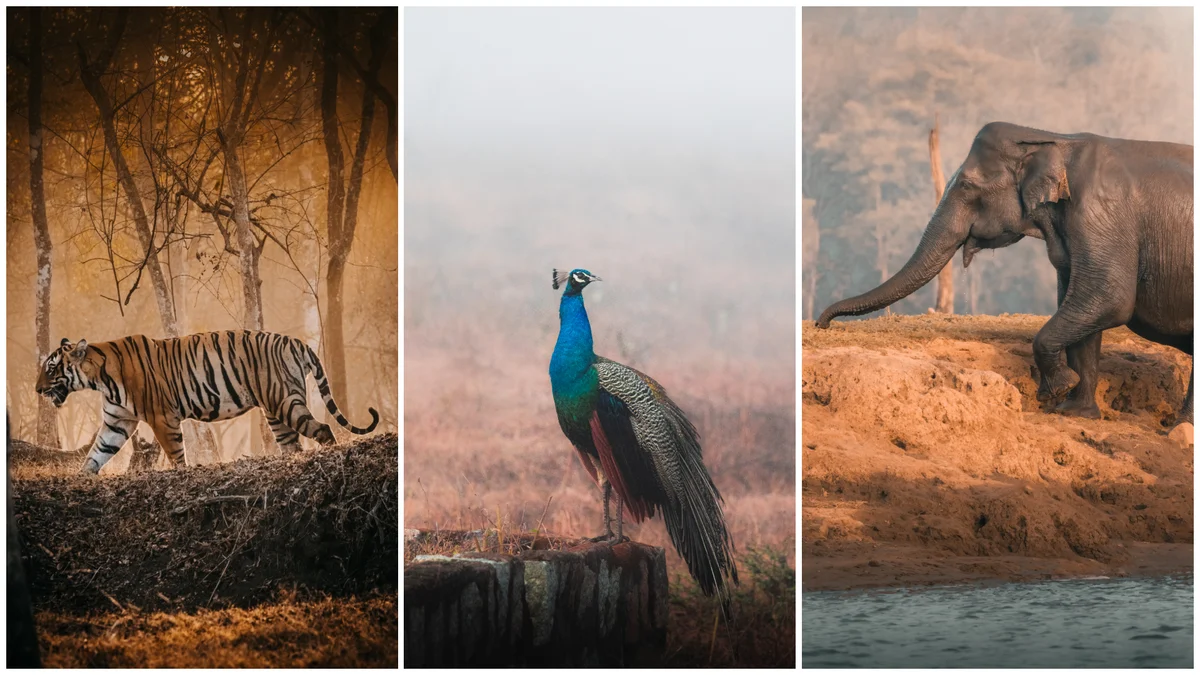
The essence of a wildlife safari is often compared to visiting a host who never invited you. There is no RSVP, no guaranteed audience, and no certainty that the residents of the forest will be "home" when you call. This inherent unpredictability defines the allure of the Nagarhole Tiger Reserve, a sprawling sanctuary in Karnataka that serves as a cornerstone of India’s tiger conservation efforts.
Following the recent lifting of a government-mandated ban on safaris—instituted due to rising human-animal conflicts—the monsoon season has brought a renewed influx of travelers to the Kabini region. This report explores the multifaceted experience of a monsoon expedition, from the high-octane pursuit of the Bengal tiger on land to the serene biodiversity observed along the Kabini River, underpinned by the luxury and hospitality of The Serai Kabini.
Main Facts: The Resurgence of Tourism in Nagarhole
Nagarhole Tiger Reserve, also known as Rajiv Gandhi National Park, is situated approximately five hours from Bengaluru. It forms a critical part of the Nilgiri Biosphere Reserve and is contiguous with the Bandipur Tiger Reserve and Wayanad Wildlife Sanctuary.

Key statistics and facts regarding the reserve include:
- Tiger Population: The reserve is home to approximately 149 tigers, making it one of the most densely populated tiger habitats in the world.
- Recent History: Safaris in Karnataka were temporarily suspended late last year by the State Government following a spike in human-animal conflicts. The recent full restoration of safari services has been met with significant enthusiasm from both domestic and international tourists.
- Biodiversity: Beyond the "Big Cat," the reserve hosts a diverse array of fauna, including the Asiatic elephant, Indian leopard, dhole (wild dog), and over 270 species of birds.
- Seasonal Dynamics: The monsoon season (June to September) transforms the landscape into a lush, emerald-green canopy. While the dense foliage makes predator sightings more challenging compared to the dry summer months, it offers a unique perspective on the forest’s lifecycle and thriving avian population.
Chronology: A Three-Phase Exploration of the Wilderness
Phase I: The Chilly Pursuit on Land
The journey began before sunrise. In the predawn gloom of the forest, visitors gathered at the State-run Jungle Lodges and Resorts, the designated embarkation point for all safaris within the reserve. The morning was characterized by a sharp chill and the aroma of black coffee, providing a stark contrast to the humid heat typical of the region’s lowlands.
The land safari, conducted in rugged canters and jeeps, was led by naturalist Chamaraj and driver Abhi. The expedition was not merely a passive drive but a coordinated mission. Using a network of WhatsApp voice notes and radio calls, naturalists and drivers tracked the movements of predators through the undergrowth.

For three and a half hours, the vehicle navigated winding roads and muddy tracks. The initial sightings included peahens, a peacock performing a plume dance, and several herds of spotted deer (Chital). As the sun rose higher, the group spotted owlets nestled in tree hollows and a crested serpent eagle perched high above. The tension peaked when a tip from another vehicle sent the canter into a high-speed U-turn toward a nearby waterbody. Though the group arrived to find only fresh pugmarks in the soft mud, the thrill of the "near-miss" underscored the raw, unscripted nature of the wild.
Phase II: The Culinary and Sensory Interlude
Returning from the land safari, the focus shifted to the hospitality of The Serai Kabini. To prepare for the afternoon’s aquatic expedition, guests were treated to a baale yele oota—a traditional Karnataka feast served on a plantain leaf.
Under the direction of Sous Chef Mudhassir, the meal served as a cultural immersion. It featured a sequence of regional delicacies:

- Appetizers: Neer moru (spiced buttermilk), cosumbari salad, Maddur vada, and masala vada.
- Main Course: Bisi bele bath (a spicy lentil-rice dish), vegetable palya, poori, and sambar.
- Dessert: Obbattu (a sweet flatbread).
This culinary "reset" provided a necessary pause, allowing travelers to reflect on the morning’s sights before heading back into the sanctuary via its waterways.
Phase III: The Serenity of the Kabini River
The afternoon boat safari offered a starkly different tempo. Led by naturalist Shekar and Captain Krishna, the boat waded down the Kabini River, which acts as a natural boundary between Nagarhole National Park to the North and Bandipur Wildlife Sanctuary to the South.
While the land safari was defined by speed and tracking, the boat safari was defined by observation. The monsoon had swollen the river, and the boat drifted past tribal villages situated on the periphery of the park. Despite the rain-heavy season, the group was fortunate to witness a family of otters and a pack of wild jackals. Two crocodiles were also spotted basking on the banks, a rarity during the monsoon when they typically remain submerged.

Supporting Data: The Infrastructure of Conservation and Tourism
The Serai Kabini, established in 2005, serves as a primary hub for those exploring this corridor. The property’s footprint and operational philosophy provide insight into how luxury tourism coexists with sensitive ecological zones.
Property Specifications:
- Land Use: The resort spans 60 acres, though only 12 acres are built-up, leaving the remainder as a natural buffer zone.
- Accommodation: 20 exclusive riverside residences designed to offer views of the Kabini River while maintaining low visual impact on the environment.
- Local Employment: The resort relies heavily on local expertise. Naturalists like Shekar have been with the property for nearly two decades, providing a bridge between indigenous knowledge and tourist education.
Ecological Insights from the Nature Walk:
During a guided nature walk, Shekar highlighted the medicinal and botanical richness of the region. The forest is not just a habitat for animals but a pharmacy for the local tribal communities. Notable flora includes:

- Jatropha: The milky sap of which is used by locals to treat fevers and joint pain.
- Timber and Fruit Trees: Red silk cotton, jamun, mahogany, and gulmohar trees form the backbone of the local ecosystem.
- Avian Biodiversity: The walk revealed the presence of white-cheeked barbets, green bee-eaters, weaver birds, and kingfishers, demonstrating that the region’s ecological health extends far beyond its charismatic megafauna.
Official Responses and Context: Balancing Conflict and Conservation
The resumption of safaris follows a period of intense scrutiny by the Karnataka Forest Department. The temporary ban late last year was a response to "human-animal conflict" (HAC), a term that encompasses crop raiding by elephants and occasional predator attacks on livestock in fringe villages.
Officials have noted that the restoration of safaris is accompanied by stricter regulations to ensure that tourism does not exacerbate these conflicts. The coordination between private naturalists and State-run lodges is part of a broader strategy to monitor animal movements more effectively. By tracking pugmarks and alarm calls, the safari teams essentially act as additional eyes and ears for the forest department, providing real-time data on animal health and locations.
Furthermore, the involvement of local boatmen like Byre Gowda—who transitioned from traditional river life to resort hospitality—highlights the "alternative livelihoods" model. By providing locals with stakes in the tourism economy, conservationists hope to reduce the community’s dependence on forest resources, thereby minimizing conflict.

Implications: The Philosophy of "Zero Expectations"
The experience at Nagarhole and Kabini underscores a vital lesson in modern eco-tourism: the value of the journey over the destination. In an era of instant gratification and "curated" travel, the safari remains one of the few experiences that cannot be bought or guaranteed.
As Front Office Manager Abdul Saleem advises guests, the most successful visitors are those who enter the jungle with "zero expectations." This mindset shifts the focus from a "trophy sighting" (the tiger) to a holistic appreciation of the ecosystem—the smell of the rain-soaked earth, the intricate architecture of a weaver bird’s nest, and the silence of the river.
The implications for the region are twofold. First, the success of the monsoon safari season suggests that Nagarhole is becoming a year-round destination, reducing the seasonal pressure on the park. Second, the integration of luxury hospitality with deep ecological education suggests a sustainable path forward for India’s tiger reserves. While the tiger remains the primary draw, the "Kabini experience" is increasingly defined by the solitude and the profound connection to nature that the forest provides.

In conclusion, while the 149 tigers of Nagarhole may remain elusive to many, the vibrancy of the forest during the monsoon offers a different kind of reward. The blend of high-stakes tracking, traditional culinary arts, and serene river exploration creates a tapestry of memories that, for many, far outweighs the brief glimpse of a striped coat in the tall grass.
