

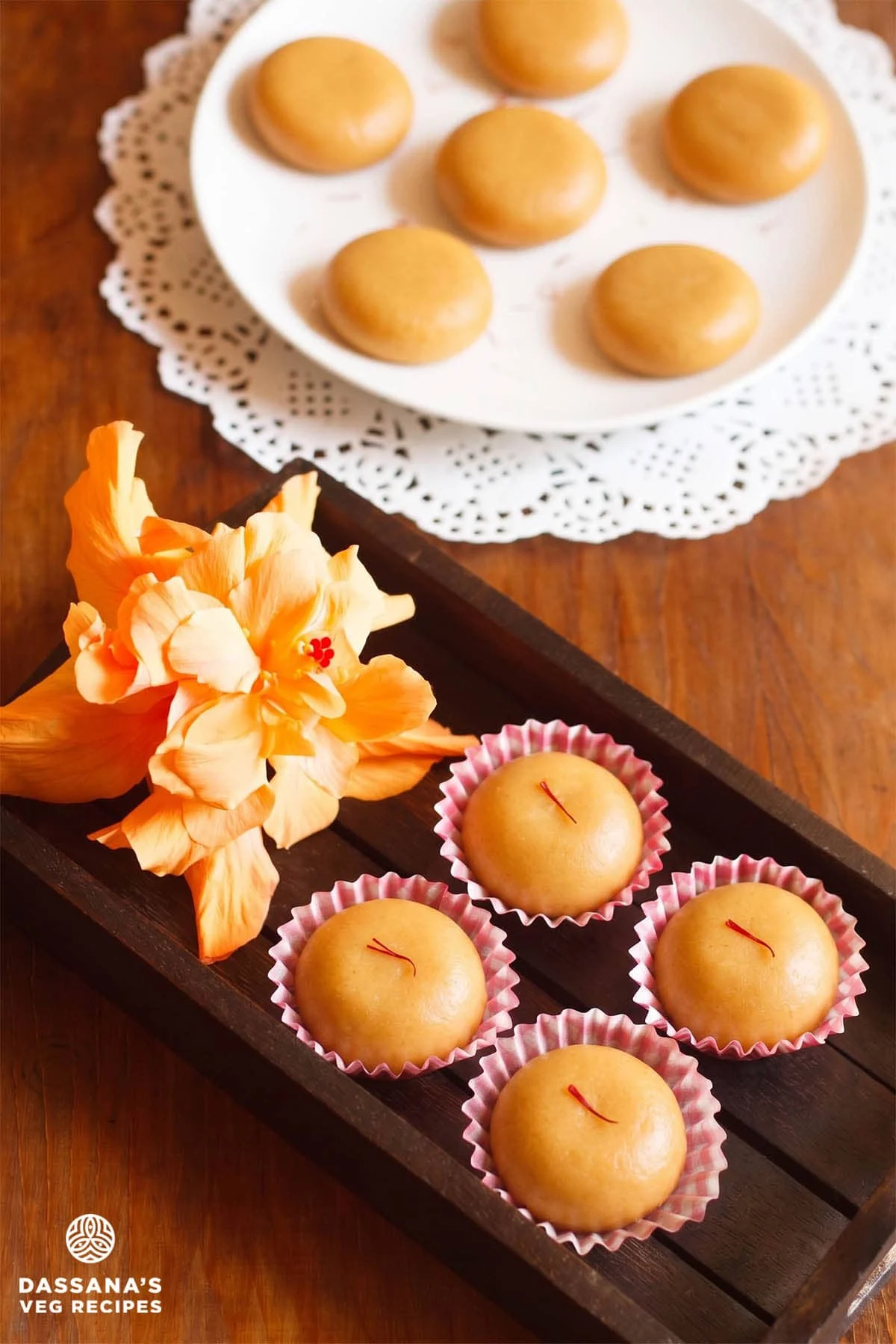
NEW DELHI — In the vast and intricate landscape of Indian subcontinental desserts, few items hold as much cultural weight or culinary reverence as the Peda. Specifically, the Mawa Peda—also known as Khoya Peda—remains a definitive benchmark for festive hospitality and ritualistic offerings. As the festive seasons of Diwali, Raksha Bandhan, and Janmashtami approach, the demand for this milk-based delicacy surges, prompting a resurgence in traditional home-cooking techniques that prioritize purity and texture.
A recent culinary study and recipe guide released by renowned food analyst Dassana Amit highlights a sophisticated evolution of the traditional Mawa Peda. By integrating whole milk into the classic reduction process, the modern iteration of the sweet achieves a moist, "melt-in-the-mouth" consistency that distinguishes it from the denser, darker varieties historically found in the markets of Mathura.

Main Facts: The Composition of a National Treasure
The Mawa Peda is fundamentally an exercise in the concentration of dairy. The primary ingredient, mawa (or khoya), consists of dried milk solids created by slowly evaporating whole milk in an open iron kadai until only the protein and fat remains.
According to the latest culinary standards, a premium Mawa Peda is defined by four key components:

- The Base: High-quality mawa, preferably grated or crumbled to ensure uniform heat distribution.
- The Hydrator: The addition of whole milk during the cooking process, which prevents the mawa from becoming overly dry or crumbly.
- The Aromatics: A precise blend of green cardamom (elaichi) and saffron (kesar), providing both olfactory depth and a visual golden hue.
- The Texture: A soft, semi-solid disc that is firm enough to hold its shape but yielding upon consumption.
The nutritional profile of a single serving (approximately 12 servings per 250g of mawa) reveals a rich caloric density of 146 kcal. While high in fats (8g) and sugars (9g), the sweet provides a significant calcium boost of 169mg, making it a substantial, albeit indulgent, source of dietary minerals.
Chronology: From Liquid Gold to Festive Disc
The production of Mawa Peda is a time-intensive process that relies on the Maillard reaction—the chemical interaction between amino acids and reducing sugars that gives browned food its distinctive flavor. The chronology of creating this confection follows a strict sequence to ensure the stabilization of the milk solids.

Phase I: The Sauté and Emulsification
The process begins with the tempering of a heavy-bottomed vessel using ghee (clarified butter). The crumbled mawa is introduced to the heat for a brief two-to-three-minute window. This initial sautéing serves to soften the fats and prepare the solids to bond with additional liquids.
Phase II: The Reduction and Infusion
Once the mawa reaches a molten state, whole milk and sugar are introduced. This stage is the most critical and time-consuming, requiring approximately 20 to 30 minutes of continuous agitation over low heat. It is during this period that the saffron strands are added, bleeding their crocin—the pigment responsible for the golden color—into the white dairy base.

Phase III: Achieving Viscosity
As the moisture evaporates, the mixture transitions from a thin liquid to a thick, cohesive paste. Culinary experts identify the "readiness point" when the spatula leaves a clear trail on the bottom of the pan and the mixture begins to spontaneously detach from the side walls. Cardamom powder is added in the final minutes to ensure the volatile oils do not evaporate under prolonged heat.
Phase IV: Stabilization and Sculpting
The mixture must be transferred to a greased tray immediately to halt the cooking process. Once the temperature drops to a manageable level (warm but not hot), the dough is hand-rolled into spheres and pressed into the iconic "peda" shape—a slightly flattened disc with a central indentation, often garnished with a sliver of pistachio or additional saffron.

Supporting Data: Nutritional and Chemical Breakdown
To understand the enduring popularity of the Mawa Peda, one must look at the data governing its composition. The following table illustrates the nutritional impact of a standard homemade Mawa Peda:
| Nutrient | Amount per Serving | Daily Value (%) |
|---|---|---|
| Calories | 146 kcal | 7% |
| Total Fat | 8g | 12% |
| Saturated Fat | 5g | 25% |
| Calcium | 169mg | 17% |
| Protein | 5g | 10% |
| Sugar | 9g | 10% |
Data suggests that the high calcium content makes it one of the more "functional" sweets in the Indian repertoire compared to flour-based or syrup-soaked alternatives like Jalebi or Gulab Jamun. Furthermore, the use of saffron (Crocus sativus) adds trace amounts of antioxidants, while cardamom serves as a traditional digestive aid, mitigating the richness of the concentrated fats.

Official Responses: Expert Directives for Culinary Success
In a detailed technical brief, culinary lead Dassana Amit provided "Official Recipe Tips" to mitigate common failures in the preparation of milk-based sweets. These directives serve as the gold standard for both amateur cooks and professional halwais (confectioners).
On Vessel Selection:
"The use of a heavy-bottomed pan or a non-stick kadai is non-negotiable," the report states. "Thin-walled vessels cause localized overheating, leading to the scorching of milk proteins which imparts a bitter, burnt aftertaste to the peda."

On Heat Management:
Experts warn against the temptation to increase the flame to expedite the reduction. Low-heat cooking is essential for the gentle caramelization that produces the "light golden" hue. High heat results in a grainy texture and an uneven color.
On Ingredient Quality:
The quality of the mawa is the single most significant variable. The report suggests that if store-bought mawa is unavailable, "instant mawa" made from milk powder and cream can be substituted, though it may lack the depth of flavor found in traditionally reduced milk solids.

On Storage Protocols:
Due to the high moisture content provided by the added milk, Mawa Peda is classified as a perishable item. "These must be stored in an airtight container within a refrigerated environment," Amit advises. "They maintain peak organoleptic qualities for 4 to 5 days. Serving them at room temperature after a brief period of tempering ensures the fat crystals soften, restoring the intended texture."
Implications: Cultural Significance and the Modern Palate
The implications of the Mawa Peda extend far beyond the kitchen. In the Indian socio-cultural context, the Peda is synonymous with "Prasad"—a religious offering. Its structural integrity makes it ideal for distribution in temples and during large-scale community festivals.

However, the rise of the "homemade" movement in Indian confectionery reflects a growing concern over food adulteration. Commercial khoya has frequently been the subject of regulatory scrutiny due to the addition of starch or synthetic fats. By promoting detailed, science-backed recipes for Mawa Peda, culinary influencers are empowering consumers to reclaim traditional foodways, ensuring that the "sweets" of the festival remain both safe and authentic.
Furthermore, the adaptation of the recipe—such as the inclusion of saffron and pistachios—signals a shift toward "premiumization" in home cooking. What was once a simple farm-style milk fudge has been elevated into a gourmet dessert that rivals Western patisserie in its complexity and presentation.

As the global diaspora continues to grow, the Mawa Peda also serves as a "nostalgia food," connecting millions of non-resident Indians (NRIs) to their heritage. The standardization of these recipes into English-language journals and digital platforms ensures that the art of the Peda will not be lost to time, but rather, will continue to evolve as a cornerstone of global dessert culture.
In conclusion, the Mawa Peda is more than a mere confection; it is a sophisticated dairy product that requires a deep understanding of heat, timing, and ingredient synergy. Whether served as a simple after-meal treat or as a centerpiece of a Diwali spread, its golden hue and cardamom-scented aroma remain an enduring symbol of the sweetness of Indian tradition.
