

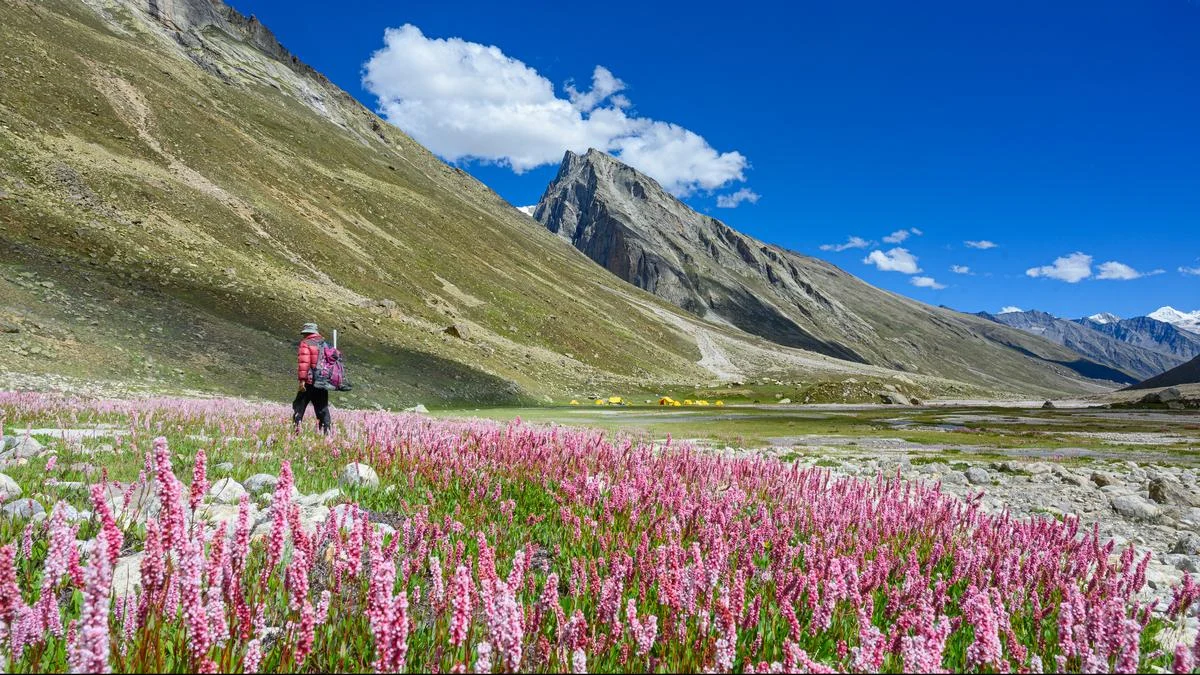
As the monsoon rains sweep across the Indian subcontinent and the Himalayas, a quiet transformation occurs in the high-altitude meadows and volcanic plateaus of the region. From the rolling hills of Nagaland to the rugged rain-shadow valleys of Himachal Pradesh, the landscape erupts into a kaleidoscope of colors. This seasonal phenomenon, often referred to as "The Great Bloom," has transformed from a niche interest for botanists into a major draw for a new generation of immersive travelers.
This comprehensive guide explores the premier floral trails of 2024-2026, examining the ecological significance, the cultural narratives of the people who guard these lands, and the growing challenges of conservation in the face of climate change and over-tourism.

1. Main Facts: The Rise of Botanical Tourism
Botanical tourism is no longer a peripheral segment of the travel industry. According to regional experts, there has been a significant shift in traveler demographics. While trekking was once dominated by those seeking physical conquest or panoramic mountain views, today’s travelers are increasingly focused on "micro-landscapes"—the rare orchids, endemic lilies, and vibrant marigolds that define specific ecological niches.
Key Destinations and Flowering Highlights:
- Kaas Plateau (Maharashtra): A UNESCO World Heritage site home to over 170 species of wildflowers, including the rare Karvi.
- Dzukou Valley (Nagaland): Famous for the endemic Dzukou Lily and high-altitude rhododendrons.
- Nepal’s Highlands: A staggering 6,000 species of flowering plants, representing nearly 3% of the world’s flora.
- Hampta Pass & Miyar Valley (Himachal Pradesh): Contrasting landscapes where Himalayan bistort and blue poppies thrive amidst glacial streams.
2. Chronology: A Seasonal Guide to the Bloom
The flowering season is a fleeting window, dictated by the delicate interplay of altitude, moisture, and temperature. For those planning a journey, timing is the difference between witnessing a barren slope and a floral carpet.

- June – Early August: The Dzukou Lily takes center stage in Nagaland. Simultaneously, the Hampta Pass in Himachal Pradesh begins its transition from snow-covered heights to green valleys.
- August – September: The peak of the monsoon brings the "underrated" wildflower season to Nepal and the primary bloom to the Kaas Plateau in Maharashtra.
- October – November: The transition to autumn sees the cosmos bloom in Nagaland and the cultural "Marigold Season" take over the valleys of Nepal.
- October – April: The long rhododendron season begins at higher elevations like Japfu Peak.
3. Regional Deep-Dives: Supporting Data and Experiences
Maharashtra: The Volcanic Tapestry of Kaas Plateau
Located 25 kilometers from the Koyana Sanctuary, the Kaas Plateau (locally known as Kas Pathar) is a geological marvel. Formed of fossilized volcanic rock, the plateau’s thin soil layer supports a unique ecosystem.
Randhir Jaya Naidu, founder of Deccan Drifts, notes that the region’s international recognition via the UNESCO tag in 2012 was a double-edged sword. "I saw it untouched in 2011," Naidu recalls. Today, the plateau is managed through a zone system where visitors must use Forest Department shuttles. Despite the beauty of the 170+ species, Naidu warns that the "bloom density" has dropped. The flowering, which traditionally peaked in late August, has shifted toward mid-September due to erratic rainfall patterns.

Nagaland: The Communal Guardians of Dzukou
In the Northeast, the Dzukou Valley (situated at 2,452 meters) offers a different narrative. Here, floral maintenance is a communal effort led by village youth. Khriebu Zhasa and Nino Zhasa of Explore Nagaland have been guiding treks here since 2002.
The Zhasa sisters highlight that while the Dzukou Lily is the primary draw in summer, the region offers year-round botanical interest. "The village youth have popularized trails via social media—Kigwema for hydrangeas in June and Mosen View Point for cosmos in October," says Nino. However, conservation has forced a change in operations: camping within the valley floor is now prohibited to protect the soil, with all trekkers diverted to designated campsites and cabins.

Nepal: Beyond the Mountain Panoramas
Nepal is often viewed through the lens of its 8,000-meter peaks, but Prashan Poudyal of Waves of Nature argues that the monsoon is the country’s most underrated season. "The monsoon breathes life into the landscape," Poudyal says. The statistics back his claim: Nepal hosts 246 endemic flowering species found nowhere else on Earth.
From June to September, the highlands of Khaptad National Park and Langtang Valley are filled with Himalayan blue poppies and orchids. As the rains recede in October, the focus shifts to the "cultural bloom." Marigolds (Sayapatri) become central to the Dashain and Tihar festivals, adorning every home and temple, while wild dahlias and edelweiss color the high trails.

Himachal Pradesh: The Crossover Beauty of Hampta and Miyar
In the North, the Kullu-Manali region offers two distinct floral experiences. Ravi Ranjan of Indiahikes describes the Hampta Pass as a "spectacular alpine flower garden."
The Hampta Pass (14,000 ft): This trek is famous for its ecological "crossover." Trekkers move from the lush, mist-covered slopes of Manali—carpeted in pink Himalayan bistort and blue-violet geraniums—to the arid, desert-like landscape of Lahaul.

The Miyar Valley: Known as the "Yosemite of the Himalayas," Miyar offers a more subtle beauty. It lies on the leeward side of the Pir Panjal range, making it drier. "The flowers here stay closer to the ground," Ranjan explains. "Marsh marigolds and the rare Himalayan blue poppy blend into vast open grasslands." The valley is also a cultural sanctuary, influenced by Buddhist gompas and a slower, pilgrimage-like trekking pace.
4. Official Responses and Expert Observations: The Human Impact
While the "bloom" is a natural event, its survival is inextricably linked to human behavior. Experts across all regions have raised alarms regarding three specific areas:

Climate Change
Randhir Jaya Naidu (Deccan Drifts) points out that climate change is actively shifting the flowering calendar. In Maharashtra, rains continuing through September have delayed blooms and reduced their duration. In Nepal, Prashan Poudyal notes that "embracing uncertainty" has become a necessary trait for modern trekkers as traditional weather patterns become less predictable.
Over-Tourism and Ethics
The "Instagram effect" has led to increased footfall, but not necessarily increased awareness. Ravi Ranjan of Indiahikes emphasizes that safety and sustainability must go hand-in-hand. The plucking of flowers, littering of plastic, and the use of loudspeakers on trails are cited as major disruptions to both the flora and the local fauna (butterflies and birds).

Demographic Shifts
Poudyal has observed a "significant increase" in visitors from Southern and Western India (specifically Kerala and Maharashtra) traveling to Nepal for these experiences. This suggests a growing national interest in ecological exploration that transcends regional boundaries.
5. Implications: A Blueprint for Sustainable Exploration
The future of floral tourism depends on a transition from "sightseeing" to "stewardship." Based on the collective advice of Forest Departments and seasoned trek leaders, a set of protocols has emerged for the modern traveler.

The Ethical Trekker’s Manifesto:
- Support the Local Economy: Always use local guides. In places like Nagaland, these guides are the primary reason trails remain protected.
- Zero-Waste Policy: Avoid packaged foods. The experts recommend carrying personal cutlery and homemade snacks to prevent the "plastic plague" currently affecting the Kaas Plateau and Hampta Pass.
- Physical Preparation: High-altitude floral trails are not "walks in the park." Ravi Ranjan suggests a mix of cardio and strength training to mitigate the risk of Acute Mountain Sickness (AMS) and ensure the trekker can focus on the environment rather than physical distress.
- Cultural Immersion: In Nepal and Nagaland, flowers are part of the spiritual fabric. Prioritizing local connections over "perfect photos" ensures a more respectful and enriched experience.
Conclusion
The mountains are indeed in full bloom, but these vibrant displays are fragile. Whether it is the pink spikes of bistort at Hampta Pass or the lilac hues of the Kaas Plateau, these flowers are indicators of a healthy ecosystem. For the traveler, these trails offer a chance to witness the resilience of nature—provided we are willing to walk them with the respect they deserve.
Travel Directory & Costs (Approximate)
- Kaas Plateau: ₹2,400 per head (Day trip). Contact: 9130641707
- Dzukou Valley: Customized rates (Day/Overnight). Contact: 9089948353
- Nepal Treks: ₹4,000+ per day (Full-board). Web: wavesofnature.com
- Himachal Treks: ₹12,950 – ₹14,950 + GST (6-7 days). Web: indiahikes.com
