

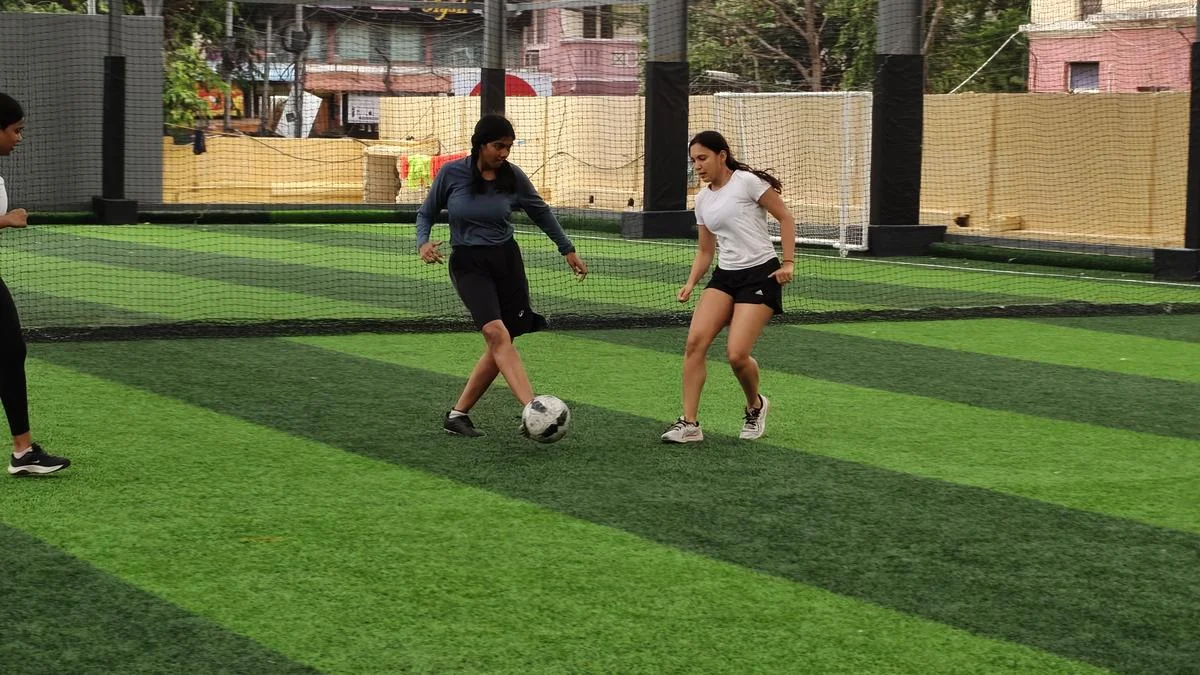
Chennai, India – The thud of a football, a collective groan, and then the infectious burst of laughter. On a rare overcast Sunday morning in Chennai, the focus wasn’t on the scoreboard. For a growing number of women, the simple act of kicking a ball, or engaging in any form of playful movement, has become a vital antidote to the pressures of modern life. These women, some of whom had never touched a football before, are finding profound joy and connection not through rigorous, data-driven workouts, but through the pure, unadulterated fun of play.
In an era where every fitness endeavour is framed with promises of enhanced longevity, bone density, and optimal health metrics, a significant shift is underway. Women across Chennai are actively seeking out experiences that prioritize enjoyment and community, with physical fitness emerging as a welcome, albeit secondary, outcome. This movement is about reclaiming the spirit of childhood play, a concept often lost amidst the responsibilities of adulthood, and fostering a sense of well-being that transcends the purely physical.
The Lost Art of Play: From Schoolyards to Structured Schedules
For many women, the vibrant freedom of playing sports purely for enjoyment is a distant memory, often confined to the halls of their school days. The transition from the carefree days of playgrounds to the structured demands of adult life—marked by report cards, career aspirations, and family obligations—has led to a fundamental redefinition of movement. Physical activity, once an intrinsic part of daily life, has become something to be scheduled, meticulously tracked through fitness apps, and measured against quantifiable goals. The emphasis has shifted from the inherent pleasure of movement to the achievement of predefined performance benchmarks.
This shift, while driven by valid desires for health and well-being, has inadvertently sidelined a crucial element: joy. The pressure to perform, to optimize, and to achieve tangible results can transform what should be an empowering experience into another source of stress. This is where a new wave of women-centric communities in Chennai is stepping in, offering a refreshing alternative.

Sisters in Sweat (SIS): Re igniting the Spark of Joyful Movement
Bengaluru-based "Sisters in Sweat" (SIS) is at the forefront of this movement, actively helping women in Chennai rediscover the sheer delight of being active. Launched in Chennai in February, the community has quickly established itself as a vibrant hub for women seeking connection and exhilaration through movement. SIS offers a diverse range of activities, catering to various interests and fitness levels.
Beginner classes in contact sports like football and basketball provide a safe and encouraging environment for newcomers to learn the ropes. Beyond these more structured team sports, SIS also hosts community games for popular activities like pickleball and badminton. The organization’s offerings extend further, encompassing a wide spectrum of movement-based disciplines, including yoga, animal flow, Bollywood dancing, Pilates, running groups, and kettlebell workouts.
The appeal of SIS, and similar initiatives, extends far beyond the conventional definition of fitness. While structured strength training and targeted workouts remain important for many, an increasing number of women are actively seeking out forms of movement that offer a richer, more holistic experience. This includes the thrill of acquiring a new skill, the profound sense of camaraderie that blossoms within team sports, and the invaluable opportunity to carve out a personal space, a sanctuary away from the relentless demands of work and family responsibilities. In these empowering communities, improved physical fitness often becomes a delightful, organic consequence of the joy derived from participation, rather than the primary, often daunting, objective.
A Non-Judgmental Arena: Building Confidence and Community
Anusha Ramachandran, the Chennai community lead for SIS, emphasizes that the sense of fun and inclusivity is central to the community’s ethos. "This is a non-judgmental, open, and comfortable space where women come to try something they might otherwise feel intimidated by," she explains. "As we grow older, it’s not easy to build a group of friends or find a community. The women who play football regularly now had never touched a football before. Nobody knew how to kick. But today, if you see them, it’s incredible."

Anusha’s sentiment is echoed by the experiences of many members. The bonds forged within these communities often transcend the scheduled sessions. She recounts heartwarming instances where women who met through the football program spontaneously organized their own games, booking turfs and enjoying extended play sessions. Similarly, individuals who joined the community’s running days as strangers found themselves forming deep connections, motivating and supporting each other through their first three-kilometer and five-kilometer runs.
Girika Mahajan, a pastry chef who relocated to Chennai a few years ago, attests to the power of group sports in fostering camaraderie. "I’ve always liked group sports. It helps build a sense of camaraderie," she shares. Having played football with SIS for the past three months, Girika has not only acquired new skills but has also cultivated meaningful friendships. She highlights the dual benefit of these activities, noting that playing a sport is as much a mental workout as a physical one. "The gym is repetitive. This is a physical and mental workout. You’re learning strategy, skills, and doing it with a group," she remarks, underscoring the dynamic and engaging nature of these pursuits.
Pallavi Rajankar, a 30-year-old psychologist, found her entry into football through SIS to be a remarkably positive experience. "I’ve never played football before, and I went to one game just to see if I would like it, and it was a very chill space where everyone is learning and figuring things out. We take things at our own pace, and it’s a relaxed way to learn a sport," she says. For Pallavi, this approach seamlessly blends fitness with enjoyment. "I hate doing cardio, but here when you are with friends and doing something fun, you are able to push your boundaries," she adds, illustrating how social connection can unlock new levels of personal achievement.
Glo Klub: Weaving Wellness into Experiential Movement
Beyond SIS, other organizations are also contributing to this burgeoning landscape of joyful movement in Chennai. Glo Klub, a Chennai-based women’s community, curates a diverse array of weekly activities designed to immerse women in the world of wellness through engaging experiences. Their offerings span from swimming and aerial yoga to boxing workshops, pickleball sessions, community runs, and a variety of other movement-based explorations.

Sharon Mary Cherian, co-founder of Glo Klub and a strength and conditioning coach, explains the philosophy behind their approach. "We wanted to move in the wellness direction rather than just the fitness direction," she states. Sharon, along with her co-founder Sampreetha Premnath, a certified fitness and nutrition coach, established Glo Klub after meeting through Chennai’s vibrant parkour scene.
Unlike traditional fitness establishments that often focus on a single discipline, Glo Klub is intentionally designed around exploration and discovery. The founders collaborate with a network of coaches and venues across the city, providing women with opportunities to be introduced to a wide array of movement practices. This results in a dynamic and rotating calendar of activities, where participants might find themselves experiencing the grace of aerial yoga one weekend, the power of boxing the next, and then joining a refreshing community swim or an energetic pickleball session shortly after.
The overarching goal for both Sampreetha and Sharon is not to foster commitment to a singular sport. Instead, they aspire to cultivate a low-pressure environment where women feel empowered to experiment, to unearth their personal preferences, and to build sustainable habits rooted in genuine enjoyment rather than obligation. "A lot of women feel intimidated even going to a gym. Unfortunately, sports and fitness are still very male-dominated spaces. We wanted to create a space where it’s just women," Sampreetha emphasizes, highlighting the critical importance of creating safe and inclusive havens.
Beyond Age and Aspiration: The Universal Appeal of Movement
The appeal of these women-focused movement communities extends across generational divides. While many are attracting younger women seeking friendship, fitness, and novel experiences, the benefits of embracing sport and physical activity are resonating with women of all ages. For some, it represents an opportunity to reconnect with movement later in life, reclaiming a part of themselves that may have been dormant for years.

Petulia Balaji, a spirited 61-year-old pickleball player, discovered the sport in Chennai nearly a decade ago through a friend’s introduction. What began as casual games in a car park gradually evolved into a more dedicated pursuit. Today, Petulia is a formidable competitor, participating in tournaments across the country and proudly holding medals from both state and national level competitions.
"Pickleball has brought out many women who otherwise would never have come out to join a sport," Petulia shares enthusiastically. "For that one hour, you forget everything else, and you’re just focused on playing and having fun. The health benefits come almost as a by-product because you’re enjoying the game so much." Her experience vividly illustrates how the intrinsic joy of play can be a powerful catalyst for sustained physical activity and overall well-being, with health benefits naturally following suit.
The Freedom of Being a Beginner: Redefining Success in Movement
Whether it’s the spirited camaraderie of a football match, the fast-paced rallies of pickleball, the empowering discipline of boxing, or the ethereal practice of aerial yoga, a common thread weaves through these burgeoning communities: they offer women something that often diminishes in adulthood – the profound freedom to be a beginner, unburdened by the pressures of competition or the demand for immediate performance.
In many traditional sporting environments, the prospect of trying something new can be fraught with anxiety and self-consciousness. Women-only spaces, however, effectively dismantle much of this inherent pressure. They cultivate an atmosphere where participants feel safe to learn, to make mistakes without judgment, and to gradually improve at their own comfortable pace. This shift fundamentally redefines success in movement. It transitions from a relentless pursuit of a quantifiable goal to an immersive experience of sheer joy, free from the need to justify one’s presence or abilities to external observers, particularly in spaces historically dominated by male perspectives. The focus shifts from proving oneself to simply experiencing the liberating power of movement.
