

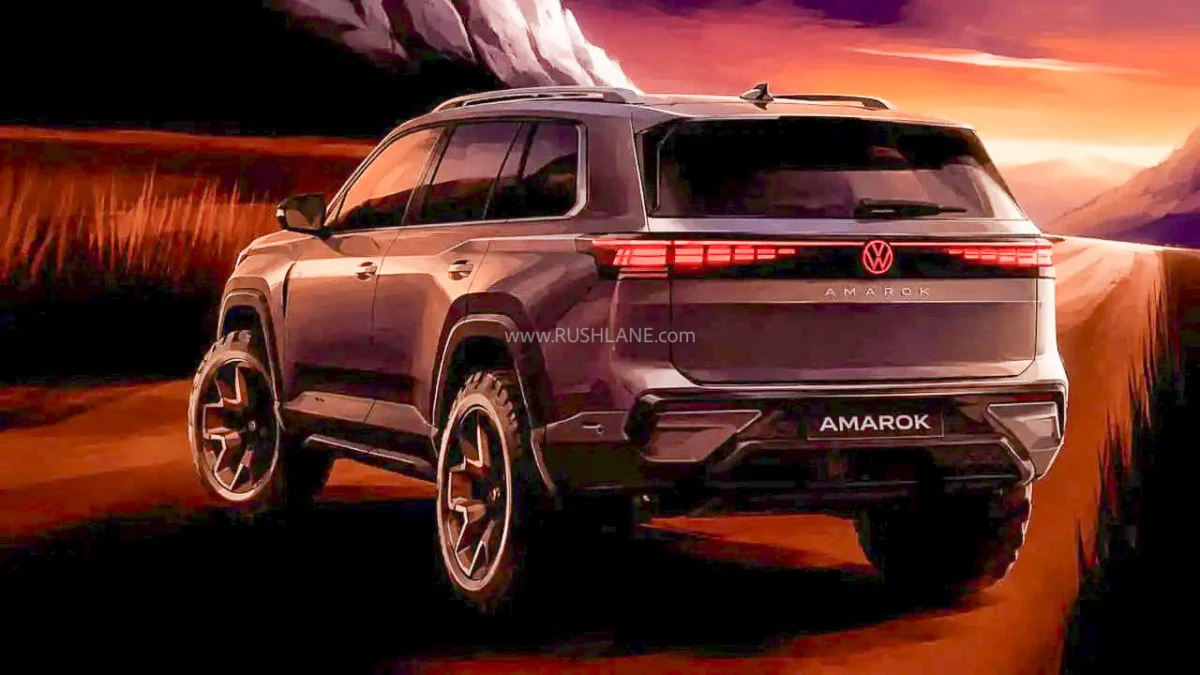
The global automotive landscape is witnessing a significant shift as Volkswagen, a brand traditionally associated with unibody sophistication and European refinement, prepares to enter the ring of heavy-duty, ladder-frame SUVs. For decades, the segment for rugged, seven-seat off-roaders has been dominated by stalwarts like the Toyota Fortuner (known as the SW4 in South America), the Ford Endeavour (Everest), and the Isuzu MU-X. Now, under the internal codename "Projeto Atacama," Volkswagen is developing a flagship SUV designed to disrupt this lucrative hierarchy.
Based on the next-generation Amarok platform and leveraging strategic partnerships, this upcoming SUV represents more than just a new model; it is a declaration of intent for the South American market and, potentially, a blueprint for Volkswagen’s future in emerging markets worldwide.
I. Main Facts: A New Titan Emerges
The core of Projeto Atacama lies in its departure from Volkswagen’s standard SUV lineup. Unlike the Tiguan or the Atlas (Teramont), which utilize the MQB or MLB unibody architectures, the new SUV will be built on a ladder-frame chassis. This "body-on-frame" construction is the gold standard for serious off-roading, heavy towing, and durability in regions with challenging infrastructure.
Key Specifications at a Glance:
- Platform: Star Bridge architecture (derived from the SAIC-Volkswagen collaboration).
- Seating Capacity: Three-row, seven-seat configuration.
- Primary Target Rivals: Toyota Fortuner/SW4, Ford Everest, GWM Haval H9.
- Flagship Powertrain: A high-performance Plug-in Hybrid Electric Vehicle (PHEV) system.
- Estimated Torque: Up to 800 Nm.
- Estimated Power: Over 470 hp.
While Volkswagen has historically utilized its partnership with Ford for the latest global Amarok, Projeto Atacama appears to be taking a distinct path by utilizing the Star Bridge architecture. This platform is already successfully deployed in the SAIC Maxus Interstellar X pickup in China. By adopting this foundation, Volkswagen can offer a vehicle with dimensions that significantly dwarf its current competition, particularly in terms of wheelbase and cabin volume.
II. Chronology: The Long Road to a Ladder-Frame SUV
The journey toward a Volkswagen body-on-frame SUV has been a decade in the making, marked by missed opportunities and strategic re-evaluations.
2010–2020: The Amarok Era and the "Missing" SUV
When the original Volkswagen Amarok launched in 2010, enthusiasts and dealers immediately called for an SUV variant. Toyota had the Fortuner based on the Hilux; Ford had the Everest based on the Ranger. Volkswagen Commercial Vehicles actually went as far as developing a functional, seven-seat SUV prototype based on the first-generation Amarok. However, the project was shelved due to high production costs and a focus on the brand’s burgeoning "ID." electric vehicle offensive.
2021–2023: The SAIC Partnership and Star Bridge
As Volkswagen looked to strengthen its position in China and South America, its partnership with SAIC (Shanghai Automotive Industry Corporation) bore fruit in the form of the Star Bridge architecture. This platform allowed for a more cost-effective yet technologically advanced ladder-frame base.
2024: The Dealer Revelation
The most recent and significant milestone occurred in late 2024. Reports from Brazil confirmed that Volkswagen presented the early stages of Projeto Atacama to a select group of high-ranking dealers. This move signaled that the project had moved past the "feasibility study" phase and into active development, with a production window likely targeting the 2026–2027 timeframe.
III. Supporting Data: Dimensions and Performance Analysis
To understand why Projeto Atacama is causing a stir, one must look at the comparative data. Volkswagen isn’t just entering the segment; they are attempting to "out-size" and "out-power" the competition.
Dimensional Dominance
The Star Bridge platform, as seen in the Maxus Interstellar X, supports a massive footprint. If Volkswagen maintains the proportions of the donor platform, the results are startling:
| Feature | VW Projeto Atacama (Est.) | Toyota Fortuner (SW4) | GWM Haval H9 |
|---|---|---|---|
| Wheelbase | ~3,300 mm | 2,745 mm | 2,850 mm |
| Total Length | ~5,500 mm | 4,795 mm | 4,859 mm |
With a wheelbase nearly 50 cm (20 inches) longer than the Toyota Fortuner, the Volkswagen SUV will likely offer class-leading third-row legroom and a cargo capacity that remains functional even with all seven seats deployed. This addresses a common criticism of current mid-size ladder-frame SUVs, where the third row is often relegated to small children.

The PHEV Revolution: 800 Nm of Torque
While the Fortuner relies on its dependable but aging 2.8-liter turbodiesel (producing roughly 204 hp and 500 Nm), Volkswagen is aiming for a paradigm shift.
The flagship variant, rumored to be badged as the "800 TSI," will likely utilize a plug-in hybrid system. This setup combines a turbocharged gasoline engine with a high-output electric motor and a substantial battery pack.
- Performance: A 0–100 km/h (62 mph) sprint in approximately 5 seconds.
- Off-Road Utility: Electric motors provide 100% of their torque from 0 RPM, which is an immense advantage for crawling over rocks or extracting a trailer from a boat ramp.
- Efficiency: The PHEV setup will allow for significant "EV-only" range, catering to urban commuters in cities like São Paulo or Buenos Aires, while maintaining the long-range capability required for cross-continental travel.
IV. Official Responses and Design Philosophy
While Volkswagen Group’s global headquarters in Wolfsburg remains tight-lipped about the specifics of the launch, the South American division has been more transparent about its growth strategy.
Not a "Badge-Engineered" Product
Volkswagen executives have emphasized that while the Star Bridge architecture provides the "bones," the SUV will be a Volkswagen through and through. This means:
- Chassis Tuning: VW engineers are reportedly recalibrating the suspension to provide a "European" driving feel, reducing the "bouncy" ride often associated with ladder-frame vehicles.
- Exterior Aesthetics: Renderings and sketches suggest a design language consistent with the new Amarok and the Touareg—clean lines, an imposing grille, and sophisticated LED matrix lighting.
- Interior Quality: Unlike some rivals that prioritize utility over luxury, Projeto Atacama is expected to feature the "Digital Cockpit," high-quality soft-touch materials, and advanced ADAS (Advanced Driver Assistance Systems).
The Dealer Feedback
Sources within the Brazilian dealer network have expressed high optimism. The consensus is that there is a "void" in the market for a vehicle that offers the ruggedness of a Fortuner with the premium technology and prestige of a Volkswagen.
V. Implications: A Market Disruptor in the Making
The introduction of Projeto Atacama has far-reaching implications for the automotive industry, particularly in South America, Southeast Asia, and potentially India.
1. The Challenge to Toyota’s Hegemony
Toyota has long enjoyed a "monopoly of trust" in the rugged SUV segment. However, the Fortuner has faced criticism for rising prices and a lack of interior modernization. If Volkswagen can price Projeto Atacama competitively while offering nearly double the torque and a significantly larger cabin, Toyota may be forced to accelerate the development of its next-generation hybrid Hilux/Fortuner platforms.
2. The Strategic Importance of Brazil
By producing this flagship locally in South America, Volkswagen avoids heavy import taxes and can tailor the vehicle to regional tastes. This move is part of a broader R$ 16 billion (approx. $3 billion USD) investment by VW in Brazil through 2028, which includes the development of hybrid technologies and new models like the Tukan pickup.
3. Global Potential
While Projeto Atacama is currently a South American focus, the ladder-frame SUV segment is booming in other regions. In India, where the Ford Endeavour’s exit left a massive gap, and in Australia, where "Grey Nomads" demand high towing capacities, a 470 hp, 800 Nm Volkswagen SUV would likely be an overnight sensation.
4. The Transition to Electrification
By skipping a pure-diesel focus and jumping straight to a high-performance PHEV, Volkswagen is future-proofing its flagship. As emissions regulations tighten globally, a "super-SUV" that can operate silently in zero-emission zones while conquering the Atacama Desert is a powerful marketing and engineering statement.
Conclusion
Volkswagen’s Projeto Atacama represents the brand’s most ambitious move in the SUV space in recent years. By combining the rugged Star Bridge architecture with a world-class PHEV powertrain and Volkswagen’s signature design language, the company is finally ready to challenge the status quo. If the production model lives up to the 800 Nm promise, the Toyota Fortuner and Ford Everest may soon find themselves looking at the taillights of a new, formidable German-engineered rival.
