

Every few months, a jarring image finds its way into the back pages of Indian newspapers or viral social media feeds: a pregnant woman, often from a tribal community, being carried across a treacherous mud path or a swelling river on a makeshift stretcher made of bamboo poles and a wooden cot. For the urban reader, the image evokes a momentary flicker of pity or a brief surge of indignation before the relentless news cycle buries it.
However, for those living on the margins, the journey on that stretcher is not a singular event but the climax of a lifelong struggle against a system that has largely forgotten them. In her seminal work, Staying Alive: Dispatches from the Margins, Dr. Ramani Atkuri—a community medicine specialist who has spent 35 years working in the tribal heartlands of Central India—peels back the layers of these headlines. She reveals that the tragedy does not end when the woman reaches a hospital; often, that is where a new, equally harrowing chapter begins.
Main Facts: The Anatomy of a Maternal Tragedy
The core of the rural healthcare crisis is perhaps best personified in the story of Sombari Sabar, a young woman whose death serves as a haunting case study in systemic failure. Sombari’s final journey was described by Dr. Atkuri as "almost regal" in its tragic slow motion: four men carrying a wooden chair secured to bamboo poles, a black umbrella fixed to the back to shield her from the scorching sun.
Sombari had been in labor for two days. In the absence of a functional local clinic, she had been administered "takatara suji" (strength-giving injections) by local practitioners—a common but often dangerous intervention in rural areas where professional oversight is lacking. By the time she reached Dr. Atkuri’s dispensary, she was exhausted, her body anchored to the chair for safety during the mountain descent.
The medical facts of Sombari’s case are a grim reflection of the "cascade of events" that define maternal mortality in India’s tribal belts:
- Obstructed Labor: A physiological complication that requires immediate surgical intervention, which was unavailable in her village.
- Inappropriate Medication: The administration of oxytocic injections (the "strength" injections) in an unsupervised setting, which can cause violent uterine contractions against an obstruction.
- Uterine Rupture: The physical consequence of the aforementioned factors, leading to massive internal hemorrhaging and sepsis.
- The Geography of Death: The "long distance" factor—a literal mountain between the patient and the life-saving surgery.
Despite the heroic efforts of health workers—who raced her down mountains in jeeps, hung IV drips from window bars, and even donated their own blood when family members were found too anemic to provide it—neither Sombari nor her child survived. Her death was not the result of a single disease, but a failure of the entire social and medical architecture.
Chronology of Neglect: From Birth to the Margins
To understand the crisis Dr. Atkuri describes, one must look at the chronology of a life lived on the margins. Healthcare in these regions is not a series of check-ups; it is a desperate attempt to avoid succumbing to the environment.
The Cycle of Vulnerability
The journey toward a medical crisis often begins decades before the patient ever sees a doctor. In the tribal communities of Central India, malnutrition is the baseline. High rates of anemia and low Body Mass Index (BMI) among adolescent girls lead to high-risk pregnancies. When these women give birth, their children are born with low birth weights, entering the world "already behind." This intergenerational cycle of physical vulnerability ensures that the body has no reserves when faced with a crisis like malaria or a difficult labor.
The Impact of Distress Migration
The chronology is further complicated by economic instability. Drought and debt frequently trigger "distress migration." When families are uprooted to move to distant states for labor, they lose their fragile link to local healthcare workers.
- Immunization Gaps: A child’s vaccination schedule is often lost in transition.
- Antenatal Care (ANC) Interruption: Pregnant women moving across state boundaries find themselves in places where they don’t speak the language and have no access to the "Mamta" cards or state-sponsored nutrition schemes they left behind.
- Systemic Discontinuity: The Indian healthcare system is often rigid and state-centric, failing to "follow" the migrant worker across borders, leaving them invisible to the new state’s health registry.
Supporting Data: The Burden of the Unseen
The stories recounted by Dr. Atkuri—the 10-year-old with untreated epilepsy falling into a fire, the tailor losing his sight to diabetes, the woman misdiagnosed with skin ailments for two years before being identified as a leprosy patient—are supported by broader national statistics that highlight a deepening divide.
The Three Delays
Public health experts often categorize maternal and emergency deaths into "The Three Delays," all of which are rampant in the regions Atkuri describes:

- Delay in seeking care: Due to lack of awareness or fear of costs.
- Delay in reaching care: Due to terrain and lack of transport (the "makeshift stretcher" phase).
- Delay in receiving care: Due to understaffed or under-equipped facilities.
Economic Impact
Data shows that those who can least afford it shoulder the highest burden of health expenditure. In India, out-of-pocket (OOP) expenditure remains one of the highest in the world. For a tribal family, a single hospitalization can lead to a debt trap that lasts generations. Dr. Atkuri notes that health workers often have to buy medicines on credit just to keep a patient alive, as the "free" pharmacy at the public hospital is frequently out of stock.
Diseases of Neglect
While the national discourse often focuses on lifestyle diseases like obesity or heart health, the margins are still battling "diseases of poverty." TB, malaria, cholera, snakebites, and burns remain the primary killers. These are conditions that are entirely survivable with timely intervention but become fatal when the nearest functional hospital is 50 kilometers of mountainous terrain away.
Official Responses and Systemic Architecture
India’s public health architecture is, on paper, one of the most well-conceptualized in the developing world. The National Health Mission (NHM) and the more recent Ayushman Bharat scheme aim to provide a safety net for the most vulnerable. However, Dr. Atkuri is blunt about the reality on the ground.
The "Hollowed Out" System
The official framework is often "hollowed out" by several chronic issues:
- Inadequate Investment: Despite promises to raise public health spending to 2.5% of GDP, the actual figures have historically hovered much lower, leading to crumbling infrastructure.
- Chronic Under-staffing: There is a severe shortage of specialist doctors (surgeons, obstetricians, and pediatricians) in Community Health Centres (CHCs). Many rural posts remain vacant for years as doctors prefer urban practices.
- Technological Mismatch: Data and technology are often deployed without considering the ground reality. Digital health IDs and online registries are of little use in areas with no cellular connectivity or where the primary concern is a lack of clean water.
The Policy-Practice Gap
While policies are "sound," the implementation is uneven. Infrastructure often exists—a building labeled "Dispensary"—but it lacks electricity, running water, or life-saving drugs. This creates a "phantom" healthcare system that looks good in government reports but fails the patient in the chair.
Implications: The Moral Imperative of Humanity
The implications of Dr. Atkuri’s dispatches are both a warning and a call to action. The current trajectory suggests that as India advances technologically and economically, a significant portion of its population is being left in a pre-modern medical era.
The Need for Decentralization
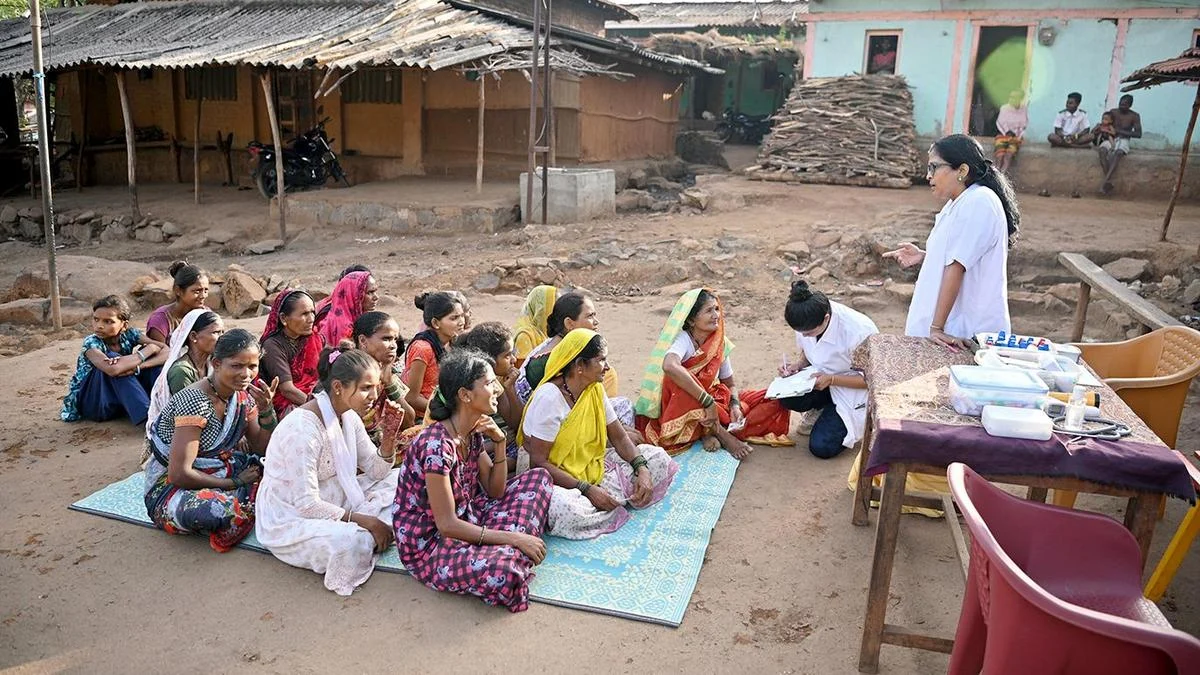
One of the primary solutions proposed is the radical decentralization of healthcare. Service delivery must be responsive to the specific needs of rural and tribal communities. This means empowering local health workers (ASHAs and ANMs) not just as data collectors, but as well-compensated, highly-trained frontline clinicians who have the resources to stabilize patients before they need a mountain descent.
Beyond the Silver Bullet
Dr. Atkuri’s "austere prose" serves as a reminder that there is no "silver bullet" for rural health. Improved data and better infrastructure are necessary, but they are insufficient without a fundamental shift in how we value lives on the margins. The "Sombari Sabars" of India will continue to perish as long as their deaths are seen as inevitable consequences of geography rather than avoidable failures of policy.
Conclusion: Bearing Witness
Ultimately, Staying Alive argues that the first step toward fixing a broken system is the refusal to look away. We must move beyond the "flicker of something" we feel when seeing a picture in the newspaper. Healthcare for the marginalized must be treated not as an act of charity, but as a fundamental right.
As the reviewer (an IAS officer) notes, the book offers an "insistence that lives on the margins should be looked at with humanity, written about, and cared for." Until the "makeshift stretcher" is replaced by a functional, localized, and empathetic healthcare network, the stories of Sombari and others will continue to be dispatches from a frontline that the rest of the country has chosen to ignore.
Book Details:
- Staying Alive: Dispatches from the Margins
- Author: Ramani Atkuri
- Publisher: Pan Macmillan India
- Price: ₹399
