

For many travelers from Southern India, the mental landscape of Jammu and Kashmir is often a palimpsest of Bollywood imagery: vibrant sequences of actors romancing amidst snow-dusted pines, juxtaposed against the somber news cycles of security encounters. However, as one’s flight descends into the Srinagar International Airport, the reality of the Kashmir Valley reveals itself as something far more nuanced. It is a city where the past is not merely remembered but lived—a place where the remnants of historical horror, architectural heritage, and cultural honor coexist in a delicate, beautiful balance.
Srinagar, the summer capital of Jammu and Kashmir, is currently undergoing a transformative period. While its geopolitical sensitivity remains, a burgeoning luxury hospitality sector and a renewed focus on cultural tourism are inviting travelers to look beyond the headlines. This report explores a 36-hour journey through the heart of the valley, capturing the sensory and structural essence of a city that remains, resolutely, a "Paradise on Earth."
1. Main Facts: The Structural and Cultural Identity of Srinagar
Srinagar is defined by its relationship with water and wood. Bisected by the Jhelum River and cradled by the Zabarwan Mountain Range, the city’s identity is anchored in its "Downtown" (Shehr-e-Khaas) and its aquatic suburbs on Dal Lake.

The city’s architecture is a unique hybrid of Islamic, Persian, and indigenous Himalayan styles. Unlike the bulbous domes common in Mughal architecture elsewhere in India, Srinagar’s historical mosques and shrines often feature pyramidal roofs and spire-like minarets, designed specifically to shed the heavy winter snows. Culturally, the city is a hub for artisanal crafts—ranging from intricate copperware and papier-mâché to the world-renowned Pashmina weaving—and a culinary tradition centered around the Wazwan, a multi-course feast that serves as the ultimate expression of Kashmiri hospitality.
2. Chronology: 36 Hours in the Valley
Tuesday: The Echoes of Old Srinagar
5:00 PM | The Serenity of Jamia Masjid
The journey begins in the bustling heart of Downtown. Standing in stark contrast to the chaotic, narrow streets outside, the 600-year-old Jamia Masjid offers a sanctuary of silence. The mosque is an architectural anomaly; it lacks the typical domes and minarets of modern Islamic structures, instead showcasing Hellenic influences.
Supported by 378 deodar pillars, each carved from a single tree trunk and standing 14 meters high, the structure feels like a sacred forest. Tour guide Yunus Bhatt notes that the pyramidal roof is a functional necessity for the Kashmiri climate. As the Maghrib (sunset) prayers begin, the fluttering of pigeons in the central courtyard provides a rhythmic backdrop to the spiritual atmosphere, while the snow-clad Hari Parbat fort looms in the distance.

7:00 PM | The Mysticism of Khanqah-e-Moula
A short walk through the Zaina Kadal area leads to the Khanqah-e-Moula, one of Kashmir’s oldest Sufi shrines. Dedicated to Mir Syed Ali Hamadani, the Persian scholar who brought Islam and various crafts to the valley, the shrine is a masterpiece of wooden architecture. Built using the traditional Taq system—an earthquake-resistant method of interlocking wooden beams without the use of nails—the shrine’s interior is a riot of color, featuring intricate papier-mâché work and floral motifs that have become synonymous with Kashmiri art.
8:00 PM | Navigating Shehr-e-Khaas
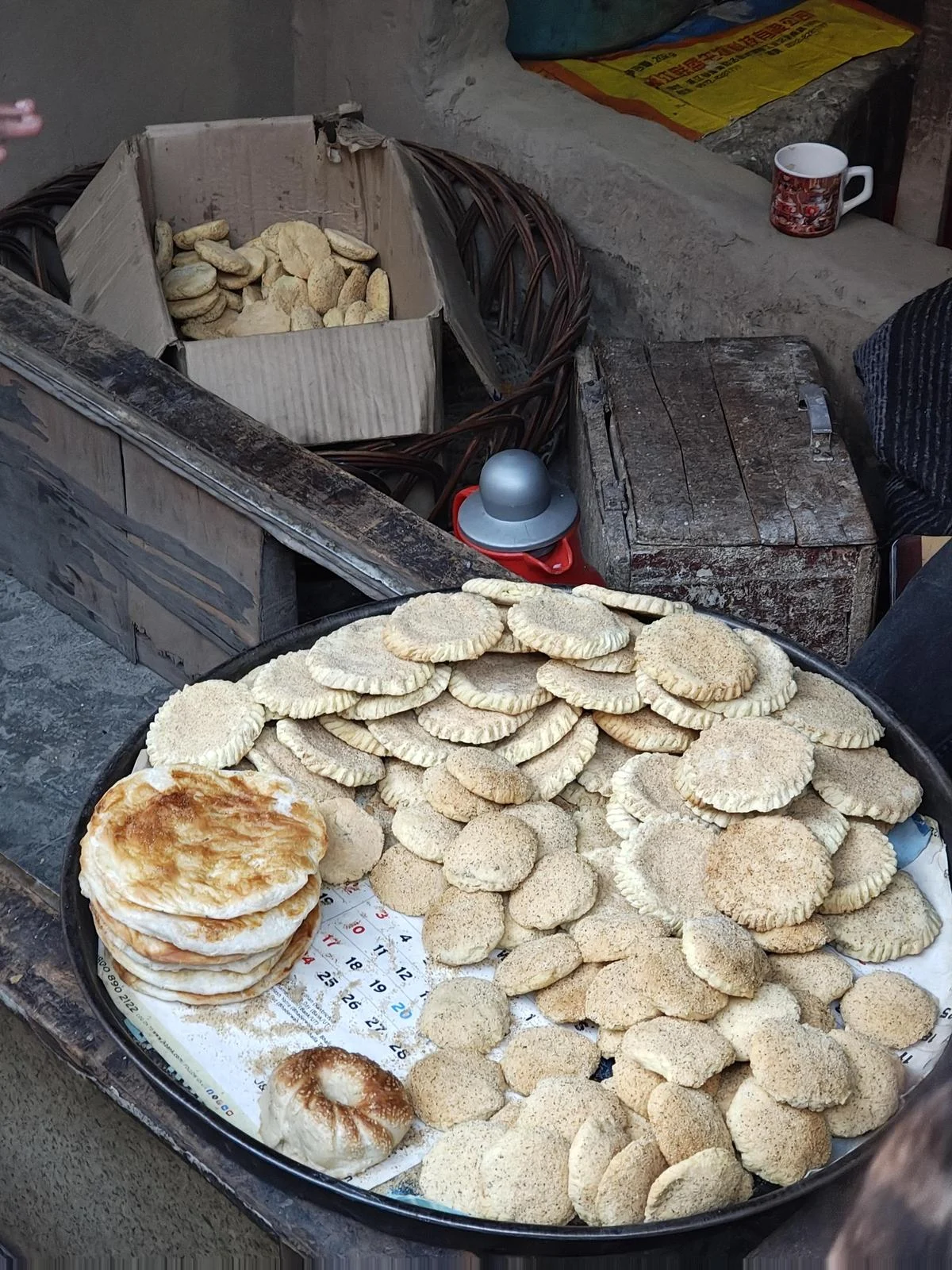
As night falls, the "Shehr-e-Khaas" (Special City) reveals its commercial soul. The area is defined by the seven historic wooden bridges, or Kadals, that span the Jhelum. Walking through the SR Gunj Market, one encounters the rhythmic hammering of metalsmiths in dimly lit workshops, shaping Samovars (traditional tea kettles) and Tash-t-Nari (ceremonial washbasins). The air here is thick with the scent of Bakarkhani, a thick, Mughlai flatbread. Local vendors insist it is best enjoyed with Kahwa, the region’s signature saffron-infused green tea.
Wednesday: Water, Petals, and the Wazwan
6:00 AM | The Floating Economy of Dal Lake
The day starts before sunrise at Nehru Gate. A Shikara (traditional wooden rowboat) ride through Dal Lake is essential to understanding the city’s aquatic life. Beyond the tourist houseboats lies a thriving ecosystem: floating vegetable markets where farmers trade Nadru (lotus stems), water chestnuts, and leafy greens from their boats. As the Zabarwan Range catches the first light, floating Kahwa vendors glide alongside tourists, serving hot tea garnished with crushed almonds and saffron strands.

11:00 AM | The Bloom of the Zabarwan Foothills
Located 22 kilometers from the airport, the Indira Gandhi Memorial Tulip Garden is Asia’s largest. Spread across 30 hectares, the garden is a seasonal phenomenon, open only for a few weeks in spring (typically mid-March to mid-April). With over 1.8 million tulips across 70 varieties, the garden represents a significant draw for domestic tourism, signaling the arrival of spring in the valley.
1:00 PM | Contemporary Flavors by the Jhelum
For lunch, Karbone Bistro & Barbecue offers a modern take on grilled meats. Situated on the banks of the Jhelum, it serves Mutton Adana and Chicken Shish kebabs, reflecting a growing trend of Middle Eastern-inspired cuisine that complements the traditional Kashmiri palate.
4:00 PM | The Pulse of Lal Chowk
No visit to Srinagar is complete without Lal Chowk, the city’s political and commercial nerve center. Named after Moscow’s Red Square, the area is dominated by the iconic Ghanta Ghar (Clock Tower). While the presence of security forces is a reminder of the region’s complex history, the market remains vibrant. This is the premier destination for Pherans (loose Kashmiri cloaks) and high-quality Pashmina shawls. For a sweet interlude, the historic Ahdoos bakery (Crème) offers walnut tarts and eclairs that have been staples for generations.

7:30 PM | The Ritual of Wazwan
The day concludes with a formal Wazwan dinner at Firdaus, located within the Radisson Collection Hotel. This is not merely a meal but a ritual. Served on a Traem (a large, engraved copper platter), the feast includes Tabak Maaz (crispy lamb ribs), Aab Ghosht (mildly spiced lamb in milk gravy), Gushtaba (velvety meat pounding in yogurt), and Rista (meatballs in red gravy). Prepared by Executive Chef Naresh Kharbanda, the meal illustrates the labor-intensive nature of Kashmiri cuisine, where meat is hand-pounded to achieve a unique, airy texture.
Thursday: A Sweet Departure
8:00 AM | The Legacy of Moonlight
Before heading to the airport, a stop at "Moonlight The Walnut Fudge Shop" is mandatory. Founded in 1896, the shop uses a secret family recipe involving local walnuts, honey, and dates. The fudge, with its dense, chewy texture and thin pastry base, serves as a literal and metaphorical "sweet note" to end the journey.
3. Supporting Data: Architectural and Economic Pillars
To understand Srinagar’s current state, one must look at the data points that define its recovery and heritage:

- Architectural Resilience: The Taq and Dhajji Dewari systems used in the Khanqah-e-Moula are recognized by global architects as superior examples of traditional seismic-responsive engineering. By using timber frames and sun-dried bricks, these buildings have survived centuries of earthquakes that leveled more modern concrete structures.
- Tourism Statistics: The Tulip Garden’s expansion to 30 hectares and 1.8 million bulbs is part of a broader state strategy to extend the tourism season. In recent years, Jammu and Kashmir have seen record-breaking tourist arrivals, often exceeding 20 million annually, with Srinagar serving as the primary hub.
- The Artisanal Economy: The copperware (Kandkari) and Pashmina industries contribute significantly to the local GDP. A single hand-knotted silk carpet from Srinagar can take two years to complete, representing the high-value, slow-fashion heritage of the region.
4. Official Responses: The Evolution of Hospitality
The entry of international luxury brands into Srinagar marks a significant shift in the city’s economic landscape. The Radisson Collection Hotel & Spa, Riverfront Srinagar, which opened in 2024, is the brand’s debut project in India.
Shubhankar Jyoti, General Manager of the property, emphasizes that the goal is to bridge the gap between luxury and authenticity. "Srinagar has a distinctive cultural identity and stories worth experiencing," Jyoti stated. "The property was envisioned as more than just a hotel; it was designed to immerse guests in the spirit of Kashmir through thoughtful design and curated local experiences."
The hotel’s architecture itself serves as an official nod to the region’s heritage, blending European alpine aesthetics with Kashmiri elements like sloping roofs and intricate woodwork, signaling a new era of "meaningful travel" in the valley.

5. Implications: Beyond the Cinematic Lens
The transformation of Srinagar from a "troubled" destination to a luxury cultural hub has several long-term implications:
- Economic Diversification: By moving beyond the "houseboat-only" model of the 1970s and 80s, Srinagar is attracting a higher-spending demographic that supports local artisans, chefs, and historians.
- Preservation through Tourism: The renewed interest in Downtown (Shehr-e-Khaas) encourages the preservation of 19th-century brickwork and wooden shrines that might otherwise fall into disrepair.
- Changing Perceptions: As travelers share experiences of the city’s serenity—such as the Maghrib prayers at Jamia Masjid or the quietude of a 6 AM Shikara ride—the narrative of Srinagar is slowly shifting from one of conflict to one of cultural resilience.
Srinagar remains a city of layers. While the security presence and the "remnants of horror" are still visible, they are increasingly overshadowed by the "heritage and honor" of its people. For the visitor, 36 hours is barely enough to scratch the surface, but it is sufficient to realize that the real Srinagar is far more captivating than any film could ever portray.
