

BOSTON, MA – As the city of Boston prepares to take center stage on the global athletic map as a host for the FIFA World Cup 2026, the "Cradle of Liberty" is undergoing a quiet but profound culinary transformation. Long celebrated for its storied past and collegiate atmosphere, Boston’s food scene is now being redefined by a sophisticated blend of historical reverence and modern innovation. From the cobblestone streets of Harvard Square to the shimmering glass of the Seaport District, the city is proving that its gastronomic offerings are as diverse and enduring as its political heritage.
Main Facts: The Intersection of History and Hospitality
Boston’s culinary identity has traditionally been anchored by the Atlantic Ocean. The city’s reputation for New England Clam Chowder and lobster rolls is not merely a marketing gimmick but a reflection of a centuries-old relationship with the sea. However, as the city gears up for the influx of international visitors associated with the World Cup—which saw matches held at the Boston Stadium (historically known as Gillette Stadium)—the local industry is expanding its scope.
Today, the Boston food scene is characterized by three distinct pillars:

- The Preservationists: Establishments like the Union Oyster House that maintain the traditions of the 19th century.
- The Modernists: High-concept restaurants like Contessa and Mooncusser that integrate global flavors with local ingredients.
- The Neighborhood Gems: An emerging sector of immigrant-driven eateries in districts like Allston and Dorchester that reflect the city’s contemporary demographics.
Chronology: A Journey Through Boston’s Neighborhoods
The Academic Gateway: Harvard Square
The journey into Boston’s soul often begins across the Charles River in Cambridge. In the shadow of Harvard University, the atmosphere is one of intellectual rigor and, during the autumn and winter months, a biting New England chill. This climate dictates the local palate, favoring "comfort food" that provides warmth and sustenance.
At Harvest, located in the heart of Harvard Square, the focus is on the "purveyor-to-table" philosophy. While many tourists flock to the John Harvard statue to rub its boot for luck, the true reward lies in the restaurant’s "old school" approach to New England Clam Chowder. Unlike the thin, broth-based versions found elsewhere, the chowder here is a rich tapestry of potatoes, salt-cured bacon, and heavy cream, brightened by the inclusion of fresh leeks and celery. It serves as a culinary introduction to the region’s agricultural and maritime bounty.
The Waterfront Evolution: Legal Sea Foods
Moving toward the city’s harbor, the aesthetic shifts from ivy-covered brick to expansive glass and steel. The Seaport District, once a desolate stretch of parking lots, is now the frontline of Boston’s modern hospitality industry. Legal Sea Foods, specifically its flagship Harborside location, represents the scale of this ambition.

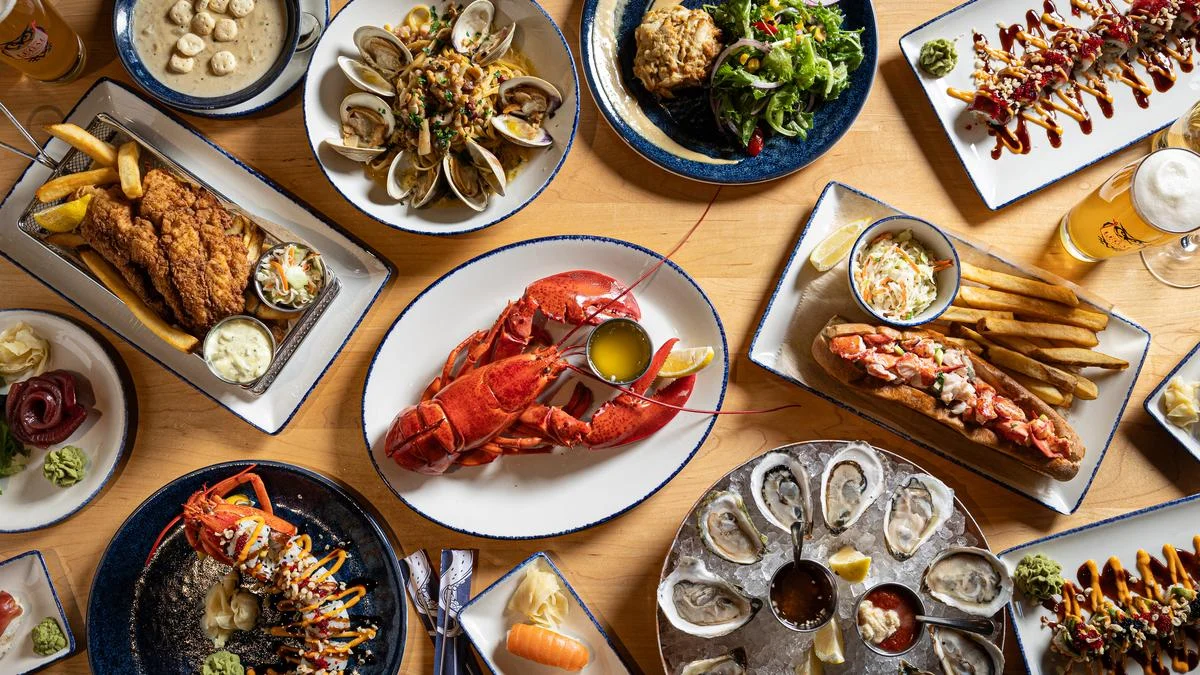
The flagship restaurant is a multi-level temple to seafood, featuring large French windows that offer a panoramic view of the waterfront. Here, the focus shifts to the raw bar. The oysters, served on ice with a sharp lemon wedge, are a masterclass in "merroir"—the maritime equivalent of terroir—tasting of the cold, briny Atlantic.
This location also serves as the battleground for the region’s most enduring debate: the construction of the lobster roll. Boston traditionally offers two variants:
- The Maine Style: A chilled preparation where the lobster meat is lightly tossed in mayonnaise and served in a cold bun.
- The Connecticut Style: A warm preparation where generous chunks of lobster are poached in butter and served on a toasted, split-top brioche roll.
The preference for the Connecticut style at Legal Sea Foods highlights a shift toward decadence, letting the sweetness of the locally sourced lobster shine through the richness of the butter.

The Living Museum: Faneuil Hall and the Union Oyster House
No culinary survey of Boston is complete without a visit to the Union Oyster House. Designated as a National Historic Landmark, it holds the title of the oldest continually operating restaurant in the United States, having served diners since 1826.
The restaurant is a labyrinth of polished wood, low ceilings, and historical artifacts, including a 44-pound stuffed lobster. Its "semi-circular" Oyster Bar, launched in 1897, remains a focal point for "bench opened" oysters. The restaurant’s history is inextricably linked to American royalty; John F. Kennedy was a regular, famously dining in Booth 18 every Sunday at noon.
The menu remains a portal to the past. The steaming clam chowder is served with "fluffy, crumbly cornbread," a recipe so popular that the kitchen produces hundreds of pounds of it daily. The introduction of the "Sam Adams Colonial Ale," specifically curated for the Oyster House, further cements the connection between the city’s brewing history and its culinary present.

The Modern Zenith: Back Bay’s Contessa
In stark contrast to the rustic charm of the Union Oyster House is Contessa, the rooftop trattoria atop the Newbury Hotel. If the Oyster House is a museum, Contessa is a film set. With pink banquettes, fresh roses, and an Art Deco aesthetic, it represents the "New Boston"—cosmopolitan, luxury-oriented, and visually stunning.
Overlooking the Boston Public Garden, Contessa bridges the gap between European technique and New England ingredients. The signature dish, a spicy lobster Capellini, marries Maine lobster with Italian pasta, tomato, cream, and Calabrian chili. This "fusion" approach—applying international spice profiles to local crustacean staples—is emblematic of the city’s evolving palate.
Supporting Data: The Economics of the Boston Food Scene
The health of Boston’s culinary sector is backed by significant economic indicators. According to the Massachusetts Restaurant Association, the hospitality industry is a primary driver of the local economy, especially during major sporting events.

- World Cup Impact: The hosting of seven matches for the FIFA World Cup 2026 is projected to bring an economic windfall of hundreds of millions of dollars to the Greater Boston area, with the restaurant sector expected to see a 20-30% spike in revenue during the tournament period.
- Diversity of Scale: While high-end spots like Contessa command premium prices, the city’s 500+ seat historic venues like Union Oyster House provide high-volume stability, ensuring the industry can cater to both luxury travelers and mass-market tourists.
- Sustainability: A 2023 report on New England fisheries indicates that the "locally sourced" movement (championed by restaurants like Harvest) has helped stabilize the price of Atlantic lobster, making it a more accessible staple for the mid-range dining market.
Official Responses: The Insider’s Perspective
To understand the city beyond the tourist brochures, one must look to its culinary leaders. Chef Carl Dooley, the creative force behind the Michelin-honored Mooncusser, offers an "insider’s guide" that highlights a more diverse, grassroots Boston.
Dooley, a James Beard Foundation nominee and Top Chef finalist, argues that the biggest mistake visitors make is focusing solely on history. "Maybe visitors come here for history, but then hopefully they realize the innovation, the arts, and definitely the food scene while here," Dooley notes.
He points toward the city’s immigrant communities as the true frontier of Bostonian flavor:

- Trinidadian Influence: Dooley recommends Singh’s Roti Shop in Dorchester for goat curry and "Doubles," noting it as a vital representative of the Caribbean population.
- Salvadorian Staples: He champions the "Pupusas" at La Reina in East Boston, suggesting that the authentic flavors found there are as essential to the Boston experience as a lobster roll.
- The "Brooklyn" Vibe: For those looking to escape the "stuffy" reputation of the Back Bay, Dooley points to Allston, a neighborhood filled with Korean BBQ spots, dive bars, and independent music venues like Brighton Music Hall.
Implications: The Future of the "Cradle of Liberty"
The evolution of Boston’s food scene has broader implications for the city’s brand. As it transitions from a regional hub to a "World Cup City," the ability to offer a multi-layered culinary experience is crucial.
The coexistence of the Union Oyster House (the past), Legal Sea Foods (the staple), and Contessa (the future) suggests a city that is comfortable with its contradictions. Boston is no longer just a place to learn about the American Revolution; it is a place to experience the "Revolution" of the American palate.
Furthermore, the emphasis on neighborhood exploration—encouraged by chefs like Dooley—suggests a shift toward a more inclusive tourism model. By promoting the use of "Blue Bikes" along the Charles River and dining in diverse districts like Allston and Dorchester, the city is fostering a sustainable tourism ecosystem that distributes economic benefits beyond the downtown core.

In conclusion, while the world may come to Boston for the soccer or the history, they will stay for the food. Whether it is a buttery lobster roll on the waterfront or a spicy Capellini overlooking the Public Garden, Boston has successfully leveraged its "Cradle of Liberty" status to become a global capital of gastronomy. The FIFA World Cup 2026 will find a city that is not only ready to host the world but ready to feed it.
