

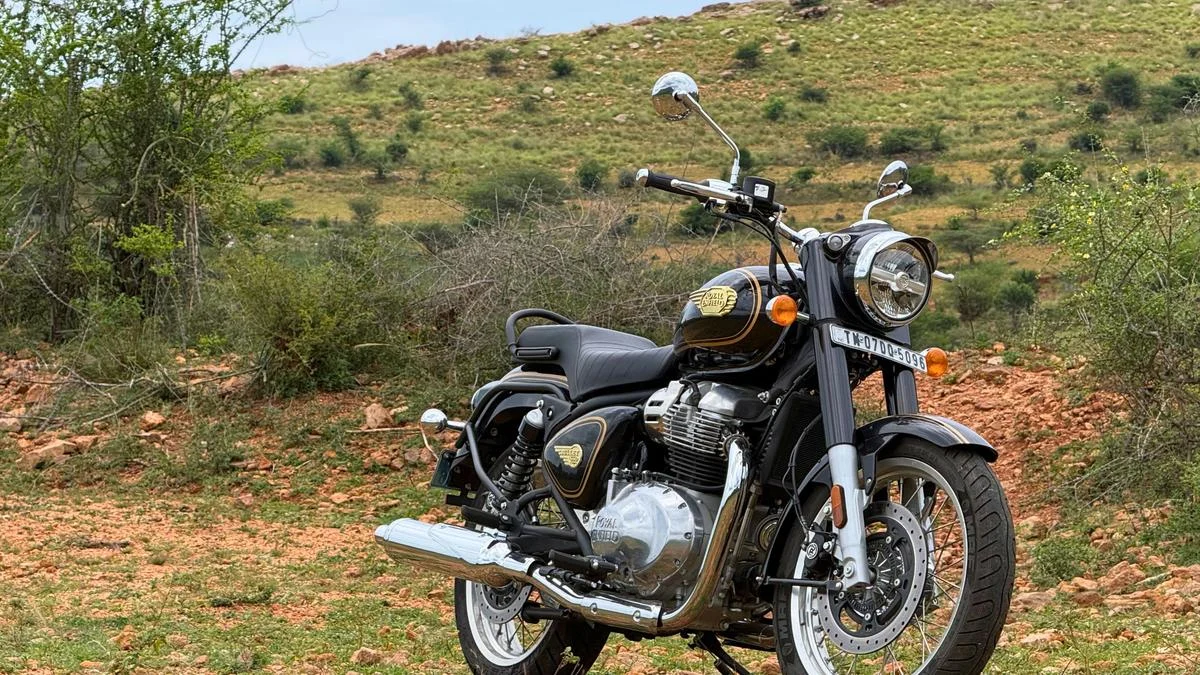
The automotive world often balances on a fine line between progress and preservation. Few names in motorcycling history carry as much weight or evoke as much emotion as the "Bullet." For over nine decades, the Royal Enfield Bullet has stood as a symbol of rugged simplicity and enduring character. However, the motorcycle industry is currently undergoing a massive shift toward refinement and multi-cylinder performance. In response, Royal Enfield has officially bridged the gap between its storied past and its high-performance future with the launch of the Bullet 650.
Priced at ₹3.64 lakh (ex-showroom), the Bullet 650 is not merely a new model; it is the culmination of Royal Enfield’s strategic expansion of its 648cc parallel-twin platform. By transplanting its most sophisticated engine into its most iconic silhouette, the company has created a machine that seeks to satisfy both the nostalgia of the purist and the demands of the modern long-distance tourer.
1. Main Facts: The Intersection of Heritage and Modern Engineering
The Royal Enfield Bullet 650 enters the market as the flagship of the Bullet range, positioned above the 350cc single-cylinder variant that has been the brand’s bread and butter for decades. The core proposition of this motorcycle is "Refined Majesty." It retains the classic aesthetic cues that have defined the Bullet since the mid-20th century while utilizing the mechanical heart that has made the Interceptor and Continental GT 650 global successes.
Key Specifications at a Glance:
- Engine: 648cc, air-oil cooled, parallel-twin SOHC.
- Power Output: 47 PS at 7,250 rpm.
- Torque: 52.3 Nm at 5,650 rpm.
- Transmission: 6-speed constant mesh with a slipper clutch.
- Weight: 243 kg (kerb).
- Chassis: Steel tubular spine frame.
- Braking: 320mm front disc / 300mm rear disc with dual-channel ABS.
- Price: ₹3.64 Lakh (Ex-showroom).
The motorcycle represents a significant leap in performance over its predecessors. Where the traditional 350cc or 500cc Bullets were celebrated for their low-end "thump" and relaxed pace, the 650 variant is designed for high-speed stability and effortless highway cruising.

2. Chronology: The Road to the Twin-Cylinder Bullet
To understand the significance of the Bullet 650, one must look at the timeline of Royal Enfield’s modern era. The Bullet nameplate itself dates back to 1932, making it the oldest motorcycle brand in continuous production. However, the path to the 650cc version was paved by several key milestones:
- 2018: The Birth of the Twins. Royal Enfield launched the Interceptor 650 and Continental GT 650. This marked the introduction of the 648cc parallel-twin engine, a clean-sheet design developed at the company’s UK Technology Centre.
- 2021-2023: Platform Diversification. The engine was successfully integrated into the Super Meteor 650 (a dedicated cruiser) and the Shotgun 650 (a bobber-style machine). This proved the versatility of the frame and motor.
- 2024: The Heritage Rebirth. With the platform’s reliability and popularity established, Royal Enfield turned its attention to its most sacred brand names. The Classic 650 and the Bullet 650 were developed simultaneously to provide a "retro-pure" experience for riders who found the Interceptor too modern or the Super Meteor too low-slung.
The arrival of the Bullet 650 was widely considered "inevitable" by industry analysts. It represents the final step in Royal Enfield’s mission to modernize its entire portfolio while keeping the "Pure Motorcycling" philosophy intact.
3. Supporting Data: Performance, Ergonomics, and Dynamics
The Heart of the Machine: The 648cc Parallel-Twin
The engine is the centerpiece of the Bullet 650. Unlike the long-stroke singles of the past, this parallel-twin uses a 270-degree crankshaft, which provides a smooth power delivery and a distinctive exhaust note. While the "thump" of the old 500cc single is gone, it is replaced by a deep, rhythmic rumble that feels more mature and purposeful.
Data from road tests indicates that the torque curve is exceptionally flat, with nearly 80% of the 52.3 Nm torque available from as low as 2,500 rpm. This allows the rider to hold higher gears at lower speeds, a trait that Bullet loyalists will find familiar, even if the engine configuration has changed.

Ride and Handling Metrics
The Bullet 650 is a substantial machine, weighing in at 243 kg. However, Royal Enfield’s engineers have focused on mass centralization.
- Suspension: The 43mm telescopic front forks offer 120mm of travel, while the twin rear shocks provide 90mm. While these numbers seem modest, the damping is tuned for "plushness," effectively soaking up the corrugated surfaces typical of Indian highways.
- Wheelbase and Stability: With a 1,480mm wheelbase, the bike is built for "straight-line confidence." During high-speed testing (100–120 km/h), the motorcycle remains planted, unaffected by wind blasts or passing heavy vehicles.
- Braking Performance: The inclusion of a 320mm front disc and a 300mm rear disc is a necessary upgrade for a bike of this weight. The dual-channel ABS is calibrated to be non-intrusive, allowing for progressive stopping power without the "wooden" feel found on older ABS systems.
Fuel Efficiency and Range
In real-world conditions, the Bullet 650 shows a variance in fuel economy based on terrain.
- Highway Cruising: 24–26 kmpl.
- Urban/Heavy Traffic: 18–20 kmpl.
- Aggressive/Mountain Riding: ~18 kmpl.
With a fuel tank designed for the long haul, riders can expect a range of approximately 280–320 km between refills, making it a viable tool for transcontinental touring.
4. Official Responses and Design Philosophy
Royal Enfield’s design team has been vocal about the "sanctity" of the Bullet’s aesthetic. In various briefings, the company has emphasized that the Bullet 650 was designed not to be a "new" bike, but an "evolved" one.
Visual Identity
The designers resisted the urge to add modern LED clusters or digital screens that would clash with the bike’s DNA. Instead, they focused on:

- The Casquette: The iconic "Tiger Eye" lamps and the integrated headlamp housing remain the face of the motorcycle.
- The Pinstripes: Each gold pinstripe on the teardrop tank is hand-painted, maintaining a tradition that has become a hallmark of the Chennai factory.
- The Rear Mudguard: The squared-off rear mudguard is a direct nod to the Bullets of the 1950s and 60s, distinguishing it from the rounded fenders of the Classic 650.
Bullet 650 vs. Classic 650: The Internal Rivalry
A common question from the public is how this bike differs from the Classic 650. Royal Enfield officials clarify that while the "bones" are the same, the "soul" differs. The Classic 650 is more ornate, featuring more chrome and a slightly different rider triangle. The Bullet 650 is the "stoic" sibling—more utilitarian in its elegance, featuring a single-piece bench seat compared to the Classic’s split-seat arrangement.
5. Implications: What the Bullet 650 Means for the Market
The launch of the Bullet 650 has several far-reaching implications for Royal Enfield and the global mid-capacity motorcycle segment.
For the Royal Enfield Brand
The Bullet 650 secures Royal Enfield’s dominance in the "Heritage" segment. By offering a 650cc version of its most famous model, the company prevents its existing customer base from migrating to competitors (like Triumph or BSA) when they feel the need to upgrade from a 350cc engine. It "future-proofs" the Bullet nameplate against tightening emissions norms and rising consumer expectations for refinement.
For the Rider
The primary implication for the rider is the elimination of "fatigue-inducing vibrations." For decades, riding a Bullet at 100 kmph was an exercise in endurance due to the vibrations transmitted through the handlebars and footpegs. The 650 platform eliminates this barrier. It democratizes long-distance touring, making it accessible to riders who want the vintage look but refuse to sacrifice modern comfort.

Accessibility Challenges
However, the move to a 650cc twin-cylinder platform brings challenges. The 243kg weight and 800mm seat height mean the bike is no longer as "approachable" for smaller-framed riders as the old 350cc models were. Maneuvering this machine in tight urban parking spots requires significant physical strength, potentially narrowing the target demographic to more experienced or physically capable riders.
Verdict: The Natural Evolution of a Legend
The Royal Enfield Bullet 650 is a masterclass in heritage management. It succeeds because it does not try to be a sportbike or a high-tech adventure tourer. It is, quite simply, a faster, smoother, and more capable version of the motorcycle that defined Indian motorcycling for nearly a century.
While purists may lament the loss of the single-cylinder "thump," the trade-off is a motorcycle that can comfortably cross continents, maintain highway speeds with ease, and start reliably every single morning. For ₹3.64 lakh, it offers a level of character and "metal-heavy" authenticity that is increasingly rare in an industry moving toward plastics and electronics.
The Bullet 650 is not just a motorcycle; it is a statement that tradition does not have to be stagnant. It proves that a legend can grow, evolve, and thrive in the modern age without losing its soul. For those who value the journey as much as the destination, the "Big Bullet" has finally arrived, and it was well worth the wait.
