

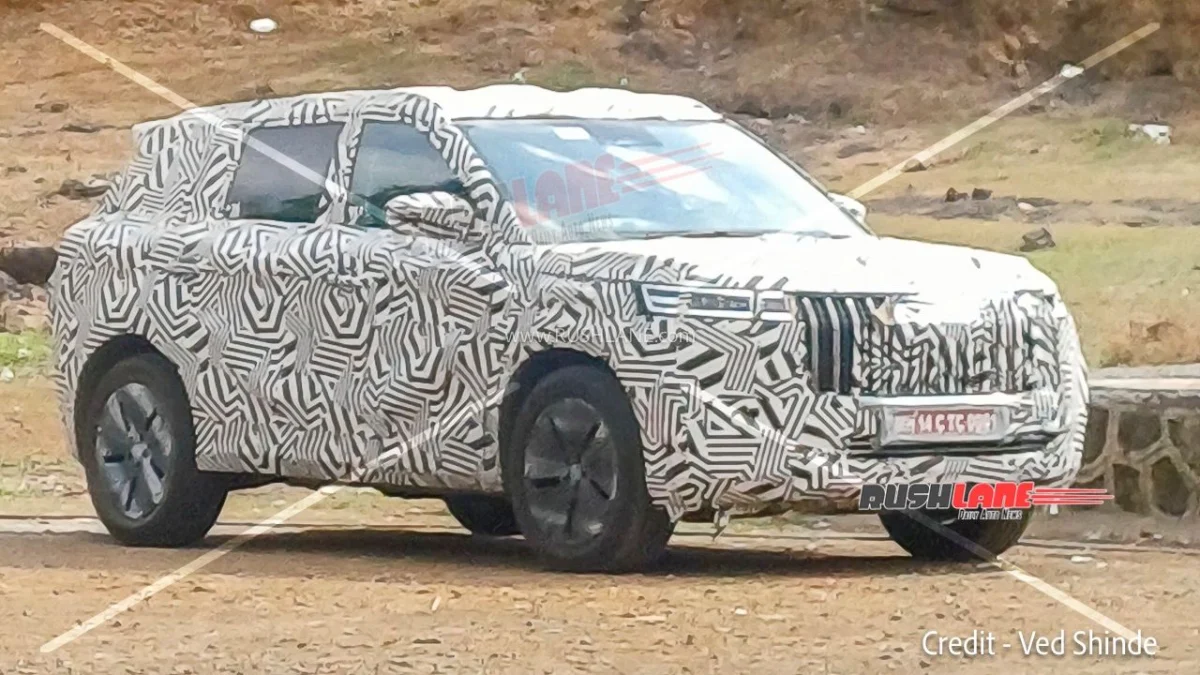
The Indian automotive landscape is on the cusp of a significant transformation as the JSW Group, a multi-billion-dollar conglomerate led by Sajjan Jindal, accelerates its solo journey into the passenger vehicle (PV) segment. While the group’s joint venture with MG Motor India has already made headlines, the emergence of JSW Motors as a distinct, independent entity marks a bold new chapter in India’s "Make in India" narrative.
Recent developments, including the filing of seven distinct trademarks and the sighting of several test mules, suggest that JSW Motors is not merely looking to participate in the market but intends to disrupt it. With a planned launch timeline set for before Diwali 2026, the company is laying the groundwork for a comprehensive portfolio of New Energy Vehicles (NEVs) that could challenge established domestic and international players.
Main Facts: The Seven Pillars of JSW’s Brand Identity
In a strategic move to secure its brand architecture, JSW Motors has officially filed for seven new trademarks. These names offer a window into the company’s product positioning and the diverse segments it intends to occupy.
The Trademarked Names
The seven names currently under review by the Controller General of Patents, Designs, and Trademarks are:
- JSW Combat
- JSW Urbanique
- JSW Dominor
- JSW Adventura
- JSW Eleve
- JSW Sereno
- JSW Cadet
Deciphering the Strategy
Industry analysts suggest these names are carefully curated to evoke specific consumer emotions and cater to distinct lifestyle segments:

- Rugged and Off-road: Combat and Adventura clearly point toward the burgeoning lifestyle SUV segment, currently dominated by the likes of the Mahindra Thar and Maruti Jimny.
- Urban and Premium: Urbanique and Eleve (likely derived from ‘elevate’ or the French ‘élève’) suggest sophisticated, city-centric crossovers or premium electric vehicles (EVs) designed for the modern commuter.
- Comfort and Performance: Sereno hints at a focus on refinement and luxury, possibly for a flagship sedan or a large family SUV, while Dominor carries a more aggressive, performance-oriented connotation.
- Entry-level Accessibility: Cadet could serve as the moniker for an entry-level compact EV, aimed at first-time buyers and urban fleets.
The Independent Path
It is crucial to note that JSW Motors will operate independently of JSW MG Motor India. While the joint venture focuses on scaling the existing MG brand, JSW Motors is a "greenfield" venture that will utilize JSW’s own sales, service, and manufacturing infrastructure. This dual-track strategy allows the JSW Group to capture the premium market through MG while building its own indigenous brand identity from the ground up.
Chronology: The Road to Diwali 2026
The journey of JSW Motors has been a rapid progression of strategic alliances and infrastructure planning.
- November 2023: The JSW Group enters into a strategic joint venture with SAIC Motor to acquire a 35% stake in MG Motor India. This move provides JSW with immediate access to the automotive market and manufacturing expertise.
- Early 2024: Reports emerge of JSW Group seeking partnerships with Chinese automotive giant Chery Automobile. Chery, known for its Jetour and Jaecoo brands, is identified as the primary technology partner for JSW’s independent venture.
- February 2024: JSW Group announces a massive investment of ₹40,000 crore (approx. $4.8 billion) in Odisha for an Integrated Electric Vehicle and EV Battery Manufacturing project. This facility is intended to be the backbone of JSW Motors.
- May – August 2024: Multiple Chery-sourced vehicles, including the Jetour T2 and the Jaecoo J5, are spotted testing on Indian roads with heavy camouflage. These sightings confirm that localization and adaptation for Indian conditions are underway.
- Late 2024: JSW Motors officially files for the seven trademarks, signaling that the product finalization stage is nearing completion.
- Projected Diwali 2026: The official market debut of the first JSW Motors vehicle is scheduled to take place, marking the group’s transition from a steel and power giant to a full-scale mobility provider.
Supporting Data: Product Synergy and Market Potential
To understand the likely specifications of JSW’s upcoming cars, one must look at the Chery global portfolio, which JSW is leveraging through its technology licensing agreement.
The "Combat/Adventura": Jetour T2
The Jetour T2 (known as the Traveler in some markets) is widely expected to be the first launch. It is a boxy, rugged SUV that aligns perfectly with the "Combat" or "Adventura" names.
- Powertrain: Internationally, it features a Plug-in Hybrid (PHEV) system combining a 1.5-liter turbocharged petrol engine with dual electric motors.
- Range: It offers an electric-only range of approximately 100-120 km and a total combined range exceeding 1,000 km.
- Capability: Equipped with an intelligent 4WD system, it is designed to compete with the Mahindra Scorpio-N and Tata Safari, but with a "green" twist.
The "Urbanique": iCar V23
The iCar V23, a product of Chery’s dedicated EV brand, has also been seen testing.

- Design: A compact, retro-modern electric SUV with proportions reminiscent of a classic off-roader.
- Dimensions: Roughly 4.2 meters in length, making it a direct competitor to the upcoming Hyundai Creta EV and the Tata Curvv.ev.
- Battery: Expected to offer 400 km to 500 km of range, catering to the "Urbanique" positioning.
The Indian Market Context
India’s SUV segment now accounts for over 50% of total passenger vehicle sales. Furthermore, the Indian government’s focus on the Faster Adoption and Manufacturing of (Hybrid &) Electric Vehicles (FAME) scheme and the Production Linked Incentive (PLI) scheme provides a tailwind for JSW’s NEV-only strategy. By focusing on PHEVs and EVs, JSW avoids the baggage of legacy internal combustion engine (ICE) manufacturing.
Official Responses and Strategic Vision
While JSW Motors has maintained a level of "stealth mode" regarding specific product specs, the group’s leadership has been vocal about the broader vision.
Sajjan Jindal, Chairman of JSW Group, has previously stated that the company aims to bring a "Maruti-like movement" to the EV sector. He emphasizes that just as Maruti Suzuki revolutionized the Indian market in the 1980s by making cars accessible to the middle class, JSW intends to democratize high-end EV and PHEV technology for the Indian masses.
Company Stance on Localization:
Internal sources at JSW indicate a "localization-first" approach. While the initial batches of the flagship SUV might arrive as Completely Knocked Down (CKD) kits to meet the 2026 deadline, the long-term plan involves 80-90% localization. This includes the localized assembly of battery packs and electric motors at the Odisha mega-plant.
On the Chery Partnership:
The collaboration with Chery is described as a "technological synergy." JSW is not merely rebadging cars; they are reportedly working on "Indianizing" the suspension tuning, air conditioning systems (to handle extreme heat), and infotainment interfaces to suit local preferences.

Implications: A New Era for the Indian Auto Industry
The entry of JSW Motors as an independent player has several far-reaching implications for the industry:
1. The Rise of the "China-Plus-One" Manufacturing Strategy
By partnering with Chery, JSW is bringing world-class Chinese EV technology to India under an Indian brand umbrella. This allows the group to bypass some of the geopolitical sensitivities associated with direct Chinese investments while ensuring Indian consumers get access to cutting-edge tech.
2. Disruption of the SUV Status Quo
If JSW can successfully launch the Jetour T2-based PHEV (Combat/Adventura) at a competitive price point, it could disrupt the mid-to-large SUV segment. Currently, Indian buyers must choose between pure ICE (XUV700/Safari) or pure EV. A long-range PHEV offers the "best of both worlds," eliminating range anxiety while providing electric efficiency for city commutes.
3. Pressure on Domestic Giants
Tata Motors and Mahindra & Mahindra have enjoyed a dominant run in the SUV and EV space. The arrival of a well-capitalized Indian conglomerate like JSW, with deep pockets and a massive industrial footprint, will force these incumbents to accelerate their own product cycles and innovation.
4. Infrastructure and Ecosystem Growth
JSW’s commitment to an independent sales and service network means more jobs and a wider charging infrastructure. As a steel producer, JSW also has a vested interest in the materials science side of automotive manufacturing, potentially leading to lighter, more efficient vehicle structures produced right here in India.

5. Consumer Choice
For the Indian consumer, the "Diwali 2026" timeline represents the arrival of more variety. Whether it is a rugged "Combat" for weekend trails or a sophisticated "Urbanique" for the office run, JSW Motors is positioning itself to be a "one-stop shop" for the next generation of Indian car buyers.
In conclusion, the trademarking of these seven names is more than a legal formality; it is the first public sketch of a multi-segment offensive. As JSW Motors moves from trademarks to test tracks, the Indian automotive industry prepares for a shake-up that could redefine the meaning of a "homegrown" car company.
