

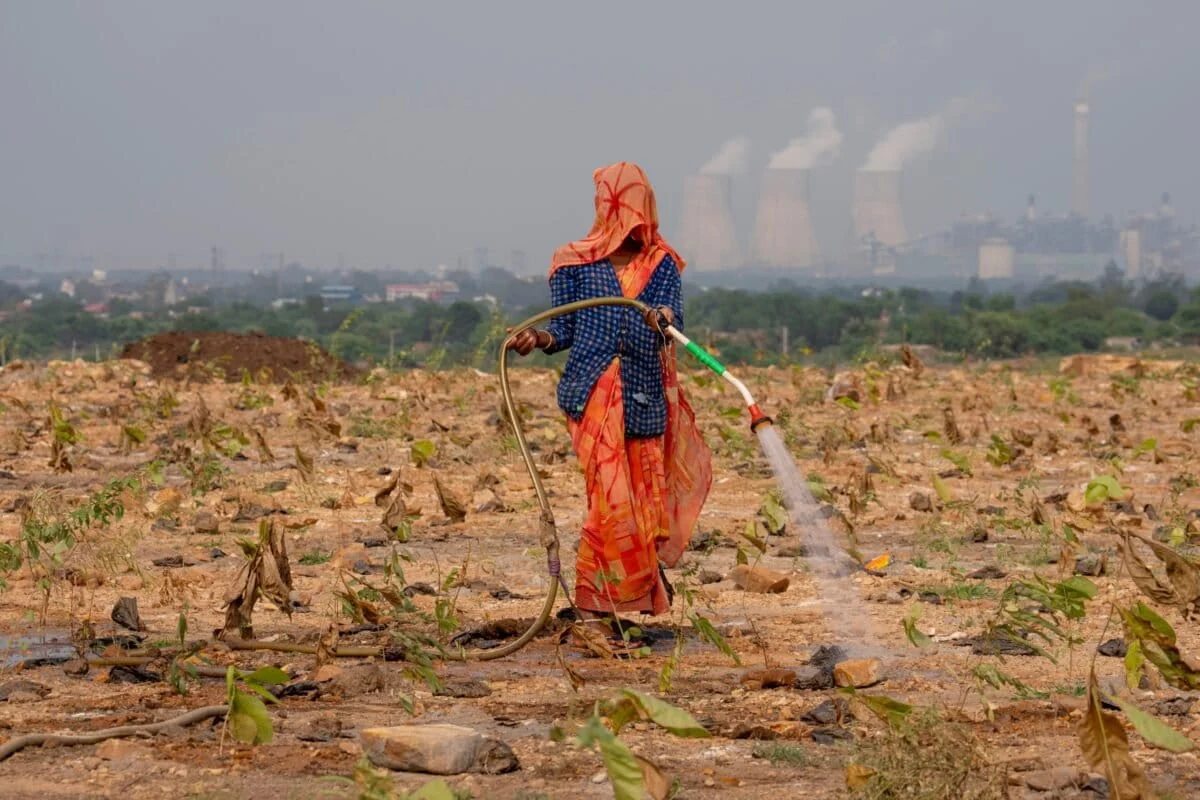
NEW DELHI — In a scathing indictment of India’s flagship afforestation program, the Comptroller and Auditor General (CAG) of India has released a comprehensive audit report detailing the systemic collapse of the National Mission for a Green India (GIM). The report, submitted to Parliament on August 12, reveals a stark disparity between the government’s ambitious climate rhetoric and the ground reality of its implementation. According to the audit, the mission has been plagued by chronic underutilization of funds, fundamental planning flaws, and a near-total failure to meet its ecological targets.
The Green India Mission, one of the eight pillars of the National Action Plan on Climate Change (NAPCC), was conceived to restore India’s thinning forest cover and enhance ecosystem services. However, the CAG’s findings suggest that the mission’s progress remains "negligible," with only 5% of the targeted area actually seeing afforestation interventions.
Main Facts: A Mission in Peril
The CAG audit, which spanned 15 states and one Union Territory over the period of 2015 to 2025, highlights a catastrophic gap in performance. Of the 2.8 million hectares (mha) targeted for afforestation by 2018, the mission managed to cover only approximately 0.15 million hectares. This represents a staggering 95% shortfall in achieving its primary land-use objective.
The audit identifies "fundamental weaknesses in planning and design" as the root cause of the failure. Rather than restoring degraded landscapes or protecting ecologically sensitive zones, the mission’s activities were largely confined to "low-vulnerability sites." Perhaps most damning is the revelation that ecologically critical landscapes—including grasslands, ravines, and scrub forests—were systematically ignored, despite being explicitly identified in previous studies and the mission’s own guidelines.

Furthermore, the audit uncovered significant financial irregularities and a lack of transparency. In Mizoram, for instance, the CAG flagged a potential misappropriation of ₹91 million, where funds were withdrawn without any documentary evidence of afforestation work being performed.
Chronology: From Ambitious Vision to Implementation Gridlock
The trajectory of the Green India Mission reflects a decade of shifting targets and diminishing returns:
- 2011: The Inception. The Mission was launched with the monumental goal of protecting, restoring, and enhancing India’s diminishing forest cover. The original objective was to influence 10 million hectares of land over a ten-year period, aiming to increase forest/tree cover by 5 million hectares and improve the quality of an additional 5 million hectares.
- 2014: Refinement of Targets. The mission’s scope was adjusted to include a specific target of afforestation on 2.8 million hectares of land by 2018. This was intended to accelerate India’s contribution to its international climate commitments.
- 2015–2025: The Audit Period. This decade saw the mission struggle with a lack of institutional coordination. Despite the high-level backing of the NAPCC, the mission failed to secure the necessary "convergence" funding from other government schemes.
- August 12 (Current Year): The CAG Report. The submission of the audit to Parliament marks a turning point, providing the first comprehensive, state-by-state breakdown of the mission’s failure to achieve its 2018 and subsequent targets.
Supporting Data: The Financial and Ecological Deficit
The failure of the Green India Mission is not merely a matter of missed deadlines; it is a story of financial stagnation and ecological mismanagement.
The Funding Gap
The government originally estimated a requirement of ₹130 billion for the mission. To meet this, a "convergence" model was designed:
- ₹40 billion was expected from the Mahatma Gandhi National Rural Employment Guarantee Act (MGNREGA).
- ₹6 billion from the National Afforestation Policy.
- ₹60 billion from the Compensatory Afforestation Fund Management and Planning Authority (CAMPA).
However, the CAG found that neither national nor state-level institutions could effectively navigate the bureaucracy required for this convergence. Consequently, the central government’s direct contribution amounted to only ₹11.49 billion over the entire ten-year audit period—less than 9% of the total projected requirement. This lack of capital trickled down to the district level, resulting in the paralysis of local forest authorities.

The "Wrong Tree, Wrong Place" Syndrome
Ecologists have long criticized the "target-driven" approach to afforestation, which often prioritizes the number of saplings planted over their survival or ecological suitability. The CAG report validates these concerns. In Odisha, afforestation was inexplicably carried out in areas that already had a dense canopy cover (40% to 70%), rendering the intervention redundant and wasteful.
In Uttarakhand’s Chakrata division, the audit found a "ghost plantation." While records claimed 2,000 saplings had been planted at the Dabala Sagwa Tok site, auditors found only 30 to 40 saplings on the ground, none of which had survived. This pattern of misreporting heights of saplings and inflating area coverage was found across several states.
Neglect of Diverse Ecosystems
The mission’s failure to address "non-forest" ecosystems is particularly glaring. While the scheme aimed to restore 1.4 million hectares of varied landscapes, there was a 97.57% shortfall in this specific sub-target.
- Scrublands: Despite eight states possessing over 2.11 million hectares of scrubland, no restoration targets were set for these regions.
- Grasslands and Ravines: These vital carbon sinks and biodiversity hubs were almost entirely excluded from state-level plans, as authorities focused on easier, low-impact sites to meet numerical quotas.
Official Responses and Expert Commentary
While the Ministry of Environment, Forest and Climate Change has yet to release a formal, comprehensive rebuttal to the CAG’s findings, the report itself contains recommendations that the Ministry has been urged to adopt. The CAG has called for "test-checks" to verify site suitability and a mandatory "bottom-up planning" approach that involves Gram Sabhas (village councils).
Pooja Choksi, an ecologist and founder of Ficus Research Consulting, described the report as a "timely wake-up call." She emphasized that the current model of afforestation is fundamentally flawed.

"It is an indication that we need to do things radically differently if we want to achieve our land use and forestry-related targets," Choksi stated. "We need to ensure the longevity of these plantation efforts in an ecologically and socially meaningful way. If district and sub-district expenditure data were made available to the public, we could have much more accurate independent evaluations. The lack of transparency and poor data quality have hindered these schemes from being peer-reviewed."
The CAG report echoed this sentiment, noting that only 54% of village-level microplans had been approved by their respective Gram Sabhas, indicating a breakdown in the community-led conservation model that the GIM was supposed to champion.
Implications: A Threat to India’s Climate Commitments
The failure of the Green India Mission has profound implications for India’s international standing and its domestic climate resilience.
Carbon Sink Targets in Jeopardy
Under the Paris Agreement and its subsequent updates, India committed to creating an additional carbon sink of 2.5 to 3 billion tonnes of CO2 equivalent through additional forest and tree cover by 2030. More recently, the government aimed for a sink capable of absorbing 3.5 to 4 billion tonnes by 2035.
However, the CAG audit reveals that between 2015 and 2025, almost no states (with the notable exceptions of Madhya Pradesh and Chhattisgarh) even conducted assessments to measure carbon sequestration. Without accurate data on how much carbon these plantations are actually absorbing, India’s claims regarding its climate goals remain scientifically unverifiable.

Economic Loss and Misappropriation
The "wrong tree in the wrong place" approach is not just an ecological error; it is a fiscal one. Previous investigations have suggested that wasteful plantations cost states dozens of crores of rupees. The Mizoram case highlighted in the CAG report—where ₹91 million vanished without a paper trail—suggests that without functional forest district authorities and rigorous oversight, the mission has become a high-risk area for the misappropriation of public funds.
The Path Forward
The CAG’s conclusion is clear: the Ministry must ensure that "bottom-up planning" is not just a buzzword but a mandatory operational requirement. This involves communicating physical targets and area suitability from the village level up to the state level, rather than imposing top-down mandates that ignore local biogeography.
For India to meet its 2030 and 2035 climate targets, the Green India Mission requires a total overhaul. This includes a transition from "plantation" (simply putting trees in the ground) to "restoration" (reviving entire ecosystems). As the audit suggests, unless there is a radical shift toward transparency, scientific site selection, and genuine community involvement, the Mission risks becoming a historical footnote of missed opportunities in the global fight against climate change.
