

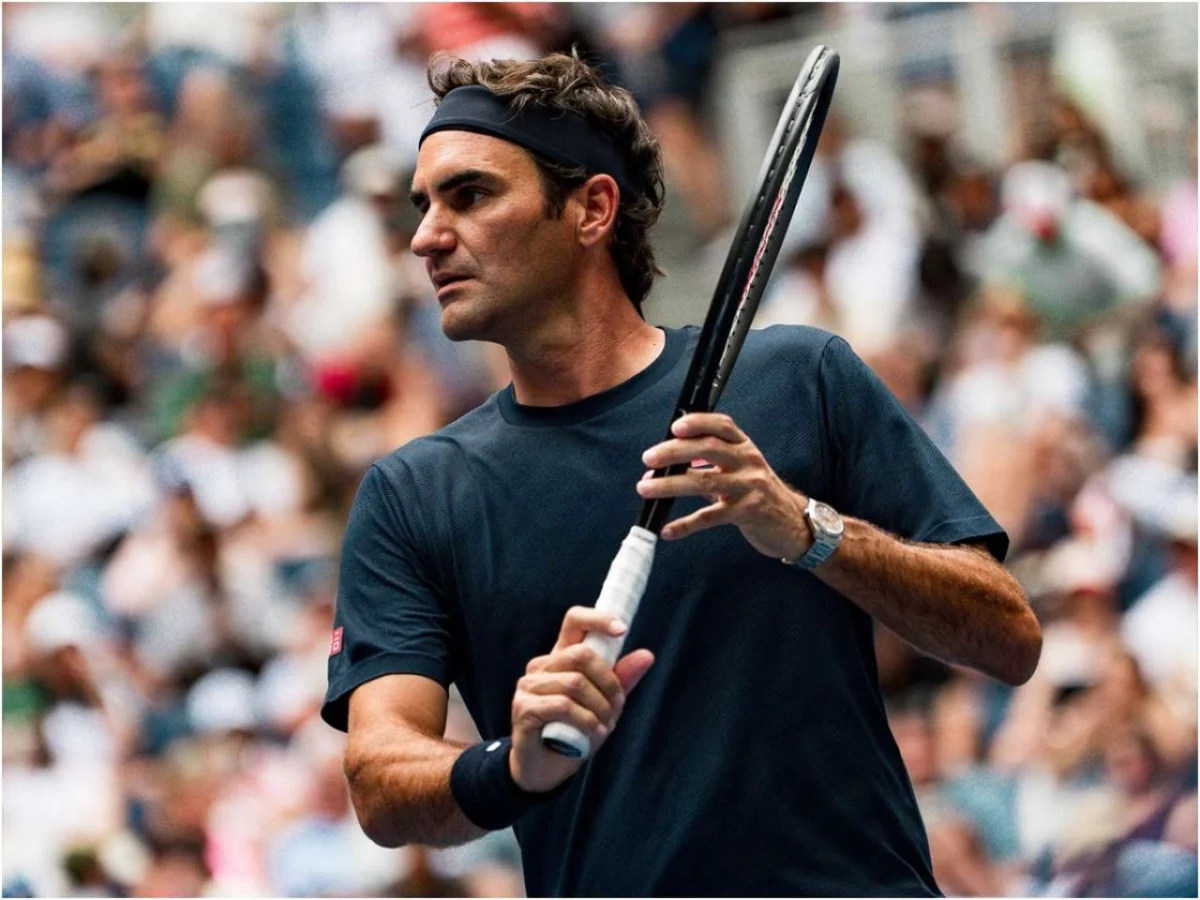
New York, USA – The mere mention of Roger Federer’s name in connection with a return to New York has, for weeks, sent ripples of excitement and fervent speculation through the global tennis community. Four years after his last professional match, the sight of the Swiss maestro back on American soil for an exhibition event ignited a potent mix of nostalgia and fervent hope among millions of fans: was the ‘Maestro’ finally contemplating an improbable return to the sport he so elegantly dominated? However, in a candid and definitive statement, Federer himself has firmly extinguished these flickering embers of hope, unequivocally ruling out a professional comeback.
The tennis icon, whose unparalleled grace and artistry defined an era, made it clear that while his presence at an exhibition match in New York this Sunday is a joyous occasion, it bears no resemblance to a return to the grueling demands of the ATP Tour. His body, he explained, is "done" with the rigors of professional competition, and his current life, filled with new priorities, leaves no room for the immense commitment required to compete at the elite level.
The Initial Spark of Hope
The buzz began to build weeks ago when news broke of Federer’s planned appearance in New York. For many, New York, specifically the US Open, holds a special place in Federer’s storied career, having captured five consecutive titles there from 2004 to 2008. The city’s electric atmosphere and the grand stage of Arthur Ashe Stadium provided the perfect backdrop for some of his most memorable triumphs. His return, even for a non-competitive event, was perceived by many as a symbolic gesture, a testing of the waters, or perhaps, a prelude to something more. Social media platforms buzzed with discussions, sports columns speculated, and fan forums erupted with theories ranging from a full-blown return to a selective schedule of Grand Slams. The tennis world, it seemed, was collectively holding its breath, clinging to the romantic notion of one last dance from a legend.
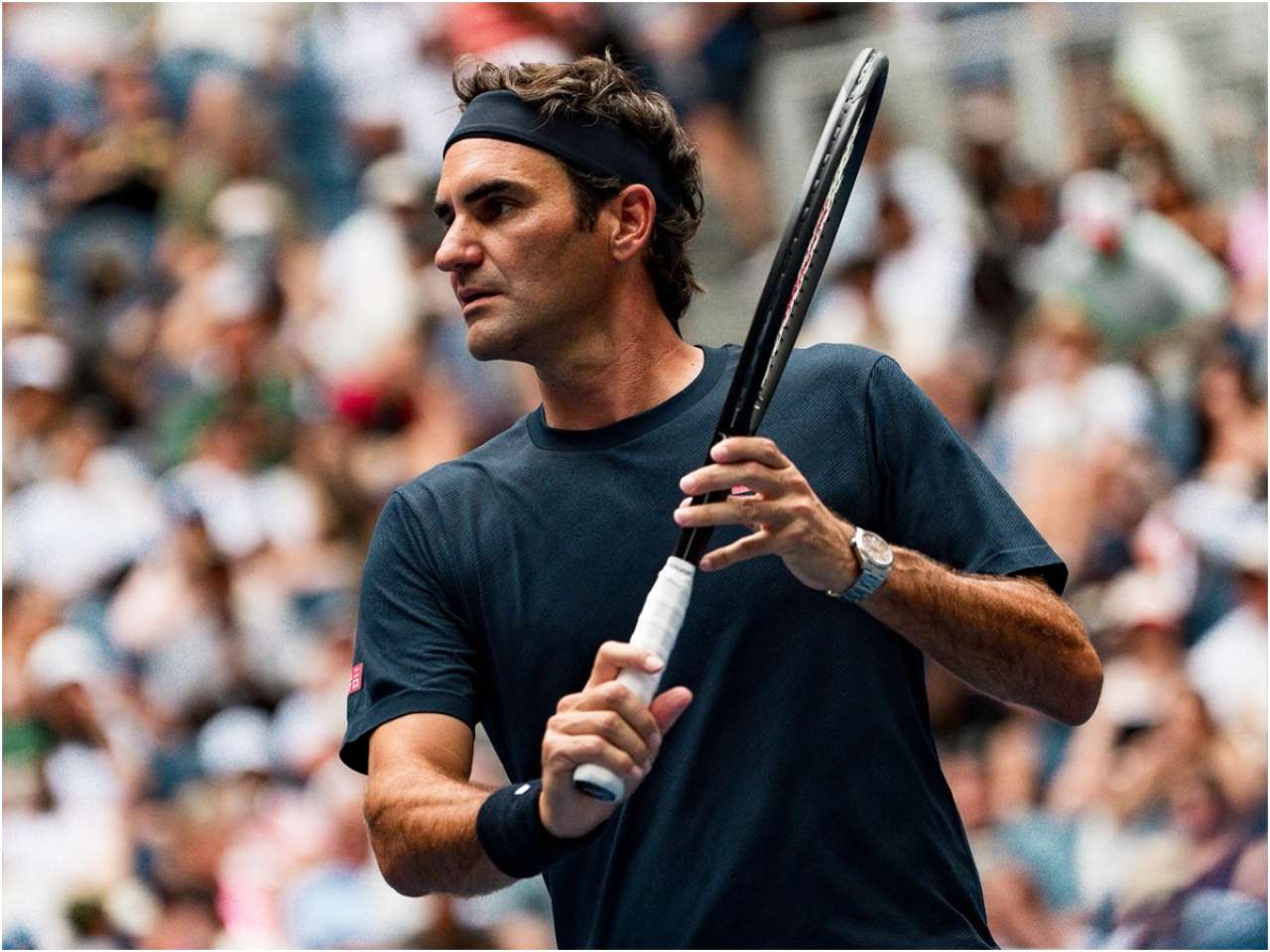
This anticipation was further fueled by recent successful comebacks in sports, albeit in different disciplines or from less severe absences. Fans, ever hopeful, imagined a scenario where Federer, after a prolonged period of rest and rehabilitation, might surprise everyone, much like other athletes who defied age and injury. The thought of seeing his balletic movement, his effortless one-handed backhand, and his laser-sharp serve once more in a competitive setting was an intoxicating prospect.
Federer’s Unequivocal Denial
During a highly anticipated press conference, the question that had been on everyone’s mind was finally posed. With his characteristic calm and thoughtful demeanor, Federer addressed the speculation head-on. "No, not at all," he replied, leaving no room for ambiguity. He expressed gratitude for the question, acknowledging the widespread curiosity it represented. "Thanks for asking. I wasn’t sure if the question was going to get asked, but I’m happy you did, so I can clarify in case anybody [was wondering] tonight."
He then proceeded to lay out the practical and physical realities that firmly shut the door on any professional comeback. "Anyway, you have to enter the doping pool. There are way too many obstacles. I’m too busy. I’m barely finding time to play any exhos, so imagine a tour, and the body is done."
)
His candor was refreshing, providing a clear and unvarnished perspective from the athlete himself. The mention of the "doping pool" highlights a significant, often overlooked, logistical hurdle for retired athletes contemplating a return. Re-entering the WADA (World Anti-Doping Agency) testing pool requires a minimum of six months of continuous testing before an athlete is eligible to compete, ensuring fairness and integrity. This commitment alone, let alone the physical and mental preparation, is a substantial undertaking.
Furthermore, his declaration of being "too busy" underscores a fundamental shift in his life priorities. Post-retirement, Federer has embraced family life with his wife Mirka and their four children, engaged in extensive philanthropic work through the Roger Federer Foundation, and fulfilled numerous ambassadorial and endorsement commitments. These are not trivial pursuits; they represent a new, fulfilling chapter that demands his time and attention. The phrase "the body is done" resonated most deeply, serving as a stark reminder of the immense physical toll professional tennis takes, even on a supremely gifted athlete like Federer. It’s a testament to the brutal reality that even the greatest of champions must eventually yield to the inexorable march of time and physical wear.
The Reality of an Exhibition
Federer’s upcoming appearance in New York is explicitly an exhibition match, a format distinctly different from the high-stakes environment of professional tour events. Exhibition matches are designed for entertainment, often featuring relaxed rules, humorous exchanges, and a focus on showcasing the players’ skills in a less competitive atmosphere. They serve as an opportunity for fans to see their idols up close, often for charitable causes or promotional events, without the intense pressure of rankings, prize money, or Grand Slam glory.

His participation in such an event is a continuation of his post-retirement engagement with the sport, allowing him to stay connected to his fanbase and the tennis world without the punishing schedule and physical demands of the tour. It’s a way for him to enjoy the game he loves, on his own terms, and to share that joy with appreciative audiences. This distinction is crucial for fans to understand, as it separates the nostalgic thrill of seeing him play from the unrealistic expectation of a full-fledged return to professional competition.
A Journey Through Time: Federer’s Retirement and Beyond
Roger Federer’s professional career, spanning over two decades, was a masterclass in sustained excellence, elegance, and sportsmanship. His retirement in September 2022 marked the end of an extraordinary era, leaving an indelible void in the sport.
The Emotional Farewell of 2022
Federer announced his retirement via a heartfelt letter posted on social media, citing his body’s struggles with injuries and the need to listen to its signals. His final professional appearance was at the Laver Cup in London, an emotional team competition he co-founded. Paired with his great rival and friend Rafael Nadal in a doubles match, the event became a poignant farewell, with tears flowing freely from both players, their teammates, and fans worldwide. It was a moment that transcended sport, showcasing the deep camaraderie and mutual respect that characterized the ‘Big Three’ era. This public farewell allowed him to bow out gracefully, surrounded by peers and adoring fans, providing a sense of closure that many athletes don’t get. It was a clear demarcation line, signaling the end of his competitive chapter.
)
Life After Professional Tennis
Since stepping away from the professional circuit, Federer has embraced a multi-faceted life that extends far beyond the confines of a tennis court. His primary focus has shifted to his family, enjoying quality time with his wife, Mirka, and their four children, twin girls Myla Rose and Charlene Riva, and twin boys Leo and Lennart. The demanding travel schedule of the ATP Tour often kept him away from home for extended periods, a sacrifice he willingly made for his career. Now, he cherishes the opportunity to be more present in their lives.
Beyond family, Federer remains a highly sought-after figure in the world of sports and luxury. His portfolio of endorsement deals is extensive, encompassing brands like Rolex, Uniqlo, On Running, and Mercedes-Benz, among others. He actively participates in promotional campaigns and brand ambassador roles, leveraging his global appeal and impeccable image. His entrepreneurial spirit is also evident, particularly with his involvement in the Swiss running shoe company On, where he holds a significant stake and contributes to product development.
Philanthropy continues to be a cornerstone of his post-retirement activities. The Roger Federer Foundation, established in 2006, is dedicated to providing educational opportunities for children in Southern Africa and Switzerland. He remains deeply involved in its initiatives, traveling to various projects and raising awareness and funds for early childhood education. This commitment reflects his desire to give back and make a lasting positive impact beyond his achievements on the court.
)
He has also made occasional appearances at tennis events in a non-playing capacity, often as a guest of honor or a commentator, demonstrating his enduring love for the sport and his desire to stay connected to its evolution. These appearances, however, are carefully selected and do not involve the physical strain or competitive pressure of playing.
The Road to the New York Exhibition
The exhibition match in New York, while fueling speculation, is in line with Federer’s current post-retirement persona. These events allow him to engage with his fanbase, revisit iconic venues, and participate in the tennis ecosystem without the demanding training regimen and travel schedule of a professional player. They are celebrations of his legacy, opportunities for fans to witness his artistry in a relaxed setting, and often serve charitable purposes. His decision to participate underscores his enduring connection to the sport and his appreciation for the fans who have supported him throughout his illustrious career.
The Unparalleled Legacy: A Look at Federer’s Illustrious Career
Roger Federer’s place in the pantheon of sporting greats is unequivocally secure. His career statistics merely scratch the surface of his profound impact on tennis, transcending mere numbers to define an era with his elegance, sportsmanship, and relentless pursuit of excellence.
)
Grand Slam Dominance and Record-Breaking Achievements
Federer’s trophy cabinet gleams with 20 Grand Slam singles titles, a remarkable feat that, at the time of his retirement, stood as a men’s record. This collection includes an unprecedented eight Wimbledon titles, solidifying his status as the undisputed king of grass. His mastery extended to other surfaces as well, with six Australian Open titles, five US Open titles, and a solitary, yet highly coveted, French Open title. The completion of the career Grand Slam in 2009, when he finally conquered Roland Garros, was a testament to his versatility and determination, silencing any critics who doubted his clay-court prowess.
Beyond the Grand Slams, Federer spent a staggering 310 weeks as World No. 1, including an astonishing record of 237 consecutive weeks at the summit of men’s tennis. This sustained period of dominance is unparalleled, showcasing his incredible consistency and ability to maintain peak performance against a formidable generation of rivals. His 103 ATP singles titles place him second only to Jimmy Connors in the Open Era, a testament to his longevity and competitive fire.
His achievements weren’t limited to singles. In 2008, he partnered with his compatriot Stan Wawrinka to win an Olympic doubles gold medal at the Beijing Games, adding another prestigious accolade to his already glittering resume. His record of reaching 10 consecutive Grand Slam finals and 23 consecutive Grand Slam semi-finals further underscores his incredible consistency and mental fortitude.
)
The Physical Gauntlet of the ATP Tour
Federer’s recent statements about his body being "done" highlight the immense physical toll exacted by professional tennis. The ATP Tour is a relentless calendar of tournaments spanning the globe, demanding peak physical condition, unwavering mental resilience, and constant travel. Players compete in different time zones, climates, and on various surfaces, each requiring specific adaptations and strains on the body.
A typical professional season involves competing in 15-20 tournaments, often playing multiple matches in a week. This includes best-of-five-set matches at Grand Slams, which can last for several hours, pushing the body to its absolute limits. The cumulative effect of thousands of hours of training, match play, and travel leads to significant wear and tear on joints, muscles, and ligaments. Injuries, particularly to the knees, back, and shoulders, are a constant threat and often dictate the longevity of a player’s career.
For an athlete approaching 40, as Federer was in his final competitive years, the recovery time between matches and tournaments lengthens significantly. The ability to bounce back, train intensely, and maintain the explosive power and agility required at the elite level becomes increasingly challenging. Even with the best medical care and conditioning, the body eventually sends signals that it can no longer sustain the demands.
)
Why a Comeback is an Uphill Battle
For these reasons, a professional comeback for Federer, especially four years post-retirement and with a history of knee surgeries in his later career, would be an almost insurmountable challenge.
- Physical Demands: His body, as he stated, is "done." The level of fitness required to compete against the current top players, who are younger, faster, and incredibly powerful, is astronomical. Even a small percentage drop in physical capability is enough to be exposed at the elite level.
- Match Rhythm and Intensity: Re-acquiring match rhythm, the unique timing and intensity of competitive play, after such a long break is incredibly difficult. Exhibition matches, while enjoyable, do not replicate the pressure, speed, and precision demanded by ATP Tour events.
- Injury Risk: Pushing a body that has already signaled its limits carries a high risk of re-injury, potentially leading to more serious and long-term health issues.
- Doping Pool Requirements: The mandatory six-month re-entry into the WADA doping pool is a significant commitment, requiring constant availability for testing, which adds a logistical burden that conflicts with a "busy" post-retirement life.
- Mental Fortitude: While Federer’s mental strength is legendary, the mental grind of constant competition, travel, and the pressure to perform at an age where most players have long retired, would be immense.
The "Big Three" Era and its Enduring Impact
Federer’s career is intrinsically linked to the "Big Three" era, a golden age of men’s tennis dominated by himself, Rafael Nadal, and Novak Djokovic. Their unparalleled rivalry, marked by mutual respect and an insatiable drive to push each other to greater heights, captivated audiences for nearly two decades. They consistently pushed the boundaries of the sport, redefining what was possible in terms of longevity, Grand Slam success, and overall dominance.
The end of Federer’s professional career marked the beginning of the end for this extraordinary era. While Nadal and Djokovic continue to compete, their active presence diminishes with each passing year, making Federer’s definitive retirement announcement all the more significant. It’s a poignant reminder that even the most enduring dynasties eventually conclude, paving the way for new generations of talent to emerge.
)
The Man Himself: Deconstructing Federer’s Statement
Roger Federer’s press conference was more than just an announcement; it was a moment of clarity for millions, delivered with his characteristic grace and pragmatism.
The Press Conference Setting
The setting of the press conference itself was significant. It was likely a formal event, perhaps tied to the exhibition match or a sponsor engagement, providing a platform for direct interaction with the media. Such events are carefully managed, but they also offer a rare opportunity for unfiltered dialogue with a legend. The question about his potential return was almost certainly anticipated by Federer and his team, given the fever pitch of speculation. His preparedness to address it directly, rather than deflecting, speaks to his respect for the fans and the media, wanting to put the rumors to rest definitively.
His exact words – "No, not at all. Thanks for asking. I wasn’t sure if the question was going to get asked, but I’m happy you did, so I can clarify in case anybody tonight." – perfectly encapsulate his approach. It’s polite, appreciative, yet firm. He understands the longing of the fans but also the necessity of setting realistic expectations.
)
The detailed reasoning he provided – the doping pool, his busy schedule, and his body being "done" – was crucial. It wasn’t a vague "I’m retired"; it was a comprehensive explanation addressing both the logistical and physical impossibilities of a comeback. This level of detail offers fans a deeper understanding and helps them process the finality of his decision.
Reaction from the Tennis World
The immediate reaction from the tennis world, though not explicitly quoted in the original article, can be broadly inferred. For seasoned journalists and analysts, Federer’s statement likely came as no surprise. Most understood the immense hurdles a comeback would entail. However, for a vast segment of the fanbase, particularly those who grew up watching him dominate, it was a bittersweet moment. There’s a collective sigh of acceptance, tinged with sadness, as the last vestiges of hope for a competitive return vanish.
Social media would have seen an outpouring of reactions:
)
- Acceptance and Gratitude: Many fans would express understanding and gratitude for his honesty, acknowledging the incredible career he had. "It’s sad, but we knew it was coming. Thank you for everything, Roger!"
- Nostalgia: A renewed wave of nostalgia for his playing days, with fans sharing favorite highlights and memories.
- Focus on Legacy: Discussions would shift from potential comebacks to celebrating his enduring legacy and impact on the sport.
- Respect for his Decision: General consensus would be one of respect for his choice to prioritize his health and family.
Fellow players, coaches, and commentators would likely echo these sentiments, praising his career and supporting his decision to remain retired. There would be no pressure or expectation from within the professional tennis community for him to return, as they understand the physical demands better than anyone.
The Future of Federer and the Sport He Left Behind
Roger Federer’s definitive "no" to a professional comeback carries significant implications, not just for his own future but also for the evolving landscape of professional tennis.
What This Means for Fans
For the millions of fans worldwide who have adored Roger Federer, this statement provides a crucial sense of closure. While the dream of seeing him hoist another Grand Slam trophy is now definitively over, it allows them to fully appreciate his post-retirement appearances for what they are: celebrations of a legendary career, rather than tantalizing hints of a return. Fans can now embrace his role as an ambassador, a family man, and a philanthropist, knowing that his contributions to the sport and society will continue in different forms. It’s a bittersweet acceptance, acknowledging that while the competitive chapter has closed, the legacy and inspiration he provides will endure. They can cherish the memories, knowing they witnessed one of the greatest athletes in history.
)
The Evolution of Tennis Post-Federer
Federer’s retirement, now fully cemented by his recent statements, signifies a definitive shift in men’s tennis. The "Big Three" era, which defined the sport for nearly two decades, is slowly but surely fading into history. While Novak Djokovic continues to break records and Rafael Nadal battles injuries, the departure of Federer removes one of its foundational pillars. This opens the door more widely for the "Next Gen" – players like Carlos Alcaraz, Jannik Sinner, Holger Rune, and Daniil Medvedev – to truly establish their dominance and forge new rivalries.
The sport will continue to evolve, with new styles of play, new personalities, and new narratives emerging. Federer’s influence, however, will undoubtedly remain. His elegant, all-court game, his impeccable sportsmanship, and his global appeal set a benchmark for future generations. Young players will continue to study his technique and aspire to his level of artistry and mental fortitude.
Federer’s Role as an Icon and Ambassador
Even without competing, Roger Federer’s connection to tennis will remain profound. He is, and will continue to be, a global icon and one of the sport’s most influential ambassadors. His impeccable image, articulate communication, and deep understanding of the game make him an ideal figure to promote tennis worldwide.
)
His future roles could include:
- Continued Exhibition Play: Participating in select exhibition matches and charity events, bringing joy to fans and raising funds for good causes.
- Mentorship: Potentially mentoring younger players, sharing his vast experience and insights.
- Commentary/Analysis: Offering expert analysis during major tournaments, though his busy schedule might limit this.
- Ambassadorial Roles: Continuing to work with the ATP, Grand Slams, or the ITF to promote the growth of tennis, particularly in developing regions.
- Business Ventures: Further expanding his entrepreneurial activities within sports or other sectors, leveraging his brand.
- Philanthropy: Dedicating more time and resources to the Roger Federer Foundation, making a lasting social impact.
In conclusion, Roger Federer’s return to New York for an exhibition match was a momentary flicker of hope for a professional comeback, swiftly and definitively put out by the legend himself. His candid explanation underscores the immense demands of professional tennis and his embrace of a fulfilling post-retirement life. While fans must now fully accept that his competitive days are behind him, his unparalleled legacy, enduring grace, and continued presence as a global ambassador will ensure his influence on the sport of tennis remains as powerful as ever. The Maestro has played his final professional note, but his melody will resonate for generations to come.
