

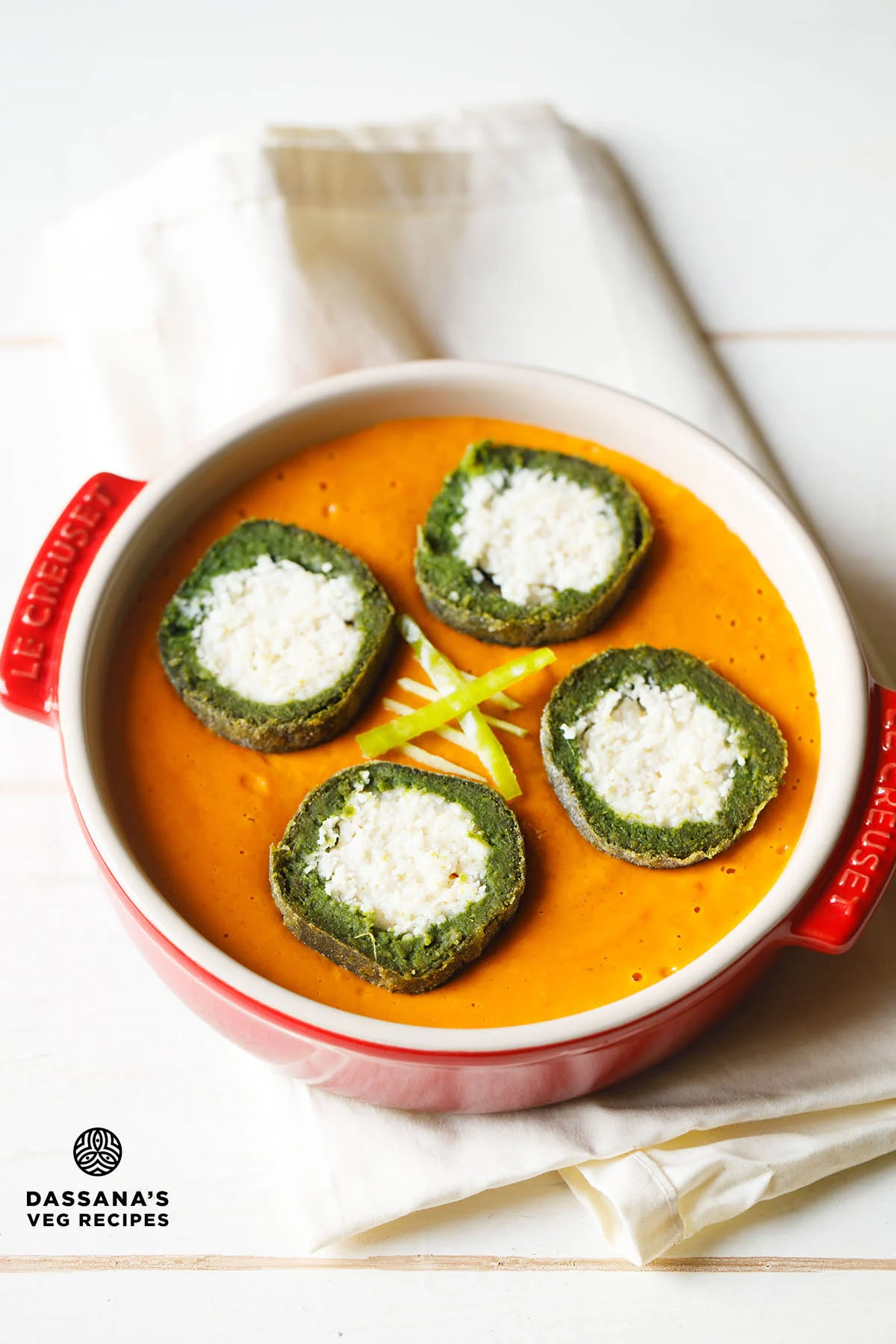
The landscape of North Indian cuisine is often characterized by its richness, its heavy use of dairy, and its complex spice profiles. However, few dishes capture the visual and metaphorical imagination quite like Shaam Savera, a sophisticated iteration of the traditional Palak Kofta. This dish, which translates literally to "Evening and Dawn," represents a pinnacle of modern Indian culinary creativity, balancing the earthy bitterness of spinach with the delicate creaminess of paneer, all submerged in a vibrant, spiced gravy.

As home cooking evolves to prioritize health without sacrificing the "gourmet" experience, contemporary adaptations of this celebrity-chef-inspired classic are gaining traction. This report explores the technical precision, historical significance, and nutritional architecture of the Palak Kofta, specifically focusing on a homestyle version that eschews heavy creams in favor of plant-based thickeners.

Main Facts: The Anatomy of a Masterpiece
At its core, Palak Kofta (Shaam Savera) is a dish of contrasts. It consists of two primary components: the stuffed dumplings (koftas) and the silk-textured gravy.

The Kofta: A Study in Contrast
The name "Shaam Savera" is not merely poetic; it is descriptive. The "Shaam" (Evening) is represented by the dark, emerald-green outer shell made of finely pureed and seasoned spinach. The "Savera" (Morning/Dawn) is represented by the bright white center of grated paneer (Indian cottage cheese). When the kofta is sliced in half, it reveals a striking visual contrast that mimics the sun breaking through the darkness of dusk.

The Gravy: Complexity Without Heaviness
Unlike many restaurant-style "Makhani" gravies that rely on significant quantities of butter and heavy cream, the modern homestyle Palak Kofta utilizes a base of onions, tomatoes, and cashews. The cashews serve a dual purpose: they provide the necessary fat content for a silky mouthfeel and act as an emulsifier to bind the acidity of the tomatoes with the sweetness of the onions.

Key Culinary Characteristics
- Texture: Crisp exterior, soft paneer core, and a velvety smooth gravy.
- Flavor Profile: Earthy, tangy, mildly sweet, and aromatic with whole spices.
- Dietary Note: This specific version is vegetarian and can be made gluten-free by substituting gram flour with appropriate binders.
Chronology: From Celebrity Innovation to Domestic Staple
The journey of Shaam Savera from a professional kitchen to the average Indian household spans several decades, marking a shift in how recipes are consumed and adapted.

The Sanjeev Kapoor Era (1990s)
The dish is widely credited as a signature creation of Chef Sanjeev Kapoor, the face of the long-running television show Khana Khazana. During the 1990s, Kapoor revolutionized Indian domestic cooking by introducing "restaurant-style" techniques to home cooks. Shaam Savera was a standout recipe that showcased how traditional ingredients like spinach and paneer could be elevated through French-inspired presentation techniques (stuffing and layering).

Integration into Home Science (2000s–2010s)
As the dish gained legendary status, it was integrated into formal culinary education in India. It became a staple of "Home Science" curricula in colleges, often chosen for luncheon menus for visiting dignitaries due to its impressive presentation and balanced nutritional profile. It represented a move away from the "curry-in-a-hurry" mindset toward a more deliberate, multi-step culinary process.

The Modern Homestyle Adaptation (Present Day)
In the current era, the recipe has undergone a "health-conscious" transformation. Home cooks, recognizing the caloric density of the original version, have adapted the gravy to be "cream-free." The focus has shifted toward refining the technique—such as roasting the gram flour (besan) to remove its raw scent and using refrigeration to firm up the dumplings rather than relying on excessive binding agents.

Supporting Data: Technical Process and Composition
Achieving the perfect Palak Kofta requires an understanding of moisture control and temperature management.

The Spinach Matrix
The outer shell is composed of approximately 200 grams of fresh spinach. A critical technical requirement is blending the spinach without adding water. Because spinach has a high water content (over 90%), any additional liquid would make the mixture impossible to shape. The addition of roasted gram flour (besan) acts as a stabilizer. Roasting the besan for 3–4 minutes is essential to develop a nutty aroma and ensure the kofta does not taste of raw flour.

The Paneer Core
The stuffing requires approximately 100 grams of grated paneer. To elevate the "Dawn" element, high-quality additives are often used:

- Saffron: Adds a subtle floral note and a hint of luxury.
- Rice Flour/Cornstarch: Provides a secondary binder to ensure the paneer doesn’t crumble during the frying process.
- Green Chilies/Ginger: Adds a sharp contrast to the mildness of the cheese.
Gravy Emulsification
The gravy is built on a ratio of roughly 1.5 cups of tomatoes to 0.75 cups of onions. The inclusion of 12 large cashews provides approximately 18-20 grams of healthy fats, which replaces the need for 50ml of heavy cream. This reduction in saturated fat from dairy makes the dish significantly lighter while maintaining the "royal" texture associated with North Indian Mughlai cuisine.

Official Responses: Expert Culinary Best Practices
Culinary experts and professional chefs emphasize several "non-negotiable" steps to ensure the integrity of the Shaam Savera.

Moisture Management
Experts warn that the spinach mixture must be refrigerated for at least 30 to 40 minutes before shaping. Cold temperatures allow the fibers in the spinach and the starches in the gram flour to set, preventing the koftas from disintegrating in the hot oil.

Frying Temperatures
The oil must be maintained at a "moderate-high" temperature. If the oil is too cool, the koftas will absorb excess fat and become greasy. If it is too hot, the spinach exterior will char before the paneer center has warmed through. A successful fry results in a thin, crisp "skin" that protects the soft interior.

The "A La Minute" Assembly
A common mistake in serving kofta curries is simmering the dumplings inside the gravy. Professional standards dictate that the koftas should be sliced and placed atop the hot gravy only at the moment of service. This prevents the spinach shell from becoming soggy and ensures the visual "Shaam Savera" contrast is preserved for the diner.

Implications: The Future of Gourmet Home Cooking
The popularity of Palak Kofta in modern households carries several implications for the future of the culinary arts.

1. The Democratization of Fine Dining
Shaam Savera proves that complex, visually stunning dishes are no longer the exclusive domain of five-star hotels. With the availability of digital tutorials and precise measurements, the "technical" barrier to entry for home cooks has lowered, allowing for a more sophisticated domestic dining experience.

2. Health-Conscious Innovation
The transition from cream-based gravies to cashew-based or vegetable-puree bases reflects a broader global trend toward "cleaner" eating. This adaptation shows that Indian cuisine can retain its identity and "richness" while aligning with modern caloric and heart-health requirements.

3. Preservation of Cultural Narratives
By continuing to cook dishes like Shaam Savera, the legacy of the pioneers of Indian television cooking is preserved. The dish serves as a bridge between the traditional "Palak Paneer" of the past and the avant-garde Indian fusion of the future.

Nutritional Summary (Per Serving)
For a standard serving (approximately 2 koftas with gravy), the nutritional breakdown is as follows:

- Calories: 291 kcal
- Protein: 6g (derived from paneer and gram flour)
- Total Fat: 25g (primarily unsaturated fats from cashews and oil)
- Fiber: 3g (high density from spinach)
- Vitamin A: 4356 IU (87% of Daily Value)
- Vitamin K: 199 mcg (over 100% of Daily Value, essential for bone health)
Conclusion
Palak Kofta, or Shaam Savera, remains a testament to the power of culinary metaphor. It is a dish that requires patience, precision, and an appreciation for the visual arts. By moving away from the heavy fats of the past and embracing the technical nuances of moisture control and plant-based creaminess, the modern version of this dish stands as a sophisticated staple of the contemporary Indian kitchen. Whether served at a high-stakes luncheon or a quiet weekend dinner, it continues to offer a "morning" of flavor and an "evening" of visual delight.
