By [Your Name/News Bureau]
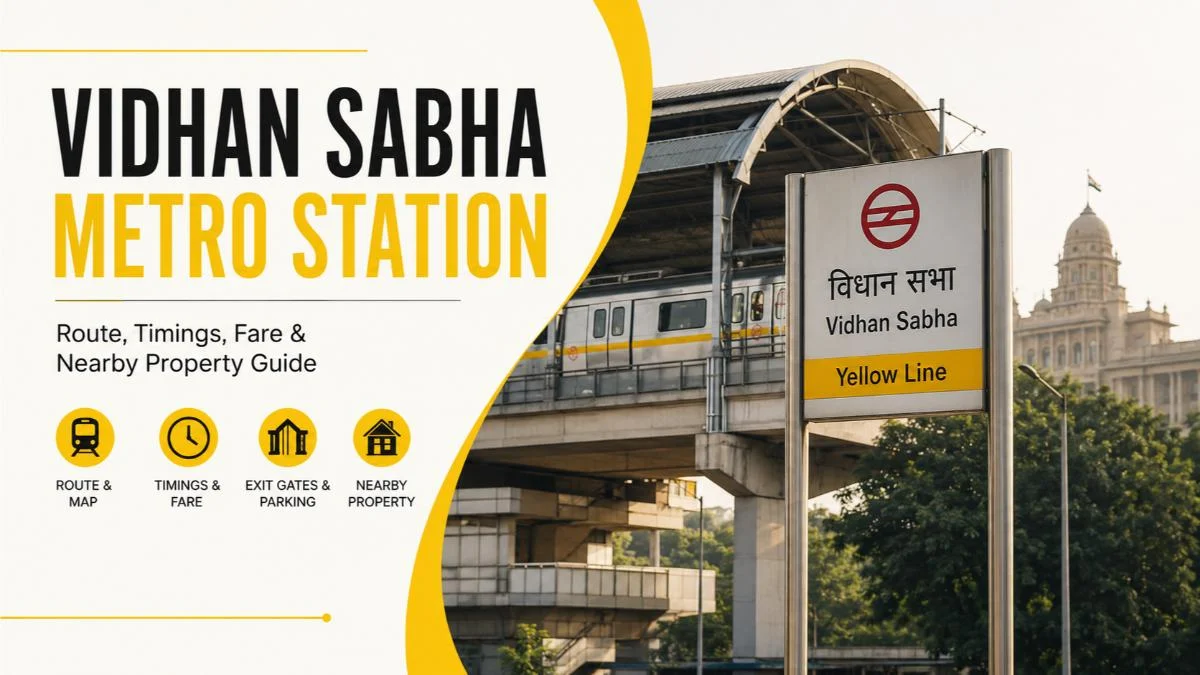
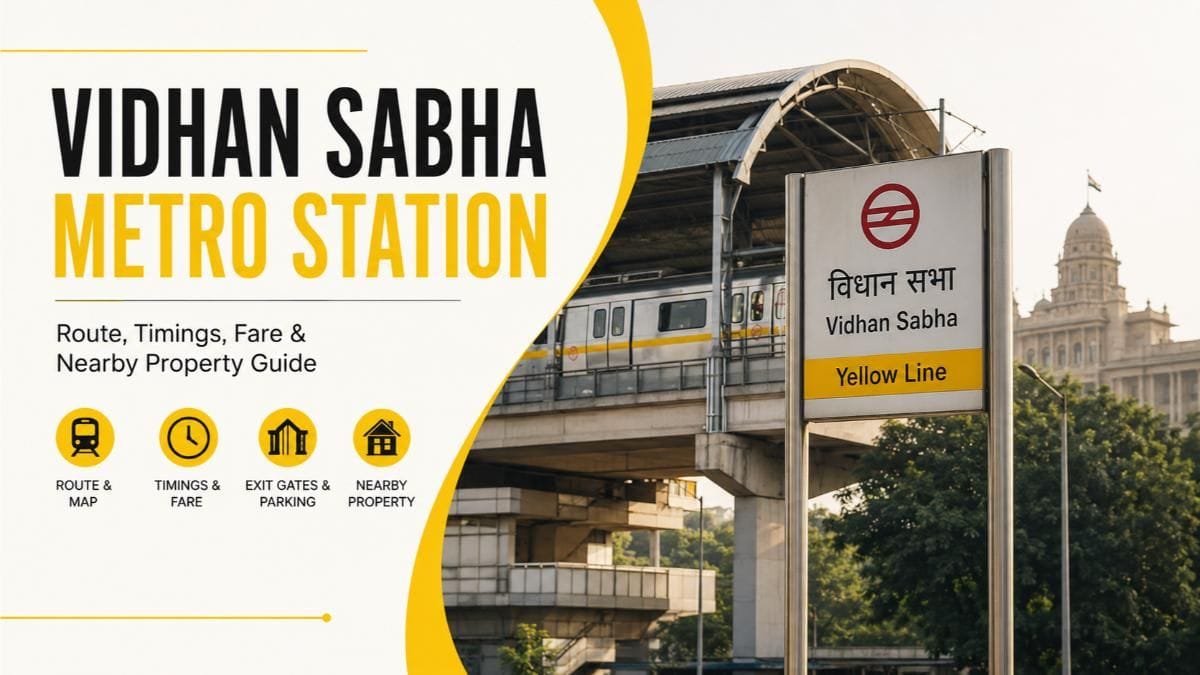
NEW DELHI – In the sprawling, often chaotic tapestry of the Delhi Metro Rail Corporation (DMRC) network, certain stations serve as more than mere transit points; they act as silent witnesses to the city’s political and historical evolution. The Vidhan Sabha Metro Station, situated on the high-traffic Yellow Line, is a prime example. While often overshadowed by the academic bustle of Vishwavidyalaya to its north and the commercial frenzy of Kashmere Gate to its south, Vidhan Sabha stands as a vital artery for the capital’s legislative machinery and the upscale residential enclave of Civil Lines.
As urban density in Delhi continues to surge, the importance of this station—not just as a transport hub but as a catalyst for real estate stability and institutional accessibility—has come into sharp focus.
Main Facts: An Overview of the Station
The Vidhan Sabha Metro Station is an underground facility located on Mahatma Gandhi Road. It serves as a primary access point for the Delhi Legislative Assembly (Vidhan Sabha), the Office of the Divisional Commissioner, and the lush, colonial-era neighborhood of Civil Lines.
Operating on the Yellow Line (Line 2), the station connects the northern suburb of Samaypur Badli to the corporate hub of Millennium City Centre (formerly Huda City Centre) in Gurugram. Its strategic positioning makes it a crucial stop for government officials, legal professionals, and the student population of the nearby University of Delhi (North Campus).
Key Station Specifications:
- Line: Yellow Line (Line 2)
- Layout: Underground
- Location: Mahatma Gandhi Road, Civil Lines
- Accessibility: Equipped with elevators and escalators for differently-abled passengers.
- Security: Managed by the Central Industrial Security Force (CISF).
Chronology: The Evolution of the Yellow Line
To understand the significance of Vidhan Sabha, one must look at the timeline of the Delhi Metro’s development. The Yellow Line was among the earliest corridors envisioned in the DMRC’s Phase I master plan.
The segment including Vidhan Sabha was part of the underground stretch that revolutionized North Delhi’s connectivity in the early 2000s. Unlike the elevated sections of the Red Line, the underground construction of the Yellow Line through Civil Lines was a technical marvel at the time, designed to preserve the aesthetic and environmental integrity of the "leafy enclave."
Over the last two decades, the station has evolved from a quiet stop to a high-utility hub. In the mid-2010s, as the DMRC expanded its reach into the deep corners of Gurugram and North Delhi, Vidhan Sabha transitioned into a critical link for commuters who sought to bypass the notorious traffic congestion of the Outer Ring Road and the historic but narrow lanes of Old Delhi.
Supporting Data: Operational Logistics and Fare Structure
The DMRC operates the Vidhan Sabha station with a focus on high-frequency service, particularly during the legislative sessions when footfall spikes significantly.
1. Fare Dynamics
The fare structure at Vidhan Sabha, as with the rest of the DMRC network, is distance-based. This tiered system is designed to make short-distance travel affordable while ensuring the financial sustainability of the network for longer hauls.
| Distance (km) | Token Fare (INR) | Smart Card Fare (Discounted) |
|---|---|---|
| 0–2 km | ₹10 | ₹9 |
| 2–5 km | ₹20 | ₹18 |
| 5–12 km | ₹30 | ₹27 |
| 12–21 km | ₹40 | ₹36 |
| 21–32 km | ₹50 | ₹45 |
| Above 32 km | ₹60 | ₹54 |
Note: Smart Card users benefit from a 10% discount on every journey and an additional 10% during off-peak hours.
2. Timing and Frequency
The station typically opens its gates at approximately 06:00 AM, with the last train departing around 11:00 PM. During peak hours (08:30 AM – 11:00 AM and 05:00 PM – 08:00 PM), trains are available at intervals of 2 to 5 minutes. On Sundays, the frequency is slightly reduced, reflecting the lower commuter volume.
3. Parking and Last-Mile Connectivity
The station features dedicated parking for both two-wheelers and four-wheelers. However, data suggests that the parking lot often reaches capacity by 10:30 AM on weekdays. This has led to a surge in the use of "last-mile" connectivity options, including e-rickshaws and cycle-rickshaws, which dominate the exit points of the station.
Official Responses: DMRC’s Stance on Safety and Maintenance
The DMRC has frequently emphasized that Vidhan Sabha is a "sensitive" station due to its proximity to the Legislative Assembly. Official spokespersons for the DMRC have noted that security protocols here are stringent, involving multi-layered screenings by the CISF.
In response to queries regarding station maintenance and crowd management, a DMRC official stated, "The Vidhan Sabha station is maintained under our ‘Gold Standard’ of cleanliness. Given the VIP movement associated with the Delhi Assembly, we ensure that the aesthetics and functional aspects of the station, including the escalators and lighting, are audited weekly."
Furthermore, the DMRC has encouraged the use of the ‘DMRC Momentum 2.0’ app. Officials state that real-time updates regarding gate closures—which can occasionally happen during high-profile protests or legislative sessions—are communicated through the app to minimize commuter inconvenience.
Real Estate Implications: The "Metro Effect" on Civil Lines
Perhaps the most significant impact of the Vidhan Sabha Metro Station has been on the local real estate market. Civil Lines has long been one of Delhi’s most prestigious residential areas, characterized by sprawling bungalows and low-density housing.
The arrival and stabilization of the metro station have acted as a "price floor" for the area, ensuring that property values remain resilient even during broader market downturns.
Market Statistics near Vidhan Sabha Metro:
- Average Rate: ₹18,750 per sq. ft.
- Price Range: ₹16,900 – ₹25,750 per sq. ft.
- 10-Year Price Appreciation: 21% increase.
Real estate analysts point out that the station has made Civil Lines a viable residential option for senior advocates and government officials who work at the Central Secretariat or the High Court. "The ability to reach Rajiv Chowk in 15 minutes or Central Secretariat in 20 minutes from a quiet, green neighborhood like Civil Lines is a massive luxury in Delhi," says a local real estate consultant. "This connectivity has shifted the demographic from purely legacy residents to high-income professionals."
Infrastructure and Exit Strategy: Navigating the Station
Navigating the Vidhan Sabha station requires an understanding of its exits, as the wrong choice can lead to a long walk along the perimeter of the Assembly grounds.
- Gate No. 1: Primarily used by those heading toward the Delhi Legislative Assembly and the various government offices located along the main road.
- Gate No. 2: Convenient for residents of the Civil Lines enclaves and those visiting the local cafes and heritage buildings in the vicinity.
The station’s underground design helps maintain a cooler temperature than the street level, a feature much appreciated by commuters during Delhi’s blistering summer months.
The Commuter Experience: A Study in Contrast
The daily experience at Vidhan Sabha is a study in contrast. In the early mornings, the station is populated by students of the University of Delhi who prefer the relative quiet of Vidhan Sabha over the often-overcrowded Vishwavidyalaya station. By mid-morning, the demographic shifts to lawyers and civil servants in crisp formals.
The station also serves as a gateway for tourists interested in "Old Delhi" history but who prefer to stay in the more modern, tranquil environment of Civil Lines. The proximity to the Ridge—a hilly, forested area—adds a unique environmental dimension to the station’s surroundings, offering a "green lung" that is rare for a Delhi Metro stop.
Future Outlook and Urban Integration
Looking ahead, the Vidhan Sabha Metro Station is expected to play a role in the DMRC’s efforts to integrate multi-modal transport. There are ongoing discussions regarding the expansion of electric bus feeder services that would link the station to deeper parts of North Delhi and the Old Secretariat.
As Delhi moves toward a more sustainable urban model, the reliance on the Yellow Line is only expected to grow. The Vidhan Sabha station, with its blend of political importance and residential prestige, remains a cornerstone of this transition.
Conclusion: Why Vidhan Sabha Works
The success of the Vidhan Sabha Metro Station lies in its ability to balance two different worlds: the high-stakes environment of the Delhi Government and the serene, historic charm of Civil Lines. For the daily commuter, it offers a reliable, punctual, and clean transit option. For the investor, it provides a stable anchor in a volatile market.
While it may not have the commercial vibrancy of Nehru Place or the interchange complexity of Kashmere Gate, Vidhan Sabha provides something arguably more valuable in a city like Delhi: a sense of calm, order, and directness. It remains an essential node in the lifeblood of the capital, proving that sometimes, the most effective transit points are those that provide the quietest service.
Disclaimer: Information regarding metro timings, gate numbers, and fares is subject to change based on DMRC operational decisions. Commuters are advised to verify real-time data via the official DMRC app or website. Real estate figures are indicative of market trends and should be independently verified before financial commitments.