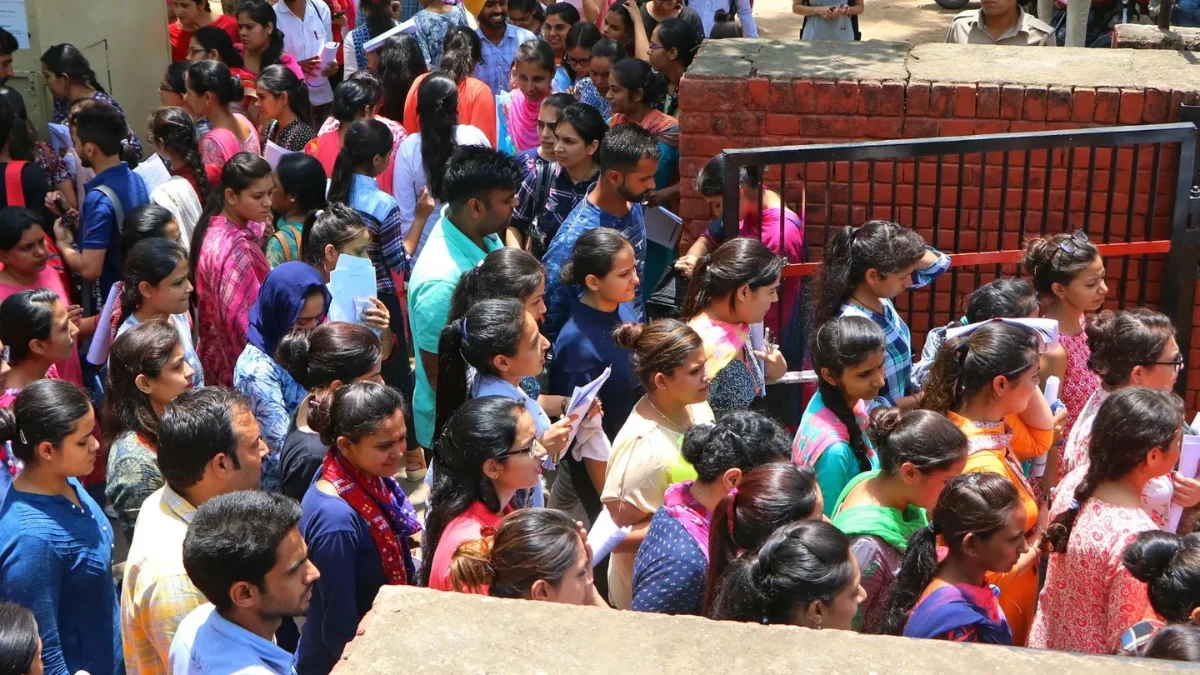
New Delhi, September 4, 2026 – The Delhi High Court has formally requested a detailed explanation from the National Testing Agency (NTA) and the central government regarding their decision to re-conduct the University Grants Commission-National Eligibility Test (UGC-NET) for the English subject for the June 2026 examination cycle. This directive comes in response to a legal challenge filed by a candidate who participated in the original examination, questioning the rationale and fairness of the re-examination mandate.
The NTA, the autonomous body responsible for conducting various entrance examinations in India, had initially announced that the English and Commerce papers would be re-administered on September 9, 2026, while the Sociology paper was scheduled for September 10, 2026. However, the plea before the High Court specifically targets the re-conduct of the English paper.
Justice Jasmeet Singh of the Delhi High Court issued the notice on August 31, 2026, demanding the NTA and the Central government to present their case. The court has also directed authorities to consider a decision on the refund of examination fees for the affected candidates. The matter has been scheduled for further adjudication on October 6, 2026, providing a critical timeline for the NTA to prepare its defense.
The Candidate’s Grievance: Arbitrary and Unfair Decision-Making
The petitioner, identified as Parul Sheoran, a candidate who took the UGC-NET June 2026 examination, has approached the court seeking to quash the NTA’s public notice dated August 16, 2026. This notice had mandated the re-conduct of the English paper. The plea contends that the decision to re-examine is not only arbitrary and unreasonable but also procedurally flawed, thereby violating the fundamental right to equality enshrined in Article 14 of the Indian Constitution.
A significant point of contention raised by the petitioner is the alleged lack of transparency in the decision-making process. The plea asserts that the NTA made the decision to re-conduct the examination without disclosing the specific material or evidence that formed the basis of this conclusion. Furthermore, it is argued that the procedure outlined in the UGC-NET June 2026 Information Bulletin, which governs the examination process, was not adhered to. This lack of procedural fairness has fueled the legal challenge.
The petition further prays for a judicial directive compelling the authorities to declare or, at the very least, process the results of the English examination that was already conducted, based on the established and applicable procedures. This suggests that the petitioner believes the original examination was conducted fairly and that the results should be processed accordingly.
In a significant ancillary request, the petition also addresses the financial implications for the candidates. It seeks a directive that, should the court permit or uphold the re-conducting of the English paper, the NTA be mandated to refund the examination fees paid by the petitioners for the original examination. This refund should be provided without prejudice to the candidates’ right to appear in the re-conducted examination, and crucially, without requiring them to pay any additional fees. This addresses the financial burden placed upon candidates who are now being asked to re-take an examination due to an alleged administrative failing.
A Chronology of Events Leading to the Legal Challenge
The UGC-NET June 2026 examination was a large-scale undertaking, conducted by the NTA across the country from June 22 to June 30, 2026. The examination covered a vast spectrum of 87 subjects, with the primary objectives being the award of Junior Research Fellowship (JRF), determining eligibility for the position of Assistant Professor, and facilitating admission to PhD programs.
The controversy surrounding the English paper, and subsequently other subjects, appears to have stemmed from issues identified in the question papers. The NTA, in a public notice, acknowledged that it had received "several complaints" concerning "multiple errors" within the question papers of three subjects. In response to these complaints, the NTA constituted a committee to meticulously examine the validity and accuracy of the questions.
The report submitted by this committee formed the bedrock of the NTA’s decision to re-conduct certain papers. The committee’s findings, as detailed in the NTA’s public notice, paint a concerning picture of the quality of the examination papers. The report stated that "the three papers had many factual, typographical, and translation errors." These errors were cataloged extensively, including:
- Mis-spelt names of prominent scholars: This indicates a lack of basic diligence in ensuring the accuracy of names crucial to the subject matter.
- Garbled book titles: This suggests a failure to correctly transcribe or present the titles of literary or academic works.
- Errors in the stem wording of questions: This points to ambiguities or inaccuracies in how the questions themselves were framed, potentially leading to misinterpretation by candidates.
- Grammatical errors, gender and number agreement errors, punctuation mistakes: These fundamental linguistic errors suggest a lack of proper review and editing by subject matter experts and language specialists.
- Non-standard coined terms for established concepts: This indicates a deviation from accepted academic terminology, potentially confusing candidates who are expected to be familiar with standard academic discourse.
- Repetition of a significant number of questions previously administered: This is a serious flaw, as it undermines the fairness of the examination by potentially benefiting candidates who had prior exposure to the same questions.
Based on these findings, the NTA decided to re-conduct the English, Commerce, and Sociology papers. The subsequent challenge by a candidate has brought this decision under judicial scrutiny, highlighting the need for robust quality control and transparent procedures in national-level examinations.
Supporting Data: The Scale and Significance of UGC-NET
The UGC-NET examination holds immense importance in the academic landscape of India. It serves as a gateway for aspiring academics to pursue higher studies and secure teaching positions in universities and colleges. The examination is conducted twice a year, though the June 2026 cycle has been marred by these controversies.
The scale of the examination is substantial, with hundreds of thousands of candidates typically appearing for it. The NTA, established in 2017, has been tasked with conducting these high-stakes examinations to ensure uniformity and standardization. The June 2026 examination, covering 87 subjects, reflects the breadth of academic disciplines covered by the UGC.
The alleged errors in the question papers, as detailed by the committee, are not mere trivialities. They represent fundamental failures in question design and review, which can have a profound impact on the fairness and validity of the examination results. For instance, factual errors or misspellings of key figures can mislead candidates. Ambiguous question wording can lead to incorrect interpretations, disadvantaging diligent students. The repetition of questions is particularly egregious, as it can lead to an unfair advantage for those who have encountered the questions before, irrespective of their actual understanding of the subject.
The financial implications for candidates are also significant. The examination fee, while not exorbitant, represents a cost that candidates bear. Being asked to re-take an examination due to alleged administrative flaws, without clear recourse or compensation, places an additional burden on them, especially for those who have invested time and resources in preparing for the original examination.
Official Responses and the NTA’s Position
While the NTA has issued public notices detailing its decision to re-conduct the papers and the reasons for it, a formal, detailed response to the High Court’s notice is now awaited. The NTA’s public stance, based on the committee’s report, is that the errors were significant enough to warrant a re-examination to ensure the integrity and fairness of the UGC-NET qualification process.
The NTA’s mandate is to conduct examinations that are credible and reliable. The formation of a committee to investigate complaints and the subsequent decision to re-conduct papers reflect an attempt by the agency to address perceived shortcomings. However, the legal challenge underscores the need for the NTA to demonstrate that its actions are not only justifiable but also procedurally sound and in line with constitutional principles.
The Central government, as a respondent alongside the NTA, will also be expected to articulate its position on the matter. As the overarching body responsible for education policy and oversight, the government’s stance will be crucial in shaping the future of such examinations and the accountability of the NTA.
Implications for Future Examinations and Candidate Rights
The ongoing legal challenge has significant implications for the future conduct of the UGC-NET and other national-level examinations. It highlights the critical importance of:
- Robust Quality Control Mechanisms: The NTA needs to strengthen its internal processes for question paper development, review, and validation. This should involve a multi-layered approach with subject matter experts, language editors, and statistical analysis to identify and rectify errors before papers are finalized.
- Transparency in Decision-Making: When decisions with significant consequences for candidates are made, such as re-conducting examinations, the basis for these decisions must be transparent and clearly communicated. This fosters trust and reduces the likelihood of arbitrary actions.
- Adherence to Established Procedures: The NTA must scrupulously follow the procedures outlined in its own information bulletins and relevant regulations. Deviations, even if well-intentioned, can lead to legal challenges and undermine the credibility of the examination.
- Candidate Grievance Redressal: A clear and effective mechanism for addressing candidate grievances throughout the examination process is essential. This includes timely and fair resolution of complaints regarding question papers, marking schemes, and result declarations.
- Accountability and Recourse: Candidates who are negatively impacted by administrative errors or procedural lapses should have clear avenues for recourse, including potential financial compensation or other forms of redressal.
The Delhi High Court’s intervention in the UGC-NET English re-examination case is a crucial step towards ensuring accountability and fairness in India’s examination system. The outcome of this case could set important precedents for how such issues are handled in the future, reinforcing the rights of candidates and the responsibilities of examination conducting bodies. The focus now shifts to the NTA and the Central government to present a compelling defense and demonstrate their commitment to upholding the integrity of academic assessments.