KOLKATA – On the second floor of the Altitude Building on Lee Road, a singular address has been bifurcated into two distinct realities. To the left, a door opens into a sanctuary of roses, soft amber light, and the rhythmic promise of a night that begins with a meal and ends on the dance floor. To the right, another door leads to a neon-etched laboratory of the future, where mixology is treated as a chronological exploration of the next century.
Tua and Synthe, the latest additions to Kolkata’s evolving F&B scene, represent a bold experiment in "parallel universe" hospitality. Though separated by a mere wall, the two venues operate under entirely different philosophical frameworks, offering patrons a choice between the intimate warmth of the present and the speculative intrigue of the future.

Main Facts: A Tale of Two Concepts
The dual-concept venture is the brainchild of a trio of entrepreneurs—Aman Bansal, Umaid Ahmed, and Tabrez Nadeem. While sharing the same physical footprint, Tua and Synthe are strategically designed to never borrow from each other’s identity.
Tua, which translates to "Yours" in Latin, is a 3,000-square-foot, 75-seater restaurant launched on June 24, 2024. Its core identity is built around "emotional architecture," specifically designed to be a feminine-friendly space that avoids the clichés of "pink-heavy" interiors. Instead, it focuses on intimacy, curated music, and a "Dance and Dine" philosophy.

Synthe, launched slightly earlier on May 27, 2024, is a more intimate, 32-seater space. It functions as a futuristic cocktail laboratory inspired by electronic music and the Japanese omakase tradition. Its menu is a lean collection of 22 small plates and 11 signature cocktails that follow a narrative timeline from the year 2030 to 2130.
Together, these venues signify a shift in Kolkata’s nightlife—moving away from massive, generic nightclubs toward specialized, narrative-driven experiences.

Chronology: From Karaoke Sessions to Concept Launch
The genesis of Tua and Synthe was as organic as the venues are curated. The three founders—Bansal, Ahmed, and Nadeem—met years ago during karaoke sessions in the very building they now own.
"We joked that in another universe we should work together," Aman Bansal recalls. "One conversation led to another, and the joke became a business plan."

The development process was rigorous, spanning several months of research and development. The cocktail program at Synthe alone underwent three months of experimentation, with recipes being deconstructed and perfected before the doors opened. The phased launch—Synthe in late May and Tua in late June—allowed the team to stabilize the operations of the futuristic bar before unveiling the larger, food-centric restaurant next door.
Supporting Data: The Architecture of Experience
Tua: Reclaiming the "Dance and Dine" Culture
Tua’s design is a deliberate departure from the aggressive, high-decibel lounge culture. The founders identified a gap in the market for a space where women felt genuinely comfortable and where the transition from dinner to dancing felt natural rather than forced.

- The Aesthetics: The palette is dominated by warm reds and hushed yellow lighting. In a move toward personalization, every guest receives a table napkin embroidered with a unique message. These range from the playful "Drinks Before Decisions" to more contemplative quotes, fostering an immediate sense of belonging.
- The Culinary Direction: Guided by consultant chef Vaibhav Bhargav and executed by sous chef Shobuj Sheikh, the kitchen eschews "Chilli Chicken" staples for Modern Asian and West Asian fusion.
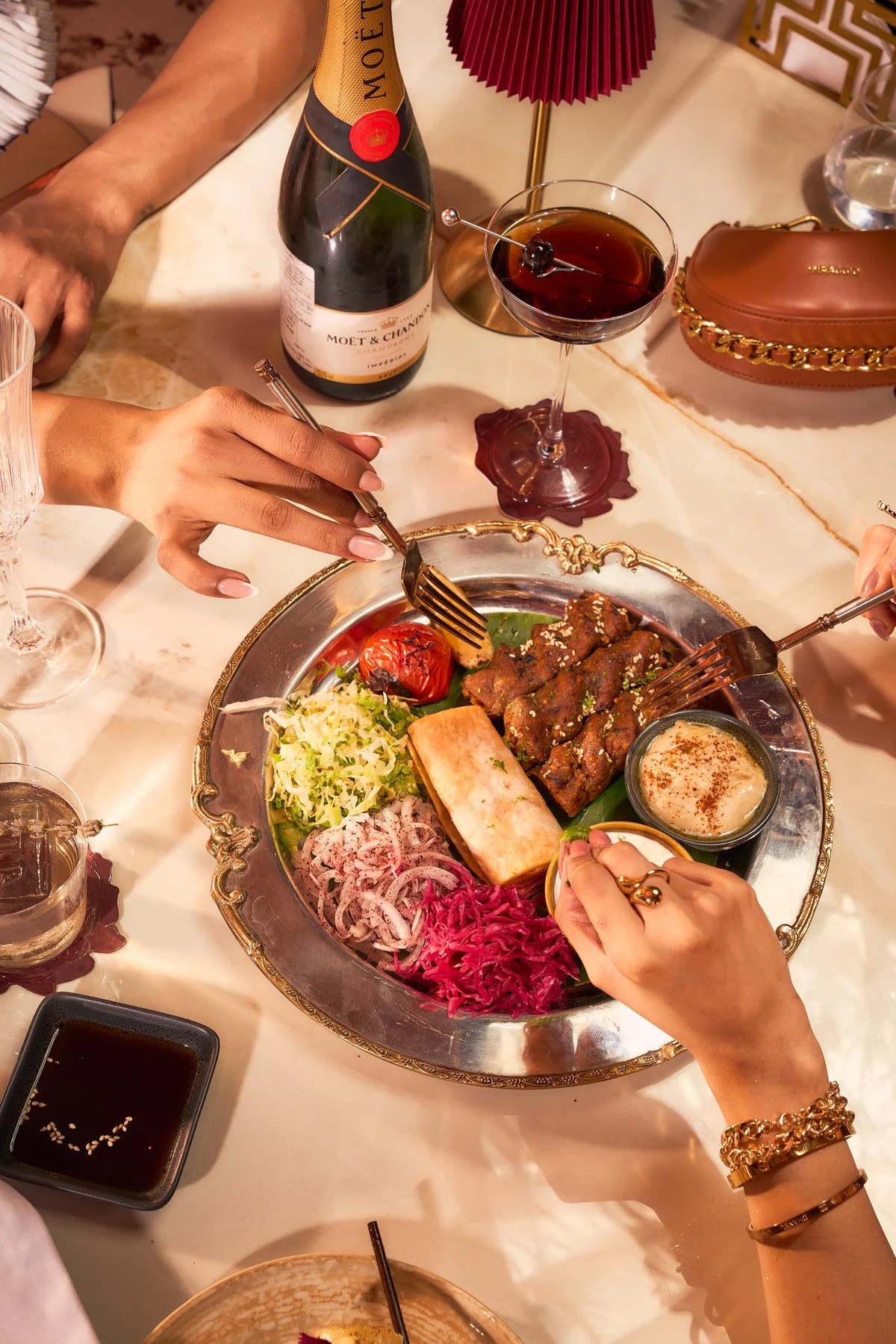
- The Turkish Kebab Platter: A highlight of the Robatayaki counter, featuring smoky, tender meats served with house-made tzatziki, pink onions, and a Turkish chili that provides depth without overwhelming heat.
- Prawn Har Gow: A standout dish served in a rich Dan Dan sauce, balancing the sweetness of the shellfish with a spicy, nutty undertone.
- The Bar Program: Managed by Akash James Mondal, the bar follows a zero-waste policy. Ingredients like banana oleo and plum liqueurs are made in-house. A notable innovation is the use of Yukina ice, which is sourced specifically to keep drinks cold without causing throat irritation—a detail often overlooked in standard high-volume bars.
Synthe: A Century of Mixology
Synthe is an intellectual playground. The name is derived from a line in "Giorgio by Moroder" by Daft Punk, where the synthesizer is described as the "instrument of the future."
- The Timeline Menu: The cocktail menu is divided into eras.
- 2030 (Reclamation): Focuses on fresh, green ingredients like shiso and cucumber, reflecting a societal return to health.
- 2060 (Restrain): A minimalist era where resources are scarce, resulting in stripped-back, potent drinks like the chamomile-infused Old Fashioned.
- 2130 and Beyond: Experimental flavors involving "Unlearn" techniques, such as a tomato and strawberry concoction where the garnish is frozen inside a clear ice block—visible but unreachable.
- The Omakase Influence: The food menu at Synthe is calibrated to be secondary to the drinks. Highlights include the Tokyo Crunch Royale (avocado tartare on crisp rice) and the Blackout Futomaki, which uses charcoal asparagus tempura to create a visually striking, dark aesthetic.
Official Responses: The Founders’ Vision
The founders are clear that these venues are not meant to compete with the existing "clubbing" infrastructure of Kolkata but to offer an alternative for a more discerning demographic.

Aman Bansal emphasizes the "feminine-first" approach of Tua: "It is designed with women in mind. They’ve shaped who we are. We wanted a space where they don’t just feel like patrons, but where the environment reflects a sense of safety and elegance."
Regarding the culinary shift, Tabrez Nadeem notes, "The city has forgotten how to dance. Our idea is simple: dine first, dance later. Good food should naturally put you in the mood to celebrate."

On the technical side, Mixologist Abhishek Das, the face of Synthe, views his role as part-educator, part-alchemist. "Synthe is about two different perspectives held effortlessly in the same frame," he says, gesturing to his mismatched black-and-white spectacles. "We are asking guests to look at things differently—to unlearn what they think a cocktail should be."
Implications for Kolkata’s F&B Sector
The opening of Tua and Synthe carries several significant implications for the regional hospitality industry:

- The Rise of Micro-Concepts: By splitting one address into two small, highly specialized venues, the founders are hedging against the "one-size-fits-all" fatigue. This allows them to capture two different moods—or two different parts of a customer’s night—within the same building.
- Narrative Over Volume: Synthe’s 32-seat capacity suggests a move toward "low-volume, high-value" experiences. The focus is on the story behind the drink (the 2030-2130 timeline) rather than just the alcohol content.
- Culinary Sophistication: Tua’s rejection of "American-Chinese" staples in favor of Turkish kebabs and Dan Dan-infused Har Gow signals a maturing palate in Kolkata. Diners are increasingly seeking authenticity and "Modern Asian" techniques over localized comfort food.
- Sustainability as Standard: The implementation of zero-waste bar programs and house-made liqueurs sets a new benchmark for environmental responsibility in the city’s luxury dining sector.
Conclusion
Tua and Synthe represent a sophisticated duality. One provides the "blanket of relatability" and the joy of the present, while the other offers a neon-lit window into the speculative future. Whether one chooses the embroidered intimacy of Tua or the chronological curiosity of Synthe, the Altitude Building has successfully created a destination where the hardest decision is simply which door to open first.
Fact Box:
- Location: 2nd Floor, Altitude Building, Lee Road, Kolkata.
- Average Cost for Two: ₹4,000 (approx. including alcohol).
- Contact: 9230197489.
- Specialty: Tua (Modern Asian/Western Asian & Dance); Synthe (Futuristic Cocktails & Omakase-style small plates).