

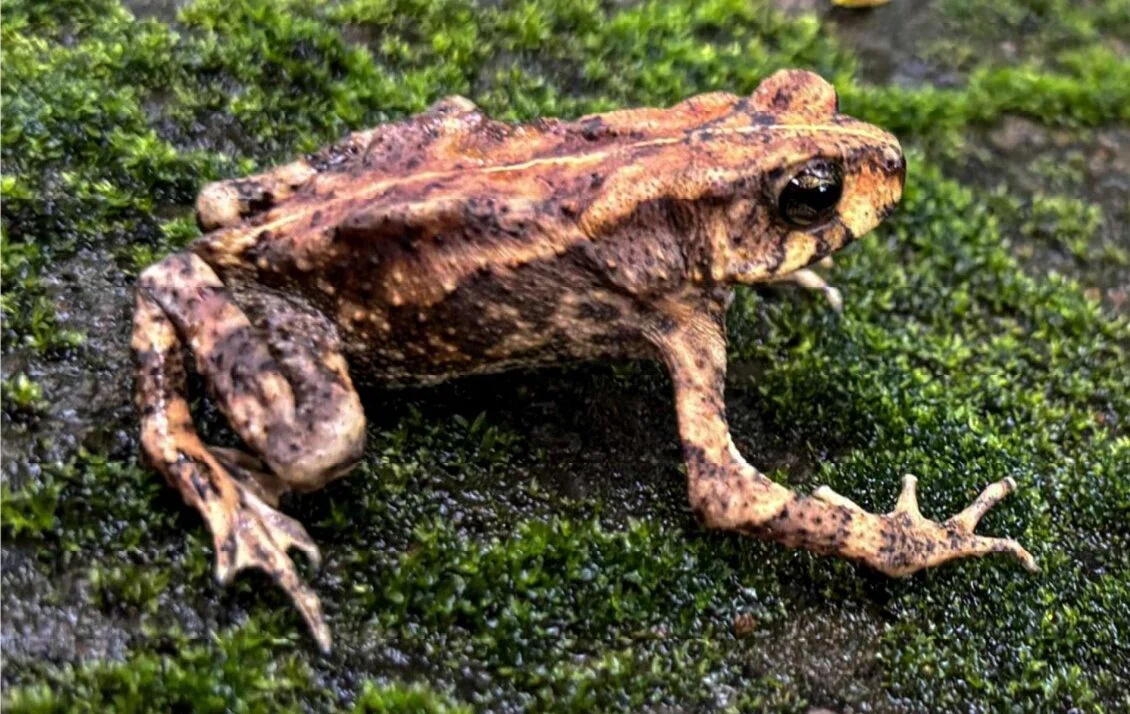
In the mist-shrouded peaks of southeastern Mizoram, where the land rises to meet the sky along the Indo-Myanmar border, scientists have uncovered a biological treasure previously unknown to the world. A study published in May 2026 has officially described Duttaphyrnus phawngpui, a new species of toad found exclusively in the rugged terrain of Phawngpui National Park. Named after the highest peak in the state, this discovery underscores the immense, yet fragile, biodiversity of the Eastern Himalayas and highlights the urgent need for conservation in high-altitude ecosystems.
The discovery is the result of a collaborative effort between researchers from Mizoram University, Assam Don Bosco University, and Help Earth, a Guwahati-based non-profit organization. The finding of D. phawngpui adds a significant chapter to the herpetological record of Northeast India, a region increasingly recognized as a global hotspot for amphibian diversity.
Main Facts: Introducing Duttaphyrnus phawngpui
The newly described species, Duttaphyrnus phawngpui, belongs to the genus Duttaphyrnus, commonly known as "true toads." While many members of this genus are generalists—found in diverse habitats ranging from pristine forests to polluted urban drains across South and Southeast Asia—D. phawngpui is a specialist.
Geographical Isolation and Naming
The species is named after its type locality, Phawngpui, also known as the "Blue Mountain." Standing at 2,157 meters above sea level, Phawngpui is the highest point in Mizoram. The mountain is revered by locals and protected within a National Park, providing a sanctuary for rare flora and fauna. The discovery of a new vertebrate in such a well-known landmark indicates how much of the region’s biodiversity remains hidden in plain sight.
Physical and Biological Characteristics
Researchers identified the species based on two individuals found near the summit. While they share the characteristic rugged, warty skin of the Duttaphyrnus genus, D. phawngpui possesses distinct morphological features that set it apart from its closest relatives.
Like many of its kin, this toad possesses parotid glands located behind the eyes. These glands secrete a milky, toxic fluid that serves as a potent defense mechanism. This chemical deterrent makes the toad unappetizing to most predators, particularly snakes, which are common in the Himalayan foothills. While the specific diet of D. phawngpui is still being studied, observations of related species in the same landscape suggest a diet consisting of termites, locusts, grasshoppers, and cockroaches.
Chronology of the Discovery
The journey toward the description of Duttaphyrnus phawngpui began with a series of high-altitude surveys aimed at documenting the herpetofauna of Mizoram’s "sky islands."
The Field Expedition
Researchers encountered the first specimens during an ascent of Phawngpui. The individuals were found at an elevation exceeding 2,000 meters above sea level, specifically along the edges of a trail leading to the summit. They were nestled among thick leaf litter on the forest floor, an area characterized by dense ground cover, including shrubbery and bamboo patches. The relative lack of human disturbance at these heights provided an ideal, albeit narrow, window into the species’ natural behavior.
Laboratory Analysis and Identification
Following the collection of two specimens, the team moved from the field to the laboratory. Identifying new species within the Duttaphyrnus genus is notoriously difficult due to "cryptic speciation"—where different species look nearly identical to the naked eye.
To confirm their findings, the researchers employed a dual-approach methodology:
- Morphological Analysis: Detailed measurements of body proportions, limb length, and skin patterns were compared against existing records of known species.
- DNA Barcoding: Genetic sequencing was used to compare the DNA of the Phawngpui specimens with that of related species like D. stuarti, D. chandai, and D. dhara.
The results were conclusive. The genetic distance and specific morphological markers confirmed that the Phawngpui toad was a distinct evolutionary lineage, leading to its formal description in the May 2026 volume of the journal Taprobanica.
Supporting Data: The "Sky Island" Ecosystem
The discovery of D. phawngpui is scientifically significant because of its habitat. It is part of a small group of Duttaphyrnus species that are restricted to the higher ranges of the Eastern Himalayas.
The Concept of Sky Islands
Phawngpui acts as a "sky island"—an isolated mountain peak surrounded by radically different lowland environments. For species adapted to the cool, moist conditions of the summit, the surrounding warm valleys act as a "sea" of uninhabitable terrain, preventing them from moving to other mountain ranges. This isolation leads to high rates of endemism, where species evolve independently on a single peak.

Habitat Specificity
Unlike the common Asian common toad (Duttaphyrnus melanostictus), which thrives almost anywhere, D. phawngpui is a habitat specialist. According to the research data:
- Altitude: Found exclusively above 2,000 meters.
- Micro-habitat: Requires high-humidity environments, specifically grassy patches and forest streams.
- Breeding Requirements: The presence of clean, slow-moving forest streams is essential for their reproductive cycle, as their larvae (tadpoles) are sensitive to water quality and temperature.
Official Responses and Expert Insights
Jayaditya Purkayastha, a co-author of the study and general secretary of the non-profit Help Earth, has been at the forefront of this discovery. His insights provide a deeper understanding of the challenges facing the new species.
On the Fragility of the Species
"They are habitat specific, not generalists," Purkayastha noted during the announcement of the discovery. "Meaning they can only survive in certain conditions. D. phawngpui is a ground-dwelling frog that requires grassy patches, high humidity, and forest streams, especially for breeding."
Purkayastha emphasized that while the parotid glands protect the toad from predators, they offer no defense against the rapid environmental changes currently sweeping through the Himalayas.
On Taxonomic Progress
Help Earth has been instrumental in documenting the region’s wildlife. Since 2006, the organization has helped describe over 38 species, including the urban bent-toed gecko (Cyrtodactylus urbanus) and Sengupta’s cricket frog (Minerva sengupti). Purkayastha views each new description not just as a scientific achievement, but as a race against time.
"The species is very susceptible to ecosystem changes," he warned. "They cannot adapt to high temperatures and must be considered in conservation efforts as climate change impacts worsen."
Implications: The Shadow of "Dark Extinction"
The discovery of Duttaphyrnus phawngpui carries heavy implications for the future of conservation biology in India. It serves as a stark reminder of the phenomenon known as "dark extinction."
The Threat of Dark Extinction
Dark extinction refers to the loss of species before they are ever discovered or described by science. Because D. phawngpui exists in such a small, specific geographic area, any localized disaster—such as a massive forest fire, a landslide, or a new road project—could have wiped out the entire species before the May 2026 study was even conceived.
Climate Change and the "Summit Trap"
For high-altitude species, climate change presents a unique "summit trap." As global temperatures rise, species typically migrate to higher elevations to remain in their preferred temperature range. However, for a species already living at the peak of Mizoram’s highest mountain, there is nowhere left to go.
The researchers warn that as human encroachment continues up the hillsides and the climate becomes warmer and drier, the "sky islands" of the Eastern Himalayas will shrink. This reduction in viable habitat could lead to the rapid decline of D. phawngpui and its relatives, D. stuarti and D. chandai.
Conservation Recommendations
The study concludes with several urgent recommendations for the management of Phawngpui National Park:
- Strict Trail Management: Limiting human foot traffic near known habitats to prevent soil compaction and micro-habitat destruction.
- Water Source Protection: Ensuring that the forest streams near the summit remain unpolluted and diverted.
- Climate Monitoring: Establishing weather stations at high altitudes to track temperature shifts and humidity levels that affect amphibian survival.
- Further Surveys: Expanding the search to neighboring peaks in Myanmar to see if the species exists in other "islands" or if it is truly endemic only to Phawngpui.
Conclusion
The description of Duttaphyrnus phawngpui is a testament to the biological richness of Mizoram and the dedication of regional scientists. However, the celebration of this discovery is tempered by the reality of the threats it faces. As a sentinel of the "Blue Mountain," this small toad represents the thousands of specialized species clinging to life in the world’s highest reaches. Its survival will depend on whether human conservation efforts can move as fast as the changing climate that threatens to silence the mists of Phawngpui forever.
