

BENGALURU, INDIA — In the lush, undulating landscape of a small farm on the outskirts of Bengaluru, Prabhakar Rao, a landscape architect turned natural farmer, walks among rows of plants that most modern consumers would fail to recognize. He points to the Yerengere white long eggplant, a slender, pale variety that was once the undisputed star of vangi bath (brinjal rice) in Karnataka. Nearby, the clove bean—known affectionately in Tamil as mookuthi avarai for its resemblance to a traditional nose-pin—climbs a trellis.
Though the clove bean was a staple in South Indian kitchens as recently as the mid-20th century, it has now largely retreated from the physical world into the pages of history. It remains "immortalized," as Rao puts it, in S. Meenakshi Ammal’s 1951 culinary masterpiece, Samaithu Paar (Cook and See). Outside of conservation hubs like Rao’s "Hariyalee Seeds," these vegetables have effectively vanished from the Indian culinary landscape, victims of a global trend toward agricultural homogenization.
Main Facts: The Homogenization of the Indian Plate
The disappearance of the clove bean and the Yerengere eggplant is not merely a matter of changing tastes; it is a symptom of a massive, silent erosion of vegetable biodiversity. According to a recent perspective article published in the Proceedings of the National Academy of Sciences (PNAS), the world is witnessing a catastrophic decline in vegetable variety. The study warns that land-use changes, market homogenization, and the extinction of wild relatives are threatening the foundations of our food systems.

Key findings from the research indicate that approximately 24% of the wild relatives of 79 major vegetable species are currently at risk of extinction. While the newly created Global Vegetable Species Dataset lists 1,482 distinct vegetables, researchers admit the true number is likely much higher, as many indigenous and wild varieties have never been formally documented.
In India, the second-largest producer of vegetables globally, the crisis is particularly acute. While markets appear "full," they are dominated by a handful of high-yielding hybrids designed for transportability and visual uniformity rather than nutritional density or local adaptation. As Rao observes, "People are all eating the same few vegetables, and the loss of vegetable biodiversity has not received a lot of attention. Why would it? Every vegetable that you use at home is available in abundance."
This abundance, however, is an illusion of choice. While a supermarket may offer five types of tomatoes, they are often genetically similar hybrids, while thousands of heirloom varieties—each with unique climate-resilient traits—face extinction.
Chronology: From Culinary Staples to Seed Bank Rarities
The decline of India’s vegetable diversity has been a decades-long process, accelerated by the industrialization of agriculture:

- 1951: S. Meenakshi Ammal publishes Samaithu Paar, documenting a rich tapestry of South Indian vegetables, including the clove bean, which were then common in household gardens.
- 1960s–1980s: The Green Revolution prioritizes staple cereal crops (wheat and rice) and high-yielding hybrid vegetables. Local "landraces" (varieties adapted to specific micro-climates) begin to be sidelined in favor of seeds that respond well to chemical fertilizers.
- 2011: Prabhakar Rao founds Hariyalee Seeds in Bengaluru, beginning a decade-long quest to recover and conserve hundreds of heirloom varieties from across India and the world.
- 2020: The Indian Ministry of Food Processing Industries (MoFPI) expands "Operation Greens." Originally focused on the "TOP" trio (Tomato, Onion, Potato), the program is expanded to "TOP to Total" in an effort to stabilize supply chains for all vegetables.
- 2022: The North East Society for Agroecology Support (NESFAS) launches a community-led school meal program in 26 schools in Meghalaya, specifically designed to reintroduce underutilized local vegetables like taro stems and Indian pennywort into the diets of the younger generation.
- 2024–2025: Recent analyses reveal that while production volume has grown, India’s vegetable productivity (tonnes per hectare) remains the lowest among the top five global producers, partly due to the loss of hardy, locally adapted varieties.
Supporting Data: The Nutritional and Genetic Gap
The loss of biodiversity is not just an aesthetic or cultural concern; it is a public health and environmental emergency. Data suggests that the homogenization of diets is directly linked to nutritional deficiencies.
A 2020 study conducted by researchers in London found a staggering gap in Indian vegetable consumption. While the FAO and World Bank recommend a daily intake of 400g of fruits and vegetables per person, the average Indian consumes only about 230g. Experts argue that increasing the variety of available vegetables—particularly nutrient-dense indigenous greens and tubers—is essential to closing this gap.
From a genetic standpoint, the safety nets are also under strain. The World Vegetable Center’s (WorldVeg) Genebank in Taiwan holds over 65,000 genetic samples of more than 330 species. In India, the National Bureau of Plant Genetic Resources (NBPGR) manages a genebank containing over 30,700 accessions of vegetables, including okra, brinjal, and onion. However, Maarten van Zonneveld, Head of Genebank at the International Potato Center in Lima, Peru, warns that these collections are incomplete. "Many of the vegetable species are not conserved in national and international gene banks," he says. "There are so many vegetables that need to be rescued before they completely disappear."
Furthermore, the "visual standard" of the modern market has eliminated diversity. Elizabeth Yorke, a chef and co-founder of Edible Issues, points out that consumers have been trained to associate "quality" with "uniformity." This has led to the "elimination of references," where a tomato that isn’t perfectly round and red is viewed with suspicion, despite the fact that heirloom varieties offer superior flavor and climate resilience.

Official and Expert Responses: The Push and Pull of Reform
The solution to the biodiversity crisis requires a two-pronged approach, often referred to by experts as the "push" (supply) and the "pull" (demand).
The "Pull" (Demand):
Colin Khoury, Global Conservation Lead at Crop Trust, emphasizes that the public must be re-educated to value diversity. "Vegetables occupy agroecological niches that are less conventional and standardized," Khoury explains. He suggests that government-led education campaigns, alongside advocacy from "people of influence" like celebrity chefs, are vital to creating market demand for "forgotten" vegetables.
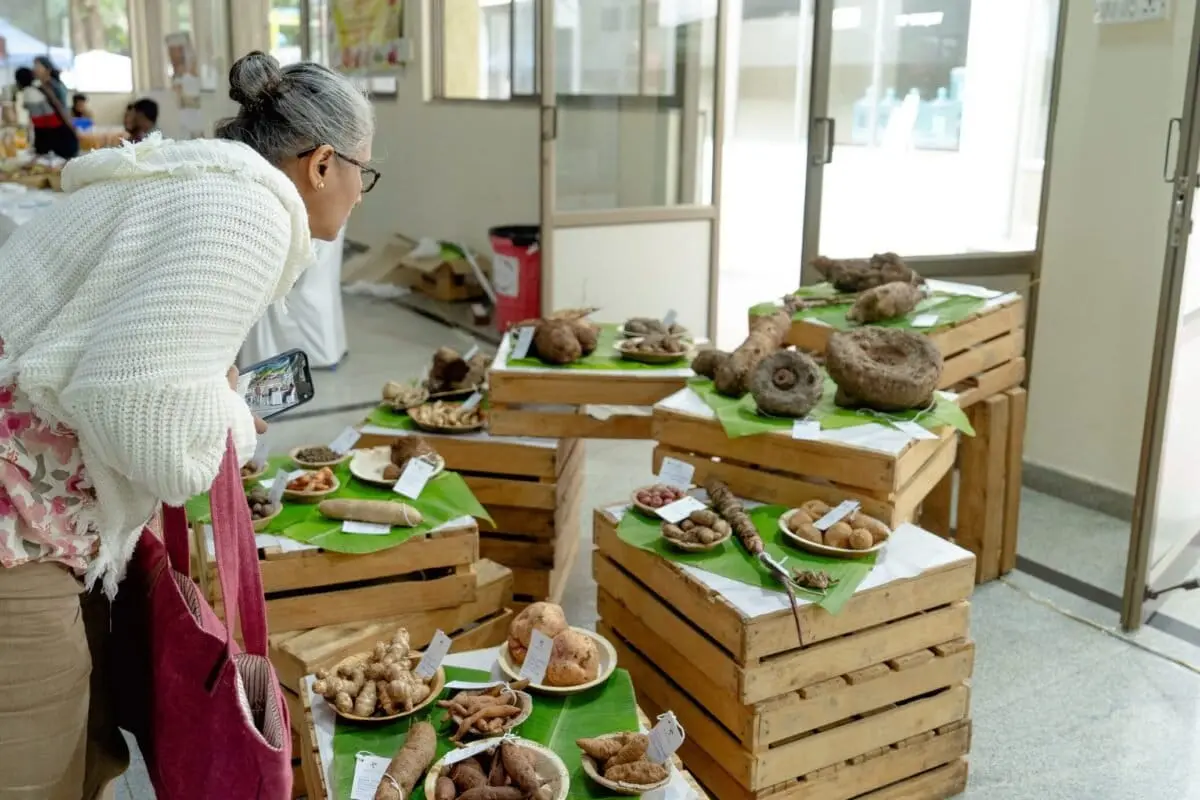
Elizabeth Yorke’s "Rooting for Tubers" initiative is a prime example of this. By hosting workshops and creating recipe cards for lesser-known tubers, her team aims to restore "culinary confidence" in consumers who may be intimidated by a vegetable they don’t know how to peel, store, or cook.
The "Push" (Supply):
On the supply side, the challenges are economic. Prabhakar Rao points out that vegetable cultivation is currently a high-risk, low-reward endeavor for most Indian farmers. "For small-scale farmers, vegetable cultivation is a hit or a miss," Rao says. "Expecting farmers to invest in biodiversity under these circumstances is not feasible."

While government initiatives like Operation Greens have helped stabilize prices for major crops, they have inadvertently reinforced the dominance of a few species. Experts argue that market linkages must be created specifically for biodiversity-friendly farmers, ensuring they receive a premium for growing rare or indigenous varieties.
Implications: Climate Resilience and Food Security
The ultimate implication of losing vegetable biodiversity is a diminished ability to survive a changing climate. Heirloom vegetables are often "opportunity crops"—plants that can thrive in poor soil, withstand droughts, or resist local pests without heavy chemical intervention.
As the planet warms, the high-input hybrid crops that currently dominate the market may fail. In contrast, the wild relatives of today’s vegetables—the 24% currently at risk of extinction—contain the genetic "blueprints" for heat tolerance and disease resistance. If these wild relatives vanish, we lose the tools necessary to breed the resilient crops of the future.
The work being done by NESFAS in Meghalaya provides a roadmap for the future. By linking school meals to local agrobiodiversity, they are creating a guaranteed market for farmers growing indigenous crops while simultaneously ensuring that the next generation develops a taste for diverse, resilient foods.

"It’s simply a matter of prioritizing vegetables," says Khoury. The silent extinction of the clove bean and its kin is not inevitable. However, reversing the trend will require a fundamental shift in how we value our food—moving away from the convenience of the uniform and toward the resilience of the diverse.
As Prabhakar Rao continues his walk through the Hariyalee Seeds farm, he remains a lone sentry for a disappearing world. His mission is a reminder that every time a seed is saved, a piece of our collective history—and a tool for our future survival—is preserved. "Sadly, this loss is happening under the radar," he concludes. "But the end goal is not just conservation; it is ensuring that this diversity is utilized on every plate."
