

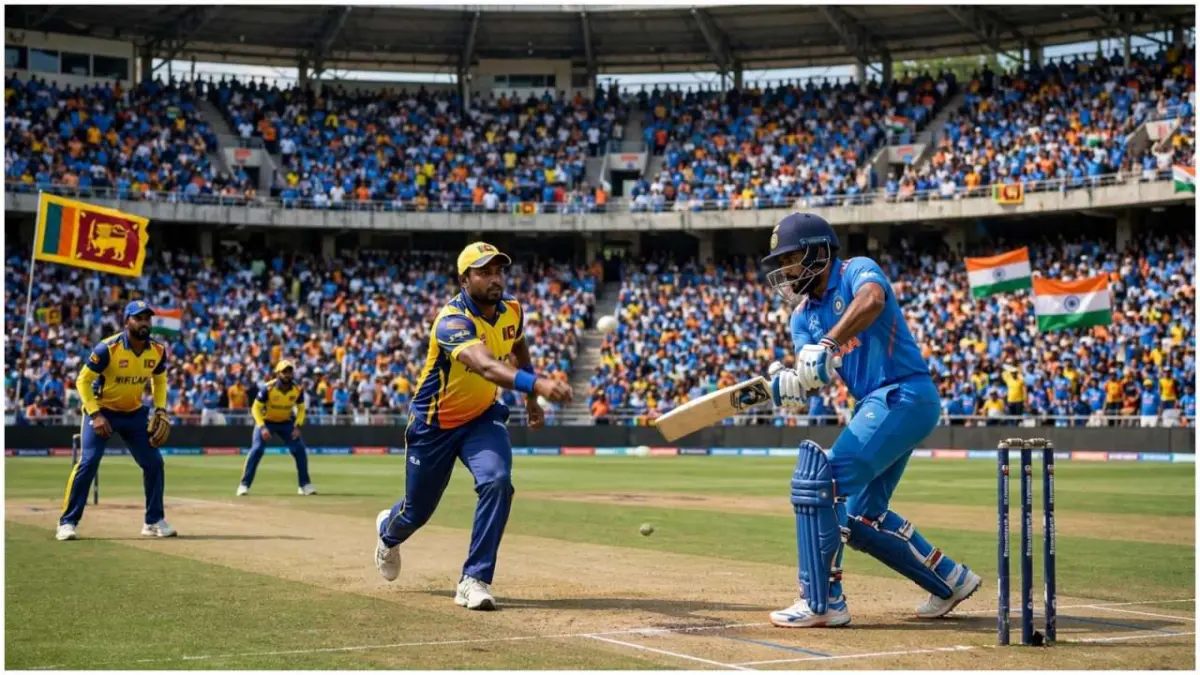
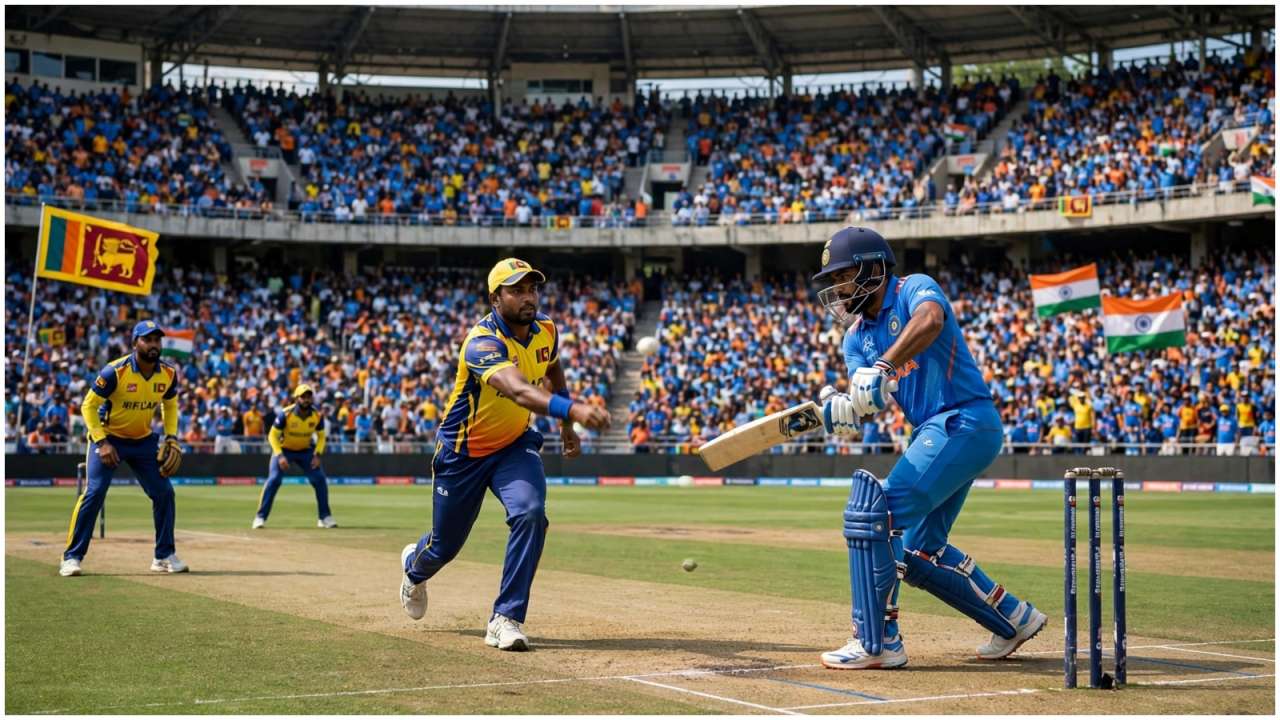
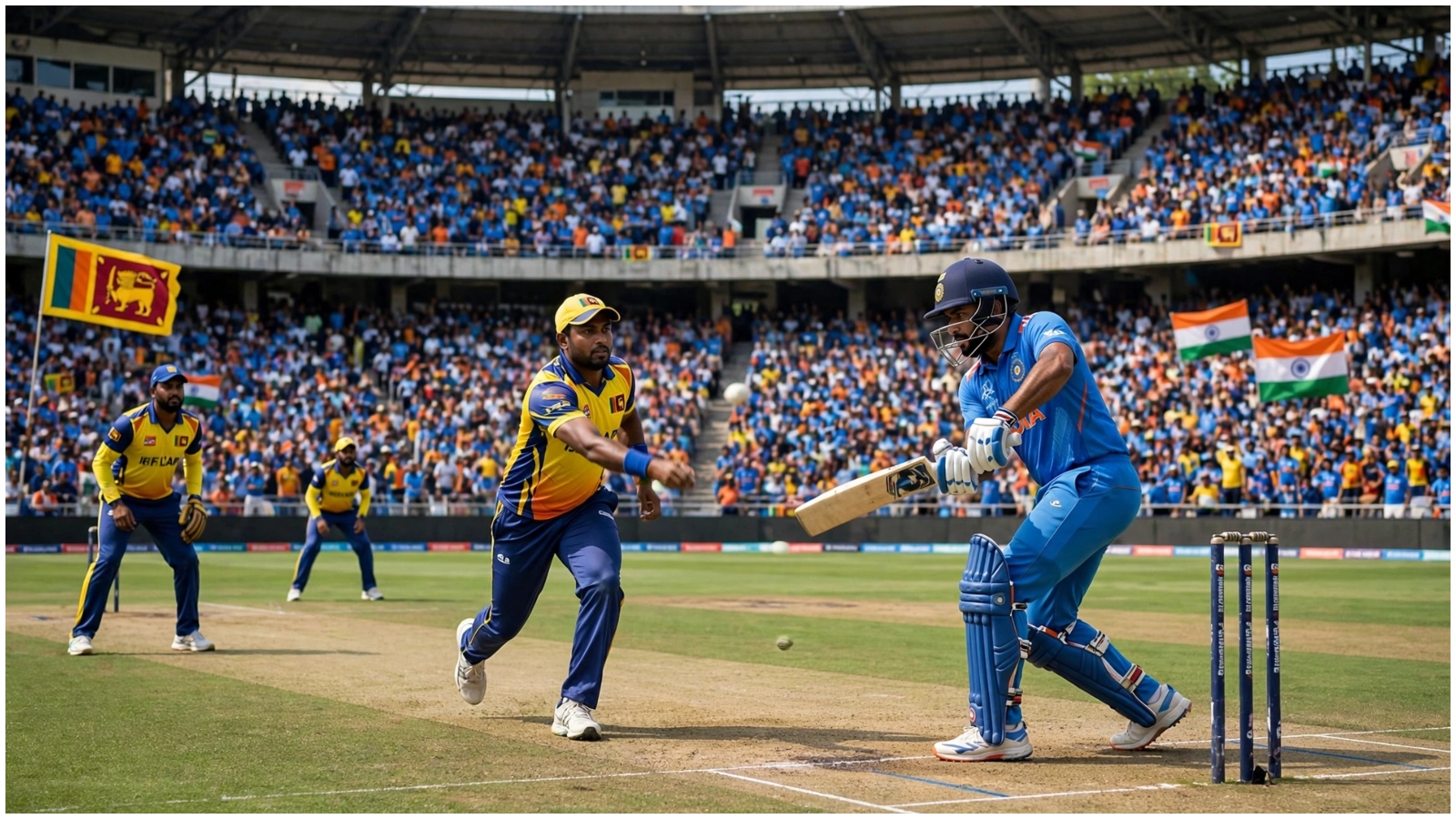
NEW DELHI, [Insert Date] – The Board of Control for Cricket in India (BCCI) has decisively put an end to swirling speculation regarding a potential last-minute venue change for the opening One Day International (ODI) between India and Sri Lanka. Contrary to widespread reports that suggested the December 13 fixture could be shifted from Delhi’s Arun Jaitley Stadium to Ahmedabad, the BCCI has clarified that the match will proceed as originally scheduled in the national capital.
The recent flurry of claims, primarily circulating within various media outlets and online platforms, had created considerable confusion among cricket enthusiasts, logistical planners, and stakeholders. These reports cited ongoing construction and renovation work at the Arun Jaitley Stadium as the primary reason for the purported relocation. However, BCCI Secretary Devajit Saikia, in an official statement, unequivocally dismissed these suggestions, urging reliance on official communications for accurate updates regarding the much-anticipated bilateral series.
"Reports suggesting that the India-Sri Lanka ODI match scheduled in Delhi may be shifted to Ahmedabad are not accurate," Saikia stated on Monday. "There has been no such decision by the BCCI. We request media colleagues to kindly refer to official BCCI communications for any updates regarding the schedule. Further, it needs to be reiterated that bilateral matches are primarily allotted by following a standard policy."
This clarification brings much-needed stability to the planning for the series, which is set to commence on December 13 and conclude on December 27, featuring three ODIs and three T20Is. The announcement reaffirms the Arun Jaitley Stadium’s readiness to host international cricket and underscores the BCCI’s commitment to its pre-determined schedule.
)
The Genesis of Confusion: Unpacking the Rumours
The whispers of a venue change began to gain traction in the days leading up to the official BCCI statement. Media reports, some citing unnamed sources within cricketing circles, suggested that the Delhi & District Cricket Association (DDCA), the governing body for cricket in Delhi and the administrators of the Arun Jaitley Stadium, was facing challenges in completing certain infrastructural upgrades or maintenance work ahead of the series. These reports quickly snowballed, with Ahmedabad, already slated to host the third ODI of the series, emerging as the most frequently cited alternative venue.
The logic behind Ahmedabad as a potential replacement was understandable. The Narendra Modi Stadium, with its colossal capacity and state-of-the-art facilities, has a proven track record of successfully hosting major international matches, including high-profile encounters like the recent ICC Cricket World Cup 2023 final. Furthermore, with Ahmedabad already on the itinerary for the series, the logistical complexities of shifting an additional match there might have appeared less daunting than finding an entirely new host city.

However, the rapid dissemination of these unverified reports generated significant anxiety. Fans who had already made travel and accommodation arrangements for the Delhi match, or purchased tickets, found themselves in a state of limbo. Such last-minute changes, while occasionally unavoidable due to unforeseen circumstances, can severely disrupt spectator plans, leading to financial losses and widespread frustration. It also creates a logistical nightmare for broadcasters, team management, and support staff who operate on meticulously planned schedules.
Arun Jaitley Stadium: A Historical Venue Under Scrutiny
The Arun Jaitley Stadium, formerly known as Feroz Shah Kotla Ground, holds a revered place in Indian cricket history. Established in 1883, it is one of the oldest cricket grounds in the country and has been the scene of numerous iconic moments, including Anil Kumble’s perfect ten against Pakistan in 1999 and Sachin Tendulkar’s record-breaking 35th Test century. Its rich heritage makes it a preferred venue for international matches, particularly for a high-profile series opener involving the Indian national team.
)
Over the years, like many historic venues, the Arun Jaitley Stadium has undergone several phases of renovation and modernization to meet contemporary international standards. The purported "ongoing construction work" cited in the unverified reports could refer to a variety of routine maintenance activities or specific upgrades designed to enhance spectator experience, media facilities, or player amenities. For instance, stadiums frequently undertake pitch relaying, dressing room refurbishments, corporate box upgrades, or improvements to floodlighting and digital scoreboards. While such work is essential for the long-term viability of a stadium, if not managed efficiently, it can indeed lead to concerns about readiness, especially when an international fixture is imminent.
The DDCA, which manages the stadium, has faced scrutiny in the past regarding infrastructure and organizational aspects. This historical context might have lent a degree of credibility to the recent rumours, amplifying the concern that the venue might not be fully prepared. However, the BCCI’s definitive statement now confirms that any such concerns, if they existed, have either been addressed or were unfounded to begin with, ensuring the Delhi crowd will witness the series opener as planned.
)
Ahmedabad’s Readiness: A Constant Backup
While Delhi remains the host, it’s worth noting why Ahmedabad consistently features in discussions about alternative venues. The Narendra Modi Stadium, located in Motera, Ahmedabad, is the largest cricket stadium in the world, with a seating capacity of 132,000. Since its grand reconstruction and reopening in 2020, it has become a premier destination for major cricketing events, hosting everything from Test matches and ODIs to the IPL final and the ICC World Cup 2023 final.
Its modern facilities, expansive infrastructure, and proven ability to handle large crowds make it an ideal emergency replacement or a preferred venue for high-stakes matches. The stadium boasts multiple pitches, world-class dressing rooms, extensive media facilities, and excellent connectivity, minimizing logistical headaches. The fact that Ahmedabad is already scheduled to host the third ODI on December 19 further solidifies its position as a reliable option within the Indian cricket calendar. This dual role, both as a scheduled host and a ready alternative, highlights the increasing concentration of high-quality cricketing infrastructure in certain Indian cities.
)
BCCI’s Official Stance and the Call for Media Responsibility
BCCI Secretary Devajit Saikia’s statement was not merely a denial but also a clear directive to media organizations. His request for "media colleagues to kindly refer to official BCCI communications for any updates" underscores the importance of accurate reporting and the potential damage caused by unverified news. In the age of rapid digital information flow, unofficial reports can quickly spiral, creating unnecessary panic and undermining the credibility of official bodies.
The BCCI, as the apex cricketing body in India, maintains various official channels for disseminating information, including its website, press releases, and direct communication with accredited journalists. Saikia’s emphasis serves as a reminder that major decisions, particularly those impacting international fixtures, are only considered final once announced through these recognized avenues. This stance aims to curb speculation and ensure that fans and other stakeholders receive timely and correct information directly from the source.
)
Decoding BCCI’s Match Allocation Policy
Saikia’s statement also included a crucial mention: "it needs to be reiterated that bilateral matches are primarily allotted by following a standard policy." This "standard policy" is a multi-faceted approach that the BCCI employs to ensure fair distribution of international matches across various cricketing centers in India, while also considering logistical and commercial factors.
Key elements of this policy typically include:
)
- Rotation Policy: The BCCI aims to rotate matches among different state cricket associations to give all regions an opportunity to host international cricket. This ensures that the sport reaches diverse fan bases across the country and helps in the development of local cricketing infrastructure.
- Infrastructure Readiness: A venue must meet stringent international standards set by the ICC and BCCI regarding pitch quality, outfield, floodlights, dressing rooms, spectator facilities, media boxes, and security arrangements. Regular inspections are conducted to ensure compliance.
- State Association’s Capacity: The financial and organizational capacity of the host state association (e.g., DDCA for Delhi) to successfully manage an international match, including ticketing, hospitality, security, and local logistics, is a critical factor.
- Commercial Viability: Factors like local interest, potential for ticket sales, and sponsorship opportunities can also influence venue selection, especially for high-profile series.
- Logistical Considerations: Ease of travel, accommodation options, and connectivity for teams, officials, and broadcasters play a significant role, particularly in a series involving multiple venues.
Any deviation from this standard policy, such as a venue change, is a serious matter and would typically only be considered under extraordinary circumstances, such as unavoidable natural calamities, severe security threats, or profound and irreconcilable infrastructural issues. The BCCI’s firm denial suggests that none of these extreme conditions applied to the Arun Jaitley Stadium, allowing the standard allocation policy to stand.
The Ripple Effect: What a Venue Change Entails
While the BCCI has confirmed no change, understanding the potential implications of a last-minute venue shift helps contextualize the importance of Saikia’s clarification. A venue change, even for a single match, triggers a cascade of logistical and financial challenges:
)
- For Fans: The most immediate impact is on ticket holders. Refunds or exchanges become necessary, often with complicated procedures. Travel plans (flights, trains, buses) and accommodation bookings would need to be cancelled or rebooked, leading to significant financial losses and inconvenience.
- For Teams and Support Staff: Revised travel itineraries, changes in hotel bookings, and adjustments to practice schedules would be required. This can disrupt team routines and impact player preparation.
- For Broadcasters: Television and digital broadcasters invest heavily in setting up equipment, personnel, and infrastructure at each venue. A sudden change necessitates relocating all this, incurring substantial additional costs and potentially impacting broadcast quality or schedules.
- For Sponsors and Advertisers: Venue-specific advertising placements and activations would need to be altered, affecting marketing campaigns and potentially leading to renegotiations.
- For Host Associations: The original host association (DDCA in this case) would lose out on revenue from ticket sales, hospitality, and local sponsorships. The new host association (e.g., Gujarat Cricket Association for Ahmedabad) would face the daunting task of rapidly organizing an international fixture.
- Reputational Impact: Frequent or last-minute changes can tarnish the reputation of the organizing body and the host country, raising questions about planning and preparedness on the international stage.
The BCCI’s swift action to quash the rumours, therefore, saved all these stakeholders from considerable disruption and potential losses, ensuring a smoother run-up to the India-Sri Lanka series.
The Broader Context of India’s Cricket Calendar
India’s cricket calendar is notoriously packed, featuring an almost continuous cycle of bilateral series, multi-nation tournaments, and the Indian Premier League (IPL). Managing this intricate schedule across various formats and venues is a monumental task for the BCCI. Each series, whether against a top-tier team or an emerging cricketing nation, carries significant weight in terms of international rankings, player development, and commercial commitments.
)
The India-Sri Lanka series, while not part of the World Test Championship or a major ICC event, is a crucial bilateral engagement. It provides valuable game time for both squads, allows for experimentation with team combinations, and offers an opportunity for players to hone their skills in different conditions. For Sri Lanka, touring India is always a high-profile assignment, offering exposure and a chance to test themselves against one of the world’s strongest teams. Maintaining a stable and predictable schedule is paramount to the success of these tours and the overall health of international cricket.
India vs Sri Lanka: Full Fixtures Confirmed
With the venue for the first ODI now firmly established, the full schedule for Sri Lanka’s tour of India stands as follows:
)
ODI Series
- 1st ODI (Dec 13): India vs Sri Lanka, Arun Jaitley Stadium, Delhi (2 PM IST)
- 2nd ODI (Dec 16): India vs Sri Lanka, Chinnaswamy Stadium, Bengaluru (2 PM IST)
- 3rd ODI (Dec 19): India vs Sri Lanka, Narendra Modi Stadium, Ahmedabad (2 PM IST)
T20I Series
)
- 1st T20I (Dec 22): India vs Sri Lanka, Saurashtra Cricket Association Stadium, Rajkot (7 PM IST)
- 2nd T20I (Dec 24): India vs Sri Lanka, Barabati Stadium, Cuttack (7 PM IST)
- 3rd T20I (Dec 27): India vs Sri Lanka, Maharashtra Cricket Association Stadium, Pune (7 PM IST)
Cricket fans across India can now confidently look forward to the series, secure in the knowledge that the initial schedule will be adhered to. The BCCI’s timely intervention not only quelled an unnecessary controversy but also reaffirmed the robust planning and operational stability underpinning India’s vibrant international cricketing calendar. The focus now shifts back to the action on the field, as India prepares to host Sri Lanka for what promises to be an engaging contest across both limited-overs formats.
