An Unforgettable Comeback: Harmanpreet Kaur’s Emotional 91* Ignites Zimbabwe T20I
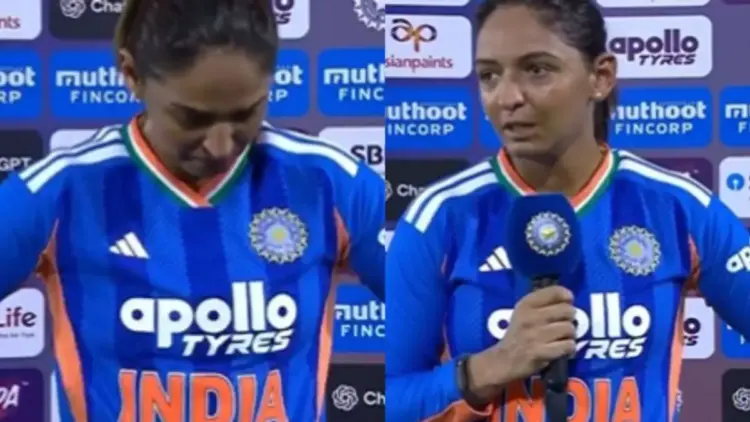
HARARE, ZIMBABWE – October 20, 2026 – In a display of raw emotion and devastating power-hitting, India’s former captain, Harmanpreet Kaur, smashed an unbeaten 91 runs off just 41 balls against Zimbabwe in the third T20 International. The innings, punctuated by 10 fours and 5 towering sixes, not only propelled India to a commanding total but also marked a profound personal triumph for the veteran batter. Breaking a lean spell of ten innings without a half-century and playing her first significant knock since stepping down from the captaincy, Kaur’s emotional outburst on live television resonated deeply with fans and pundits alike, signifying a powerful return to her most destructive form.
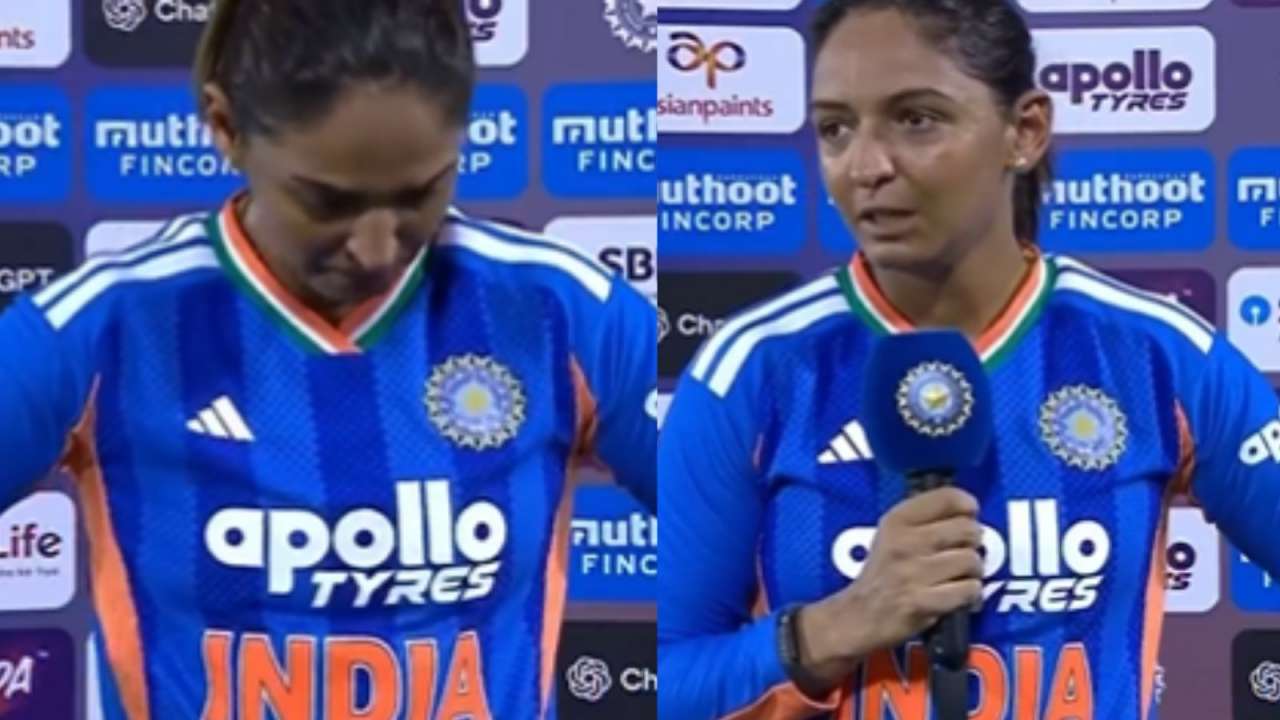
The sight of Harmanpreet, tears welling in her eyes as she spoke during the innings break, offered a rare glimpse into the immense pressure and personal sacrifice that often accompany elite sports leadership. Her performance was more than just a statistical highlight; it was a testament to resilience, a release of pent-up frustration, and a declaration of her renewed joy in the game, unburdened by the armband.
The Spark of a Comeback: Main Facts
Harmanpreet Kaur’s scintillating 91 not out came at a blistering strike rate of 221.95, anchoring the Indian innings and ensuring a dominant performance against the hosts. This extraordinary effort in the third match of the bilateral T20I series against Zimbabwe was her first half-century as a non-captain, following a period of intense scrutiny and introspection. Her innings was a masterclass in controlled aggression, blending exquisite timing with her characteristic brute force, particularly evident in the five sixes that soared over the ropes.
The significance of the knock was amplified by the context of her recent past. Having voluntarily relinquished the captaincy across all formats just weeks prior, Harmanpreet had been under immense pressure, both self-imposed and external, to rediscover her scoring touch. The innings served as a definitive answer to her critics and a powerful affirmation of her enduring class. Her visible emotion during the post-innings interview underscored the depth of her struggle and the sheer relief that accompanied this spectacular return to form. It was a performance that spoke volumes about the mental fortitude required to navigate the highs and lows of international cricket, especially for a player of her stature.
A Journey of Pressure and Poise: The Chronology of a Resurgence
Harmanpreet Kaur’s emotional 91* was not an isolated event but the culmination of a challenging period, marked by significant decisions and relentless hard work. To fully appreciate the magnitude of her comeback, it is crucial to trace the chronological path that led to this cathartic moment in Harare.
Before the Innings: The Weight of the Armband and a Search for Form
The months leading up to the Zimbabwe series had been a trying time for Harmanpreet Kaur. After years of leading the Indian women’s team with distinction, she made the significant decision to step down from captaincy across all formats earlier this month. This move was widely speculated to be a result of a combination of factors: the immense pressure associated with leading a high-profile national team, a perceived dip in her personal batting form, and perhaps a desire to focus solely on her primary role as a destructive middle-order batter. While her leadership had brought India many memorable victories, including deep runs in ICC tournaments, the captaincy often came with a heavy emotional toll, particularly during challenging phases for the team.

Her batting statistics over the preceding ten innings painted a picture of a player struggling for consistency, a shadow of the dominant force she is known to be. Across various formats, the big scores that were once her hallmark had eluded her, leading to questions about her form and future. This lean patch coincided with and perhaps contributed to the decision to cede captaincy, suggesting a strategic move to alleviate pressure and rediscover her natural game.
Crucially, after the Asian Games, where India had a mixed performance, Harmanpreet dedicated herself to intensive training. She openly credited batting coach Himanshu Chawla for his unwavering support and specialized guidance during this period. "He worked tirelessly with me after the Asian Games," she shared, hinting at technical adjustments and perhaps more importantly, mental conditioning to help her navigate the turbulent waters of professional sport. This period of quiet work behind the scenes, away from the glare of leadership, proved instrumental in rebuilding her confidence and refining her technique.

Another significant influence, as revealed in her emotional interview, was former India women’s coach WV Raman. His words, "Now you do what you want to do," resonated deeply with Harmanpreet. Raman, known for his astute cricketing insights and empathetic coaching style, understood the burdens of captaincy. His advice was not just about technique but about reclaiming the joy and freedom that initially drew her to the game. It was a powerful affirmation that she had earned the right to play for herself, to express herself without the additional layer of strategic and emotional responsibility that comes with leadership. This counsel served as a psychological reset button, allowing her to approach the game with a fresh perspective.
During the Innings: A Symphony of Power and Precision
Walking to the crease in the third T20I against Zimbabwe, Harmanpreet carried the weight of her recent past and the hopes of her team. The early moments of her innings were crucial. She revealed post-match that a boundary off the second ball she faced was pivotal. "The ball was coming nicely to the bat. I gained a lot of confidence from that shot," she stated, highlighting how a single, well-executed stroke can unlock a batter’s rhythm and belief. This early boundary was a sign of intent and a clear indication that she was seeing the ball well, an essential ingredient for any big score.

From that point, Harmanpreet settled into a dominant display. She started cautiously, rotating the strike, but quickly shifted gears, unleashing her trademark power-hitting. The innings was a masterclass in accelerating through the middle overs, turning good balls into boundaries and punishing anything slightly off-line. Her ten fours were a mix of cover drives, pulls, and delicate deflections, showcasing her versatility, while the five sixes were pure exhibitions of brute strength, clearing the boundary with ease. Each boundary seemed to strip away another layer of past frustration, replaced by a growing sense of liberation. The crowd, sensing a special innings, was captivated as Harmanpreet steadily built towards her half-century, and then accelerated towards an almost century. The partnerships she formed, particularly with younger players, also allowed her to play with freedom, knowing that support was available at the other end. She dictated the pace, manipulated the field, and brought up her fifty with characteristic aggression, before launching into a final flourish that saw her finish tantalizingly close to a hundred.
After the Innings: The Emotional Release and Candid Reflections
The moment Harmanpreet walked off the field, her face etched with a mix of exhaustion and profound relief, was met with thunderous applause. But it was during the live television interview that the full impact of her journey became evident. As she began to speak, her voice wavered, and tears welled up, a raw and unfiltered display of emotion that resonated globally.

"It feels great. Just wanted to enjoy myself," she managed to say, her voice choked with emotion. This simple statement encapsulated the essence of her comeback – a return to the sheer pleasure of playing cricket, unburdened by external expectations. She publicly thanked WV Raman for his impactful advice, reiterating, "You said, ‘Now you do what you want to do,’ and that’s what I want to do." This moment was a powerful testament to the influence of a mentor and the importance of psychological support in high-pressure environments. Her gratitude extended to Himanshu Chawla, acknowledging the technical and mental groundwork laid after the Asian Games, which clearly paid dividends in this match.
Later, in the post-match press conference, a more composed Harmanpreet elaborated on the newfound freedom. "I don’t think there is any pressure anymore. Now it’s all about going out there and enjoying myself," she declared. This statement was not just about her individual game but also a broader reflection on the psychological impact of leadership. By stepping down, she had consciously chosen to prioritize her personal game and mental well-being, a decision that this innings emphatically validated. The boundary off the second ball, which she cited as a confidence booster, was a small but crucial detail, illustrating how even minor successes can trigger a cascade of positive outcomes for a player grappling with form.

Statistical Brilliance and Historical Context: Supporting Data
Harmanpreet Kaur’s unbeaten 91 is not just a personal milestone; it is a statistically significant performance that solidifies her place among India’s cricketing elite and offers fascinating insights into her career trajectory.
Statistical Breakdown of the 91*
- Runs Scored: 91* (not out)
- Balls Faced: 41
- Strike Rate: 221.95
- Boundaries: 10 Fours, 5 Sixes
- Boundary Percentage: Approximately 85% of her runs came from boundaries (10×4 + 5×6 = 40 + 30 = 70 runs out of 91). This highlights the destructive nature of her innings.
- Lean Run Halted: This innings ended a ten-match streak across all formats where she failed to register a half-century, a significant monkey off her back.
Captaincy vs. Non-Captaincy Performance
This 91* marks Harmanpreet’s first half-century since relinquishing the captaincy. While a single innings is not enough to draw definitive conclusions, it aligns with a well-observed phenomenon in sports where players, freed from leadership responsibilities, often experience a resurgence in their individual performance. The mental burden of captaincy, which involves tactical decisions, team management, media interactions, and constant scrutiny, can sometimes overshadow a player’s natural game. Without these pressures, Harmanpreet can now channel all her energy and focus purely into her batting. Historically, some of her most explosive innings, including her early career breakthroughs, came before she took on the full-time captaincy role, suggesting that a more singular focus often brings out her best.

Historical Context in Women’s T20Is
Her 91 not out against Zimbabwe is the second-highest score by an Indian batter batting at number four or lower in Women’s T20 Internationals. The only score higher on this elite list remains her monumental 103 runs against New Zealand at the 2018 T20 World Cup in Providence. That legendary knock not only made her the first Indian woman to score a T20I century but also established her reputation as one of the most feared power-hitters in the world. The current innings, while not a century, mirrors the same destructive intent and ability to single-handedly change the complexion of a match from a middle-order position. It reaffirms her unique ability to score rapidly and turn the tide when the team needs it most. This consistency in delivering high-impact innings from lower down the order makes her an invaluable asset to the Indian team.
Voices of Support and Analysis: Official Responses
The cricketing world, from coaches to former players and pundits, has reacted with a mix of empathy and admiration to Harmanpreet Kaur’s spectacular comeback. Her emotional display resonated deeply, drawing widespread support and analytical commentary.

WV Raman’s Endorsement
Former India women’s coach WV Raman, who was on commentary during the match, undoubtedly felt a sense of vindication and pride upon hearing Harmanpreet’s public acknowledgement. Raman, a respected figure in Indian cricket, has always advocated for creating an environment where players can express themselves freely. His philosophy, often centered on mental fortitude and individual empowerment, clearly had a profound impact on Harmanpreet. While his immediate reaction on air was likely one of quiet satisfaction, those familiar with his coaching style would understand that his advice was not just about technique but about helping a player reconnect with their intrinsic motivation. Cricket pundits widely agree that Raman’s timely counsel might have been the crucial psychological nudge Harmanpreet needed to shed the burden and play with abandon. His words served as a potent reminder that sometimes, the best way to succeed is to simplify and trust one’s instincts.
Himanshu Chawla’s Impact
Batting coach Himanshu Chawla’s role, though less public, appears to have been equally significant. Harmanpreet’s specific mention of his efforts after the Asian Games underscores the detailed, personalized work they undertook. Coaches like Chawla often work on both the technical aspects of batting – refining stance, shot selection, and power generation – and the mental game, helping players manage pressure and rebuild confidence. His reaction would likely be one of quiet satisfaction, seeing his hard work manifest on the biggest stage. This collaboration highlights the importance of specialized coaching support in modern cricket, allowing players to address specific areas of their game away from the general team training. Experts suggest that Chawla likely focused on helping Harmanpreet rediscover her natural rhythm and power, which had been somewhat muted during her lean patch, ensuring she was both physically and mentally prepared for such an explosive return.

Team Management and Fellow Players
The Indian team management and current coach would undoubtedly view Harmanpreet’s return to form as a massive boost. Her experience, leadership qualities (even without the armband), and match-winning ability make her an indispensable part of the squad. Her performance not only strengthens the middle order but also sets an inspiring example for younger players. The sight of a senior player battling through a tough phase and emerging stronger would surely galvanize the dressing room. Teammates would likely express immense happiness and relief, knowing that one of their most impactful players is back to her best. Her emotional display would have fostered a deeper connection and empathy within the squad, reinforcing the idea that vulnerability is also a strength. Many players, having witnessed her struggles and hard work first-hand, would be celebrating this personal victory alongside her.
Broader Cricket Fraternity
The broader cricket fraternity, including former players and commentators, has hailed Harmanpreet’s innings as a remarkable testament to resilience. Social media was abuzz with messages of support and admiration, recognizing the courage it takes to openly display vulnerability while performing at the highest level. Many pundits drew parallels with other athletes who have thrived after shedding leadership roles, emphasizing the unique psychological challenges that come with captaincy. Her comeback is seen as a powerful narrative, not just for Indian women’s cricket but for sports globally, underscoring the importance of mental health and finding joy in one’s craft.

Looking Ahead: Implications for Harmanpreet and Indian Cricket
Harmanpreet Kaur’s emotional 91* against Zimbabwe is more than just a single performance; it carries profound implications for her individual career, the dynamics of the Indian women’s cricket team, and potentially, the broader conversation around athlete well-being.
For Harmanpreet Kaur: A Renewed Lease on Batting Life
For Harmanpreet herself, this innings represents a powerful psychological reset. By publicly acknowledging the pressure and emotion, she has not only validated her decision to step down from captaincy but also allowed herself to heal and rediscover her authentic batting self. This performance could very well be the catalyst for a second wind in her illustrious career. Freed from the strategic and emotional burden of leadership, she can now fully immerse herself in her primary role: that of a destructive, match-winning batter. This renewed focus might enable her to play with greater freedom, take more calculated risks, and consistently deliver the kind of high-impact innings for which she is renowned. It promises a version of Harmanpreet that is less burdened, more expressive, and potentially even more dangerous. The next few series will be crucial in confirming if this is a sustained return to form, but the initial signs are overwhelmingly positive.

For the Indian Team: Strengthening the Core and Evolving Dynamics
Harmanpreet’s resurgence is an immense boon for the Indian women’s cricket team. Her return to form strengthens the middle order significantly, providing stability and explosive power crucial for T20 cricket. In upcoming major tournaments, a firing Harmanpreet will be a formidable asset, capable of turning games on her own. Her presence, even without the captaincy, provides invaluable experience and a calming influence in the dressing room. The new captain, whoever it may be, will benefit immensely from having a senior player of Harmanpreet’s calibre contributing wholeheartedly without the additional pressure of leading the side. This dynamic could foster a more collaborative environment, with the leadership responsibilities distributed, allowing everyone to focus on their specific roles. Her emotional honesty might also encourage other players to be more open about their struggles, fostering a supportive team culture.
Broader Message: Mental Well-being and the Athlete’s Journey
Beyond the boundaries, Harmanpreet’s journey sends a powerful message about mental well-being in elite sports. Her decision to step down, followed by this emotional comeback, highlights the immense pressure athletes face and the importance of prioritizing mental health. It normalizes the idea that even the strongest leaders need support and that stepping back can sometimes be the most courageous step forward. This narrative can inspire countless young athletes to understand that vulnerability is not weakness, and that finding joy in their sport is paramount. Her story serves as a poignant reminder that behind every statistic and every trophy, there is a human being navigating immense challenges and triumphs.

As Harmanpreet Kaur embarks on this new chapter of her career, unburdened and unleashed, the cricketing world watches with anticipation. Her emotional 91* against Zimbabwe was not just a score; it was a powerful declaration of intent, a testament to resilience, and a beacon of hope for every athlete striving to rediscover their passion amidst pressure. This innings may well be remembered as the moment Harmanpreet Kaur truly started to "do what she wants to do," once again lighting up the world of women’s cricket with her fearless spirit and undeniable talent.