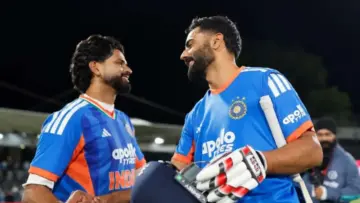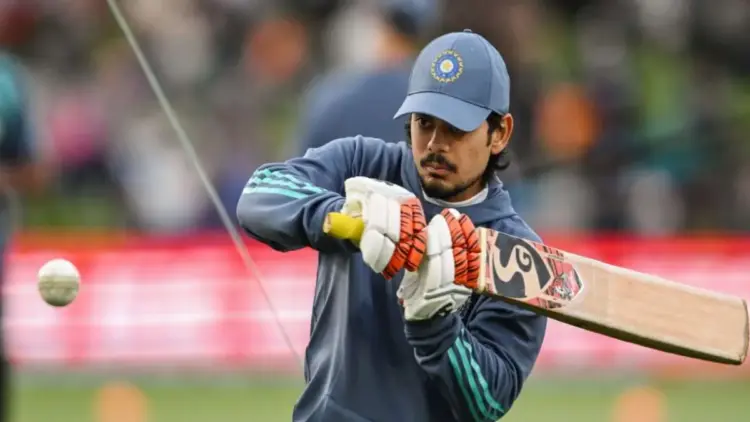
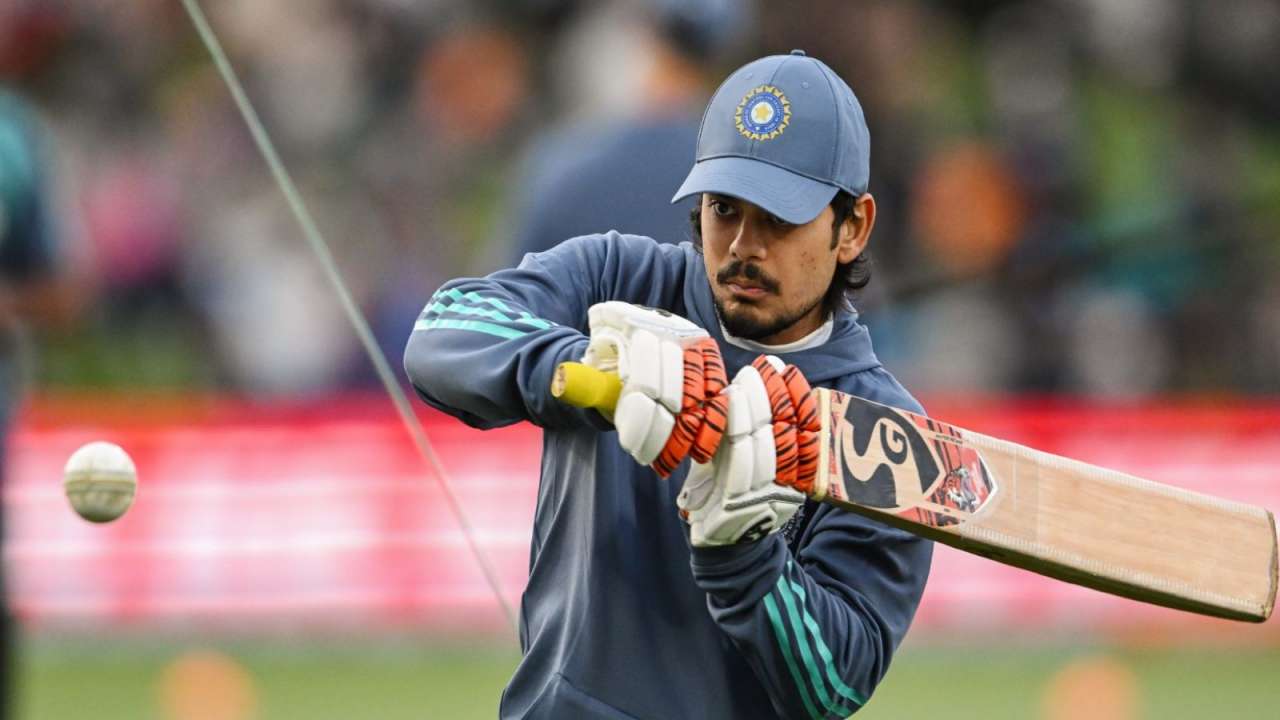
Christchurch, New Zealand – October 25, 2026 – In a significant setback for the Indian cricket team, dynamic wicketkeeper-batter Ishan Kishan has been officially ruled out of the crucial second Twenty20 International against New Zealand. The Board of Control for Cricket in India (BCCI) confirmed on Friday that Kishan sustained a low-grade right adductor strain during the thrilling series opener, necessitating his immediate withdrawal from Saturday’s fixture at Hagley Oval. The BCCI medical team is closely monitoring his progress, casting a shadow of uncertainty over his availability for the remainder of the extensive tour.
Kishan’s absence presents an immediate challenge for the Indian team management, which must now recalibrate its playing XI and strategy following a hard-fought victory in the first T20I. The 28-year-old, known for his explosive batting and agile wicketkeeping, is a vital cog in India’s white-ball machinery, and his sudden unavailability underscores the physical demands of modern international cricket.
Chronology of Events Leading to Kishan’s Sidelining
The India-New Zealand series, comprising five T20 Internationals, five One-Day Internationals, and two Test matches, commenced with high expectations and a tightly packed schedule. Ishan Kishan, having established himself as a prominent figure in India’s limited-overs setup, was expected to play a pivotal role, either as an aggressive opener or a middle-order enforcer.
The Thrilling Series Opener:
The unfortunate incident unfolded during the first T20I at Christchurch on Thursday. New Zealand, batting first, put on a formidable total of 225 for 4, powered by a blistering 82 not out from Glenn Phillips and a quickfire 45 from Finn Allen. India, facing a daunting chase, responded with characteristic aggression. Kishan, batting at number five, came to the crease under pressure. While details surrounding the exact moment of injury remain unspecified by the BCCI, it was during his brief stint at the crease, where he managed to score just one run before being dismissed by Mitchell Santner, that he sustained the low-grade right adductor strain. Such injuries often occur during sudden explosive movements, sharp turns, or powerful shots, all integral parts of a T20 batter’s repertoire.
Initial Concerns and Medical Assessment:
Following the match, which India dramatically won by four wickets with two balls to spare thanks to heroic efforts from Sanju Samson (67 off 33), Shreyas Iyer (42 off 28), and an unbeaten 42 off 15 balls from Naman Dhir, concerns about Kishan’s fitness began to emerge. The team’s medical staff immediately assessed the extent of the injury.
Batting Coach’s Early Confirmation:
India’s batting coach, Sitanshu Kotak, was among the first to provide an update, confirming the severity of the situation. "Ishan has a small groin strain," Kotak stated, indicating the initial diagnosis. He further added, "I don’t think he’ll play in tomorrow’s game either," signaling the early prognosis and the team’s pragmatic approach to player welfare. Kotak’s remarks, made prior to the official BCCI announcement, provided an early indication of the challenge ahead for the team selection.

Official BCCI Announcement:
The initial assessment by the medical team culminated in an official announcement from the BCCI on Friday, confirming Kishan’s unavailability for the second T20I. The statement specified the nature of the injury as a "low-grade right adductor strain," reinforcing the need for caution and proper recovery. The BCCI also emphasized that their medical team would continue to monitor Kishan’s progress, a standard protocol to ensure comprehensive rehabilitation and a safe return to play.
Looking Ahead to the Second T20I:
With Kishan now on the sidelines, the focus shifts to Saturday’s second T20I at Hagley Oval. The team management faces the task of finalizing a replacement and adjusting the team’s balance, all while aiming to consolidate their 1-0 lead in the five-match series. The quick turnaround between matches, combined with the intensity of the series, highlights the relentless demands placed on international cricketers.

Supporting Data: Kishan’s Importance, Series Context, and Medical Insights
Ishan Kishan’s injury is not merely the absence of a player; it’s the temporary loss of a key performer whose contributions span multiple facets of the game. Understanding his role, the series dynamics, and the nature of his injury provides crucial context to this development.
Ishan Kishan’s Vital Role and Recent Trajectory:
Since his international debut, Ishan Kishan has rapidly ascended the ranks to become one of India’s most exciting white-ball cricketers. His statistics speak volumes: 67 Twenty20 Internationals, where he has amassed 1,955 runs at a commendable average of 31.03 and a blistering strike rate of 148.55. These numbers underscore his aggressive approach and his ability to score quickly, often turning the tide of a match with his fearless batting.

Kishan’s versatility is another significant asset. He can open the innings, providing explosive starts, or bat in the middle order, acting as an accelerator or finisher. His left-handed batting provides a crucial variation in India’s predominantly right-handed batting line-up, making it difficult for opposition bowlers to settle into a rhythm. Beyond his batting prowess, Kishan’s wicketkeeping skills add an invaluable dimension to the team. His agility behind the stumps allows for an extra specialist bowler or batter in the playing XI, offering greater tactical flexibility to the captain.
His inclusion in the ODI squad for the same New Zealand tour further highlights his importance across formats and his status as a multi-format contender for India. Kishan’s journey has seen him experience both exhilarating highs, such as his double hundred in ODIs, and periods of introspection, but he has consistently demonstrated the resilience and talent required to perform at the highest level. His current form and confidence would have been crucial for India in this challenging tour, making his injury particularly ill-timed.

The High-Stakes India-New Zealand Series:
The ongoing series against New Zealand is more than just another bilateral contest. For India, it serves as a critical phase in their long-term planning, particularly with an eye on future ICC tournaments. Each match provides an opportunity to test squad depth, refine strategies, and build team cohesion. The first T20I perfectly encapsulated the competitive spirit of the series. India’s successful chase of 226 was a testament to their batting firepower and composure under pressure, securing a vital 1-0 lead. The performances of Samson, Iyer, and Dhir showcased the depth of talent within the Indian camp, but Kishan’s aggressive flair was also a part of the expected contributions.
New Zealand, despite the loss, demonstrated their formidable capabilities, especially with the bat, setting a high standard for the rest of the series. The second T20I at Hagley Oval is now pivotal, as New Zealand will be eager to level the series on their home turf, while India will aim to extend their lead. The full tour itinerary – five T20Is, five ODIs, and two Test matches – promises a grueling and comprehensive challenge for both sides, demanding peak physical fitness and mental resilience from all players.

Understanding Adductor Strains in Elite Athletes:
An adductor strain refers to an injury of the muscles located on the inner thigh, collectively known as the adductor magnus, adductor longus, and adductor brevis. These muscles are crucial for bringing the legs together, stabilizing the pelvis, and assisting in various hip movements, including rotation and flexion. In sports like cricket, which involve explosive movements, sudden changes of direction, powerful throwing, and quick sprints between wickets, adductor strains are relatively common.
Adductor strains are typically graded based on severity:

- Low-grade (Grade 1): This involves microscopic tears to the muscle fibers. Symptoms usually include mild pain or tenderness, especially during movement, but no significant loss of strength or function. Recovery typically ranges from 1 to 3 weeks.
- Moderate (Grade 2): More significant tearing of muscle fibers, leading to moderate pain, swelling, and some loss of strength and mobility. Recovery can take 3 to 6 weeks.
- Severe (Grade 3): A complete rupture or tear of the muscle, resulting in intense pain, significant swelling, bruising, and a complete loss of function. This often requires surgery and can lead to a recovery period of several months.
Ishan Kishan’s diagnosis of a "low-grade right adductor strain" is reassuring in the context of long-term recovery, suggesting it’s not a severe injury. However, even a low-grade strain can be debilitating for an athlete, causing pain during running, squatting (relevant for wicketkeeping), and explosive batting movements. Rehabilitation for such an injury typically involves an initial phase of rest, ice, compression, and elevation (RICE), followed by a progressive program of gentle stretching, strengthening exercises, and functional movements, carefully guided by physiotherapists and sports medicine specialists. The primary goal is not just to heal the muscle but to restore full strength, flexibility, and agility to prevent recurrence, which is a common concern with groin injuries if not managed meticulously.
Official Responses and Management Protocol
The response from the Indian cricket management and the BCCI has been swift and aligned with standard operating procedures for player injuries. The emphasis has been on transparency, player welfare, and meticulous monitoring.

BCCI’s Formal Communication:
The official statement from the BCCI served as the definitive confirmation of Ishan Kishan’s injury and his exclusion from the second T20I. While concise, such statements are crucial for keeping stakeholders, including fans, media, and other teams, informed. The phrase "The BCCI Medical Team is monitoring his progress" is a standard but important part of the announcement. It signifies that Kishan is under constant observation by specialist medical professionals, who are responsible for assessing the injury’s evolution, prescribing treatment, and formulating a rehabilitation plan. This structured approach ensures that player health is prioritized and decisions regarding their return to play are based on expert medical advice.
Team Management’s Pragmatism:
The early comments from batting coach Sitanshu Kotak offered a valuable glimpse into the immediate assessment and the practical implications for the team. Kotak’s candid acknowledgment of a "small groin strain" and his prediction that Kishan would miss the next game demonstrated a pragmatic approach. In the fast-paced world of international cricket, where schedules are relentless, quick and decisive action on player injuries is paramount. It allows the team to adjust its plans promptly and focus on the available resources. This proactive communication helps in managing expectations and preparing contingency strategies.

Implied Strategy from Captain and Coach:
While no direct quotes from the captain or head coach were provided in the initial reports regarding Kishan’s injury, their strategic approach can be inferred. Any team management, especially in a long and demanding tour, must have contingency plans for player injuries. The focus would undoubtedly be on trusting the depth of the squad and empowering other players to step up. The philosophy often revolves around prioritizing the long-term fitness of a player over short-term gains, especially for a "low-grade" injury where rushing back could exacerbate the problem. The captain and coach would work closely with the medical team to understand the recovery timeline and make informed decisions about selection, ensuring the team’s balance is maintained without compromising player welfare.
Medical Team’s Role and Protocol:
The BCCI Medical Team plays a pivotal role in such situations. Their protocol typically involves:

- Diagnosis: Confirming the type and grade of injury through clinical examination and, if necessary, imaging like MRI scans.
- Immediate Management: Implementing RICE (Rest, Ice, Compression, Elevation) and pain management.
- Rehabilitation Plan: Developing a tailored rehabilitation program focusing on pain reduction, restoration of range of motion, strengthening exercises, and gradual return to sport-specific activities.
- Monitoring and Assessment: Continuous evaluation of the player’s progress, adjusting the rehabilitation plan as needed, and performing fitness tests to clear the player for a return to competitive cricket.
- Communication: Liaising regularly with the team management, coaches, and the player to provide updates and ensure a coordinated approach.
This comprehensive medical framework ensures that Kishan receives the best possible care, aiming for a full recovery and minimizing the risk of re-injury.
Implications for the Series and Kishan’s Future
Ishan Kishan’s injury carries significant implications, both for the immediate dynamics of the India-New Zealand T20I series and for Kishan’s personal trajectory in the national team.

Immediate Team Composition and Strategy Shifts:
The most immediate consequence of Kishan’s absence is the need for a forced change in India’s playing XI for the second T20I. Given his dual role as a wicketkeeper-batter, there are a few likely scenarios for his replacement:
- Like-for-Like Replacement: If another specialist wicketkeeper-batter is available in the squad, such as Jitesh Sharma, he would be the most straightforward replacement. Jitesh Sharma has shown glimpses of his explosive batting in domestic cricket and the IPL.
- Sanju Samson Taking the Gloves: Sanju Samson, who played a match-winning knock in the first T20I, could potentially take over the wicketkeeping duties. This would open up a batting slot for another specialist batter, perhaps someone like Rinku Singh or even a bowler if the team management desires a different balance. However, making Samson keep might add an extra workload, especially if he is also expected to anchor the innings.
- Batting Order Reshuffle: Regardless of who comes in, Kishan’s absence might necessitate a slight reshuffle in the batting order. The team management will have to weigh the options carefully, considering the conditions at Hagley Oval and the strengths of the available players.
The challenge for the team will be to maintain the winning momentum without a key player, ensuring that the team’s balance and aggressive intent remain intact. This situation will be a true test of India’s squad depth and the adaptability of the coaching staff.

Kishan’s Road to Recovery and Future Engagements:
The "low-grade" nature of the adductor strain offers a degree of optimism, suggesting a relatively shorter recovery period compared to more severe injuries. However, the exact timeline for Kishan’s return remains uncertain.
- Remainder of the T20I Series: His participation in the subsequent T20Is will depend entirely on how he responds to treatment and rehabilitation. Even if he recovers quickly, the team management might opt for caution, especially given the length of the tour.
- ODI Series Concerns: More critically, Kishan is also a member of India’s squad for the five-match ODI series against New Zealand, which follows the T20Is. A prolonged absence could jeopardize his involvement in that series, impacting his match fitness and rhythm ahead of other crucial assignments.
- Personal Form and Rhythm: Any time away from competitive cricket can affect a player’s form and rhythm. For an explosive batter like Kishan, who relies on timing and confidence, a break, even due to injury, can be challenging to overcome upon return.
- Long-Term Outlook: The focus for the medical team will be on ensuring a complete and robust recovery to prevent the injury from becoming a chronic issue. Adductor strains, if not managed properly, can recur, which could have a more significant long-term impact on his career.
Broader Player Management and Injury Concerns:
Kishan’s injury is a stark reminder of the increasing frequency of player injuries in modern cricket. The relentless international schedule, combined with the high-intensity nature of all three formats, places immense physical stress on athletes. This incident highlights:

- Workload Management: The critical importance of player workload management, rotation policies, and effective rest and recovery protocols.
- Sports Science: The indispensable role of sports science, strength and conditioning coaches, and medical teams in monitoring player fitness, identifying potential risks, and implementing preventative measures.
- Squad Depth: The necessity for international teams to cultivate a deep pool of talent, capable of stepping up when key players are unavailable. India’s ability to absorb Kishan’s absence and still perform at a high level will be a testament to its robust domestic structure and talent pipeline.
In conclusion, while Ishan Kishan’s injury is an unfortunate setback, particularly after India’s exhilarating win in the first T20I, the focus now shifts to prudent player management and leveraging the team’s inherent strengths. The coming days will be crucial for Kishan’s recovery and for India’s quest to maintain its dominance in what promises to be an enthralling series against New Zealand. The incident once again brings to the fore the delicate balance between pushing for performance and safeguarding the long-term health of elite athletes in a demanding sporting landscape.