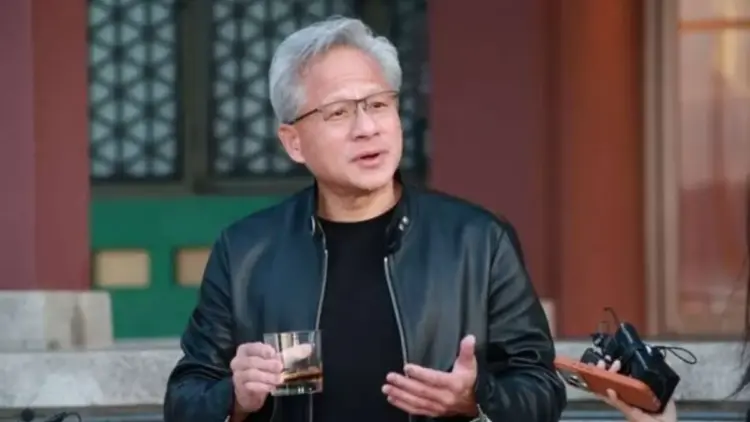
SANTA CLARA, CA – November 13, 2026 – Nvidia Corporation, the undisputed titan of artificial intelligence hardware, is embarking on a critical search for a permanent Chief Executive Officer following the abrupt resignation of its visionary co-founder and long-time leader, Jensen Huang. Huang, who steered the company for an remarkable 33 years, departed on November 12, effective immediately, citing personal reasons that have drawn public scrutiny. The sudden leadership vacuum at the helm of one of the world’s most strategically important technology companies has ignited intense speculation across the global tech industry and financial markets, with a diverse slate of high-profile candidates reportedly vying for the coveted position.
The company’s board has swiftly appointed Chief Financial Officer Colette Kress as interim CEO, tasking her with ensuring operational continuity while a comprehensive search for a permanent successor gets underway. This high-stakes selection process is expected to scrutinize both internal talent and external industry stalwarts, including a notable cohort of three Indian-origin executives whose names are prominently circulating in reports from Reuters and other media outlets. Sanjay Mehrotra, CEO of Micron Technology; Nikesh Arora, CEO of Palo Alto Networks; and Thomas Kurian, CEO of Google Cloud, are among the leading external contenders. Their names are being mentioned alongside other technology luminaries such as Arm CEO Rene Haas, AMD CEO Lisa Su, and even Apple’s Tim Cook, underscoring the immense significance and strategic challenges inherent in leading Nvidia during this unprecedented era of AI-driven transformation.
The individual ultimately chosen to succeed Huang will inherit a company at the very epicenter of the AI boom, navigating not only explosive growth and fierce competition but also complex geopolitical export restrictions and mounting regulatory scrutiny of AI investments. This transition marks a watershed moment for Nvidia, the broader technology landscape, and the future trajectory of artificial intelligence itself.
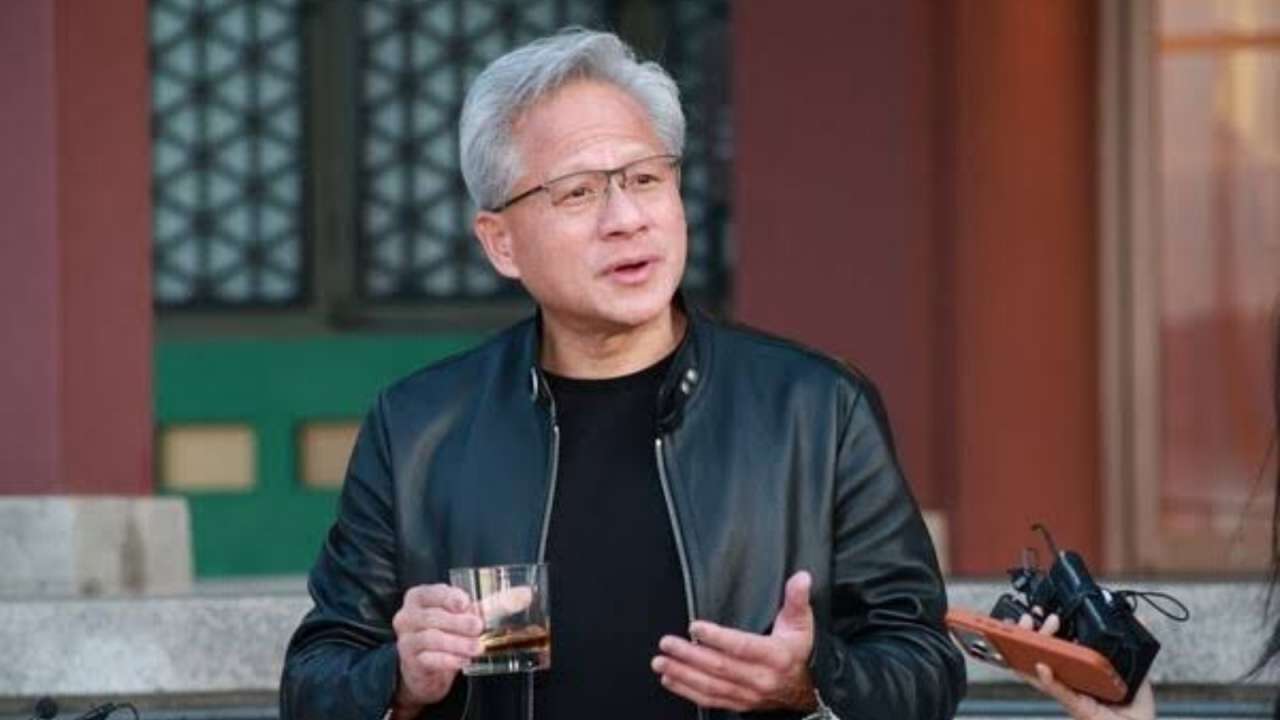
The Unforeseen Departure and the Global Search
Jensen Huang’s resignation on November 12, 2026, sent shockwaves through the technology sector. For over three decades, Huang had been the singular, charismatic face of Nvidia, guiding it from a nascent graphics card manufacturer to an indispensable architect of the modern AI revolution. His departure, effective immediately and reportedly due to unspecified reasons related to his private life, leaves an enormous void at a time when Nvidia’s influence has never been greater.
The board’s prompt action in naming Colette Kress, a highly respected and experienced CFO with a long tenure at Nvidia, as interim CEO was a crucial move to stabilize investor confidence and ensure operational stability. Kress, who joined Nvidia in 2013, possesses an intimate understanding of the company’s financial health, strategic initiatives, and operational intricacies, making her a natural choice for temporary leadership. Her appointment signals the board’s commitment to a seamless transition while emphasizing that Nvidia’s product roadmap and core operations will continue without interruption.
The search for a permanent CEO is not merely about finding a competent executive; it is about identifying a leader capable of sustaining Nvidia’s extraordinary momentum, innovating at an unprecedented pace, and skillfully navigating a complex global landscape. The reported list of candidates—ranging from established CEOs of major tech firms to internal architects of Nvidia’s success—reflects the multifaceted demands of the role. The next CEO must possess not only profound technical acumen but also strategic foresight, geopolitical savvy, and the leadership prowess to inspire a global workforce driving the cutting edge of technological advancement. The stakes could not be higher, as the chosen leader will directly influence the future direction of AI infrastructure worldwide.
A Timeline of Leadership Transition and Market Reaction
Jensen Huang’s journey with Nvidia began in 1993, co-founding the company with Chris Malachowsky and Curtis Priem. Over the next 33 years, he cultivated a culture of relentless innovation, famously pivoting the company from merely producing graphics cards for gaming to developing the Graphics Processing Unit (GPU) as a general-purpose parallel processor. This strategic foresight laid the groundwork for the CUDA computing platform, which would later become the foundational engine for machine learning and artificial intelligence.
Key Milestones of Huang’s Tenure:
- 1993: Nvidia founded.
- 1999: Invented the GPU, revolutionizing computer graphics and laying the groundwork for parallel processing.
- 2006: Launched CUDA, enabling GPUs to be programmed for general-purpose computing, a critical step towards AI.
- 2012 onwards: Aggressively invested in AI research and development, positioning GPUs as the essential compute engine for deep learning.
- 2020-2023: Witnessed explosive growth and market dominance as the generative AI boom took hold, with Nvidia’s H100 and A100 GPUs becoming the de facto standard for AI training and inference.
- Late 2025/Early 2026: Nvidia’s market capitalization soared, often ranking among the world’s most valuable companies, fueled by insatiable demand for its AI accelerators.
November 12, 2026: The announcement of Jensen Huang’s immediate resignation marks an abrupt end to his storied tenure. While the official communication from Nvidia’s board focused on ensuring continuity and a robust search process, media reports, specifically from Reuters, indicated the departure stemmed from "scrutiny over his private life." This terse explanation, lacking further detail, has fueled widespread speculation and discussion within industry circles, though Nvidia has refrained from elaborate public commentary beyond the initial announcement.

Immediate Aftermath: The board moved swiftly to appoint Colette Kress, the company’s highly respected CFO, as interim CEO. This decision was largely seen as a pragmatic measure to maintain stability and reassure investors. Kress’s deep institutional knowledge and financial acumen are critical assets during this transitional period. The board emphasized its commitment to evaluating both internal and external candidates, signaling a thorough and deliberate process for finding a permanent successor.
Market Reaction: The initial market reaction to such a high-profile, unexpected departure from a company so central to a booming sector is typically characterized by volatility. While specific stock movements aren’t detailed in the provided content, it’s reasonable to infer that Nvidia’s share price likely experienced an initial dip as investors digested the news, followed by stabilization as the interim leadership was announced and the board committed to a comprehensive search. Analysts and industry observers would have immediately focused on the potential impact on Nvidia’s strategic direction, innovation pipeline, and competitive positioning, given Huang’s integral role as both a technical visionary and a business strategist. The market’s long-term response will undoubtedly hinge on the perceived strength and vision of the eventual permanent CEO.
Nvidia’s Strategic Apex and the AI Imperative
Nvidia stands at a truly unique and critical juncture in technological history. Its strategic apex is defined by its near-monopolistic position in the supply of high-performance GPUs, which have become the fundamental building blocks for artificial intelligence. The explosion of generative AI, epitomized by large language models like ChatGPT, has created an unprecedented demand for Nvidia’s specialized hardware, propelling the company to extraordinary financial heights and making it one of the world’s most valuable corporations.

Dominance in AI Hardware:
Nvidia’s H100 and A100 GPUs, along with its full stack of software and networking solutions, are the gold standard for AI training and inference in data centers globally. Its CUDA platform, a proprietary parallel computing architecture, acts as a powerful ecosystem lock-in, making it incredibly difficult for competitors to catch up. Developers and researchers have invested years building on CUDA, creating a vast library of tools, frameworks, and applications that run optimally on Nvidia hardware. This formidable ecosystem provides a significant competitive moat, securing Nvidia’s market share even as rivals like AMD push their own AI accelerators.
Explosive Financial Performance:
In the years leading up to Huang’s departure, Nvidia experienced exponential revenue growth and record-breaking profits, driven almost entirely by the insatiable demand from hyperscalers, cloud providers, and enterprises building AI capabilities. Its market capitalization has soared, frequently surpassing trillion-dollar valuations, reflecting investor confidence in its continued leadership in the AI space. This financial strength provides Nvidia with ample resources for R&D, strategic acquisitions, and expanding its manufacturing and supply chain capabilities.
The Weight of the Role – Challenges and Opportunities:
The next CEO will inherit a company with immense opportunities but also significant challenges:

- Sustaining Innovation: The pace of AI development is blistering. The new CEO must ensure Nvidia continues to innovate at the forefront, developing next-generation architectures, expanding its software ecosystem, and exploring new AI paradigms beyond traditional deep learning.
- Intensifying Competition: While dominant, Nvidia faces formidable competition. AMD is aggressively investing in its MI series of accelerators, Intel is pushing its Gaudi platform, and major tech giants like Google (TPUs) and Amazon (Inferentia/Trainium) are developing custom silicon to reduce their reliance on external vendors. The CEO must maintain Nvidia’s competitive edge through superior performance, cost-effectiveness, and a robust software stack.
- Geopolitical Landscape: The US-China tech rivalry and associated export restrictions (particularly on advanced AI chips to China) present a complex and evolving challenge. The CEO must navigate these geopolitical currents, balancing compliance with market access, and potentially developing region-specific products without compromising technological leadership.
- Supply Chain Resilience: Manufacturing advanced semiconductors is a complex global endeavor. Ensuring a resilient and scalable supply chain, especially in the face of global disruptions and geopolitical tensions, will be a perpetual challenge.
- Regulatory Scrutiny and AI Ethics: As AI becomes more powerful and pervasive, Nvidia, as a foundational technology provider, will face increasing scrutiny regarding market dominance, anti-competitive practices, and the ethical implications of AI development. The CEO must be prepared to engage with regulators, policymakers, and the public on these critical issues.
- Diversification and New Markets: While AI data centers are paramount, the CEO will also need to drive growth in other areas, such as automotive AI, professional visualization, and the metaverse, ensuring Nvidia’s long-term relevance across multiple high-growth sectors.
Leading Nvidia today means not just managing a business, but steering a global technological force with profound implications for industries, economies, and societies worldwide.
Official Responses and Candidate Speculation
Following Jensen Huang’s resignation, Nvidia’s official communications have been carefully calibrated to project stability and confidence in the company’s future direction. The board’s primary message has been one of continuity, assuring stakeholders that operations, strategic initiatives, and the product roadmap will proceed without interruption.
Nvidia Board Statement: The board emphasized its commitment to a thorough and deliberate search for a permanent CEO, considering both highly qualified internal candidates and external industry leaders. This approach is standard for high-profile executive transitions, designed to signal due diligence and a commitment to finding the best possible fit. The board also publicly expressed its gratitude to Jensen Huang for his unparalleled contributions to Nvidia’s success over three decades.

Colette Kress’s Role: As interim CEO, Colette Kress has stepped into a pivotal role. Her long tenure as CFO, having joined Nvidia in 2013, makes her an invaluable asset during this transition. She possesses a deep understanding of Nvidia’s financial health, strategic investments, and operational complexities. Her appointment provides immediate stability and internal leadership, allowing the board ample time to conduct its comprehensive search without undue pressure. While an interim role, Kress’s performance during this period could also position her as a strong internal candidate for the permanent position, demonstrating her ability to lead the company beyond financial stewardship.
Lack of Official Commentary from Candidates: As is customary in such high-stakes executive searches, none of the individuals reportedly under consideration have issued public statements regarding their potential candidacy. Such speculation is generally met with silence from the individuals involved, preserving their professional standing and respecting the confidentiality of the search process. Their current employers also typically refrain from commenting on rumors concerning their executives. The information regarding potential candidates, as cited by Reuters, originates from industry sources and is reflective of informed speculation within the technology community rather than official confirmations.
Jensen Huang’s Departure Statement: Beyond the brief mention of "scrutiny over his private life" as a reason for his immediate resignation, Huang himself has not made an extensive public statement regarding his departure. This lack of detailed commentary from the departing CEO is notable, especially for a figure who has been so central and visible to his company for so long. The focus from Nvidia has been squarely on the future and the stability of the organization moving forward, rather than dwelling on the specifics of Huang’s personal reasons for leaving. This approach aims to minimize disruption and maintain market confidence during a sensitive transition period.

The Future Leadership Landscape: A Deep Dive into Potential Successors
The search for Jensen Huang’s successor is one of the most critical decisions in corporate America, given Nvidia’s pivotal role in the global economy and the future of AI. The candidates being discussed represent a blend of proven leadership, deep technical expertise, and strategic vision.
The Indian-Origin Contenders
The reported inclusion of three Indian-origin executives highlights the growing influence of this talent pool in leading major global technology corporations. Each brings a unique skill set and track record of success:
-
Sanjay Mehrotra (CEO, Micron Technology):

- Background: Co-founder of SanDisk, served as its CEO before its acquisition by Western Digital. Became CEO of Micron Technology in 2017. Has extensive experience in the semiconductor memory and storage industry.
- Relevance to Nvidia: Mehrotra’s leadership at Micron, a major player in memory technology, is highly relevant. Nvidia’s GPUs are increasingly reliant on high-bandwidth memory (HBM), making expertise in memory architecture and manufacturing crucial. His experience managing a large-scale, complex semiconductor company through market cycles demonstrates robust operational and strategic capabilities.
- Pros: Deep semiconductor industry experience, proven CEO of a multi-billion dollar company, understanding of critical components for AI hardware.
- Cons: Primarily focused on memory, not GPU architecture or AI software stack. Transition from a memory company to a GPU/AI platform company might require a significant shift in strategic focus.
-
Nikesh Arora (CEO, Palo Alto Networks):
- Background: Former Senior Vice President and Chief Business Officer at Google, then President and COO of SoftBank Group. Currently CEO of cybersecurity giant Palo Alto Networks since 2018.
- Relevance to Nvidia: Arora brings a strong background in enterprise software, cloud services, and global business development from his time at Google and SoftBank. His current role at Palo Alto Networks involves navigating complex enterprise security landscapes, which increasingly integrate AI. His strategic vision and experience in scaling businesses globally could be valuable.
- Pros: Strong strategic leader, extensive experience in enterprise tech and global markets, proven ability to grow and transform companies.
- Cons: Lacks direct semiconductor design or manufacturing experience, and his primary focus has been software and cybersecurity, not core AI hardware.
-
Thomas Kurian (CEO, Google Cloud):
- Background: Spent 22 years at Oracle, rising to President of Product Development. Joined Google in 2019 to lead Google Cloud.
- Relevance to Nvidia: Kurian has been instrumental in dramatically growing Google Cloud’s market share and expanding its enterprise offerings, including AI services. His experience in cloud computing, enterprise software, and bringing AI solutions to businesses aligns well with Nvidia’s strategy of expanding its software and platform offerings for AI deployment.
- Pros: Deep experience in cloud and enterprise software, proven track record of growing a major tech business unit, understanding of AI application at scale.
- Cons: Similar to Arora, his background is more on the software and cloud services side rather than the core hardware design and semiconductor manufacturing that is Nvidia’s historical strength.
Industry Veterans and Internal Stalwarts
Beyond the Indian-origin executives, the list of rumored candidates includes a mix of internal champions and highly respected external figures, each bringing a distinct set of qualifications:

-
Colette Kress (Interim CEO, CFO of Nvidia):
- Relevance: As interim CEO and long-time CFO, Kress possesses unparalleled internal knowledge of Nvidia’s financials, strategy, and operations. She has been instrumental in managing the company’s hyper-growth.
- Pros: Deep institutional knowledge, trusted by the board, strong financial acumen, ensures continuity.
- Cons: Primarily a finance executive; questions might arise about her technical vision for AI and hardware innovation compared to a founder like Huang.
-
Ian Buck (VP Hyperscale, Architect of CUDA at Nvidia):
- Relevance: A true internal technical visionary, Buck is credited as the architect of CUDA, Nvidia’s foundational AI computing platform. He represents the technical heart of Nvidia.
- Pros: Deep technical expertise, instrumental in Nvidia’s core innovation, embodies the company’s engineering culture.
- Cons: Lacks CEO-level operational experience, particularly in navigating complex geopolitical and financial landscapes of a multi-billion dollar public company.
-
Rene Haas (CEO of Arm, ex-Nvidia):

- Relevance: Haas is currently the CEO of Arm, a critical intellectual property provider for the semiconductor industry. He previously held senior roles at Nvidia, including Vice President and General Manager of the computing products business. His return would be a homecoming.
- Pros: Strong semiconductor industry leadership, familiar with Nvidia’s ecosystem and culture, experience running a major tech company (Arm).
- Cons: Leading Arm is a different challenge than leading Nvidia. His departure from Nvidia might suggest reasons that could be revisited.
-
Lisa Su (CEO of AMD):
- Relevance: While highly unlikely due to her current role at Nvidia’s direct competitor, Lisa Su’s name often surfaces in such discussions purely because she is one of the most respected and successful CEOs in the semiconductor industry. She has engineered an impressive turnaround at AMD, making it a formidable rival.
- Pros: Unquestionable leadership, deep semiconductor expertise, proven track record of innovation and market share gains against Nvidia.
- Cons: Extremely improbable given her current position at AMD; a direct conflict of interest. Her inclusion on such lists is more a testament to her industry stature than a realistic possibility.
-
Pat Gelsinger (CEO of Intel):
- Relevance: Currently CEO of Intel, Gelsinger has a long and distinguished career in the semiconductor industry, including a significant tenure at Intel before leading VMware and then returning to Intel as CEO. His experience includes leading a major chip manufacturer through challenging times.
- Pros: Deep semiconductor industry knowledge, extensive experience leading large organizations, strong engineering background.
- Cons: His current role at Intel, Nvidia’s direct competitor in some segments, makes a move highly unlikely. The article incorrectly stated "ex-Intel CEO," but he is the current CEO. His name appearing is more symbolic of the type of heavyweight leader considered for such roles.
-
Johny Srouji (Senior Vice President of Hardware Technologies, Apple):

- Relevance: Srouji leads Apple’s highly secretive and successful internal chip development efforts, including the M-series and A-series processors. He is a master of large-scale, vertically integrated hardware development.
- Pros: Unparalleled expertise in custom silicon design and large-scale hardware engineering, experience managing critical technology development for a global giant.
- Cons: Primarily focused on internal chip development within a closed ecosystem, lacks experience in leading an external-facing, platform-centric company like Nvidia.
-
Tim Cook (CEO of Apple):
- Relevance: Another highly improbable but symbolically significant name. Cook has successfully led Apple to unprecedented heights, demonstrating extraordinary operational prowess and strategic leadership. His inclusion on any such list speaks to the desire for a leader of his caliber.
- Pros: One of the most successful and respected CEOs globally, master of supply chain, operations, and brand management.
- Cons: Extremely unlikely to leave Apple. His leadership style is more operational and less product-visionary than Huang’s, which might be a cultural mismatch for Nvidia.
Criteria for Selection: The next CEO of Nvidia will need an exceptional blend of technical acumen, strategic vision to anticipate future AI trends, battle-hardened leadership experience in hyper-growth environments, and the diplomatic skills to navigate geopolitical complexities. They must also be a financial steward, ensuring continued profitability and shareholder value, while fostering the unique innovation culture that Huang instilled. The ability to articulate a compelling vision for Nvidia’s future, inspiring both employees and the broader industry, will be paramount. Stepping into Jensen Huang’s shoes, a founder whose legacy is so intertwined with the company’s identity, will be an immense challenge requiring a truly extraordinary leader.
The Road Ahead: Navigating Nvidia’s Next Chapter
The departure of Jensen Huang marks the end of an era for Nvidia, but it also heralds the beginning of a new, pivotal chapter. The decision facing Nvidia’s board is not merely about replacing a CEO; it is about selecting the steward who will guide the company through the most transformative technological shift of our time. The choice will reverberate far beyond Nvidia’s campuses, influencing the trajectory of artificial intelligence, cloud computing, and numerous other industries globally.

The interim leadership of Colette Kress provides a necessary period of stability, allowing the board to conduct its exhaustive search without undue pressure. Whether an internal stalwart like Kress or Ian Buck will rise to the occasion, or if an external titan such as Sanjay Mehrotra, Nikesh Arora, or Thomas Kurian will be tapped, the selected individual must possess a rare combination of technical prowess, strategic foresight, and exceptional leadership qualities. They will be tasked with maintaining Nvidia’s aggressive innovation pace, navigating the treacherous waters of geopolitical trade policies, fostering healthy competition, and ensuring that Nvidia continues to be the foundational engine for the AI revolution.
The challenges are immense, from warding off increasingly sophisticated competitors to managing an ever-complex global supply chain and responding to growing regulatory scrutiny. Yet, the opportunities are equally vast. Nvidia stands poised to continue shaping the future of computing, from autonomous vehicles and robotics to the metaverse and beyond. The next CEO will not only inherit a technological powerhouse but also the immense responsibility of harnessing its capabilities for positive global impact. The world watches keenly as Nvidia embarks on this critical quest, preparing to write the next chapter in its extraordinary story.