

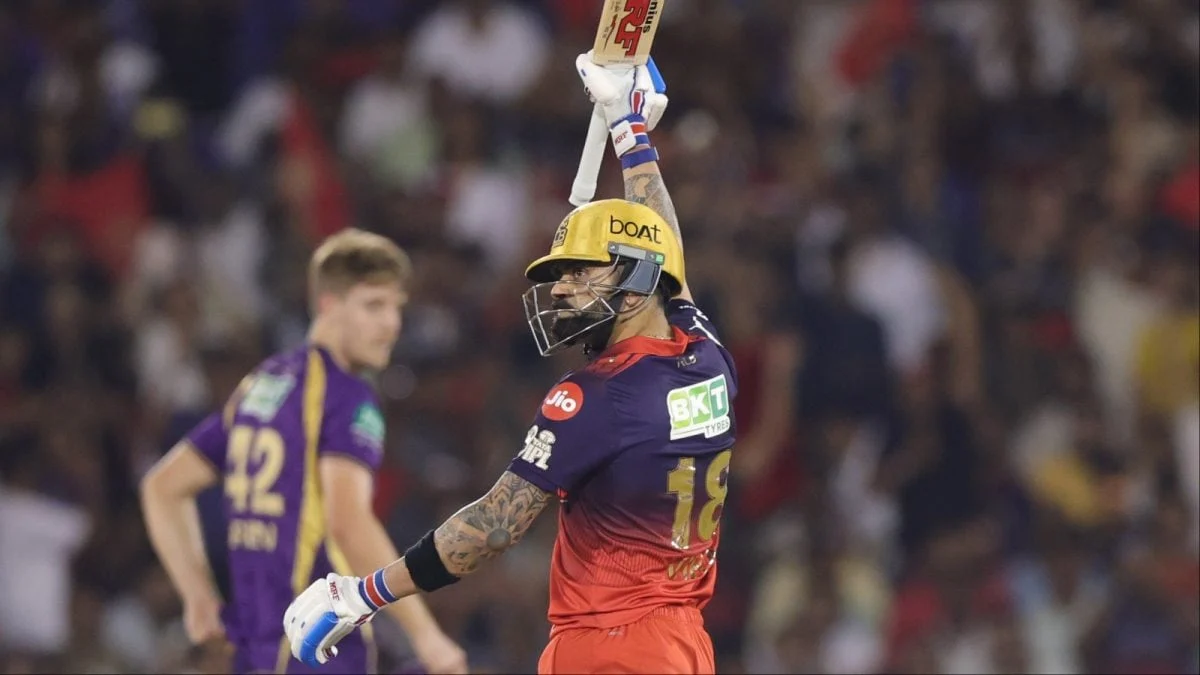
New Delhi, India – In a statement that has sent ripples across India’s sporting landscape, cricketing titan Virat Kohli has asserted that cricketers fall significantly short in fitness compared to their hockey counterparts, claiming they "aren’t even 15% of the fitness of an Indian hockey player." The candid remark, made at the prestigious RCB Innovation Lab Indian Sports Summit, has not only gone viral but has also drawn fervent reactions, particularly from the Indian hockey community, which views it as a powerful validation of their sport’s rigorous demands.
Kohli, widely regarded as the torchbearer of modern cricket’s fitness revolution, delivered this surprising assessment on May 19, 2026, challenging conventional perceptions and highlighting the often-underestimated physical prowess required by other sports. His words underscore a deeper conversation about the benchmarks of athleticism and the recognition of diverse sporting disciplines in a cricket-obsessed nation.
Main Facts: The Unfiltered Assessment from a Fitness Icon
Virat Kohli’s declaration came during a keynote address at the RCB Innovation Lab Indian Sports Summit, an event designed to foster dialogue around advancements and challenges in Indian sports. Speaking with his characteristic frankness, Kohli did not mince words when comparing the physical conditioning of cricketers to that of hockey players. "I know people sometimes look at fitness as something extraordinary, but for me, it is what the job demands. It should be the norm, not something celebrated as special," Kohli articulated, setting the stage for his impactful comparison.
He continued, "Cricket is in such prime focus in our country that we often overlook other sports. If I am being honest, we aren’t even 15% of the fitness of an Indian hockey player. If the hockey players watch our training sessions, they would laugh because their sport demands far more."
This statement, coming from an athlete whose personal commitment to fitness has transformed the Indian cricket team’s approach to physical conditioning, carries immense weight. Kohli’s rigorous training regimens, strict diet, and unwavering dedication to maintaining peak physical form have set new benchmarks in cricket, inspiring a generation of cricketers to prioritize athleticism. For him to openly admit a significant gap in fitness levels between cricketers and hockey players, therefore, is not a self-deprecating remark but rather a profound acknowledgment of the intense physical demands inherent in hockey. The comment swiftly gained traction across social media platforms, igniting debates and garnering widespread attention, shining an unexpected spotlight on the physical rigours of field hockey.
Chronology: From Summit Stage to National Dialogue
May 19, 2026, 21:56 IST: Virat Kohli addresses the RCB Innovation Lab Indian Sports Summit in New Delhi. During his speech, he emphasizes the importance of fitness as a fundamental requirement, not an exception, for professional athletes. He then makes the striking comparison between cricketers’ and hockey players’ fitness levels.
May 19, 2026, 21:59 IST: News outlets begin reporting on Kohli’s comments, with excerpts and quotes circulating rapidly across social media platforms. The phrase "aren’t even 15%" quickly becomes a trending topic.
Immediate Aftermath: The Indian hockey community, including current and former players, coaches, and administrators, begins to react. The sentiment is overwhelmingly positive, viewing Kohli’s statement as a significant endorsement and a much-needed recognition of their sport’s physical demands.
Historical Context of Fitness in Cricket:
For much of its history, cricket, particularly in India, was not traditionally seen as a sport demanding extreme athleticism. While skill and technique were paramount, physical conditioning often took a backseat. Players of previous generations, though undeniably talented, rarely adhered to the stringent fitness standards seen today. The late 20th and early 21st centuries saw a gradual shift, with captains like Sourav Ganguly introducing rudimentary fitness tests. However, it was truly under the influence of athletes like MS Dhoni and, most prominently, Virat Kohli, that fitness transformed from a desirable trait to an absolute prerequisite for international cricket. Kohli’s personal transformation and relentless pursuit of peak physical condition have redefined what it means to be a modern cricketer, making him an unlikely, yet powerful, voice to highlight the fitness disparities he now observes.
Historical Context of Fitness in Hockey:
Conversely, field hockey has always been a sport synonymous with relentless physical exertion. From its early forms to the modern, fast-paced game played on artificial turf, hockey demands continuous, high-intensity running, explosive sprints, sudden changes in direction, and intricate stick work performed under pressure. Players are constantly moving, covering significant distances in short bursts, requiring exceptional aerobic and anaerobic endurance. The nature of the game, with its non-stop action and minimal stoppages compared to cricket, naturally fosters a culture of extreme physical conditioning. This inherent demand has ensured that top-level hockey players consistently maintain some of the highest fitness standards in global sports.
Precedent of Recognition:
Kohli’s remarks echo earlier commendations from other prominent figures in Indian sports. Notably, during the Hero Asia Cup Rajgir, Bihar in 2025, South African mental conditioning expert Paddy Upton, who has worked extensively with both cricket and hockey teams, lauded the Indian Men’s Hockey Team for its unwavering commitment, exceptional fitness, and high professional standards. These instances collectively underscore a growing appreciation among experts for the physical tenacity exhibited by Indian hockey players. The fact that a figure like Kohli, revered for his own fitness, has now publicly acknowledged this superiority, elevates the conversation to an unprecedented level.
Supporting Data: A Deep Dive into Physiological Demands
To truly appreciate the weight of Kohli’s statement, it’s essential to delve into the comparative physiological demands of cricket and field hockey. While both are team sports requiring skill, strategy, and mental fortitude, their physical landscapes are vastly different.
Physiological Demands – Cricket:
Cricket is a sport of intermittent activity, with periods of high intensity followed by periods of rest or low-intensity movement. The demands vary significantly across formats:
- Test Cricket: Emphasizes endurance and recovery. Bowlers might bowl dozens of overs in a day, requiring significant muscular and cardiovascular stamina. Fielders are on the pitch for extended periods, covering ground and reacting to shots. Batters need mental and physical endurance for long innings, interspersed with short sprints between wickets. The overall pace is lower, but the duration is immense.
- One-Day Internationals (ODIs): A blend of endurance and power. Players engage in more frequent high-intensity sprints for fielding, quick singles, and doubles. Bowlers deliver up to 10 overs, maintaining intensity.
- Twenty20 (T20) Cricket: The most explosive format. Characterized by short, intense bursts of activity – rapid sprints for runs, aggressive fielding, and power hitting. Bowlers deliver short, intense spells. While the overall duration is shorter, the anaerobic demands are very high.
- Distance Covered: A T20 fielder might cover 8-10 km in a match, often in short bursts. A Test bowler could cover 20+ km over a day, but much of it is walking or jogging.
- Key Fitness Components: Anaerobic power (sprinting, jumping), aerobic endurance (recovery, long periods in the field), strength (bowling, hitting), agility, hand-eye coordination.
Physiological Demands – Field Hockey:
Field hockey, especially in its modern iteration, is a continuous, high-intensity aerobic and anaerobic sport.
- Continuous High-Intensity Running: Players are almost constantly in motion, moving across the pitch. A typical elite hockey player can cover between 8-12 km in a 60-minute match, a significant portion of which is at high speed or sprinting.
- Explosive Movements: The game demands frequent and rapid accelerations, decelerations, and changes of direction (COD). These bursts require powerful leg muscles and excellent anaerobic capacity.
- Core Strength and Agility: Maneuvering the ball with a stick while running at speed and fending off opponents requires exceptional core stability, balance, and agility. The constant bending and twisting place considerable strain on the core.
- Upper Body Strength: While often overlooked, stick control, hitting, and tackling require significant upper body and grip strength.
- Recovery: The short breaks between quarters and the continuous nature of play demand rapid recovery capabilities, highlighting the importance of a robust cardiovascular system.
- Key Fitness Components: Superior aerobic capacity (VO2 max), high anaerobic threshold, explosive power, exceptional agility, strong core, excellent muscular endurance, and rapid recovery.
Training Regimens:
- Cricket Training: Often includes a mix of gym work (strength, power), cardio (running, conditioning drills), and skill-specific practice. The focus can be tailored to individual roles (e.g., fast bowlers have different conditioning needs than specialist batters). Recovery is a significant component, especially in multi-day formats.
- Hockey Training: Heavily emphasizes endurance running, interval training, shuttle runs, agility drills, and strength training focused on the lower body and core. High-intensity small-sided games are common to simulate match conditions. The training mimics the continuous high-intensity nature of the game.
Expert Opinions and Scientific Consensus:
Sports scientists and physical trainers generally concur that sports like field hockey, soccer, and basketball, due to their continuous nature, high-intensity running, and frequent directional changes, demand a higher overall aerobic and anaerobic fitness profile compared to sports like cricket, which are more intermittent. While cricketers have made immense strides in fitness, the fundamental design of hockey necessitates a level of sustained physical output that is rarely matched in cricket.
"Kohli’s statement, while perhaps a slight exaggeration for rhetorical effect, captures a fundamental truth," explains Dr. Anjali Sharma, a sports physiologist based in Bengaluru. "The energy systems predominantly used in hockey are aerobic and anaerobic glycolytic, requiring players to maintain high power output for extended periods with minimal rest. Cricket, even in its T20 format, allows for more recovery time between efforts. A hockey player’s average heart rate during a match is significantly higher and more sustained than a cricketer’s, which speaks volumes about the cardiovascular demands."
This scientific perspective validates Kohli’s anecdotal observation, reinforcing the notion that while cricketers are fit, the sheer physiological grind of field hockey places its athletes in a unique category of endurance and explosive power.
Official Responses: Pride and Perspective from the Sporting Fraternity
Virat Kohli’s provocative statement has elicited a wave of responses from both the hockey and cricket communities, primarily characterized by pride, validation, and a call for introspection.
The Hockey Community’s Resounding Welcome:
The reaction from the Indian hockey fraternity has been overwhelmingly positive, bordering on celebratory. For years, Indian hockey, despite its rich legacy and recent resurgence, has often felt overshadowed by cricket in terms of public attention and recognition. Kohli’s words, therefore, serve as a powerful endorsement from arguably the biggest sporting icon in the country.
Hardik Singh, the star Indian midfielder, was among the first to express his appreciation. "Virat Kohli has performed for India under immense pressure for years and has set standards for fitness that athletes across sports look up to. So when someone of his stature says this, it means a lot to the hockey community," Singh remarked. His comments highlight the respect Kohli commands and the significant boost his words provide to the morale and recognition of hockey players.
Harmanpreet Singh, captain of the Indian Men’s Hockey Team, added another layer of insight, revealing a previous interaction with Kohli. "We had a great conversation around fitness not too long ago at an event. He told me hockey is such a fast sport and was curious to know about our fitness benchmarks," Harmanpreet shared. This anecdote suggests that Kohli’s recent public statement is not a sudden, uninformed opinion but rather an observation rooted in prior curiosity and possibly, personal investigation into hockey’s physical demands. It lends further credibility to his assessment.
A Senior Official from Hockey India, speaking on condition of anonymity, expressed similar sentiments: "It’s truly heartwarming to hear such praise from a legend like Virat. It validates the immense hard work and dedication our players put into their fitness. It also brings much-needed attention to the physical intensity of our sport, which is sometimes overlooked." This indicates that Kohli’s statement transcends mere compliments; it’s a strategic spotlight on a sport that could benefit from increased public awareness and appreciation.
Former Indian hockey captain and Olympian, Sardar Singh, weighed in, stating, "Virat Kohli is absolutely right. The nature of modern hockey demands non-stop action, high-speed sprints, and constant changes of direction. You cannot survive at the international level without being supremely fit. His words are a great motivator for our young players and a reminder to the nation of the fitness levels required in our sport."
The Cricket Community’s Perspective:
While Kohli’s direct colleagues in cricket have not yet issued public responses, the statement is likely to be met with a mix of acceptance, challenge, and inspiration within the cricketing fraternity.
- Acceptance: Many modern cricketers, having witnessed Kohli’s transformation and dedication, might view his comments as an honest self-assessment of the sport rather than an insult. They understand that different sports have different physical matrices.
- Challenge: For some, it might serve as a further challenge to elevate cricket’s fitness standards, pushing players to bridge whatever gap exists, even if the fundamental demands of the sport are different.
- Inspiration: Kohli’s own journey from a talented but less-fit cricketer to a fitness icon serves as a constant inspiration. His remarks could encourage even greater emphasis on strength, endurance, and agility across all formats of cricket.
- Self-Reflection: As Kohli himself is a cricketer, his critical self-assessment adds a layer of introspection to the cricketing world, prompting a re-evaluation of current training methodologies and fitness benchmarks.
The overall sentiment suggests that Kohli’s statement is being received not as a criticism, but as an insightful observation from a highly respected figure, sparking healthy dialogue and fostering inter-sport respect.
Implications: Shaping the Future of Indian Sports
Virat Kohli’s bold assertion carries significant implications for the landscape of Indian sports, extending beyond a mere comparison of fitness levels. His words are poised to influence inter-sport dynamics, promote a holistic fitness culture, and elevate the visibility of other sports in a cricket-dominated nation.
1. Fostering Inter-Sport Dialogue and Respect:
One of the most profound implications of Kohli’s statement is its potential to foster greater understanding and respect between different sporting disciplines. In a country where cricket often overshadows other sports, a leading figure acknowledging the superiority of another sport in a specific aspect like fitness can break down perceived hierarchies. It encourages fans and athletes alike to look beyond their preferred sport and appreciate the unique demands and athletic prowess required across the spectrum of sports. This dialogue can lead to shared learning, cross-training inspirations, and a more unified sporting fraternity.
2. Promoting a Universal Fitness Culture:
Kohli’s central message – that fitness should be the "norm" and not "extraordinary" – resonates across all athletic endeavors. His statement serves as a powerful reminder that elite performance in any sport is intrinsically linked to peak physical condition. Coming from an athlete who has single-handedly redefined fitness standards in cricket, his words are likely to inspire young athletes across all sports, from football to badminton, to prioritize their physical conditioning from an early age. This could lead to a more robust, athletic talent pool for India in the long run. The idea is to move away from a culture where athletes are celebrated merely for their skill, towards one where comprehensive athleticism is a foundational expectation.
3. Enhanced Visibility and Recognition for Other Sports:
Perhaps the most immediate and tangible implication, particularly for hockey, is the surge in visibility and recognition. When a personality of Kohli’s stature publicly praises another sport, it invariably draws national attention. This spotlight can translate into increased viewership, greater public interest, and potentially, more corporate sponsorship and governmental support for hockey. For a sport that has historically struggled for mainstream attention despite its Olympic successes, this kind of endorsement is invaluable. It helps to shift public perception, encouraging more people to understand and appreciate the demanding nature of hockey.
4. Challenging and Inspiring the Cricket Community:
While Kohli’s statement lauded hockey, it also implicitly challenged the cricket community. It serves as a benchmark and a potential motivator for cricketers to continually elevate their own fitness standards. Even if the demands of cricket are different, the pursuit of peak physical conditioning, as exemplified by Kohli himself, is a continuous journey. His words might inspire a deeper dive into comparative sports science within cricket, seeking ways to integrate elements of high-intensity training from other sports where applicable, thereby making cricketers even fitter within their own specific contexts.
5. The Broader Vision for Indian Sports:
Ultimately, Kohli’s remarks contribute to a larger narrative about the future of Indian sports. For India to become a true sporting powerhouse on the global stage, it requires excellence across multiple disciplines, supported by a universally high standard of athleticism. By highlighting the fitness benchmarks set by Indian hockey, Kohli subtly advocates for a holistic development approach where every sport is valued for its unique contributions and demands. This vision promotes an ecosystem where diverse sports flourish, where athletes from different disciplines respect and learn from each other, and where fitness is the undeniable bedrock of all national sporting success.
In conclusion, Virat Kohli’s seemingly simple comparison has unleashed a profound discussion. It is not just about cricket versus hockey, but about setting new paradigms for athletic excellence, fostering inter-sport appreciation, and propelling India towards a future where fitness is not an exception but an ingrained expectation across its vibrant sporting landscape. The dialogue initiated by the cricket icon is a vital step towards a more robust, respected, and successful multi-sport nation.
