

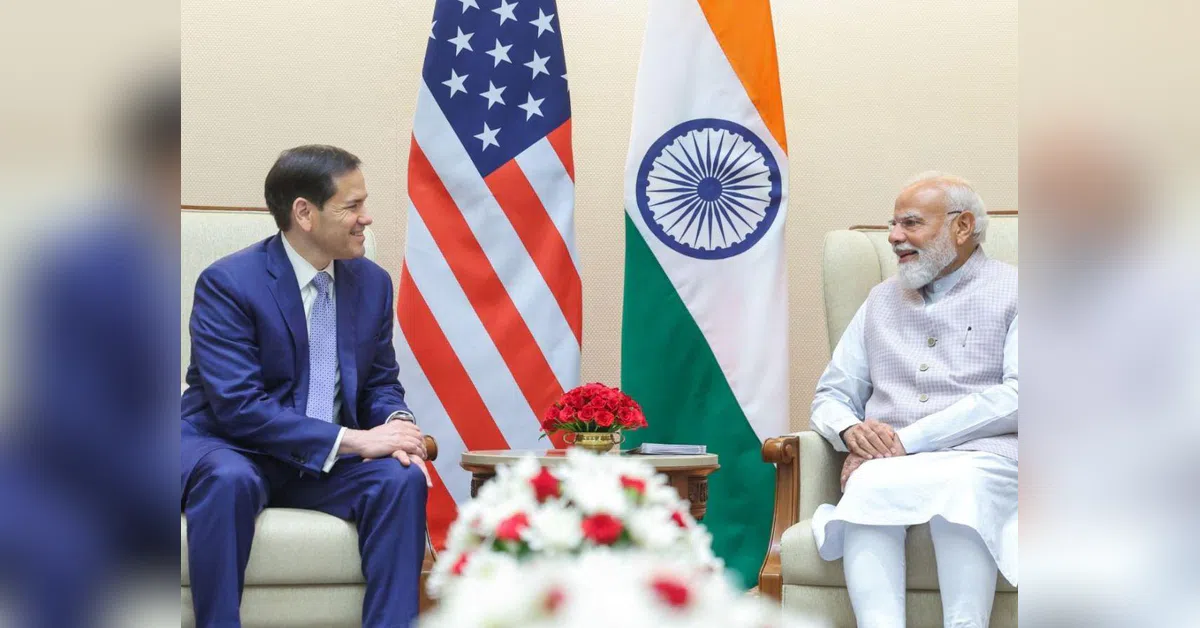
New Delhi, India – In a significant diplomatic gesture aimed at solidifying the strategic partnership between the United States and India, US Secretary of State Marco Rubio, on his inaugural official visit to India, extended a formal invitation to Prime Minister Narendra Modi to visit the White House. The invitation, conveyed on behalf of US President Donald Trump, signals a concerted effort by both nations to recalibrate and strengthen bilateral ties following a period marked by various points of friction.
Rubio’s visit, which commenced on Saturday, serves as a pivotal moment for both Washington and New Delhi to address a complex array of shared interests and lingering disagreements. Discussions during the high-level engagements have focused on fostering greater cooperation across critical sectors while navigating challenges ranging from trade tariffs and immigration policies to the volatile security landscape in West Asia and the overarching vision for a free and open Indo-Pacific.
The invitation was publicly announced by US Ambassador to India, Sergio Gor, who posted on X (formerly Twitter): "News! Secretary Marco Rubio extended an invite on behalf of President Donald Trump, for Prime Minister Modi to visit the White House in the near future." This announcement underscored the visit’s primary objective: to reaffirm the enduring strength and strategic importance of the India-US relationship.
Main Facts: A Diplomatic Overture and Strategic Dialogue
US Secretary of State Marco Rubio’s first official trip to India has been highlighted by a key diplomatic overture: the extension of an invitation for Prime Minister Narendra Modi to visit the White House. This invitation, coming directly from the US President Donald Trump via his top diplomat, is more than a mere courtesy; it represents a strategic move to infuse renewed vigor into the bilateral relationship. The overarching goal of Rubio’s visit, and the broader engagement it signifies, is to stabilize and enhance the comprehensive global strategic partnership between the two largest democracies.
Central to the discussions between Secretary Rubio and Prime Minister Modi, as well as anticipated talks with External Affairs Minister S. Jaishankar, are efforts to expand cooperation across a spectrum of strategic sectors. These include bolstering security cooperation, increasing bilateral trade and investment, facilitating collaboration on critical and emerging technologies, and aligning visions for regional stability, particularly in the Indo-Pacific.
However, the path to a fully harmonized relationship has not been without its hurdles. The visit also provided a crucial platform to address several contentious issues that have caused strain in recent months. These include disagreements over trade tariffs, specific security or political differences that have emerged, concerns related to immigration policies – most notably regarding the H-1B visa program – and the broader implications of the escalating crisis in West Asia, which directly impacts India’s vital energy security. By confronting these challenges head-on while simultaneously pursuing areas of mutual benefit, both sides aim to fortify a partnership deemed indispensable for global peace and prosperity.
Chronology of Engagement: Building Bridges After Strain
Secretary Rubio’s visit to India unfolded with a carefully curated itinerary designed to blend high-stakes diplomatic discussions with symbolic cultural engagements, reflecting the multifaceted nature of the US-India relationship. The journey began on Saturday, setting the stage for a series of interactions intended to underscore the depth and breadth of bilateral ties.
Rubio’s Arrival and Initial Engagements
Rubio’s arrival in India commenced not in the national capital, but in Kolkata, the vibrant cultural hub of West Bengal. This choice of entry point allowed the Secretary of State to undertake a deeply symbolic visit to the Mother House, the headquarters of Saint Teresa’s Missionaries of Charity. This gesture was seen as a nod to the humanitarian and cultural linkages between the two nations, providing a softer opening to what would become an intense diplomatic schedule. Such engagements often serve to humanize diplomatic missions, fostering goodwill and acknowledging shared values beyond geopolitical calculations.
Following his visit to Kolkata, Secretary Rubio proceeded to New Delhi, the epicenter of India’s political and diplomatic activity. His arrival in the capital marked the transition to the core of his mission: high-level political consultations aimed at advancing the strategic partnership.
The Core Meeting: Modi and Rubio
The highlight of Rubio’s Saturday engagements was his meeting with Prime Minister Narendra Modi. This crucial interaction provided the primary forum for the direct exchange of views on the state of the bilateral relationship and its future trajectory. It was during this meeting that the momentous invitation for Prime Minister Modi to visit the White House was extended. This invitation, delivered personally by the US Secretary of State on behalf of President Trump, carries significant diplomatic weight, signifying a desire at the highest levels of the US administration to deepen engagement with India.
US Ambassador Sergio Gor, in a post on X following the meeting, provided further insight into the discussions: "Great to join @SecRubio for a meeting with Prime Minister @narendramodi. We had a productive discussion on ways to deepen U.S.-India cooperation across security, trade, and critical technologies – areas that strengthen both our nations and advance a free and open Indo-Pacific. India is a vital partner to the United States!" This statement encapsulated the expansive agenda, emphasizing strategic alignment and mutual benefit.
Prime Minister Modi, acknowledging the meeting in his own social media post, conveyed a similar sentiment of positive engagement. He stated, "Happy to receive US Secretary of State Marco Rubio. We discussed sustained progress in the India-US Comprehensive Global Strategic Partnership and issues related to regional and global peace and security. India and the United States will continue to work closely for the global good." Modi’s remarks underscored India’s commitment to the partnership and its broader contributions to global stability.
The Road Ahead: Quad Meeting and Future Itinerary
Rubio’s diplomatic engagements are set to continue with wide-ranging talks with India’s External Affairs Minister S. Jaishankar. These discussions are expected to delve deeper into specific areas of cooperation, including energy, trade, investment, critical technologies, and the vital people-to-people exchanges that form a bedrock of the relationship.
A significant component of Rubio’s visit is his participation in the Quad Foreign Ministers’ Meeting in New Delhi. This gathering brings together the foreign ministers of India, the United States, Australia, and Japan – a grouping central to the shared vision of a "free and open Indo-Pacific." During his meeting with PM Modi, Rubio explicitly underlined the strategic importance of this partnership, stating his anticipation of advancing this vision alongside India, Australia, and Japan at the upcoming Quad meeting. The Quad has evolved into a crucial platform for coordinating strategies on regional security, economic resilience, and maritime cooperation, particularly in response to evolving geopolitical dynamics in the Indo-Pacific region.
Beyond the high-level political and strategic discussions, Secretary Rubio’s itinerary also includes cultural immersion. He is scheduled to travel to Agra, home to the iconic Taj Mahal, and Jaipur, the "Pink City" known for its rich heritage, on Monday. These visits are not merely tourist stops but often serve to highlight the cultural vibrancy and historical depth of India, further cementing soft power diplomacy. He will return to Delhi on Tuesday for the conclusion of his official engagements, including the Quad meeting, before departing the country. This blend of strategic dialogue and cultural outreach is a hallmark of modern diplomacy, aiming to build rapport on multiple levels.
Supporting Data: The Complex Tapestry of US-India Relations
The relationship between the United States and India, often hailed as a partnership between the world’s largest and oldest democracies, is characterized by immense potential alongside periodic challenges. Secretary Rubio’s visit comes at a time when both nations are actively working to stabilize and elevate their ties, particularly after a "patchy period" marked by specific points of contention.
Navigating Economic Headwinds: Trade and Tariffs
One of the most significant sources of strain in the recent past has been trade. The Trump administration’s "America First" policy led to the imposition of punitive tariffs on various Indian goods, sparking retaliatory measures from New Delhi. These tariffs, particularly on steel and aluminum, and India’s retaliatory tariffs on certain US agricultural products and other goods, created an environment of uncertainty for businesses on both sides. The US had also withdrawn India’s Generalized System of Preferences (GSP) status, a move that impacted Indian exports worth billions of dollars.
The economic disagreements extended to market access issues, with the US pushing for greater access for its agricultural products, medical devices, and dairy products in India, while India sought resolution on issues like totalization agreements and easier market access for its IT services. This period of intense trade friction, however, saw persistent efforts to find common ground. Both sides had been engaged in protracted negotiations to finalize a framework for a bilateral trade deal. While progress was made, the next steps for this deal have recently been complicated by judicial verdicts in US courts that invalidated certain tariffs imposed by President Trump. This legal development adds another layer of complexity to the trade dialogue, necessitating renewed efforts to forge a stable and mutually beneficial economic framework. The underlying goal remains to increase bilateral trade, which has seen substantial growth over the past decade, from $60 billion in 2009 to over $140 billion in 2019, but still falls short of its potential given the size of both economies.
Addressing Human Capital: Immigration and H-1B Visas
Immigration policies, particularly concerning the H-1B visa program, have long been a sensitive point in US-India relations. The H-1B visa is crucial for Indian professionals seeking employment in the US technology sector, and any changes to its regulations directly impact a significant segment of India’s skilled workforce. Under the Trump administration, there were increased scrutiny, higher rejection rates, and proposed changes to the H-1B lottery system and visa fees, which caused considerable anxiety and frustration in India.
The concerns extend beyond just visa numbers; they touch upon the broader issue of people-to-people ties, which are considered a cornerstone of the US-India partnership. A large and vibrant Indian diaspora in the US, alongside a steady flow of Indian students and professionals, contributes significantly to both economies and cultures. Restrictive immigration policies are seen as detrimental to this vital human capital exchange, potentially impacting innovation and collaborative research. Discussions during Rubio’s visit would likely have touched upon these concerns, with India advocating for a more predictable and streamlined visa regime that supports mutual economic growth and strengthens the diaspora link.
Geopolitical Flashpoints: West Asia and Energy Security
The crisis in West Asia has emerged as a critical geopolitical flashpoint, directly imperiling India’s energy security and adding another layer of complexity to the US-India strategic dialogue. India is heavily dependent on oil imports from the Middle East, making it particularly vulnerable to any disruptions in the region, especially those affecting shipping lanes like the Strait of Hormuz. Escalating tensions, particularly involving Iran, pose a significant threat to global oil supplies and prices, which directly impacts India’s economic stability and development goals.
During his meeting with Prime Minister Modi, Secretary Rubio directly addressed this issue, asserting that Washington would not allow Iran to "hold the global energy market hostage." This statement underscores the US commitment to ensuring the free flow of oil and gas. Crucially, Rubio also presented a strategic alternative: he emphasized that US energy products have the potential to diversify India’s energy supplies. The US has rapidly become a major producer of oil and natural gas, and increased exports to India could reduce New Delhi’s over-reliance on a single, volatile region. This proposition aligns with India’s broader strategy to diversify its energy basket and enhance its energy independence, making it a key area for potential collaboration.
While the original content mentioned "Operation Sindoor" as a point of strain, without further specific public details, it can be understood as representing other sensitive security or political differences that occasionally arise between the two nations. These often relate to regional security dynamics, differing approaches to specific international issues, or internal policy matters that intersect with bilateral interests. The very mention of such a point, even without elaboration, highlights the comprehensive nature of the relationship, encompassing both overt cooperation and the need to manage discreet disagreements.
Forging a Strategic Alliance: Indo-Pacific and Critical Technologies
A cornerstone of the US-India strategic partnership is the shared vision for a "free and open Indo-Pacific." This concept, championed by both nations, emphasizes adherence to international law, freedom of navigation, peaceful resolution of disputes, and respect for sovereignty in a region critical for global trade and security. It serves as a counterweight to rising assertive actions by other regional powers.
The Quad, comprising India, the US, Australia, and Japan, is the primary multilateral mechanism for advancing this vision. The upcoming Quad Foreign Ministers’ Meeting, in which Rubio is participating, will be a crucial platform for coordinating strategies on maritime security, infrastructure development, humanitarian assistance and disaster relief, and counter-terrorism efforts within the Indo-Pacific. Secretary Rubio’s emphasis on advancing this shared objective underscores the importance Washington places on India’s role in maintaining regional stability and prosperity.
Beyond geopolitical alignment, cooperation in critical technologies forms another vital pillar. This includes collaboration in areas such as artificial intelligence, 5G and future telecommunications technologies, quantum computing, biotechnology, and clean energy. Such partnerships are essential for enhancing both nations’ economic competitiveness, national security, and technological sovereignty. The discussions during Rubio’s visit would have undoubtedly explored avenues for deeper collaboration, including joint research and development, technology transfer, and resilient supply chains, recognizing that leadership in these fields will shape the 21st century.
Official Responses: Voices from Washington and New Delhi
The diplomatic exchanges surrounding Secretary Rubio’s visit were carefully articulated through official statements and social media posts, reflecting the importance both nations place on managing perceptions and signaling future intent.
US Diplomatic Messaging
US Ambassador to India Sergio Gor played a significant role in disseminating the US perspective on the visit. His posts on X were timely and strategically worded, emphasizing the positive aspects of the engagement. By highlighting "productive discussion on ways to deepen U.S.-India cooperation across security, trade, and critical technologies," Gor reiterated the comprehensive nature of the partnership. His statement, "India is a vital partner to the United States!", served as a clear affirmation of India’s indispensable role in US foreign policy, particularly in the Indo-Pacific region. This messaging aimed to project confidence and a commitment to robust engagement.
Secretary Rubio himself, during his interactions, consistently underscored the strategic importance of the India-US partnership. His explicit mention of looking forward to advancing a "free and open Indo-Pacific" alongside India, Australia, and Japan at the upcoming Quad Foreign Ministers’ Meeting highlighted the multilateral dimension of the relationship and its broader regional implications. Furthermore, his firm stance on not allowing Iran to "hold the global energy market hostage" and the offer of US energy products as a means of diversifying India’s supplies demonstrated a pragmatic approach to addressing immediate geopolitical and economic concerns. These statements collectively painted a picture of a US administration keen on deepening a multi-faceted alliance with India.
Indian Leadership’s Perspective
Prime Minister Narendra Modi’s social media response to the meeting with Secretary Rubio was equally measured and strategically framed. His post, stating "Happy to receive US Secretary of State Marco Rubio," initiated a positive tone. More importantly, his subsequent remarks about discussing "sustained progress in the India-US Comprehensive Global Strategic Partnership and issues related to regional and global peace and security" underscored India’s view of the relationship as evolving positively and contributing to broader international stability.
The phrase "Comprehensive Global Strategic Partnership" is a key descriptor often used by New Delhi to characterize its relationship with Washington, signifying a wide-ranging, deep, and mutually beneficial alliance that extends beyond traditional security or economic ties. Modi’s assertion that "India and the United States will continue to work closely for the global good" further articulated India’s vision of the partnership as a force for positive global impact, aligning with its aspirations for a greater role on the world stage. These official responses from both sides, while acknowledging existing challenges, primarily focused on the shared objectives and the positive trajectory of the bilateral relationship.
Implications: Charting the Future of the World’s Largest Democracies
Secretary Marco Rubio’s visit to India and the invitation extended to Prime Minister Modi represent more than a routine diplomatic exchange; they signify a deliberate effort to manage, reset, and elevate one of the most consequential bilateral relationships of the 21st century. The implications of this visit resonate across strategic, economic, and geopolitical spheres.
A Reset in Bilateral Dynamics?
The primary implication of Rubio’s visit is the tangible effort to initiate a reset in bilateral dynamics following a period of intermittent strain. The invitation for PM Modi to visit the White House, coming directly from the US President, is a powerful signal of high-level commitment to the partnership. Such an invitation typically precedes significant discussions and potential agreements, suggesting a desire to move past recent disagreements over trade and immigration. While a single visit may not resolve all outstanding issues, it creates momentum for continued dialogue and cooperation, aiming for a more stable and predictable relationship. It could pave the way for a more collaborative approach to issues where differences have emerged, fostering greater trust and mutual understanding.
Reinforcing the Indo-Pacific Strategy
Rubio’s explicit emphasis on advancing a "free and open Indo-Pacific" and his participation in the Quad Foreign Ministers’ Meeting underscore the centrality of this strategy to both nations. The visit serves to reinforce the US-India alignment on regional security and governance, particularly in the face of a rising China. Strengthening the Quad through coordinated diplomatic and security efforts provides a crucial framework for maintaining a rules-based order in the Indo-Pacific. This partnership is vital for counterbalancing regional influences, promoting maritime security, and ensuring stability in a strategically critical part of the world. The visit suggests a deepening of security cooperation and a more unified front on regional challenges.
Economic and Energy Security Outlook
Economically, the discussions on trade tariffs and the ongoing efforts to finalize a bilateral trade deal are critical. While recent US court rulings have complicated the tariff landscape, the commitment to trade negotiations remains. The visit could accelerate efforts to resolve lingering trade disputes, creating a more conducive environment for bilateral investment and commerce. Furthermore, Rubio’s offer of US energy products for India’s diversification strategy has significant implications for India’s energy security. Increased imports of US oil and natural gas could reduce India’s vulnerability to geopolitical instabilities in West Asia, offering a more stable and diverse energy supply chain. This could also bolster economic ties through long-term energy contracts, fostering greater interdependence.
Addressing immigration concerns, particularly around the H-1B visa, remains crucial for the long-term health of people-to-people ties. While immediate policy changes may not materialize from this visit, the dialogue helps to keep Indian concerns on the US agenda, potentially influencing future policy decisions that support the valuable contributions of Indian professionals and the diaspora.
The Broader Global Context
Ultimately, Rubio’s visit and the ongoing high-level engagements highlight the indispensable role of the US-India partnership in the broader global context. As the world’s two largest democracies, their collaboration on issues ranging from climate change and global health to counter-terrorism and technological governance holds immense potential for shaping a more stable and prosperous international order. The commitment to a "Comprehensive Global Strategic Partnership" and working "for the global good" reflects a shared understanding of their collective responsibility.
However, challenges persist. Navigating the complexities of trade, immigration, and regional security in a rapidly evolving geopolitical landscape will require sustained diplomatic effort, flexibility, and a commitment to finding mutually acceptable solutions. The visit, therefore, is not an endpoint but a significant step in an ongoing journey, charting a future where the world’s largest democracies continue to deepen their ties and collectively address the pressing issues of the 21st century.
