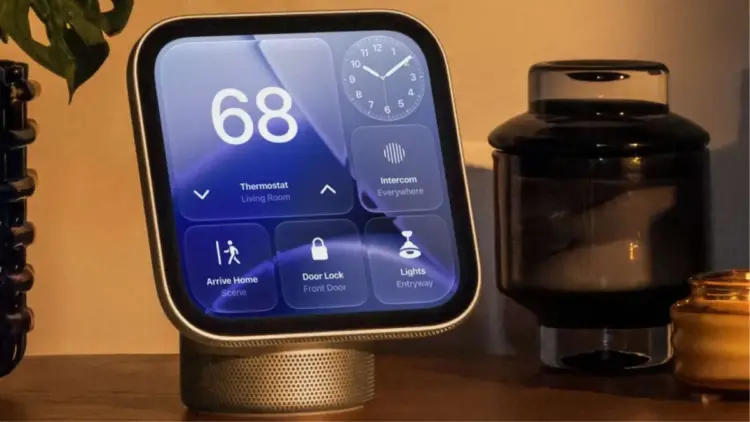
CUPERTINO, CA – October 14, 2026 – Apple, a company synonymous with innovation and premium technology, is making its second major foray into the smart home market with the introduction of HomeView. Priced at USD 299 and slated for a November launch, this 7-inch smart home screen is positioned not as a revolutionary standalone device, but rather as a seamless extension of the iPhone ecosystem, powered by a personalized Siri AI. This strategic move signals Apple’s intent to challenge the entrenched dominance of Amazon and Google by offering a simpler, more private, and elegantly integrated smart home experience.
The announcement, made at a special New York event, underscored Apple’s deliberate approach: to create a device that, while seemingly "boring" in its simplicity, aims to build unparalleled user trust and reliability. HomeView represents a refined strategy following the mixed reception of the 2018 HomePod, an ambitious but ultimately niche smart speaker. With HomeView, Apple appears to be betting that a focus on core functionality, robust privacy, and deep integration with its existing user base will be its secret weapon in a market often criticized for its complexity and data concerns.
The Core of HomeView: Simplicity Meets Seamless Integration
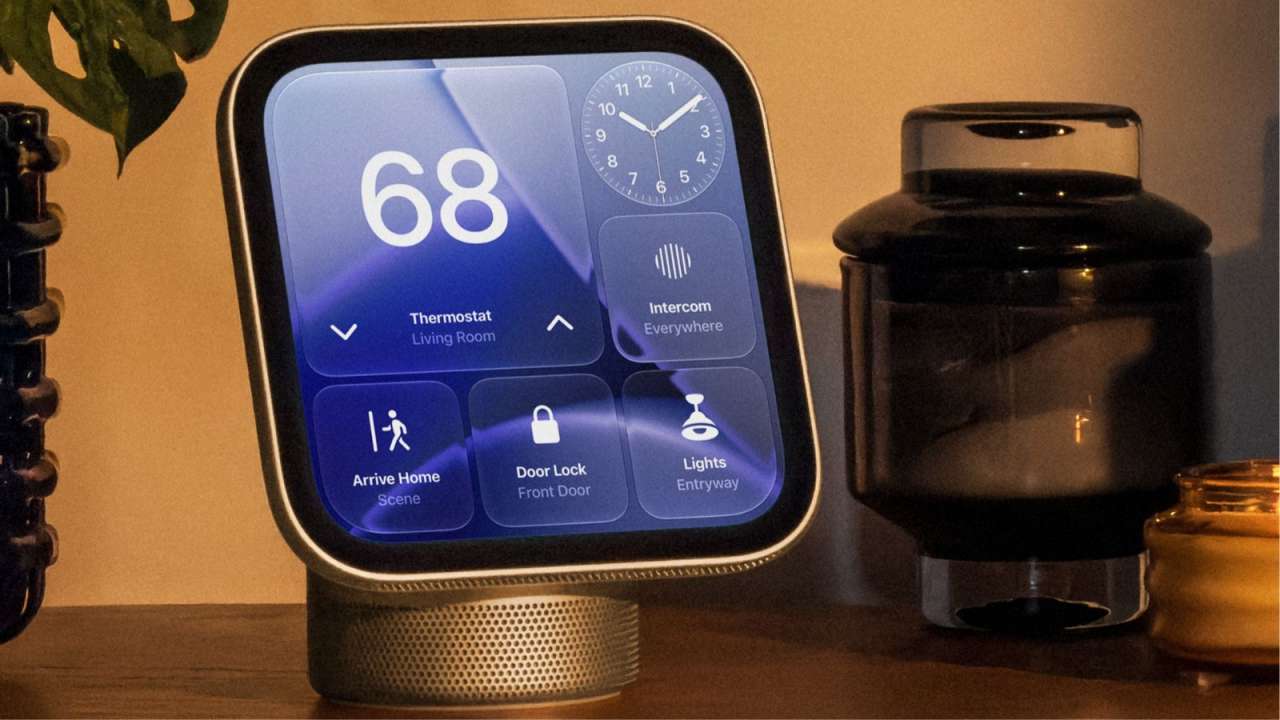
At its heart, HomeView is a meticulously designed 7-inch touchscreen device. Its aesthetic aligns perfectly with Apple’s minimalist philosophy, featuring a choice of an elegant aluminium base for tabletop placement or the option for discreet wall-mounting. This dual functionality speaks to Apple’s understanding of diverse home environments and user preferences.
Personalized Intelligence at Your Fingertips:
The true power of HomeView lies in its advanced integration of camera and voice recognition technologies. These capabilities allow the device to intelligently personalize its home screen for different users within the household. Imagine waking up and HomeView instantly displaying your calendar appointments, preferred news feeds, and quick access to your most-used apps, while your partner sees their own customized interface moments later. This level of personalization, driven primarily by an enhanced Siri AI, aims to transform the device from a generic gadget into a truly intuitive personal assistant for every member of the family.
An Extension, Not a Replacement, for Your iPhone:
Crucially, HomeView operates as an extension of the iPhone rather than a standalone computing device. This design choice is fundamental to Apple’s strategy, particularly concerning data privacy. HomeView does not store sensitive personal data directly on the device. Instead, it relies on a nearby iPhone for context and to process much of the personal information, leveraging the iPhone’s robust security protocols. This "on-device intelligence" approach, where much of the processing happens locally or is tethered to a user’s primary, secure device, stands in stark contrast to many cloud-heavy competitors.
While core Apple services like FaceTime and Apple Music are natively integrated and optimized for HomeView, the device’s reliance on the iPhone extends to third-party applications. For instance, accessing a personalized Spotify account or managing complex smart home routines often requires the iPhone to provide the necessary context or authentication. This symbiotic relationship reinforces the value of the Apple ecosystem and ensures that the iPhone remains the central hub of a user’s digital life, with HomeView serving as a convenient and intelligent interface within the home. The emphasis during the New York launch was clearly on HomeView’s elegant design and the promise of a user experience defined by simplicity and fluid interaction.

Apple’s Evolving Smart Home Journey: A Chronology of Ambition and Refinement
Apple’s journey into the smart home domain has been a cautious and, at times, challenging one. The landscape it seeks to conquer is far from nascent, having been shaped by years of fierce competition and varying degrees of consumer adoption.
The Dawn of the Smart Home Era (Pre-2018):
Before Apple’s initial major entry, the smart home market was largely defined by the pioneering efforts of Amazon and Google. Amazon launched the Echo in 2014, popularizing the concept of voice-controlled smart speakers and laying the groundwork for ambient computing. Google followed suit with Google Home in 2016. These devices, primarily focused on voice AI (Alexa and Google Assistant), quickly evolved to include smart displays like the Echo Show and Google Nest Hub, which added a visual dimension to smart home interaction. Their early market presence allowed them to capture significant market share and establish ecosystems that integrated with a vast array of third-party smart home devices, often at aggressive price points.

The HomePod Experiment (2018-Present):
In 2018, Apple made its first significant move with the launch of the HomePod. Positioned as a premium smart speaker, its primary differentiator was exceptional audio quality, coupled with Siri integration. However, the HomePod faced several hurdles. Its initial price point (USD 349) was considerably higher than competing smart speakers. More critically, Siri’s capabilities at the time were often perceived as less versatile than Alexa or Google Assistant, particularly in handling complex queries or integrating with a broad range of third-party smart home devices. Furthermore, the HomePod’s functionality was deeply tied to Apple Music, limiting its appeal to users of other streaming services.
Despite subsequent price reductions and the introduction of the more affordable HomePod mini, the original HomePod struggled to gain significant traction. Industry reports consistently showed Apple’s market share in the smart speaker segment hovering around a modest 6%, a stark contrast to its dominance in smartphones. This experience provided Apple with crucial lessons: that audio fidelity alone wasn’t enough, that the market demanded broader smart home utility, and that seamless integration with the wider Apple ecosystem and a clear value proposition were paramount.

Conceptualizing HomeView: Learning from Past Lessons:
The development of HomeView appears to be a direct response to these past experiences. Instead of leading with audio quality, HomeView prioritizes the visual interface, personalized interaction, and a clearer role as an iPhone extension. The shift from a speaker-centric device to a screen-centric one acknowledges the market’s evolution towards smart displays. The emphasis on privacy and simplicity also reflects a growing consumer fatigue with overly complex devices and concerns over data collection by tech giants. Apple’s strategy with HomeView is not to out-compete on sheer number of features, but to refine the user experience, making it more intuitive, trustworthy, and deeply personal.
The HomeView Announcement and Future Rollout:
The recent New York event served as the official unveiling, where Apple meticulously highlighted HomeView’s design, its personalized Siri capabilities, and its unique privacy architecture. The deliberate messaging around its "boring" nature was a calculated move to set expectations and differentiate it from competitors often pushing the boundaries of AI with less emphasis on user trust. With its November launch date approaching, the tech world eagerly awaits to see if Apple’s refined approach can finally carve out a significant presence in the bustling smart home market.

Supporting Data and the Competitive Landscape: A Market Ripe for Disruption?
The smart home market is a dynamic and rapidly expanding sector, yet it remains largely dominated by a few key players. Understanding this landscape is crucial to appreciating Apple’s strategic positioning with HomeView.
Market Size and Growth:
Industry analysts project the global smart home market to continue its robust growth, reaching hundreds of billions of dollars within the next few years. This expansion is driven by increasing adoption of IoT devices, rising consumer demand for convenience, energy efficiency, and enhanced security. Smart displays, like HomeView, are a particularly fast-growing segment, serving as central control points for various connected devices and offering richer interactive experiences than voice-only speakers.

Dominance of Amazon and Google:
For nearly a decade, Amazon and Google have held a near-duopoly in the smart speaker and smart display segments. Amazon’s Echo line, powered by Alexa, and Google’s Nest Hub devices, integrated with Google Assistant, collectively command the vast majority of market share. Their success stems from several factors:
- Early Mover Advantage: They were among the first to popularize voice assistants and smart displays.
- Extensive Ecosystems: Both companies offer a wide range of first-party devices and have fostered massive ecosystems of third-party integrations, allowing their assistants to control thousands of smart home products.
- Aggressive Pricing: Amazon and Google frequently offer competitive pricing, especially on their entry-level devices, making smart home technology accessible to a broad consumer base.
- Broad Feature Sets: Their devices offer a wide array of functionalities, from playing music and setting timers to video calls, recipe guidance, and security camera monitoring.
The HomePod’s Limited Success Revisited:
As mentioned, the HomePod’s market share in the smart speaker segment consistently lagged behind its rivals, hovering around 6%. The primary reasons for this can be attributed to:

- High Price Point: The original HomePod was significantly more expensive than most competing smart speakers.
- Siri’s Limitations: At the time of its launch, Siri was often seen as less capable and versatile than Alexa and Google Assistant for general knowledge queries and smart home control.
- Walled Garden Effect: The HomePod was deeply integrated with Apple Music and the Apple ecosystem, making it less appealing to users who preferred other streaming services or had non-Apple smart home devices.
- Lack of a Screen: Unlike smart displays, the HomePod offered no visual interface, limiting its utility for certain tasks.
Apple’s Unique Advantages with HomeView:
Despite being a late entrant in the smart display segment, Apple brings formidable strengths to the table:
- Brand Loyalty and Premium Positioning: Apple commands unparalleled brand loyalty and has a proven track record of success in the premium market. Consumers are often willing to pay a premium for Apple products due to perceived quality, design, and ecosystem benefits.
- Robust Ecosystem: The iPhone, Apple ID, iCloud, and a suite of integrated services (FaceTime, iMessage, Apple Music, Apple Fitness+) form a powerful, cohesive ecosystem that HomeView can seamlessly tap into.
- Perceived Privacy Superiority: Apple has consistently differentiated itself on privacy, emphasizing on-device processing and robust data protection policies. In an era of increasing data concerns, this is a significant advantage.
- Design and User Experience: Apple’s commitment to elegant design and intuitive user interfaces is a hallmark of its products, promising a polished experience for HomeView users.
Challenges and the Pricing Strategy:
At USD 299, HomeView is indeed positioned at the higher end of the smart display market, likely exceeding the price points of comparable offerings from Amazon and Google. This strategy, however, is consistent with Apple’s historical approach. The iPhone, for example, is often more expensive than its Android counterparts but continues to dominate the premium smartphone market. Apple believes that its unique value proposition – especially around privacy and seamless integration – justifies the higher cost.

The primary challenge for Apple will be to convince consumers that HomeView’s perceived benefits outweigh its higher price tag and the established ecosystems of its rivals. While Google and Amazon have had a decade to refine their smart home offerings, Apple is banking on the idea that they haven’t created an unassailable lead, particularly when it comes to simplicity, elegance, and user trust. The market, Apple believes, is ready for a simpler, more trustworthy gadget that connects intimately with the iPhone and addresses the pervasive privacy concerns that often plague connected devices.
Official Responses and Analyst Perspectives: A "Boring" Strategy for a Complex World
Apple’s unveiling of HomeView has elicited a range of responses from industry analysts and, implicitly, from Apple itself through its carefully crafted messaging. The company’s decision to frame HomeView as "boring" is a significant rhetorical choice, aimed at resetting expectations and highlighting a core strategic differentiator.

Apple’s Narrative: Simplicity as Strength, Trust as Currency:
While specific executive quotes from the New York event were not provided in the original brief, Apple’s communication consistently emphasized HomeView’s dedication to simplicity, elegance, and user trust. The "boring" moniker is not an admission of a lack of innovation, but rather a deliberate contrast to the often-complex, data-hungry nature of current AI products. In an age where AI advancements are rapid but often accompanied by ethical and privacy dilemmas, Apple is positioning HomeView as a stable, predictable, and secure interface for the home.
The company’s messaging highlights that HomeView’s integrated approach, leveraging the iPhone for context and data processing, inherently fosters user confidence in data privacy. Features like personalized Spotify accounts and seamless FaceTime calls, while seemingly basic, are presented as core functionalities that work flawlessly and securely within the Apple ecosystem, removing the friction and privacy concerns often associated with similar features on other platforms. This focus on "it just works" and "it protects your data" is Apple’s explicit response to a market saturated with features but often lacking in user assurance.

Analyst Reactions: Cautious Optimism and Strategic Validation:
Initial analyst reactions to HomeView are varied but generally acknowledge Apple’s strategic intent.
-
Positive Outlook on Niche Appeal: Many analysts believe HomeView could find a strong niche among existing Apple users. "Apple has a uniquely loyal customer base, and HomeView is clearly designed to appeal to them," commented one prominent tech industry analyst. "For iPhone users deeply embedded in the Apple ecosystem, HomeView offers a compelling, integrated experience that competitors simply can’t match on their own terms." The focus on privacy is also seen as a significant differentiator, especially for a premium segment willing to pay more for peace of mind.

-
Addressing HomePod’s Legacy: Analysts noted that HomeView directly addresses some of the HomePod’s shortcomings. "The addition of a screen and the explicit positioning as an iPhone extension are smart moves," remarked another analyst specializing in smart home tech. "Apple learned that an ambient device needs more than just great sound; it needs a visual interface and a clear role within the broader ecosystem."
-
Pricing and Market Penetration Concerns: However, the USD 299 price point remains a point of contention. "While Apple has a history of succeeding in the premium segment despite higher prices, the smart display market is incredibly competitive," cautioned a market research firm. "Amazon and Google have devices offering similar core functionalities at significantly lower price points. Apple will need to clearly articulate the ‘Apple premium’ beyond just brand recognition." There’s also the challenge of Apple’s relatively late entry into this specific segment, where competitors have had years to cultivate user habits and third-party developer support.

-
The "Boring" Strategy as a Double-Edged Sword: The "boring" strategy is viewed as both clever and potentially limiting. "It’s a brilliant way to manage expectations and emphasize reliability and privacy," an AI ethics researcher observed. "In a world grappling with AI’s complexities, ‘boring’ can be reassuring. However, it also means HomeView might not capture the imagination of users seeking bleeding-edge AI features or a highly open ecosystem."
In essence, while analysts acknowledge HomeView’s strategic alignment with Apple’s core strengths (design, privacy, ecosystem), they remain pragmatic about its potential to significantly disrupt the established market leaders. Its success will hinge on whether Apple can effectively translate its "boring but trustworthy" mantra into tangible user value that justifies its premium pricing.

Implications: Reshaping the Smart Home Paradigm and Apple’s Future
The launch of Apple’s HomeView carries significant implications, not only for the smart home market but also for Apple’s broader ecosystem strategy and the future of personalized AI in the home.
Impact on the Smart Home Market:
HomeView has the potential to subtly, yet significantly, influence the smart home landscape. While it’s unlikely to immediately dethrone Amazon or Google, it could achieve several key outcomes:

- Elevating the Premium Segment: By offering a premium smart display focused on design, privacy, and seamless Apple integration, HomeView could solidify and expand a premium segment within the smart display market. This might compel Amazon and Google to innovate more in their high-end offerings, pushing the overall quality and security standards.
- Shifting Focus to Privacy: Apple’s strong emphasis on privacy with HomeView could force competitors to re-evaluate their own data handling practices and transparency. As consumers become more aware of and concerned about data collection, Apple’s approach could become a significant differentiator, potentially making privacy a more central battleground in future smart home device development.
- Encouraging Ecosystem Cohesion: HomeView’s tight integration with the iPhone and Apple services might inspire other tech companies to foster more cohesive experiences within their own ecosystems, rather than focusing solely on standalone device sales.
Apple’s Broader Ecosystem Strategy:
HomeView is more than just a smart display; it’s a strategic piece in Apple’s ever-expanding ecosystem.
- Reinforcing iPhone Centrality: By positioning HomeView as an "iPhone extension," Apple further entrenches the iPhone as the indispensable hub of a user’s digital life. This strengthens user loyalty and provides more reasons to stay within the Apple ecosystem.
- Gateway to Services: HomeView can act as an intuitive interface for Apple’s growing suite of services, including Apple Music, Apple Fitness+, Apple Arcade, and potentially future subscription offerings. This could boost service revenue, a critical growth area for the company.
- Future Hub for Apple Devices: With its camera, microphone, and processing capabilities, HomeView could evolve into a central hub for controlling and interacting with a wider array of future Apple smart home devices, becoming the true "home brain" that the original HomePod aspired to be.
The Future of Personalized AI in the Home:
HomeView’s approach to personalized Siri AI offers a glimpse into a potential future for ambient intelligence.

- Privacy-Centric Personalization: By relying on the iPhone for much of its contextual data, HomeView demonstrates a model where personalization doesn’t necessarily require extensive cloud-based data harvesting. This could set a precedent for more privacy-conscious AI development.
- Contextual Awareness: The device’s use of camera and voice recognition to personalize screens for different users highlights the potential for truly intelligent, context-aware home interfaces that anticipate needs rather than merely responding to commands.
- Evolving Siri: HomeView could serve as a crucial platform for the continuous improvement of Siri, especially in understanding context, handling multi-user environments, and integrating seamlessly with daily routines.
Long-Term Success Factors and Potential Challenges:
HomeView’s long-term success will depend on several critical factors:
- Adoption Rate: How quickly will existing iPhone users embrace HomeView, and will it attract new users to the Apple ecosystem?
- Developer Support: While Apple apps are built-in, robust third-party app support will be crucial for broader utility and to avoid the "walled garden" criticism that plagued the original HomePod.
- Continued Feature Development: Apple will need to consistently add new features and integrations to keep HomeView relevant and competitive.
- Integration with Smart Home Standards: Compatibility with emerging smart home standards like Matter and Thread will be vital for HomeView to truly serve as a universal smart home controller.
Potential challenges include consumer perception of its value proposition against cheaper rivals, overcoming the lingering "walled garden" perception, and the continuous innovation from Amazon and Google, who are unlikely to cede market share without a fight.

In conclusion, Apple’s HomeView is a calculated and mature strategic move. It acknowledges past missteps while leveraging Apple’s undeniable strengths in design, ecosystem integration, and privacy. By embracing a "boring" yet trustworthy philosophy, Apple is not just launching a new device; it’s attempting to redefine what a smart home interface should be – simple, elegant, personal, and, above all, private. The coming months will reveal whether this refined approach can finally establish Apple as a dominant force in the increasingly competitive and complex world of the smart home.