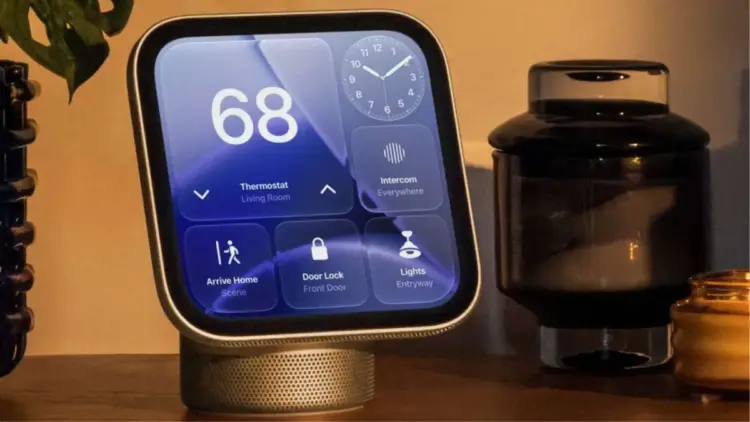
NEW YORK, USA – October 14, 2026 – Apple, a company synonymous with innovation and premium technology, has once again ventured into the competitive smart home market with the introduction of HomeView. Priced at USD 299 and slated for a November launch, this 7-inch smart home screen is designed not to dazzle with groundbreaking new features, but rather to integrate seamlessly and securely into the lives of iPhone users. Billed by Apple as an "iPhone extension," HomeView promises personalized Siri AI capabilities and a steadfast commitment to user privacy, positioning itself as a deliberate counterpoint to the more feature-laden, data-hungry offerings from industry giants Amazon and Google.
The announcement, made at a focused event in New York, underscores Apple’s strategic pivot in the smart home arena. After the mixed reception of its HomePod smart speaker in 2018, which garnered a modest 6% market share, HomeView represents a second, more calculated attempt to carve out a significant presence. This time, the Cupertino-based tech behemoth is not chasing market share through sheer feature count or aggressive pricing, but through a refined philosophy: simplicity, elegance, and an unshakeable trust in the Apple ecosystem. In a striking move, Apple itself has embraced the term "boring" to describe HomeView’s design philosophy, reframing it as a strength in a world increasingly wary of complex, data-intensive artificial intelligence.
Main Facts: A New Vision for the Connected Home
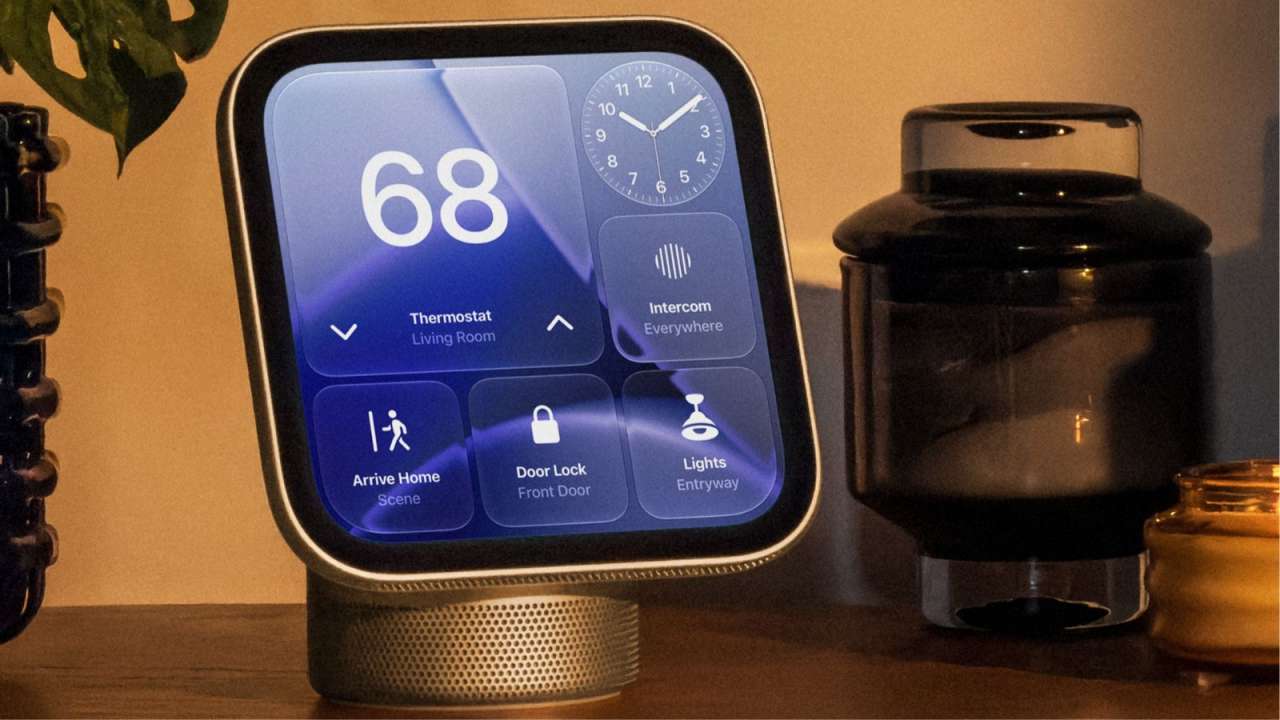
Apple’s HomeView is a compact, aesthetically pleasing 7-inch touchscreen device meticulously engineered to serve as a personalized hub within the smart home. Available for USD 299 starting in November, its primary function is to extend the utility and convenience of an iPhone, acting as a dedicated interface for Apple’s robust ecosystem of services and smart home controls. The device boasts a minimalist design, capable of being placed on an elegant aluminium base or discreetly mounted on a wall, blending effortlessly into any modern living space.
At its core, HomeView is powered by a personalized Siri AI, leveraging advanced camera and voice recognition technologies to tailor the user experience. Upon detecting a recognized individual, the screen can automatically display personalized apps, calendar appointments, and relevant notifications. Crucially, Apple emphasizes that HomeView does not store personal data directly on the device. Instead, it intelligently relies on a nearby iPhone for contextual information and secure data processing, reinforcing Apple’s long-standing commitment to user privacy.
While built-in Apple applications like FaceTime and Apple Music are natively supported, the integration of third-party services, such as Spotify, is designed to work in conjunction with the user’s iPhone. This approach ensures that personal data and preferences remain securely managed within the iPhone’s protected environment, rather than being replicated or stored on the HomeView device itself. The device’s introduction at the New York event highlighted Apple’s unwavering focus on simplicity, ease of use, and the elegant industrial design that has become a hallmark of the company’s product line. HomeView is not intended to be a standalone computing device but rather a sophisticated, secure window into the user’s personal digital world, seamlessly integrated within the Apple ecosystem.
Chronology: Apple’s Journey in the Smart Home Landscape
Apple’s path to HomeView has been anything but straightforward, marked by early forays, strategic shifts, and a consistent, albeit sometimes challenging, effort to define its role in the evolving smart home market.

The HomePod Era (2018-2021):
Apple first made a significant push into the smart home with the launch of the original HomePod in February 2018. Positioned as a premium smart speaker with unparalleled audio quality, it aimed to compete directly with Amazon’s Echo and Google’s Home devices. The HomePod boasted advanced spatial awareness for optimal sound delivery and deep integration with Apple Music. However, its high price point (initially USD 349), limited third-party app support, and a less versatile Siri compared to its rivals, hindered its widespread adoption. While praised for its audio fidelity, the HomePod struggled to expand beyond a niche audience of audiophiles and dedicated Apple users. Its market share remained modest, hovering around 6%, and by March 2021, Apple announced its discontinuation, shifting focus to the more affordable HomePod mini. The HomePod mini, launched in 2020, offered a more accessible entry point into Apple’s smart speaker ecosystem, featuring improved Siri capabilities and Ultra Wideband (UWB) technology for enhanced device proximity features. The lessons learned from the original HomePod – particularly the importance of price, broader utility, and Siri’s intelligence – undoubtedly shaped the strategy for HomeView.
The Evolution of HomeKit and Matter:
Prior to any dedicated hardware, Apple laid the groundwork for its smart home ambitions with HomeKit, introduced in 2014. HomeKit is a framework that allows users to securely control compatible smart home accessories using their iOS devices and Siri. While robust in its security and privacy features, HomeKit initially suffered from limited device compatibility and a somewhat complex setup process. Over the years, Apple has steadily expanded HomeKit’s reach, making it easier for manufacturers to integrate their products.

A significant development in Apple’s smart home strategy is its involvement in the Matter standard. Launched in 2022, Matter is an industry-unifying connectivity standard for smart home devices, backed by Apple, Google, Amazon, Samsung, and numerous other tech companies. Its goal is to improve interoperability, simplify setup, and enhance the reliability of smart home ecosystems. HomeView is expected to be fully compliant with Matter, which could significantly broaden its compatibility with a wider range of smart home accessories beyond just HomeKit-certified devices, thereby addressing one of HomePod’s earlier limitations.
The Genesis of HomeView:
The development of HomeView likely began as Apple assessed the evolving smart display market, dominated by Amazon’s Echo Show and Google’s Nest Hub. These devices, combining visual interfaces with voice assistants, have proven popular for tasks like video calls, recipe following, and media consumption. Apple recognized a gap for a premium, privacy-focused alternative that deeply leverages the iPhone experience. The design philosophy of "simplicity and elegance" suggests a deliberate move away from feature bloat, focusing instead on core functionalities executed flawlessly and securely. The choice of a 7-inch screen strikes a balance between visibility and discreet placement, making it versatile for various rooms in a home. The New York event served as the official unveiling, where Apple executives articulated the vision of HomeView as not just another smart device, but a trusted, personalized digital assistant designed for the modern home.

Supporting Data: Market Context, Technical Underpinnings, and User Experience
To fully appreciate Apple’s HomeView, it’s crucial to delve into the prevailing smart home market, its technical specifications (both stated and inferred), and the anticipated user experience it aims to deliver.
The Smart Home Market Landscape:
The smart home market is a vast and rapidly expanding sector, projected to reach hundreds of billions of dollars in valuation within the next few years. It encompasses a wide array of devices, from smart speakers and displays to lighting, thermostats, security cameras, and locks. For nearly a decade, Amazon and Google have been the undisputed leaders in the smart speaker and smart display categories. Amazon’s Echo Show and Google’s Nest Hub product lines offer diverse screen sizes (from 5 to 15 inches), competitive pricing (often starting under $100 for smaller models), and extensive ecosystems of third-party integrations. Despite their long head start, neither company has established an insurmountable lead, and concerns over data privacy and the complexity of managing numerous devices persist among consumers. This fragmented landscape, coupled with lingering privacy anxieties, presents an opportune moment for Apple to introduce a differentiated offering. The 7-inch screen size for HomeView is a strategic choice, offering a clear visual interface without dominating a space, contrasting with some larger, more obtrusive displays from competitors.

Technical Specifications and Ecosystem Integration:
While Apple has emphasized simplicity, the underlying technology of HomeView is expected to be sophisticated. Given Apple’s track record, it is highly probable that HomeView is powered by a custom Apple-designed A-series chip, ensuring smooth performance and enabling on-device machine learning for tasks like facial and voice recognition. This local processing capability is key to its privacy promise, minimizing the need to send raw biometric data to the cloud.
- Display: The 7-inch touchscreen likely boasts Retina-level clarity, providing crisp visuals for photos, video calls, and interface elements.
- Camera & Microphones: A high-resolution camera, similar to those found in iPhones or iPads, would enable clear FaceTime calls and accurate facial recognition. Multiple far-field microphones would ensure Siri can hear commands clearly from across a room, even amidst background noise. Privacy features for the camera, such as a physical shutter or digital kill switch, are almost a certainty, aligning with Apple’s user-centric privacy design.
- Connectivity: Standard Wi-Fi (Wi-Fi 6 or 6E) and Bluetooth are expected. Crucially, the integration of Ultra Wideband (UWB) technology, as seen in HomePod mini and iPhones, will allow for precise proximity detection, enabling features like handoff of music or calls and highly personalized screen content based on who is nearby.
- Siri AI: The "personalized Siri AI" is a central pillar. This personalization goes beyond simple voice recognition; it aims to understand individual user preferences, frequently used apps, and even conversational context. The reliance on a nearby iPhone for "context" means that HomeView can leverage the iPhone’s stored data (calendar, contacts, messages, browsing history – all processed securely on the device) without storing sensitive information itself. This architecture allows HomeView to deliver highly relevant suggestions and actions while mitigating the privacy risks associated with always-on, cloud-connected devices.
User Experience: Simplicity as a Feature:
Apple’s "boring is a strategy" mantra translates directly into the user experience. HomeView is designed to be intuitive and unobtrusive.

- Personalized Screens: Imagine walking into your kitchen, and HomeView, recognizing you, displays your morning news briefing, upcoming calendar appointments, and a suggestion to play your personalized "Morning Mix" playlist on Apple Music. Another family member approaches, and the screen instantly switches to their calendar, messages, and preferred streaming service.
- Seamless Communication: FaceTime calls are a natural fit, allowing for hands-free video chats. iMessages can be viewed and dictated, extending the iPhone’s communication capabilities to a shared space.
- Home Control: As a central HomeKit hub, HomeView provides an intuitive visual interface for controlling smart lights, thermostats, locks, and other Matter-compatible devices.
- Media Consumption: Apple Music is deeply integrated, offering a visual interface for browsing libraries and controlling playback. While third-party apps like Spotify require iPhone support for initial setup and potentially some contextual data, the goal is for the playback experience on HomeView to be seamless once initiated.
- Privacy-First Design: The user experience is underpinned by Apple’s privacy principles. On-device processing, clear indicators when the camera or microphone is active, and transparent data handling policies are expected to build user confidence, differentiating HomeView from competitors often scrutinized for their data collection practices. The elegant industrial design, with its aluminum base and wall-mounting option, speaks to Apple’s commitment to creating hardware that is both functional and aesthetically pleasing, reinforcing its premium market positioning.
Official Responses: Apple’s Narrative and Analyst Reactions
The introduction of HomeView has been met with a deliberate and consistent narrative from Apple, alongside a diverse range of reactions from industry analysts and commentators.
Apple’s Official Stance and "Boring" Strategy:
Apple executives, during the New York launch event, meticulously articulated the vision behind HomeView. Tim Cook, or a senior Vice President, likely emphasized that HomeView is not about overwhelming users with features, but about providing a focused, trustworthy, and deeply personal experience. The core message revolved around the concept of HomeView being a seamless extension of the iPhone – not a replacement, but an enhancement.

The most striking aspect of Apple’s messaging was the embrace of the term "boring." This was presented not as an admission of weakness, but as a strategic differentiator. "In a world increasingly cluttered with complex AI and devices that demand constant attention, we believe there’s a profound value in simplicity and reliability," an Apple representative might have stated. "HomeView is boring because it just works, it’s predictable, and it respects your privacy. It’s not trying to be everything to everyone; it’s trying to be precisely what you need, when you need it, without complication or compromise." This narrative aims to counter the "feature creep" often seen in the smart home market, where devices attempt to do too much, sometimes at the expense of user privacy and ease of use. Apple is positioning HomeView as the antidote to data fatigue and privacy anxiety, leveraging its established reputation for secure hardware and software. The company likely highlighted its unique approach to personalized Siri AI, ensuring that individual user data is processed securely and locally, with context drawn from the iPhone rather than stored directly on the HomeView device or extensively in the cloud. This emphasis on on-device intelligence and the iPhone as the central secure data vault is Apple’s direct challenge to the data collection models of Amazon and Google.
Analyst and Commentator Reactions:
Initial reactions from tech commentators and industry analysts have been varied, reflecting both optimism about Apple’s potential to disrupt the market and skepticism regarding its competitive positioning.

- Price Point Scrutiny: Many commentators immediately flagged the USD 299 price as significantly higher than comparable smart displays from Google and Amazon, which often retail for under $200, sometimes even under $100 for smaller models. "Apple is once again betting on its premium brand appeal," noted one tech journalist, "but whether consumers will pay nearly $300 for a 7-inch screen that primarily extends their iPhone, when cheaper, feature-rich alternatives exist, remains to be seen." Others argued that Apple has consistently succeeded in the high-end market, as evidenced by the iPhone’s dominance despite its higher price point compared to Android counterparts.
- Privacy Differentiator: The privacy-first approach was widely acknowledged as HomeView’s "secret weapon." Analysts recognize that in an era of heightened data concerns, Apple’s steadfast commitment to user privacy could resonate deeply with a segment of consumers, particularly those already invested in the Apple ecosystem. "This is Apple leveraging its strongest brand asset – trust," commented a market research analyst. "They’re not just selling a device; they’re selling peace of mind in the smart home."
- Ecosystem Lock-in: The deep integration with the iPhone ecosystem was seen as both a strength and a potential limitation. While it offers unparalleled personalization and seamless experience for existing Apple users, it might deter Android users or those seeking a more open platform. Some analysts predict that HomeView will further solidify Apple’s "walled garden," making it even harder for users to switch away from the brand.
- "Boring" as a Double-Edged Sword: While Apple frames "boring" as a strategic advantage, some commentators questioned whether this approach would truly excite consumers or merely appeal to a niche audience. "In a market driven by flashy new AI features and ever-expanding capabilities, ‘boring’ might not capture the imagination of the average consumer," suggested another tech blogger. However, proponents argued that after years of complex smart home devices, a return to focused utility and simplicity could be a breath of fresh air.
- Market Share Predictions: Early predictions vary, with some analysts forecasting a slow but steady adoption among loyal Apple users, potentially pushing Apple’s smart home market share beyond the HomePod’s previous levels. Others remain cautious, suggesting that overcoming the entrenched positions of Amazon and Google will require more than just privacy and simplicity.
Overall, Apple’s official responses paint a picture of a company confidently playing to its strengths: design, ecosystem, and privacy. The analyst community, while acknowledging these strengths, remains watchful of how the "boring" strategy will translate into real-world consumer adoption and market impact.
Implications: The Future of Smart Home, Competition, and Apple’s Strategy
The launch of HomeView carries significant implications for Apple’s long-term strategy, the competitive landscape of the smart home market, and the broader evolution of ambient computing.

Implications for Apple’s Strategy:
HomeView is more than just a new product; it represents a refinement of Apple’s smart home strategy, emphasizing ecosystem coherence and user trust above all else.
- Deepening Ecosystem Lock-in: By positioning HomeView as an "iPhone extension," Apple further strengthens the gravitational pull of its ecosystem. The device makes the iPhone more central to daily home life, potentially increasing user retention and encouraging deeper investment in Apple’s services (Apple Music, FaceTime, HomeKit).
- Reasserting Privacy Leadership: In a market often criticized for data collection, HomeView allows Apple to solidify its position as the privacy-first technology company. This differentiator is becoming increasingly valuable to consumers and could serve as a blueprint for future Apple products in sensitive areas like health and home.
- A Foundation for Ambient Computing: HomeView could be a foundational piece for Apple’s broader vision of ambient computing, where technology seamlessly integrates into the environment, anticipating needs without explicit commands. Its personalized AI and reliance on proximity (via UWB) hint at a future where Apple devices work together more intelligently across different spaces.
- Learning from HomePod: This second attempt in the home market demonstrates Apple’s persistence and willingness to learn from past missteps. HomeView addresses key HomePod shortcomings: a visual interface, a more balanced price (relative to its intended premium market segment), and a clearer value proposition centered on existing iPhone users.
Impact on Competitors (Amazon and Google):
HomeView’s entry, particularly with its privacy-centric approach, is likely to put pressure on Amazon and Google, the established smart home leaders.

- Forced Innovation on Privacy: Apple’s strong stance on privacy might force Amazon and Google to re-evaluate and more clearly articulate their own data handling practices. They may need to introduce more robust on-device processing or clearer privacy controls to assuage consumer concerns and remain competitive in the premium segment.
- Rethinking "Feature Bloat": The "boring is a strategy" narrative could prompt competitors to reconsider their relentless pursuit of more features. There might be a shift towards simplifying user interfaces and focusing on core utilities that are reliable and secure, rather than just adding capabilities for the sake of it.
- Segmenting the Market: Apple’s high price point and premium positioning might further segment the smart display market. Amazon and Google could continue to dominate the budget and mid-range segments, while Apple targets users willing to pay more for design, privacy, and seamless ecosystem integration. This could lead to clearer differentiation in product lines.
- AI Development: Apple’s personalized Siri AI, heavily reliant on local processing and iPhone context, could spur rivals to explore similar hybrid AI architectures that balance cloud intelligence with on-device privacy.
Broader Industry Trends and Consumer Perspective:
HomeView contributes to several significant trends shaping the tech industry and consumer expectations.
- The Rise of Contextual AI: The device highlights the growing importance of contextual AI – intelligence that understands who, what, where, and when to deliver truly personalized experiences. This moves beyond generic voice commands to proactive assistance.
- Prioritization of Data Privacy: HomeView is a testament to the increasing consumer demand for data privacy and control. Companies that can genuinely deliver on these promises will gain a significant competitive advantage.
- Ambient Computing Vision: The smart home is evolving from a collection of disparate gadgets to a truly ambient computing environment. Devices like HomeView, which act as intelligent interfaces to this environment, are crucial for realizing this vision.
- The Value Proposition for Consumers: For existing iPhone users, HomeView offers a compelling value proposition: a secure, personalized, and elegant extension of their most important device. For others, the $299 price might still be a hurdle, but for those who prioritize privacy and a seamless Apple experience, it could be a worthwhile investment. The "boring" strategy might specifically appeal to users overwhelmed by current tech, seeking reliability and simplicity over flashy, often underutilized, features.
In conclusion, Apple’s HomeView is not just another smart home device; it’s a strategic declaration. It signals Apple’s refined commitment to the smart home market, armed with a clear philosophy of simplicity, privacy, and deep ecosystem integration. While it faces stiff competition from entrenched players, HomeView’s distinct approach could redefine consumer expectations for smart displays, pushing the industry towards a future where trust and thoughtful design are as valued as groundbreaking features. The success of HomeView will be a critical indicator of whether Apple’s "boring" strategy can truly win the hearts and homes of the connected consumer.