

The allure of "smart living" has become a cornerstone of modern Indian real estate marketing. However, as thousands of homebuyers are discovering, there is a vast chasm between a home equipped with a Wi-Fi router and a residence integrated into a functional smart city ecosystem. For Nandini Joshi, a 42-year-old HR director from Ahmedabad, this realization came at a significant emotional and financial cost.
“Buying my first home was supposed to be the culmination of a decade of hard work,” Joshi recalls. “I was pitched ‘smart’ homes that promised the future. In reality, they had basic internet connectivity but lacked the essential smart grid technology and automated security protocols that actually impact daily living and long-term property value. I felt overwhelmed because I didn’t know how to look past the sales brochure.”
Joshi’s experience is not an isolated incident. As India’s Urban Missions continue to evolve, the distinction between digital marketing and civic infrastructure has become the most critical factor for property investors and homeowners alike. This report explores the realities of smart city developments, providing a data-driven framework for evaluating residential investments in the 2025-26 market.
Main Facts: Distinguishing Smart-Lite from True Infrastructure
The term "Smart City" is frequently co-opted by developers to justify premium pricing. To make an informed decision, one must first understand what constitutes genuine smart infrastructure. True smart city developments are characterized by the integration of Information and Communication Technology (ICT) with physical civic amenities to improve the quality of government services and citizen welfare.
The Core Pillars of Genuine Smart Infrastructure
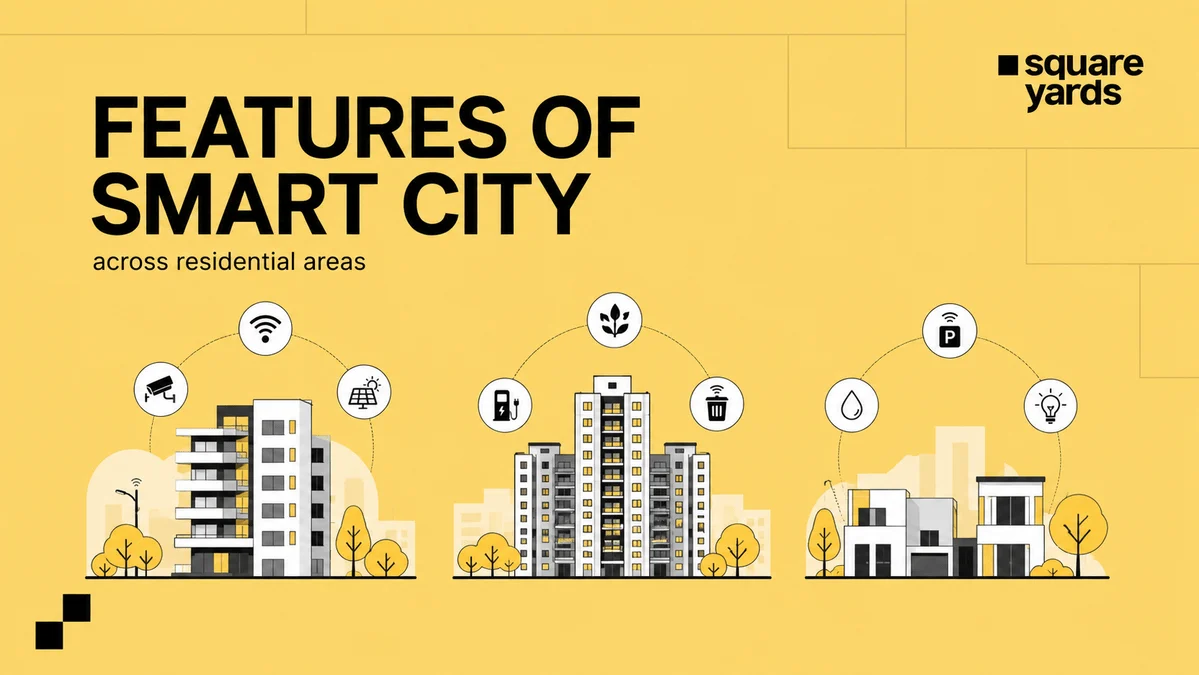
- Smart Grids and Energy Management: Unlike traditional power setups, smart grids allow for two-way communication between the utility and the consumer. This enables automated load balancing, real-time consumption monitoring, and seamless integration of renewable energy sources like rooftop solar.
- Integrated Security Protocols: This moves beyond a simple CCTV camera. It involves AI-driven anomaly detection, centralized command centers, and automated emergency response triggers that connect the residence directly to local law enforcement or medical services.
- Civic Digital Integration: A true smart development is not an island. It is connected to the municipal digital backbone, allowing for automated waste management, smart water metering, and real-time traffic/public transport updates.
- Proactive vs. Reactive Tech: Most "smart-lite" homes are reactive—they allow you to turn on an AC via an app. Proactive infrastructure predicts maintenance needs, optimizes water pressure based on usage patterns, and reduces utility costs through autonomous efficiency.
Chronology: The Buyer’s Journey from Pitch to Possession
Evaluating a smart property requires a chronological approach that moves from initial curiosity to technical validation. Most buyers fail because they engage with the technology only when prompted by a developer’s sales pitch.
Phase 1: The Education Gap (Pre-Search)
The journey begins with the buyer recognizing the need for a technologically resilient home. As seen in Nandini Joshi’s case, the initial phase is often marked by "feature blindness," where the buyer cannot distinguish between a gadget and infrastructure.
Phase 2: Establishing the Baseline (0-30 Days)
Before viewing properties, savvy investors now establish a "technical baseline." This involves defining non-negotiables: Does the project have a dedicated fiber-optic backbone? Is there a provision for EV charging integrated into the building’s load management? Establishing this baseline prevents "relative choice," where a buyer chooses the "least bad" option rather than the "correct" one.
Phase 3: Market Mapping and Micro-Market Analysis (30-60 Days)
The buyer then maps these requirements against local market conditions. In cities like Ahmedabad or Gurgaon, the "smart" value of a property is often dictated by its proximity to municipal smart corridors. A property located within a government-backed smart zone will always outperform a developer-only "smart" project in an unconnected neighborhood.
Phase 4: Validation and Triangulation (The Final 48 Hours)
The final step before commitment is the "Validation Gap." This is where the buyer moves away from the developer’s data and looks toward independent sources—reviewing municipal plans, checking property valuation benchmarks, and verifying the technical specifications of the promised amenities.
Supporting Data: The Economic Impact of Smart Integration
The data for the 2025-26 fiscal years indicates a clear divergence in the Indian real estate market. Technology is no longer a luxury; it is a primary driver of asset liquidity and rental yield.
Appreciation and Market Value
According to recent market trends, residential projects that are fully integrated into municipal smart grids have shown an appreciation rate of 12-15% higher than the national average for standard luxury housing. In micro-markets where the government has successfully deployed smart civic infrastructure, property values have repriced significantly faster than isolated "lifestyle" projects.
Rental Yield Divergence
Data shows a growing gap between premium and mid-segment smart properties:
- Mid-Segment: Properties with functional smart amenities (smart water meters, automated security) demonstrate higher occupancy stability, even if the headline yield is lower (approx. 3-4%).
- Premium Segment: While yields can reach 5-6%, these properties face higher volatility if the "smart" features are perceived as gimmicky rather than functional.
Utility Cost Efficiency
Homes with integrated smart grids and automated climate control systems report a 20-25% reduction in monthly utility expenditures. Over a ten-year holding period, these savings contribute significantly to the total cost of ownership (TCO), making the initial premium for smart infrastructure a net-positive investment.
Official Responses and Professional Perspectives
Industry experts emphasize that the complexity of modern real estate requires a shift from "gut-feeling" to "data-driven" advisory.
Priya Thakkar, a 45-year-old investment advisor from Gurgaon, highlights the role of professional oversight. “When I worked with Square Yards to navigate the NCR market, the focus wasn’t just on the floor plan. It was on the ‘digital health’ of the project. Having access to verified market data and structured timelines meant I could advise my clients based on hard evidence rather than developer promises.”
The Developer’s Stance
Leading developers are beginning to realize that "smart-washing" no longer works. Forward-thinking firms are now partnering with global tech giants to provide certified smart infrastructure. However, the onus remains on the buyer to verify these partnerships.
The Role of PropTech Platforms
Platforms like Square Yards have become essential intermediaries. By providing online property valuations and access to an expansive network of local experts, these platforms help buyers navigate the "information asymmetry" that often plagues the real estate sector. Their advisors argue that the difference between a good decision and a costly error is almost always the quality of information available at the time of the transaction.
Implications: The Future of Urban Living in India
The move toward smart city developments carries profound implications for the future of Indian urbanism and personal wealth management.
1. Resale Liquidity and Obsolescence
As technology advances, homes that lack a foundational digital ecosystem will become obsolete faster. A home bought today without a smart grid or high-speed data backbone will be difficult to sell in 2035. Conversely, properties built on scalable infrastructure will maintain high resale liquidity, as they can be upgraded without tearing down walls.
2. The Shift to "Proactive Living"
The psychological impact of true smart infrastructure cannot be overstated. When security is automated and energy usage is optimized without human intervention, the "cognitive load" on the resident is reduced. This shift from reactive to proactive living is becoming a major selling point for the modern, high-net-worth individual.
3. Environmental and Social Governance (ESG)
Smart cities are inherently more sustainable. For the environmentally conscious buyer, features like automated waste segregation and smart irrigation for communal gardens are no longer "extras"—they are essential components of a responsible lifestyle. This alignment with global ESG trends is also attracting more NRI (Non-Resident Indian) investors back to the domestic market.
4. Risk Mitigation
The most significant implication is risk reduction. By following a structured framework—establishing a baseline, mapping the market, and validating data—buyers can avoid the common pitfall of "prioritizing the familiar over the accurate." The correction of a bad property decision is significantly more expensive when applied after the transaction.
Conclusion: Taking the Next Step
For buyers like Nandini Joshi, the lesson is clear: information is the most valuable amenity a property can offer. The transition from an "overwhelmed buyer" to a "confident investor" requires a commitment to research and a willingness to leverage professional advisory services.
As the Indian real estate landscape becomes increasingly complex, the tools provided by platforms like Square Yards—ranging from verified listings to deep-dive market analytics—are no longer optional. They are the prerequisites for success in a market where the "smart" label is common, but "smart" infrastructure remains a premium prize.
To ensure your next property move holds up over time, focus on the fundamentals of digital and civic infrastructure. In the 2025 market, the most successful buyers will be those who look past the Wi-Fi and into the grid.
