

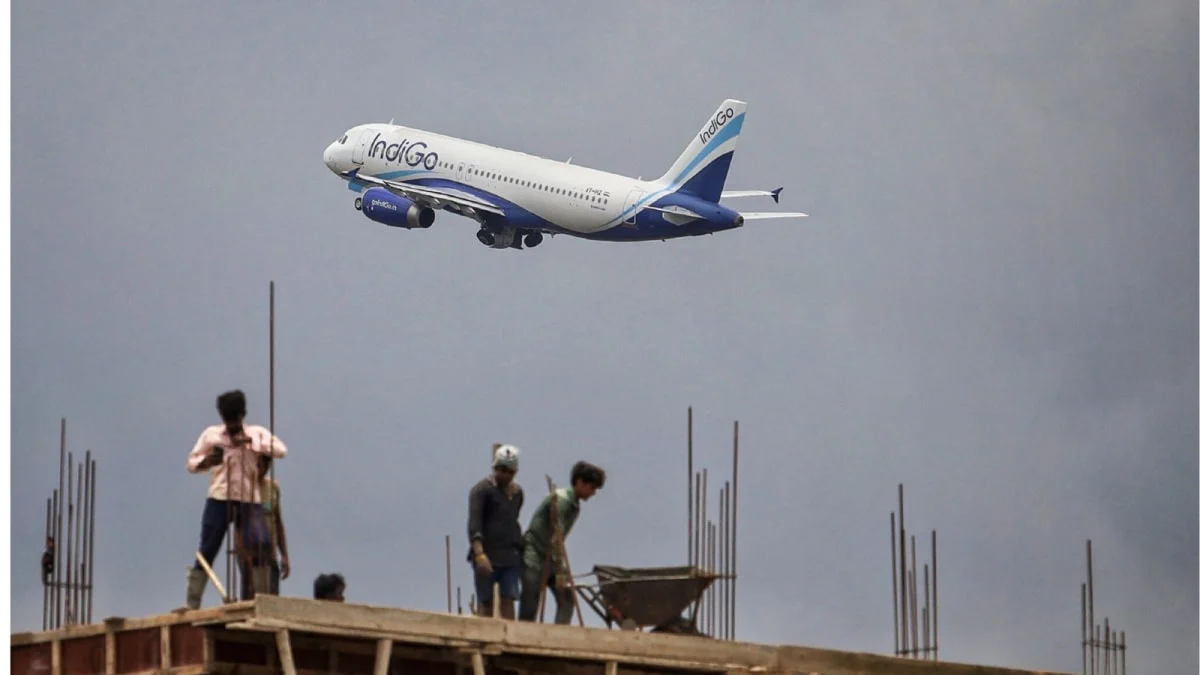
BENGALURU — In the rapidly evolving landscape of India’s Silicon Valley, the mere whisper of a transformative infrastructure project is often enough to reshape the real estate map. As of May 2026, Bengaluru is witnessing a speculative frenzy reminiscent of the early 2000s, driven by the Karnataka government’s quest to identify a location for the city’s second international airport. While official confirmation remains pending, the corridors of Kanakapura Road, Harohalli, Nelamangala, and Kunigal have become the epicenters of an aggressive land rush, with investors and developers betting billions on the future of the city’s aviation landscape.
Main Facts: A Market in Overdrive
The speculation surrounding the proposed second airport has moved beyond boardroom discussions and into the fertile soil of South and West Bengaluru. Despite the absence of a final government notification, the real estate market in these regions is behaving as if the first stone has already been laid.
The most striking development is the meteoric rise in land values along the Kanakapura Road-Harohalli stretch. Market data and reports from leading real estate consultancies indicate that land prices in this belt have effectively doubled over the past six to eight months. This surge is not merely limited to commercial plots but extends to agricultural land, residential layouts, and large-scale land parcels sought by institutional aggregators.
While Kanakapura is emerging as a lifestyle and residential hub, the Nelamangala-Kunigal corridor is carving out a niche as a logistics and industrial powerhouse. The proximity to the Satellite Town Ring Road (STRR) and existing industrial clusters has made this western belt a primary target for long-term institutional investors.
Key players in this "land grab" include:
- High-Net-Worth Individuals (HNIs) and NRIs: Seeking long-term capital appreciation through "land banking."
- Tier-1 Developers: Quietly securing Joint Development Agreements (JDAs) to build future townships.
- Logistics Giants: Scouting for massive acreage near Nelamangala to capitalize on the potential synergy between an airport and the STRR.
Chronology: The Path to a Second Runway
The journey toward a second airport for Bengaluru has been necessitated by the staggering growth of the Kempegowda International Airport (KIA) in Devanahalli.
- 2008: KIA becomes operational, triggering a decade-long boom in North Bengaluru.
- 2020–2022: Post-pandemic recovery sees air traffic at KIA nearing its projected saturation point. Discussions begin at the state cabinet level regarding the need for a second terminal or a second airport entirely.
- Late 2023: The Karnataka government formally announces a search for a second airport site. The criteria include a minimum of 4,000 to 5,000 acres of land, proximity to existing highways, and minimal environmental disruption.
- Early 2024: Seven to eight potential locations are shortlisted, including sites near Bidadi, Harohalli, Nelamangala, and Tumakuru.
- Late 2025 – Early 2026: Deputy Chief Minister D.K. Shivakumar hints at the possibility of merging two land parcels near Kanakapura to create a "perfect" site. This statement acts as the primary catalyst for the current speculative surge.
- May 2026: While the Technical Committee continues its feasibility studies, the "land rush" reaches a fever pitch in the South and West corridors.
Supporting Data: Comparing the "Devanahalli Effect"
To understand the current frenzy, one must look at the historical data from North Bengaluru. When the Devanahalli airport was announced in 2005, the surrounding region was largely barren. Within a decade of the airport becoming operational in 2008, land values in North Bengaluru appreciated by an estimated 40% to 86%, depending on the micro-market.
In the current context, the Kanakapura-Harohalli stretch is seeing a faster rate of initial appreciation. According to Ram Chandnani, Managing Director of Leasing at CBRE India, the doubling of prices within a year is a testament to the "organized" nature of today’s real estate market. Unlike 2005, the current market benefits from:
- Transparency: Digital land records and RERA have made speculative buying slightly more structured.
- Connectivity: The presence of the Namma Metro Green Line extension and the NICE Road provides an existing infrastructure base that Devanahalli lacked in 2005.
- Liquidity: There is significantly more domestic and NRI capital chasing "hard assets" in the post-pandemic economy.
Micro-Market Analysis:
- Kanakapura Road (Chudahalli, Somanahalli, Kaggalipura): These areas have transitioned from "weekend getaway" destinations to high-stakes investment zones. Residential plot prices that were hovering around ₹3,000 per sq. ft. are now being quoted at ₹5,500 to ₹6,500 per sq. ft.
- Nelamangala-Kunigal: Industrial land prices have seen a more modest but steady increase of 25–30%, driven primarily by the logistics sector’s interest in the STRR connectivity.
Official Responses and Expert Caution
The Karnataka government has maintained a balanced yet optimistic stance. Deputy Chief Minister D.K. Shivakumar, who also holds the Bengaluru Development portfolio, has confirmed that the race is narrowing down. While he has acknowledged the suitability of the Kanakapura sites due to their terrain and ownership patterns, he has urged the public not to fall prey to "unverified rumors."
"The final decision will be based on technical feasibility, wind direction, and airspace management," a senior official from the Infrastructure Development Department (IDD) stated. "While we understand the market excitement, the government’s priority is long-term urban planning, not short-term real estate gains."
Expert Perspectives:
Real estate analysts are sounding a note of caution. While the potential for appreciation is high, the risks are equally significant.
- Fragmented Growth: Unlike the north, which had a unified development corridor, the south and west are more fragmented. Building the necessary social infrastructure (hospitals, schools, malls) to support an airport ecosystem could take another 15 years.
- The "Hype" Gap: Consultants warn that the current price doubling is based on "anticipatory value." If the government eventually selects a different site—such as one toward Tumakuru or Malavalli—the speculative bubble in Kanakapura could burst, leading to a sharp correction.
- Long Horizon: An airport project involves environmental clearances, land acquisition hurdles, and multi-year construction timelines. Experts advise that this is a "10-to-15-year play," not a quick-flip investment.
Implications: Shifting the City’s Gravity
The hunt for a second airport is more than just a transportation project; it is an exercise in rebalancing Bengaluru’s lopsided growth. For decades, the city has expanded northward and eastward (toward Whitefield and Devanahalli), leading to massive traffic congestion and overstressed resources in those sectors.
1. Economic Diversification:
A second airport in the South or West would stimulate industrial growth in the Ramanagara and Magadi belts. It would provide a massive boost to the toy-making clusters of Channapatna and the silk industries of Ramanagara, integrating them into the global supply chain.
2. The Logistics Revolution:
The Nelamangala-Kunigal corridor is poised to become the "Logistics Capital" of South India. With the STRR connecting this region to the Chennai and Mumbai highways, an airport in this vicinity would create a tri-modal transport hub (Rail, Road, Air) that could rival any in Asia.
3. Environmental Concerns:
The southern corridor is known for its greenery and proximity to the Bannerghatta National Park and various forest reserves. Environmentalists are already raising red flags about the impact of a mega-airport on the local ecology, water tables, and elephant corridors. Any final decision will likely face intense scrutiny from the National Green Tribunal (NGT).
4. The "Second City" Phenomenon:
If the airport is situated toward the South-West, Bengaluru will effectively become a "bi-polar" city. This would lead to the development of a "Second CBD" (Central Business District), potentially easing the pressure on the MG Road and Koramangala areas.
Conclusion: A High-Stakes Game of Wait-and-Watch
As the Karnataka government nears its final decision, the land rush along the Kanakapura and Nelamangala corridors serves as a vivid reminder of Bengaluru’s insatiable appetite for growth. While the "Devanahalli Blueprint" offers a tempting vision of wealth creation, the current speculative environment is fraught with complexity.
For the farmers of Ramanagara and the industrialist in Nelamangala, the proposed airport represents a once-in-a-generation opportunity. However, for the city at large, the challenge lies in ensuring that this second gateway to the world does not just create a real estate boom, but a sustainable, well-planned urban future. For now, the investors have placed their bets; the final card remains in the hands of the state’s planners.
