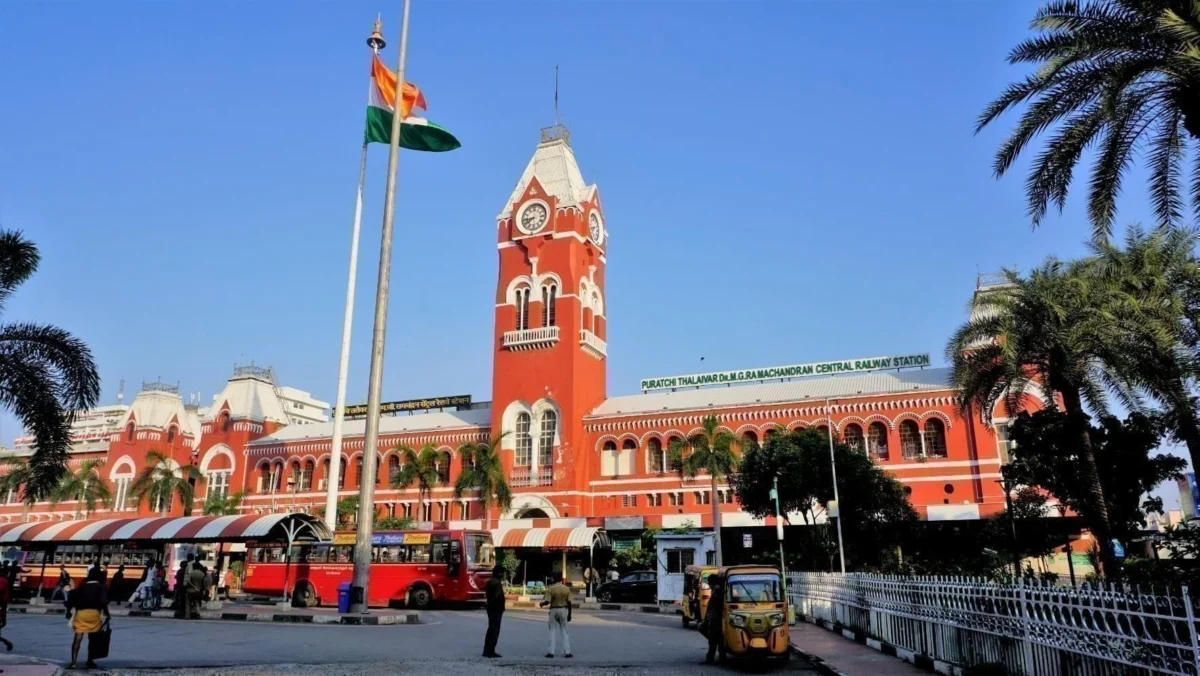
Chennai, Tamil Nadu – In an era of rapid urbanization and shifting demographics, the Tamil Nadu Housing Board (TNHB) has emerged as the cornerstone of the state’s mission to provide "Housing for All." Functioning under the Housing & Urban Development Department of the Government of Tamil Nadu, the TNHB has recently undergone a seismic shift in its operational philosophy, moving from traditional offline allotments to a sophisticated, 100% digital sales model.
As of August 2026, the Board has launched its most ambitious residential rollout to date, offering over 6,700 units across the state. This report provides an in-depth analysis of the TNHB’s current schemes, its administrative evolution, and the socio-economic implications of its latest housing policies.
I. Main Facts: The Strategic Mandate of TNHB
The Tamil Nadu Housing Board is not merely a construction agency; it is a social welfare institution. Historically, more than 50% of the dwelling units constructed by the TNHB have been reserved for the Economically Weaker Sections (EWS) of society. This mandate ensures that the "Housing for All" motto remains a reality rather than a rhetorical flourish.
Quick Facts at a Glance
| Feature | Details |
|---|---|
| Parent Department | Housing & Urban Development Department, Govt of Tamil Nadu |
| Core Objective | Provision of affordable, sustainable, and user-friendly housing |
| Target Demographic | EWS, LIG, MIG, and HIG residents of Tamil Nadu |
| Current Status | 100% Online Sales and Allotments |
| Inventory Type | Multi-Storied Building (MSB) Flats, Individual Houses, and Developed Plots |
Under the leadership of a Government-appointed Chairman and a Managing Director, the Board operates across 12 distinct divisions or zones. These include specialized circles such as the Chennai City Circle (I & II), Salem, Madurai, and Coimbatore, ensuring that housing development is not localized to the capital but distributed across the state’s burgeoning secondary cities.
II. Chronology: From Offline Legacy to the 2026 Digital Frontier
The evolution of the TNHB can be categorized into three distinct eras: the foundational years of manual allotments, the pandemic-driven urgency for urban shelter, and the current era of digital transparency.
The Pandemic Catalyst
The COVID-19 pandemic significantly altered the housing landscape in Tamil Nadu. As employment opportunities fluctuated, a massive wave of migration toward urban centers like Chennai, Trichy, and Coimbatore was observed. This surge in demand forced the TNHB to accelerate its construction timelines and modernize its delivery systems.
The 2026 Digital Pivot
A landmark moment occurred on August 12, 2026, with the issuance of Notification No. 01/2026. This directive officially ended the era of physical form sales at the JJ Nagar division office. For the first time in its history, the Board transitioned to a fully online property sales portal.
Current Timeline (2025-2027)
- August 12, 2026: Official notification of 6,775 units for sale.
- August 25, 2026: Opening of the online booking window.
- March 2027: Scheduled closing of the current booking window (or until stocks last).
III. Supporting Data: Analyzing the 2025-26 Live Schemes
The TNHB’s current inventory is a diverse mix of unsold "First Come First Serve" (FCFS) units and new projects allocated via an online lottery. The price points reflect the Board’s commitment to affordability, ranging from ₹3 lakh for EWS plots to ₹1.46 crore for luxury HIG flats in prime Chennai locations.
Active Scheme Highlights (2026)
| Location | Units/Type | Category | Price Range |
|---|---|---|---|
| Sholinganallur, Chennai | 1,749 (MSB Flats) | LIG, MIG, HIG | ₹36 Lakh – ₹76 Lakh |
| Anna Nagar West Extn. | 1,749 (MSB Flats) | MIG | ₹79 Lakh – ₹98 Lakh |
| Mogappair & Nolambur | 1,749 (HIG Flats) | HIG, MIG | ₹73 Lakh – ₹1.21 Cr |
| Navalpattu, Trichy | Plots | EWS to HIG | ₹4 Lakh – ₹43 Lakh |
| Mullur, Pudukkottai | 2,184 (Plots) | EWS to HIG | ₹5 Lakh – ₹46 Lakh |
| Tirunelveli (Phase VII) | 2,184 (Plots) | EWS to HIG | ₹7 Lakh – ₹1.31 Cr |
Income Eligibility and Property Specifications
The TNHB utilizes a strict monthly income bracket system to ensure fair distribution.
- EWS (Economically Weaker Section): Income up to ₹25,000. These units are usually 1 RK/1 BHK with a carpet area of up to 320 sq. ft., heavily subsidized by the state.
- LIG (Low Income Group): Income between ₹25,001 and ₹50,000. Units range from 320 to 645 sq. ft.
- MIG (Middle Income Group): Income between ₹50,001 and ₹75,000. Units are 2 BHK/3 BHK configurations (645 – 1,290 sq. ft.) featuring community parks and assigned parking.
- HIG (High Income Group): Income above ₹75,000. These luxury 3 BHK/4 BHK units exceed 1,290 sq. ft. and include amenities like elevators, gymnasiums, and 24/7 security.
IV. Official Responses and Implementation: The Online Application Guide
Government officials have emphasized that the new digital portal (propertysales.tnhb.tn.gov.in) was designed to eliminate middlemen and ensure a transparent "one person, one unit" policy.
The Digital Journey for Applicants
To apply, a resident must follow a standardized digital protocol:
- Registration: Create a profile on the official TNHB sales portal.
- Project Selection: Browse through available flats or plots using the "View All Projects" feature, which provides PDFs containing unit numbers, floor plans, and UDS (Undivided Share of Land) details.
- Documentation: Upload proof of residency, age (minimum 21 years), and income certificates.
- Payment of EMD: The Earnest Money Deposit (EMD) must be paid online to validate the application.
Financial Flexibility: Three Modes of Payment
The TNHB offers unique financial models to accommodate different economic backgrounds:
- Hire Purchase: A rare model where the allottee pays 40% upfront and the remaining 60% as an EMI over 5 to 14 years. This serves as a government-backed home loan for those who might not qualify for private bank credit.
- Self-Finance: Allottees pay the cost in stages as construction progresses.
- Outright Purchase: The total cost is paid within 30 days of the allotment letter.
V. Social Welfare: Specialized Housing for Urban Workers
In a significant policy expansion, the TNHB recently approved a specialized scheme for sanitary workers. Recognizing the vital role of cleanliness workers in urban ecosystems, the state government has pledged the construction of 30,000 houses specifically for this demographic over the next three years.
This initiative is being executed in collaboration with the Tamil Nadu Urban Habitat Development Board and the Sanitation Workers Welfare Board. Priority is being given to workers currently residing in rural areas or substandard housing, provided they do not already own property under other government schemes like the Kalaignar Kanavu Illam.
VI. Implications: Challenges and the Road Ahead
While the TNHB’s digital transition and affordable pricing are commendable, the shift has brought several post-allotment challenges to the forefront.
Infrastructure and Maintenance
Journalistic inquiries and resident feedback have highlighted recurring issues in older TNHB colonies. Common grievances include:
- Quality of Construction: Seepage and structural cracks in some LIG/MIG high-rises.
- Maintenance Delays: A lag in the handover of maintenance responsibilities to Resident Welfare Associations (RWAs).
- Legal Bottlenecks: Delays in obtaining the final "Sale Deed" or "No Objection Certificate" (NOC) after the completion of EMI payments.
The Role of Transparency
The introduction of the GPMS-TNHB Mobile App, a third-party application linked to the TNHB portal, has increased accessibility. However, officials warn users to verify all data through the official website (tnhb.tn.gov.in) to avoid misinformation.
Conclusion
The Tamil Nadu Housing Board stands at a crossroads. Its pivot to a 100% digital model for the 2025-26 schemes represents a bold step toward modernizing state-led real estate. By balancing high-end developments in Chennai’s IT corridors with subsidized housing for sanitary workers and the EWS category, the TNHB continues to be the primary engine of equitable urban growth in Tamil Nadu. For the thousands of applicants currently vying for the 6,775 units on offer, the TNHB remains the most viable path to realizing the dream of homeownership in an increasingly expensive market.
Contact Information for Applicants:
- Address: CMDA Complex, E&C Market Road, Koyambedu, Chennai, 600107
- Helpline: 24794201 (through 06)
- Official Portal: tnhb.tn.gov.in