

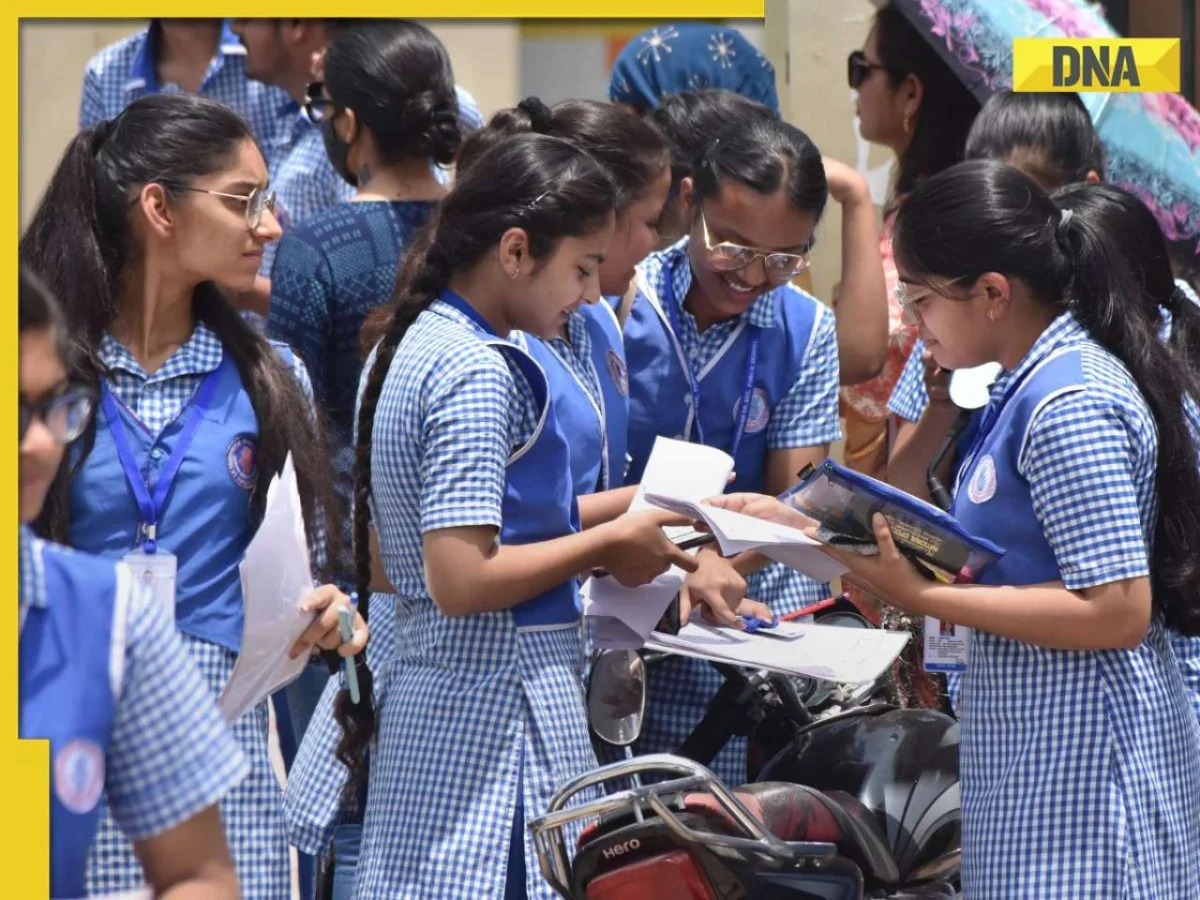
New Delhi: The Central Board of Secondary Education (CBSE) has officially announced the much-anticipated Class 12 examination results for the academic year 2026 on Wednesday. Students can access their scorecards on the official CBSE results portal, cbseresults.nic.in. This year’s results reveal a national pass percentage of 85.20%, a figure that, while representing the successful completion of this crucial academic milestone for a vast majority of students, also signals a dip compared to the previous year and stands as one of the lower pass rates recorded in recent times.
Despite the overall decrease in the pass percentage, the academic performance of students has seen significant highs. Over 17,000 students have achieved an exceptional score of above 95%, a testament to their dedication and rigorous preparation. Furthermore, a substantial cohort of nearly 94,000 students have surpassed the 90% mark, indicating a strong performance among a significant segment of the student population.
A perennial trend in CBSE results has been the outperformance of girls over boys, and 2026 is no exception. Girls have once again demonstrated their academic prowess, achieving a pass percentage of 88.86%. However, this figure is a slight decline from last year’s 91.64%. Similarly, the boys’ pass percentage stands at 82.13%, also a decrease from their 85.70% in 2025. The gap between the pass percentages of girls and boys has been recorded at 6.73 percentage points, highlighting the consistent academic advantage held by female students.
The Class 12 board examinations, a critical juncture for students aspiring for higher education, saw a massive participation this year. Over 18 lakh students across the nation appeared for these examinations, which were conducted meticulously from February 17 to April 10, 2026. The smooth conduct of these examinations, amidst various logistical and educational challenges, underscores the robust administrative machinery of the CBSE.
)
A Historical Perspective: Analyzing the Pass Percentage Trends
The announcement of the CBSE Class 12 results for 2026 brings into focus the evolving performance metrics of students over the years. While the 85.20% pass rate is commendable, it represents a discernible downward trend when compared to previous years. In 2025, the overall pass percentage was higher, and the current figure is among the lowest recorded in the past few years. This observation prompts a deeper dive into potential contributing factors and the broader implications for the education system.
The dip in the overall pass percentage, though marginal, warrants careful examination. Educational experts often attribute such fluctuations to a myriad of factors, including evolving examination patterns, the rigor of the syllabus, the impact of external events on student preparation, and even shifts in assessment methodologies. It is crucial to analyze these elements in conjunction with the performance data to gain a comprehensive understanding.

The consistent outperformance of girls in the CBSE Class 12 examinations is a well-documented phenomenon. This year, the 88.86% pass rate for girls, while lower than 2025, still reflects a significant achievement. The 6.73 percentage point difference between girls and boys highlights a persistent gender gap in academic success at this level. While the reasons for this gap are multifaceted and debated, they often include societal expectations, differences in study habits, and the influence of support systems. The slight decline in both girls’ and boys’ pass percentages this year suggests a need for a holistic review of support mechanisms and pedagogical approaches for all students.
A Closer Look at Student Achievements: Peaks of Excellence
Amidst the discussion of the overall pass percentage, it is imperative to acknowledge the exceptional performances that define the spirit of academic excellence. The fact that over 17,000 students have achieved scores exceeding 95% is a remarkable feat. These students have not only mastered the curriculum but have also demonstrated a profound understanding of their subjects, pushing the boundaries of academic achievement. Their success stories serve as beacons of inspiration for their peers and future batches.
)
Similarly, the nearly 94,000 students who have secured over 90% are a testament to the high caliber of education being imparted and the dedication of students and educators alike. This substantial number signifies a strong foundation being laid for higher education and specialized fields. These students represent the future intellectual capital of the nation, poised to contribute significantly to various sectors.
The disparity in pass percentages between urban and rural areas, and across different socio-economic strata, is another area that requires continuous attention. While the provided data focuses on the aggregate national performance, a granular analysis of these factors would offer a more nuanced understanding of educational equity and access.
)
The Examination Landscape: A Glimpse at the Process
The Class 12 board examinations are a rigorous and comprehensive assessment designed to evaluate students’ learning across a spectrum of subjects. The period from February 17 to April 10, 2026, was a crucial time for over 18 lakh students, who dedicated themselves to preparing for these high-stakes tests. The CBSE’s role extends beyond merely conducting examinations; it encompasses setting syllabi, designing question papers that are both challenging and fair, and ensuring a transparent and efficient evaluation process.
The methodology for calculating the pass percentage is a critical aspect of the examination system. It typically involves a combination of marks obtained in theory and practical components of various subjects. The continuous evaluation system, which includes internal assessments, also plays a role in the final outcome for many students. Understanding the nuances of this evaluation process is essential for students, parents, and educators.
)
Navigating the Results: A Step-by-Step Guide for Students
For the students eagerly awaiting their results, the process of accessing their scorecards is straightforward. The CBSE has provided a dedicated online portal for this purpose.
Step-by-step guide to download scorecard:
)
- Visit the Official Website: Navigate to the official CBSE results website, which is results.cbse.nic.in.
- Locate the Result Link: On the homepage, find and click on the prominent link for "CBSE Class 12 Result 2026".
- Enter Required Credentials: Students will be prompted to enter their examination details. This typically includes their roll number, school number, and admit card ID. Ensure accuracy in entering these details.
- Submit and View: After entering the required information, click on the ‘Submit’ button. Your result will be displayed on the screen.
- Download and Print: It is highly recommended to download a copy of your scorecard for future reference. Printing a hard copy is also advisable for official purposes, such as admissions to higher education institutions.
Students can also access their results through other official channels like the UMANG app and DigiLocker, providing multiple convenient options for accessing their academic performance data.
Official Responses and Future Outlook
While the immediate focus is on the release of results and the individual achievements of students, educational bodies and policymakers will undoubtedly be analyzing the trends revealed by the 2026 examination outcomes. A slight dip in the pass percentage, even if marginal, often triggers discussions about potential reforms and areas for improvement within the education system.
)
The CBSE, as the apex examination board, is expected to conduct a thorough review of the examination process, the syllabus, and the assessment patterns in light of these results. This analysis could lead to adjustments aimed at enhancing student performance, ensuring greater equity, and adapting to the evolving needs of higher education and the job market.
The consistently strong performance of girls is a positive indicator of their academic engagement and success. However, the slight decline in their pass percentage this year, alongside that of boys, suggests that the focus should be on enhancing overall academic support and pedagogical strategies for all students, irrespective of gender.
)
The significant number of students scoring above 90% and 95% underscores the potential for academic excellence within the Indian education system. The challenge lies in replicating this success across a wider student population and ensuring that every student has the opportunity to reach their full potential.
Implications for Higher Education and Beyond
The CBSE Class 12 results serve as a critical gateway for students aspiring to pursue higher education in universities and colleges across India and abroad. The performance metrics, particularly the high achievers, will be closely watched by admission committees. Universities often set cut-off marks based on these board results, making them a pivotal factor in shaping students’ academic trajectories.
)
The skills and knowledge acquired during the Class 12 curriculum are foundational for specialized courses in science, commerce, arts, and vocational fields. The success rate and the distribution of marks provide insights into the preparedness of the student cohort for the demands of higher education.
Beyond academia, the CBSE Class 12 results also have implications for the workforce. Employers often consider academic performance as an indicator of a candidate’s diligence, discipline, and cognitive abilities. Therefore, a strong performance in these examinations can open doors to various career opportunities.
)
As the education landscape continues to evolve, the CBSE Class 12 results for 2026 offer valuable data points for reflection, analysis, and strategic planning. The focus will remain on fostering an environment that nurtures academic excellence, promotes equitable opportunities, and equips students with the skills and knowledge necessary to thrive in an increasingly competitive global landscape. The continuous endeavor will be to not only maintain high standards but also to ensure that the educational journey is inclusive and empowering for every student.
