

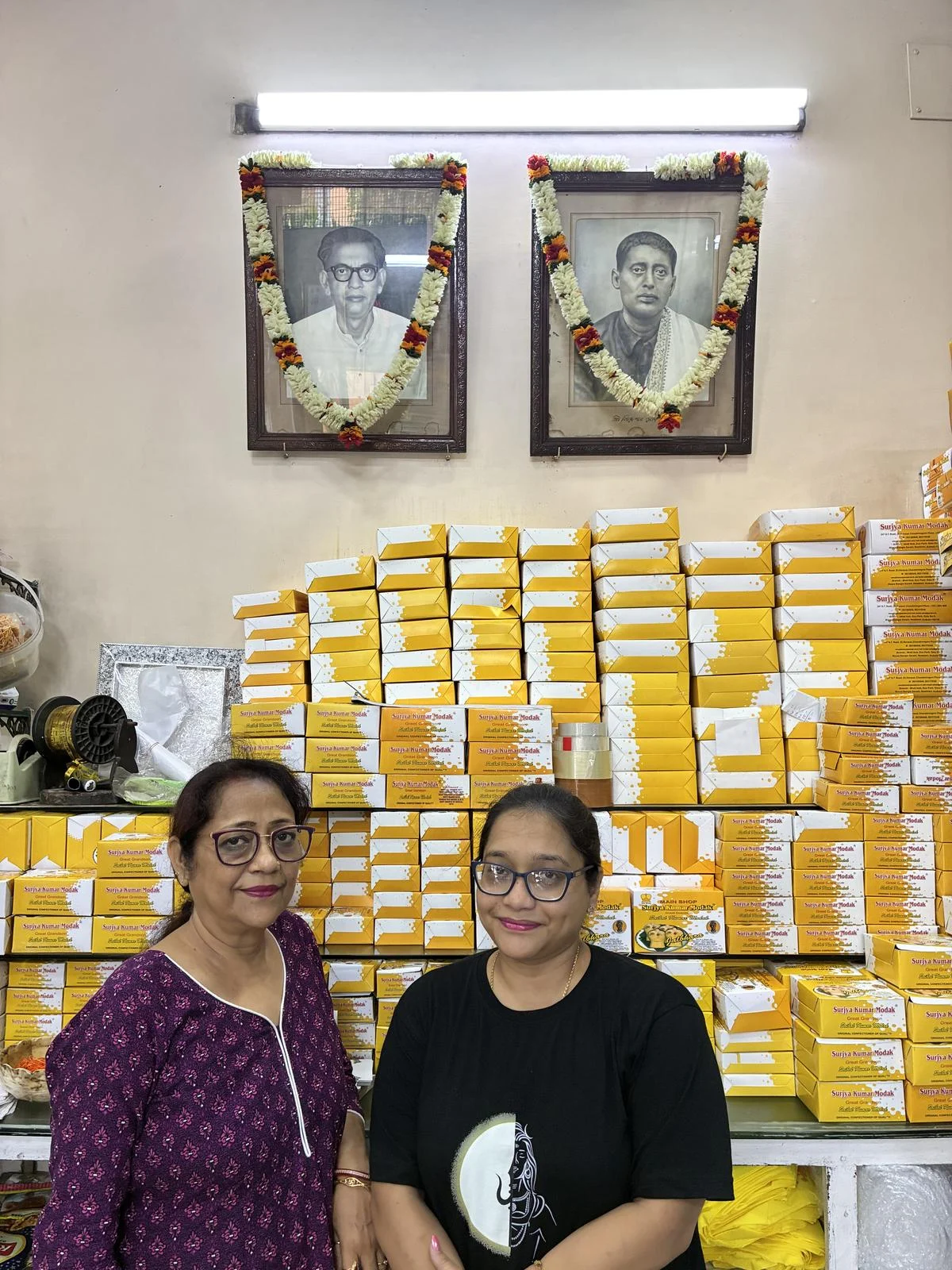
The recognition marks a pivotal moment for the Modak family, the custodians of a 220-year-old secret. For the town of Chandannagar, located 45 kilometers from the bustling metropolis of Kolkata, the GI tag is more than a legal protection of intellectual property; it is a validation of a "trick" that has baffled visitors for nearly two centuries: how can a solid sweet hold a reservoir of fragrant liquid without letting a single drop escape?

Main Facts: The Anatomy of a Gastronomic Mystery
The Jalbhara (literally translated as "filled with water") is a variant of the traditional Bengali sandesh, made primarily from chhena (fresh cottage cheese). However, unlike its solid counterparts, the Jalbhara features a hollow center filled with a viscous, aromatic syrup.
At the flagship shop of Surjya Kumar Modak, located at 247, Grand Trunk Road East, the process remains an exercise in precision. The sweet is molded into the shape of a talshansh—the translucent, heart-shaped pulp of the ice apple (palmyra fruit). Beneath the delicate white shell of chhena lies the surprise: a pocket of rose-infused syrup or, in the winter months, the prized nolen gur (date palm jaggery).

The technical feat lies in the consistency of the outer shell. According to Gitasree Modak, a sixth-generation descendant of the founder, the shell is engineered to be non-porous. "The outer shell has such a specific consistency that it never absorbs the liquid inside," she explains. This structural integrity allows the sweet to remain intact for four to five days without refrigeration, even in the sweltering humidity of a Bengal summer.
Chronology: From a Zamindar’s Prank to Global Export
The story of the Jalbhara begins in the mid-19th century, specifically around the year 1250 of the Bengali calendar (circa 1843-1844). The setting was the Telinipara neighborhood, home to a prominent zamindar (landlord) family.

The grihini (matriarch) of the household approached Surjya Modak with a peculiar request. She wanted a sweet that would playfully deceive her newlywed son-in-law—a culinary prank to welcome him into the family. Surjya and his son, Siddheshwar Modak, rose to the challenge. They devised a method to trap liquid syrup inside a chhena mold.
When the unsuspecting groom took his first bite, the hidden reservoir of rose-scented jaggery burst forth, spilling down his traditional panjabi (kurta). The ensuing laughter of the household women cemented the sweet’s reputation. What began as a joke for a single wedding soon became a regional sensation.

The Jalbhara has since outlived the French colonial administration of Chandannagar, survived the transition of the British Raj, and weathered the socio-economic shifts of post-independence India. It has been transported in tin boxes, tucked between clothes in traveler’s luggage, and has traveled from the banks of the Hooghly to the skyscrapers of New York and London.
Supporting Data: The Science of Chhena and the Portuguese Influence
The existence of the Jalbhara is inextricably linked to the broader evolution of Bengali confectionery, which underwent a revolution following the arrival of the Portuguese in the 16th century. Before this period, Bengali sweets were primarily grain-based or made from thickened milk (kheer), as curdling milk was traditionally considered inauspicious in Hindu customs.

The Portuguese, who settled in nearby Bandel, introduced the technique of curdling milk with acid to create chhena. Local moiras (confectioners) like Surjya Modak eventually mastered this new ingredient, turning it into the versatile base for the sandesh family.
The Jalbhara represents the pinnacle of this experimentation. Today, the Modak family maintains strict quality control over their ingredients. The chhena and milk are sourced from trusted suppliers in the suburban belts surrounding Chandannagar to ensure the fat content remains consistent—a vital factor in maintaining the shell’s "waterproof" quality.

In terms of market presence, the original Jalbhara is priced at ₹65 per piece, while modern variations, such as the Alphonso mango-filled version, retail for ₹90. The shop also produces seasonal variants, including strawberry, black currant, and green mango, ensuring the 19th-century invention remains relevant to 21st-century palates.
The Tagore Connection and Literary Legacy
The history of Surjya Modak is not merely one of sugar and cheese; it is deeply entwined with the cultural renaissance of Bengal. Surjya Modak himself was a man of letters, a poet whose collection Geet Gobindo is still preserved in the French Museum of Chandannagar. This dual identity—confectioner and poet—typified the 19th-century Bengali intellectual who saw no divide between craft and culture.

The shop also boasts a legendary connection to the Nobel laureate Rabindranath Tagore. During his frequent stays at Patal Bari, a historic house overlooking the Hooghly River, Tagore sampled the Modak family’s creations. While he admired the Jalbhara, he was particularly struck by another preparation made of delicate grains of chhena. He remarked that they looked like tiny pearls (moti) and christened the sweet Motichur Sandesh. Notably, this has no relation to the North Indian motichoor ladoo, serving instead as a testament to Tagore’s influence on the nomenclature of Bengali desserts.
Official Responses: Preserving the 220-Year Legacy
Today, the heritage is managed by Saibal Kumar Modak (fifth generation), his wife Madhuri, and their daughters Bhagyasree and Gitasree. For the family, the recent GI tag is a shield against the proliferation of "fake" Surjya Modaks. The popularity of the brand has led to numerous imitators across the Hooghly district, but the family maintains that their only legitimate branch outside Chandannagar is located at the Misti Hub in New Town, Kolkata.

"For international business, we needed official recognition," says Gitasree Modak. "Earlier, the world knew it as Surjya Modak’s sweet. Now, the world recognizes it as Chandannagar’s heritage. It places our town on the global map."
The family has also modernized their logistics to meet global demand. Every week, half a dozen consignments are dispatched via DHL to major Indian metros like Bengaluru, Delhi, and Hyderabad. The international demand, particularly from the United States, is managed through specialized vendors who distribute the sweets across the North American continent, ensuring that the Jalbhara reaches its destination within 24 to 48 hours to maintain freshness.

Implications: The Future of Heritage Confectionery
The awarding of the GI tag to the Jalbhara has significant implications for the local economy of Chandannagar. It provides a legal framework to prevent the unauthorized use of the name, ensuring that only sweets produced within the specific geographic region and following the traditional methods can be marketed as "Chandannagar Jalbhara."
Beyond the legalities, the GI tag serves as a catalyst for "culinary tourism." As travelers increasingly seek authentic, localized experiences, Chandannagar’s identity as the "City of the Jalbhara" is expected to draw more visitors to its historic Strand, where French colonial architecture meets the timeless flow of the Hooghly.

The Jalbhara remains a metaphor for Chandannagar itself: a town that appears quiet and unassuming on the outside, but contains a rich, fluid history within. As another tray of sweets is emptied at the Barasat shop, the Jalbhara continues to perform its oldest trick. A brittle shell yields, a burst of sweetness follows, and a new generation of tasters experiences the same astonishment that the Telinipara groom felt over two centuries ago. The GI tag ensures that this surprise—and the legacy of Surjya Modak—will remain protected for centuries to come.
