

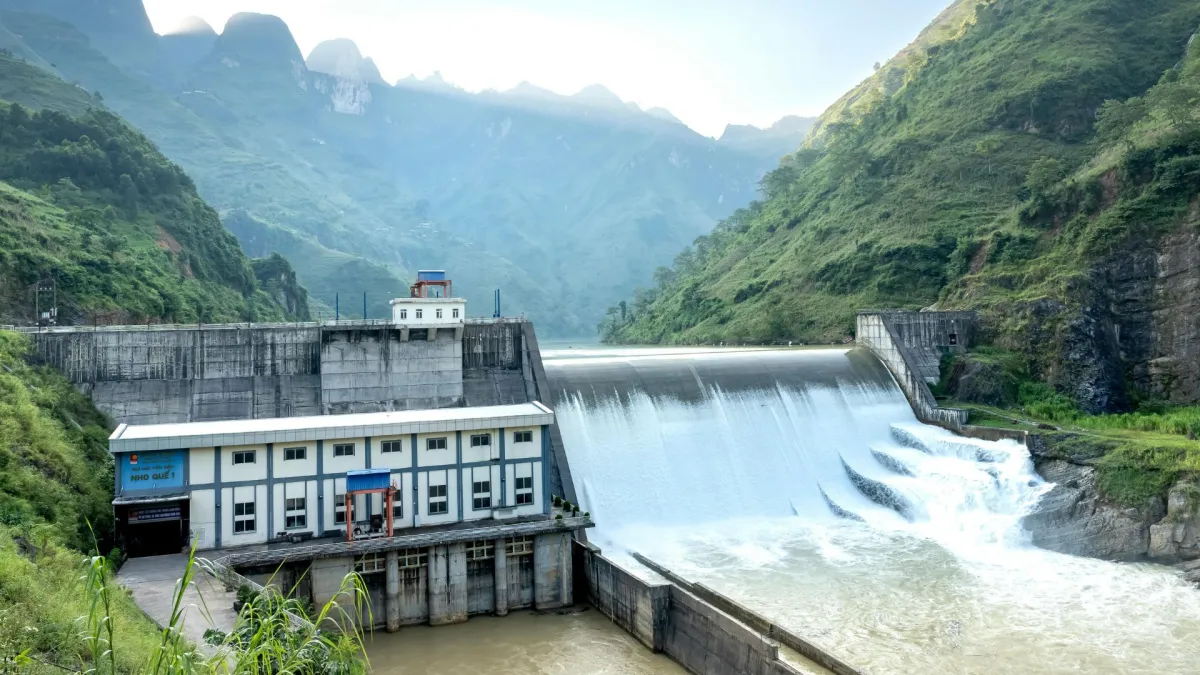
BENGALURU – In an era where the specter of climate change casts a long shadow over global infrastructure, a landmark study from the Indian Institute of Science (IISc) and the National Institute of Hydrology (NIH) has provided a beacon of optimism for the renewable energy sector. The research reveals that major hydropower projects in the Eastern Himalayas, specifically the Kameng Hydro Electric Project in Arunachal Pradesh, are projected to remain remarkably resilient to the volatile climatic shifts predicted through the end of the 21st century.
As the planet faces unprecedented warming, the "Water Tower of Asia"—the Himalayan range—has been a focal point of concern due to its retreating glaciers and erratic precipitation patterns. However, the new findings suggest that strategic engineering, when aligned with regional hydrological realities, can withstand the rigors of a changing climate, ensuring a steady supply of clean energy for decades to come.
I. Main Facts: Engineering a Sustainable Future
The study, recently published and centered on the Kameng Hydro Electric Project, addresses a critical question: Can mountain-based renewable energy infrastructure survive a future characterized by extreme weather? The Eastern Himalayas are a region of immense untapped potential, yet they are notoriously data-scarce and topographically challenging.
The Core Findings
The collaborative research team utilized a sophisticated suite of climate and hydrological models to simulate the river basin’s behavior under various global warming scenarios. The primary takeaway is that despite a projected temperature increase of up to 2.8 degrees Celsius by the year 2100, the Kameng project will continue to meet and exceed its operational efficiency benchmarks.
Key highlights of the findings include:

- Operational Reliability: The plant is expected to maintain a steady annual energy output, exceeding national operational efficiency benchmarks in more than 80% of the years leading up to 2100.
- Buffer Capacity: The facility’s specific engineering—utilizing a "high head" (a significant vertical drop)—allows it to remain productive even when water volumes fluctuate.
- Seasonal Adaptation: While winter energy production may dip due to decreased river flow, the massive surge in summer monsoon waters will compensate, allowing the plant to operate at peak capacity for extended periods.
The Run-of-the-River Advantage
Unlike traditional large-scale dams that require the flooding of vast tracts of land to create reservoirs, the Kameng project is a "run-of-the-river" facility. These plants use the natural flow and the steep gradients of mountain terrain to drive turbines. This method is widely considered more environmentally sustainable, as it minimizes the disruption of local ecosystems and the displacement of communities, making its climate resilience even more significant for future green energy policy.
II. Chronology: Mapping a Century of Change
To reach these conclusions, the researchers embarked on a multi-stage simulation process that bridged historical weather data with future climate projections.
Phase 1: Historical Data Integration
The study began by gathering decades of historical weather data from the Eastern Himalayan region. This data served as the baseline for the Variable Infiltration Capacity (VIC) model. The VIC model is a high-resolution hydrological tool that creates a digital twin of the river basin, accounting for soil moisture, evaporation, and surface runoff.
Phase 2: Climate Projection (Present to 2100)
The team then applied seven different global climate models (GCMs) to this digital twin. By using an "ensemble" approach—averaging the results of multiple models—the researchers were able to mitigate the biases inherent in any single climate prediction. They tested two distinct warming scenarios: a moderate path and a more extreme "high-emissions" path.
Phase 3: Hydrological Simulation
Under these scenarios, the researchers simulated how water would move through the landscape through the year 2100. They looked at "snowmelt-to-runoff" ratios and the timing of the Indian Summer Monsoon.

Phase 4: Operational Impact Assessment
Finally, the hydrological data was fed into the operational parameters of the Kameng Hydro Electric Project. The researchers calculated how much electricity could be generated based on the predicted daily flow of the Bichom and Tenga rivers, which feed the facility.
III. Supporting Data: The Climate Contrast
The data generated by the IISc and NIH study paints a picture of a future characterized by "seasonal extremes." The Eastern Himalayas will likely experience a dramatic shift in its hydrological cycle, requiring infrastructure to be both robust and flexible.
Temperature and Precipitation Shifts
The models predict a temperature rise of approximately 2.8°C by the late 21st century. This warming will have a bifurcated impact on precipitation:
- Winter Desiccation: Winters are projected to become significantly drier. The research suggests that natural river flows during the lean dry season could plummet by as much as 80%. This is primarily due to reduced snowfall and altered atmospheric circulation patterns.
- Monsoon Intensification: Conversely, the summer monsoons are expected to become much wetter and more intense. The volume of water flowing through the basin during the peak monsoon months will surge, creating a massive surplus of potential energy.
The "High Head" Efficiency Metric
The reason the Kameng project survives these extremes lies in its design. Hydropower generation is a product of two factors: Flow (the volume of water) and Head (the vertical distance the water falls).
- Kameng’s Design: The project utilizes a very high head. Because the water falls from a great height, the turbines require a relatively low volume of water to generate significant torque.
- The Result: During the dry winter months, even with an 80% drop in flow, the high head ensures the plant can still produce a baseline of power. During the wet summer, the excess water is so vast that the plant can run all its turbines at 100% capacity for longer durations than it currently does, effectively "making up" for the winter deficit on an annual basis.
IV. Official Responses and Strategic Context
While the study is a scientific endeavor, its implications have resonated with energy planners and policy experts across India. The findings align with the Indian government’s broader "Panchamrit" goals—a five-point plan to combat climate change, which includes reaching 500 GW of non-fossil energy capacity by 2030.

Policy Implications for Arunachal Pradesh
Arunachal Pradesh is often referred to as the "Powerhouse of India," with an estimated hydropower potential of over 50,000 MW. However, investment has often been stymied by fears of climate instability and the high cost of Himalayan construction.
- Investor Confidence: Experts suggest that this study provides the "scientific proof of concept" needed to de-risk future investments in the region.
- Grid Stability: The Ministry of Power has long emphasized the need for "peaking power"—energy that can be deployed quickly to balance the grid when solar and wind fluctuate. Resilient hydropower is the ideal candidate for this role.
The Call for Better Instrumentation
Despite the optimistic findings, the research team and environmental officials have highlighted a critical gap: the lack of physical data. The researchers noted that the sheer ruggedness of the Himalayan terrain means there are very few physical weather stations to verify computer models.
"Computer models are only as good as the data we feed them," the researchers noted in their summary. There is an urgent call for the installation of more high-altitude automated weather stations (AWS) to provide real-time monitoring of glacial melt and rainfall.
V. Implications: A Blueprint for Global Mountain Regions
The significance of the IISc and NIH study extends far beyond the borders of India. The methodology used—combining ensemble climate modeling with site-specific engineering parameters—offers a transferable blueprint for mountainous regions worldwide, from the Andes to the Alps.
1. Adaptation and Maintenance
One of the most practical implications of the study is for plant operators. By knowing that winters will be drier and summers wetter, operators can shift their maintenance schedules. Heavy maintenance and turbine overhauls can be scheduled during the predicted "ultra-lean" winter months, ensuring that every single turbine is operational and ready to capture the massive energy potential of the intensified summer monsoons.
2. Sustainable Development Goals (SDGs)
The study directly supports United Nations Sustainable Development Goal 7 (Affordable and Clean Energy) and Goal 13 (Climate Action). By proving that hydropower can be climate-resilient, it reinforces the role of water as a primary pillar of the global transition away from coal and gas.

3. Addressing Model Uncertainties
The researchers were transparent about the limitations of their work. The current models use a simplified approach to estimate groundwater flows, which can lead to slight inaccuracies during the dry season. Future research will need to integrate more complex "sub-surface" hydrological data to refine these predictions. Furthermore, the study highlights that while the infrastructure is resilient, the ecology of the river—such as sediment transport and fish migration—will still face challenges under extreme weather, requiring ongoing environmental monitoring.
Conclusion
The resilience of the Kameng Hydro Electric Project serves as a testament to the power of informed engineering. As the world grapples with the realities of a warming planet, the Eastern Himalayas offer a lesson in adaptation: by understanding the specific hydrological future of a region, we can build infrastructure that does not just survive climate change, but thrives within its new parameters. For the millions who rely on the steady hum of the electrical grid, this study offers a profound assurance that the lights will stay on, powered by the very rains and rivers that define the Himalayan landscape.
