

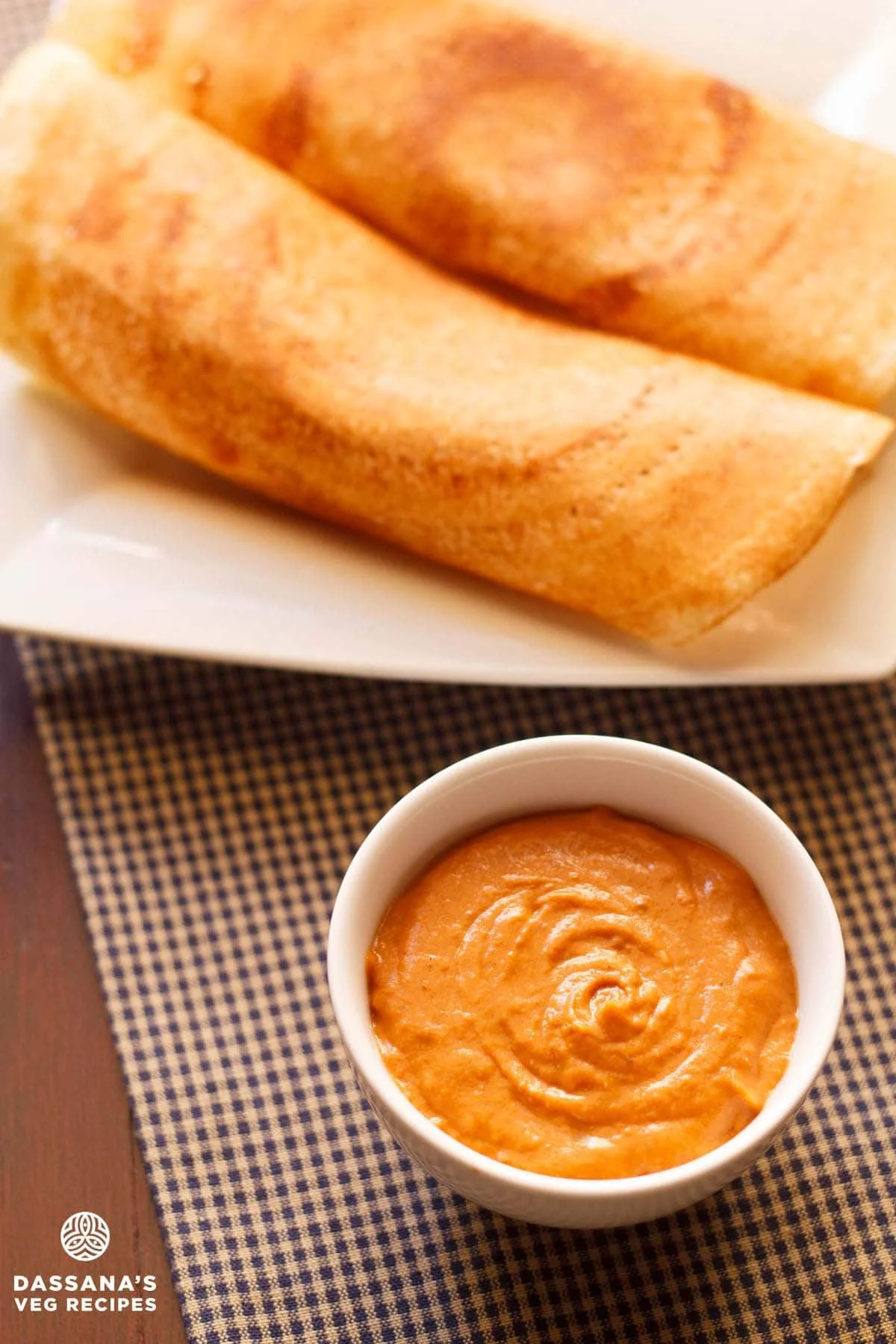
Main Facts: The Anatomy of a South Indian Staple
In the vast and diverse landscape of Indian gastronomy, few categories are as essential yet understated as the chutney. Among these, the Onion Tomato Chutney—often referred to as Vengaya Thakkali chutney in Tamil Nadu—stands as a pillar of the South Indian breakfast table. It is a condiment that achieves a rare culinary trifecta: it is simultaneously sweet, tangy, and spicy, providing a vibrant contrast to the fermented, earthy flavors of traditional tiffin items like dosa, idli, and medu vada.
The fundamental composition of this chutney relies on five core pillars: aromatics (onions), acidity (tomatoes and tamarind), protein-based texture (urad dal), heat (dried red chilies), and fat (sunflower or neutral oil). While every household across the southern states of India—Karnataka, Andhra Pradesh, Telangana, Kerala, and Tamil Nadu—claims a proprietary variation, the core objective remains the same: a harmonious emulsion of sautéed vegetables and spices.

The recipe under review is a streamlined, 20-minute iteration that prioritizes the natural sugars of the onion and the bright acidity of the tomato. Unlike many commercial versions that rely heavily on oil or artificial thickeners, this home-style version uses the slow-roasting of urad dal (split black gram) to provide a nutty depth and a thick, spreadable consistency.
Chronology: A Technical Breakdown of the Preparation Process
The creation of Onion Tomato Chutney is not merely a task of blending; it is a chronological progression of heat application designed to layer flavors. The process can be divided into three distinct phases: the tempering of the base, the caramelization of aromatics, and the final emulsification.

Phase I: The Tempering of Lentils and Chilies
The procedure begins with the precision roasting of urad dal. In a pan heated over medium-low flame, a single tablespoon of neutral oil serves as the medium for heat transfer. The urad dal is sautéed until it reaches a light golden hue. This is a critical stage; the lentils must undergo the Maillard reaction to release their characteristic nutty aroma without crossing the threshold into bitterness.
Once the lentils are primed, dried red chilies are introduced. The heat of the oil rehydrates the capsaicin within the chilies, deepening their color and infusing the oil with a foundational spice. Professionals warn that this stage requires constant vigilance, as burnt chilies can compromise the entire flavor profile of the batch.

Phase II: The Softening of Aromatics and Acids
The second phase involves the introduction of roughly one cup (100 grams) of chopped onions. Unlike Western culinary traditions that might call for deep caramelization, this South Indian technique seeks a "translucent golden" state. This preserves the onion’s moisture and gentle sweetness, which will later balance the sharper notes of the tomatoes.
Following the onions, chopped tomatoes are added along with salt and asafoetida (hing). The addition of salt at this juncture is functional; it draws out the moisture from the tomatoes through osmosis, allowing them to break down into a pulpy consistency. The mixture is cooked until the "raw" smell of the tomatoes evaporates, a chemical transition indicating that the sugars have concentrated and the acidity has mellowed.

Phase III: Cooling and Emulsification
The final chronological step is the transformation of these sautéed solids into a semi-liquid state. The mixture must be cooled to room temperature before blending—a safety precaution to prevent steam buildup in the grinder. A small, tightly packed piece of seedless tamarind is added at this stage. This provides a "high note" of tartness that cuts through the richness of the sautéed lentils. The result is a smooth, vibrant orange-red paste that requires little to no additional water, ensuring a concentrated flavor.
Supporting Data: Nutritional Composition and Ingredient Efficacy
From a nutritional standpoint, the Onion Tomato Chutney is a low-calorie, nutrient-dense accompaniment. A standard serving (approximately one-third of the recipe) contains roughly 67 calories, making it a health-conscious alternative to coconut-based chutneys, which are significantly higher in saturated fats.

Nutritional Breakdown per Serving:
- Total Fat: 5g (primarily monounsaturated fats from the cooking oil).
- Carbohydrates: 6g (derived from the natural sugars in onions and tomatoes).
- Protein: 1g (contributed by the urad dal).
- Micronutrients: The chutney is particularly rich in Vitamin A (324 IU) and Vitamin C (7mg), largely due to the high tomato content. It also provides essential minerals such as Potassium (138mg) and trace amounts of Iron and Magnesium.
The inclusion of asafoetida and urad dal is not purely for flavor; these ingredients have long been recognized in Ayurvedic traditions for their digestive properties. Asafoetida acts as an anti-flatulent, which is particularly beneficial when the chutney is paired with lentil-heavy dishes like medu vada or idli.

Official Responses: Culinary Insights and Expert Recommendations
While the recipe is straightforward, culinary experts and seasoned home cooks emphasize that the "soul" of the chutney lies in the adjustments made during the final stages.
The Tamarind Variable:
According to culinary experts, the tamarind is an optional but highly recommended component. "The tamarind acts as a bridge," says one seasoned chef specializing in South Indian cuisine. "It connects the sweetness of the onion with the sharpness of the tomato. If your tomatoes are particularly heirloom or sour, you may reduce the tamarind. If you are using sweet Roma tomatoes, the tamarind is essential."

The Tempering Debate:
A point of contention among purists is the tadka (tempering). The recipe provided is a "no-tempering" version, which is favored for its clean flavor and ease of preparation. However, official culinary recommendations suggest that for formal occasions, a secondary tempering of mustard seeds, curry leaves, and a pinch of urad dal in hot oil can be poured over the finished chutney. This adds a textural "crunch" and a fresh, herbal aroma that elevates the dish from a simple condiment to a centerpiece.
Storage and Longevity:
Food safety experts recommend that because this chutney contains fresh vegetables and no chemical preservatives, it should be stored in an airtight glass container. While it can last up to 24 hours in a refrigerator, the flavor profile is at its peak within the first four hours of preparation. If refrigerated, the chutney may thicken due to the starches in the urad dal; a small splash of room-temperature water can restore its original consistency.

Implications: The Chutney’s Role in Global Gastronomy
The enduring popularity of the Onion Tomato Chutney has broader implications for the global "clean eating" movement and the rising international profile of South Indian cuisine. As diners worldwide move away from heavy, cream-based sauces, the vibrant, vegetable-forward chutneys of India are being reimagined as versatile spreads and dips.
Versatility Beyond Tiffin
While its primary role remains an accompaniment to dosa and idli, the flavor profile of this chutney allows it to function as a sophisticated spread for modern wraps, sandwiches, and even as a dip for Mediterranean-style appetizers. Its high acidity and spice make it an excellent foil for fatty meats or fried snacks like aloo pakora and mysore bonda.

The "Equal Ratio" Philosophy
The specific recommendation to use equal quantities of onion and tomato represents a balanced approach to flavor construction. This "1:1 ratio" ensures that neither the pungency of the onion nor the tartness of the tomato dominates the palate. It is a lesson in culinary equilibrium that can be applied to various other sauces and salsas.
Cultural Continuity
Finally, the Onion Tomato Chutney serves as a vessel for cultural continuity. As the recipe notes, "Every household has its own way of making this chutney." This flexibility allows the dish to evolve while maintaining its core identity. Whether made in a traditional stone mortar and pestle (ammikkallu) or a high-speed modern blender, the chutney remains a testament to the ingenuity of South Indian cooking—taking humble, everyday ingredients and transforming them through heat and technique into something extraordinary.

In conclusion, the Onion Tomato Chutney is more than a side dish; it is a calculated exercise in flavor layering. Its 20-minute preparation time belies a complex chemical process that delivers a nutrient-dense, flavorful, and culturally significant addition to any meal. As South Indian cuisine continues to gain traction on the global stage, staples like this chutney will undoubtedly lead the way, proving that simplicity, when executed with precision, is the ultimate sophistication.
