

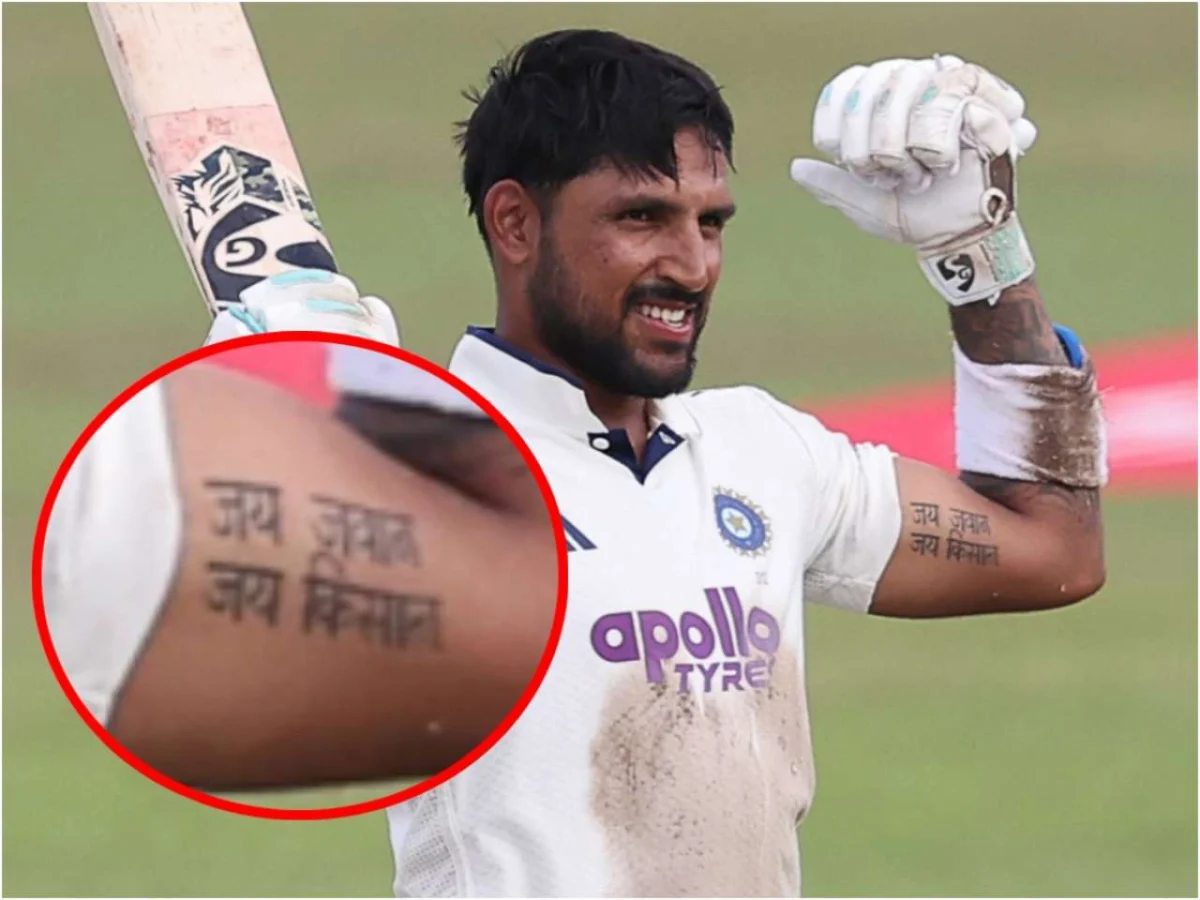
Colombo, Sri Lanka – In a moment that transcended the boundaries of sport, India’s dynamic wicketkeeper-batter Dhruv Jurel etched his name into the annals of cricketing history and the hearts of millions. Celebrating his second Test century during the second match against Sri Lanka in Colombo, Jurel chose not just to raise his bat, but to proudly display a tattoo bearing the powerful, resonant slogan: "Jai Jawan, Jai Kisan." The gesture, captured in a flurry of images and videos, instantly went viral, sparking a nationwide conversation about patriotism, sacrifice, and the deep-rooted values that define India.
The celebration was more than a personal triumph; it was a profound tribute, a poignant reminder of the nation’s pillars. As Jurel later revealed in the post-match press conference, the tattoo on his left arm is a homage to the armed forces and the farming community, deeply personal to his own heritage: his father, a soldier, and his grandfather, a farmer. This powerful intertwining of personal history with national sentiment resonated across the subcontinent, adding a layer of emotional depth to an already stellar cricketing achievement.
The Defining Moment: A Century and a Salute
The setting was the R. Premadasa Stadium in Colombo, a venue steeped in cricketing lore. India, having asserted dominance in the series opener, aimed to solidify their position. On Day 2 of the second Test, the stage was set for Dhruv Jurel to make his mark. Having already showcased flashes of brilliance in his nascent Test career, the pressure was on for the young batter to convert potential into performance.
Jurel walked to the crease with India in a strong, but not unassailable, position. He demonstrated composure and maturity beyond his years, building crucial partnerships and meticulously accumulating runs. His innings was a blend of measured defense and calculated aggression, punctuated by elegant drives and deft deflections. As he neared the triple-figure mark, the tension in the stadium was palpable, a collective anticipation building among Indian supporters.
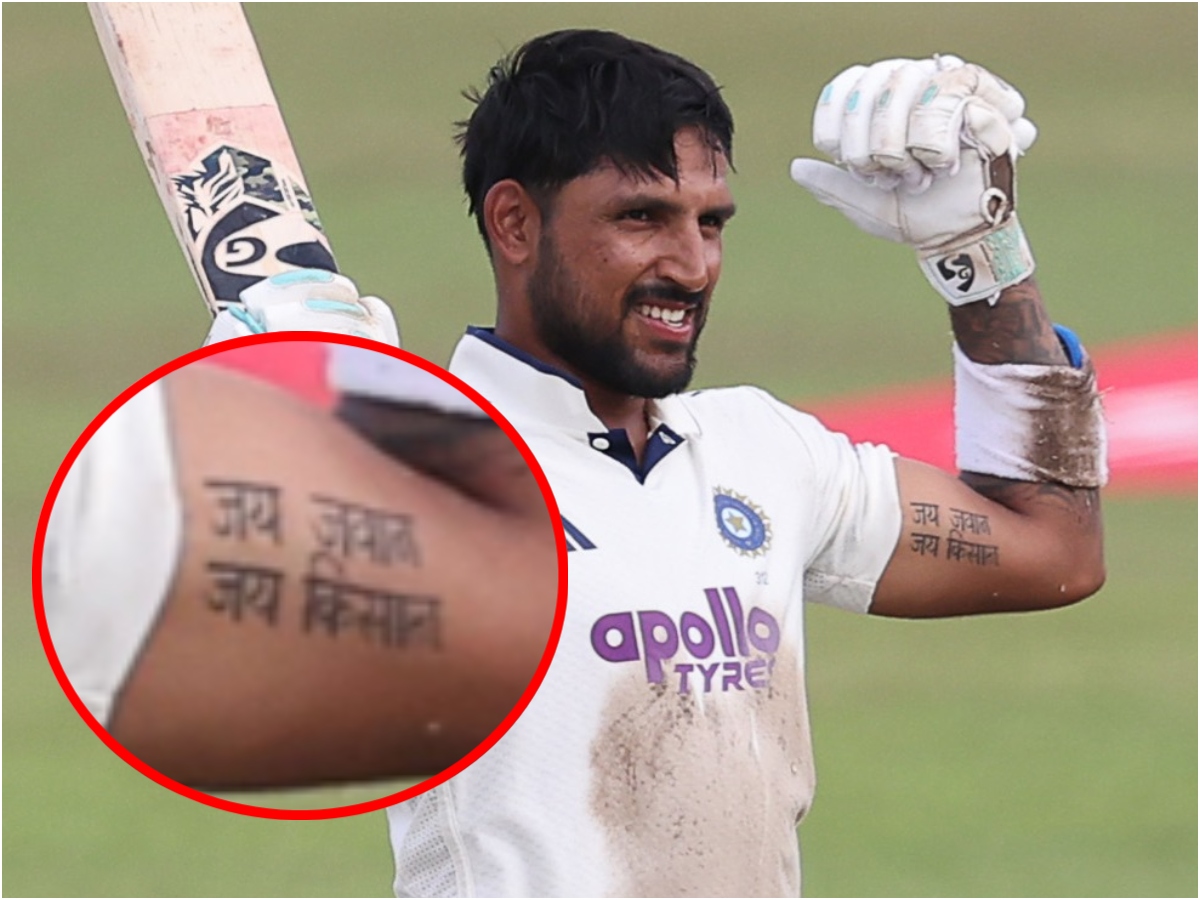)
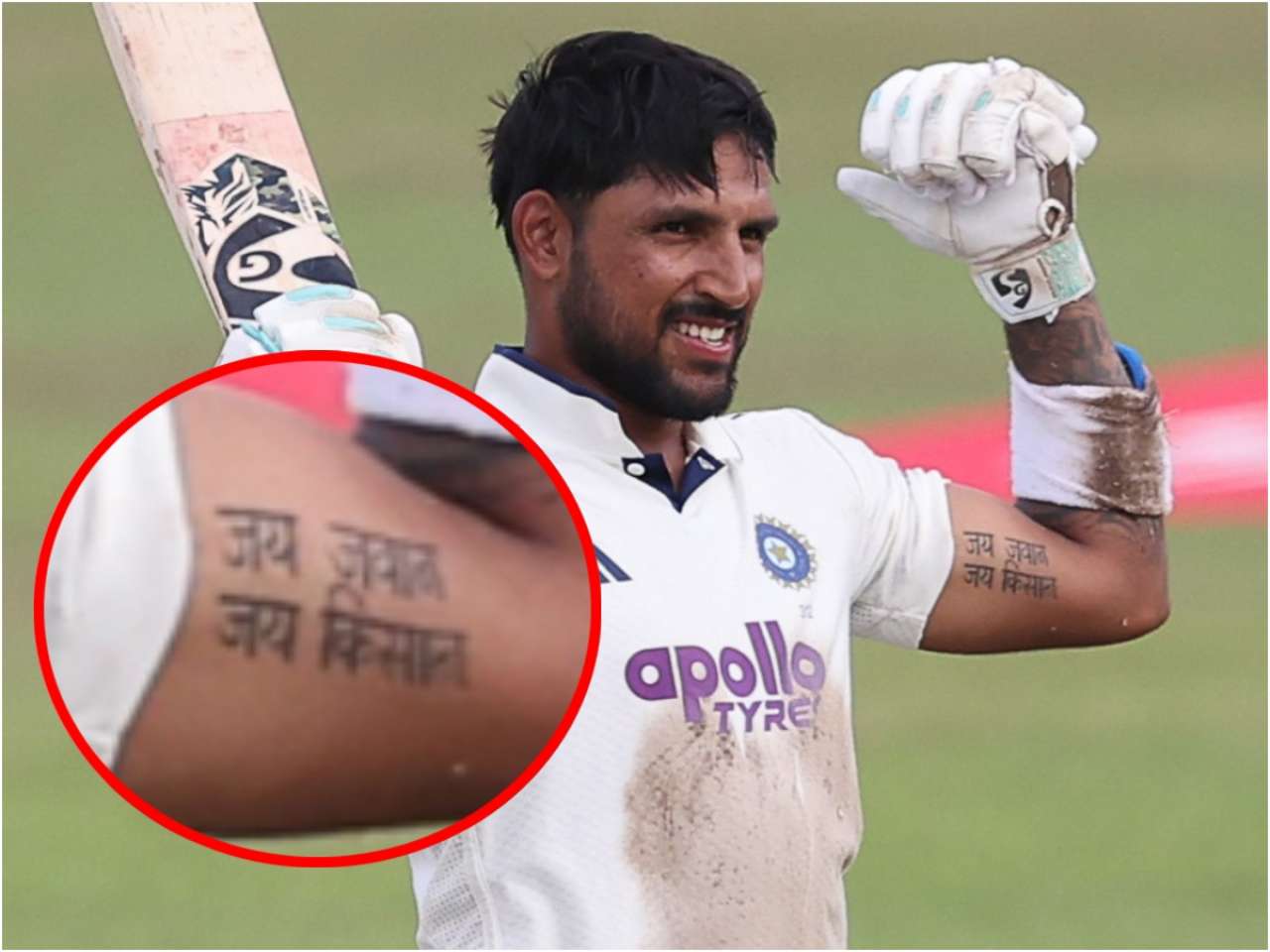
Finally, with a confident stroke, Jurel reached his second Test century, a significant milestone in his burgeoning career. The applause was thunderous, a recognition of his skill and perseverance. But it was his subsequent celebration that truly captured the imagination. Instead of a conventional gesture, Jurel turned towards the dressing room, tapped his left arm, and proudly displayed the "Jai Jawan, Jai Kisan" tattoo. His expression was one of immense pride and deep reverence, a silent but powerful declaration of his roots and values. The image of the young cricketer, bat raised in one hand and his patriotic tattoo displayed with the other, became an instant iconic photograph, encapsulating a moment of national pride and personal dedication.
Unveiling the Inspiration: "My Roots"
The immediate aftermath of the celebration saw a flurry of speculation. What did the tattoo mean? Why this particular slogan? The answers arrived shortly after, during the post-match press conference, where Jurel, still basking in the glow of his achievement, provided a candid and heartfelt explanation.

"That is my story," Jurel began, his voice imbued with sincerity. "My grandfather was a farmer, and my father was a soldier. Those are my roots, where I came from, and I do not want to forget them. So that celebration was for my father and grandfather."
His words resonated deeply. It was a clear, unambiguous statement of gratitude and respect for the two pillars of Indian society that had shaped his family and, by extension, his own identity. The connection was not abstract; it was intensely personal. His father’s dedication to the armed forces, safeguarding the nation’s borders, and his grandfather’s tireless labor in the fields, feeding the nation, represented the very essence of service and sustenance. Jurel’s gesture was a tribute born from lived experience, a profound acknowledgement of the sacrifices made by his family and countless others like them across India.
)
This revelation cemented the public’s admiration for Jurel. It showcased not just his cricketing talent but also his strong moral compass and an unwavering connection to his origins. In a world often perceived as increasingly detached, Jurel’s public display of gratitude for his humble beginnings and the noble professions of his forebears struck a chord of authenticity.
The Man Behind the Bat: Dhruv Jurel’s Journey
Dhruv Chand Jurel’s path to the Indian national cricket team is a testament to resilience, sacrifice, and an unyielding pursuit of excellence. Born on January 21, 2001, in Agra, Uttar Pradesh, Jurel hails from a modest background, a fact that deeply informs his current perspective and appreciation for his roots. His father, Nem Singh Jurel, served as a Havildar (sergeant) in the Indian Army, enduring arduous postings in various parts of the country, including the Kargil War. This military background instilled in Dhruv a sense of discipline, dedication, and the understanding of sacrifice from a very young age. His grandfather, on the other hand, embodied the spirit of the Indian farmer – industrious, grounded, and essential to the nation’s sustenance.
)
Jurel’s cricketing journey began with considerable challenges. Financial constraints were a constant hurdle. His father, despite his modest army pension, made immense sacrifices to fund Dhruv’s cricketing ambitions, often going without necessities to ensure his son had the right equipment and training. There are anecdotes of his father borrowing money and working extra shifts to support Dhruv’s dream, a common narrative among many aspiring athletes from humble backgrounds in India.
His talent, however, was undeniable. Jurel quickly rose through the ranks of age-group cricket in Uttar Pradesh. He was known for his aggressive batting style and sharp wicketkeeping skills, catching the eye of selectors at various levels. His performances for Uttar Pradesh in domestic cricket, particularly in the Ranji Trophy, showcased his ability to perform under pressure and score crucial runs.
)
The big break arrived with the Indian Premier League (IPL). Jurel was picked by the Rajasthan Royals, where he quickly made an impact with his explosive hitting and calm demeanor in crunch situations. The IPL exposure not only honed his skills against top-tier international bowlers but also provided him with invaluable experience and recognition.
His consistent performances led to his inclusion in India A squads, where he further refined his technique and gained experience playing in diverse conditions. He was a part of the India A tour to Sri Lanka, which proved to be a crucial preparatory ground for his Test debut. It was during this tour that he familiarized himself with the local conditions, an experience he referenced in his post-match comments, stating, "I was there, and I was touring with India A, so I know, I am aware of the situation."
)
Jurel’s Test debut came earlier in the year, and he quickly demonstrated his capability to handle the rigors of the longest format. His wicketkeeping was tidy, and his batting showed glimpses of the maturity and fight that defined his Colombo century. This second Test ton wasn’t just a personal milestone; it was a statement that he belonged at the highest level, a testament to years of hard work, family support, and an unwavering belief in his abilities, all rooted in the values instilled by his soldier father and farmer grandfather.
The Slogan’s Enduring Legacy: "Jai Jawan, Jai Kisan"
The slogan "Jai Jawan, Jai Kisan" (Hail the Soldier, Hail the Farmer) is more than just a phrase; it is a profound expression of India’s national ethos. Coined by India’s second Prime Minister, Lal Bahadur Shastri, in 1965 during the Indo-Pakistani War, it emerged at a critical juncture when the nation faced dual challenges: external aggression and a severe food crisis.
)
Shastri’s leadership during this period was exemplary. He rallied the nation with his call to valor and self-reliance. The "Jawan" (soldier) represented the country’s defense, the brave men and women guarding its borders and sovereignty. The "Kisan" (farmer) symbolized the backbone of the nation, those who toiled in the fields to ensure food security, a matter of paramount importance in an agrarian society. The slogan beautifully encapsulated the idea that both these groups were indispensable to the nation’s survival and prosperity. It highlighted the symbiotic relationship between national security and food production, arguing that neither could be compromised.
The slogan instantly resonated with the masses and has since become an integral part of India’s national consciousness. It has been invoked by subsequent leaders, embedded in patriotic songs, and displayed in public spaces, serving as a constant reminder of the fundamental pillars of Indian society. Indira Gandhi later added "Jai Vigyan" (Hail Science) to acknowledge the role of scientific advancement, and more recently, Prime Minister Narendra Modi added "Jai Anusandhan" (Hail Research) to emphasize innovation. However, the original "Jai Jawan, Jai Kisan" retains its unique emotional power and historical significance, representing the bedrock upon which modern India was built.
)
For Dhruv Jurel to choose this specific slogan for his public tribute speaks volumes. It signifies a conscious embrace of these core national values and a recognition of their timeless relevance. It connects his personal narrative to a larger national story, making his achievement not just a sporting spectacle but a cultural moment.
Cricket, Patriotism, and Public Resonance
Sport, particularly cricket in India, often serves as a powerful conduit for national sentiment and pride. Cricketers are not merely athletes; they are often seen as ambassadors, role models, and symbols of the nation’s aspirations. Instances of cricketers expressing patriotism, dedicating performances, or aligning themselves with national causes are common and deeply cherished by the public.
)
From Sachin Tendulkar carrying the national flag after a World Cup victory to Virat Kohli’s impassioned gestures on the field, Indian cricketers have frequently embodied the spirit of the nation. These moments transcend the game, forging a deeper connection between the players and their vast fan base. Dhruv Jurel’s "Jai Jawan, Jai Kisan" tattoo celebration falls squarely into this tradition, but with a uniquely personal and historically significant twist.
The public reaction to Jurel’s gesture was overwhelmingly positive. Social media platforms were flooded with messages of appreciation, admiration, and pride. Commentators lauded his maturity and the depth of his character. Many noted that such a gesture, especially from a young player, highlighted a profound understanding of his responsibilities beyond the cricket field. It served as a powerful reminder to a generation that might be more digitally connected but sometimes less aware of the foundational struggles and sacrifices that built the nation.
)
The gesture also sparked renewed discussions about the welfare of soldiers and farmers. While not explicitly political, such high-profile acknowledgments invariably bring these vital communities back into the spotlight, reminding society of their immense contributions and the challenges they face. It fostered a sense of unity, cutting across regional and social divides, to celebrate shared national values.
The Colombo Test: A Broader Context
While Jurel’s century and celebration were the focal points, the second Test against Sri Lanka in Colombo was a significant fixture for India. Having convincingly won the first Test, India aimed for a dominant performance to secure the series. The pitch at R. Premadasa Stadium offered a balanced contest, initially aiding seamers before settling into a batting track.
)
India’s innings was a strong display of collective batting prowess. After winning the toss and electing to bat, the top order laid a solid foundation. Contributions came from various batters, building partnerships that slowly but surely ground down the Sri Lankan bowling attack. The team’s strategy was clear: accumulate a formidable total to put immense pressure on the opposition.
Jurel’s innings came at a crucial phase, where consolidating the score and pushing towards a commanding lead was paramount. His century, coming after earlier contributions, helped India declare their innings at a mammoth 503 for 9. This substantial total showcased India’s batting depth and their intent to dominate the game.
)
In response, Sri Lanka faced an uphill battle. By the end of Day 2, they had already lost two crucial wickets for just 8 runs, struggling against India’s potent bowling attack. The massive first-innings lead and the early breakthroughs put India in a commanding position, setting the stage for a likely series victory. Jurel’s contributions, both with the bat and behind the stumps, were integral to this overall team effort, proving his value as a multi-faceted asset to the Indian side.
His post-match comments on his batting approach during the game further illustrated his tactical acumen: "While batting, I was just trying to bat in partnerships because, as the coach said, as the captain said, he always says to try to assess the condition, what the situation is asking from you, and just pick you pockets and play positively." This highlights a player who not only possesses talent but also thinks deeply about the game, adapting his approach to the team’s needs.
)
Beyond the Boundary: Implications of the Gesture
Dhruv Jurel’s "Jai Jawan, Jai Kisan" tattoo celebration carries significant implications, extending beyond the immediate cricketing context.
For Dhruv Jurel: This moment will likely define a significant part of his public image. It establishes him not just as a talented cricketer but as a young man with deep-seated values and a strong connection to his national identity. It could enhance his appeal to fans, sponsors, and even team management, potentially cementing his place as a future leader. Such gestures often elevate a player’s status from a mere performer to an inspirational figure, capable of influencing public sentiment positively. It adds a layer of depth to his personality, distinguishing him in a crowded field of talented athletes.
)
For Indian Cricket: The incident reinforces the narrative of cricket as a sport deeply intertwined with national pride and values in India. It inspires younger generations of cricketers to not forget their roots and to connect their personal achievements with broader national sentiments. It also strengthens the bond between the team and the diverse fabric of Indian society, reminding everyone that the players represent not just a sport but the aspirations and values of a billion people. It underscores that while the game is played on the field, its impact resonates far beyond the boundary ropes, contributing to a sense of collective identity and purpose.
Societal Impact: In an era where nationalistic fervor often sparks debate, Jurel’s tribute offers a unifying perspective. It gently yet powerfully reminds society of the fundamental contributions of soldiers and farmers, professions that often operate in the background but are vital for the nation’s well-being. It can foster a renewed sense of respect and gratitude for these communities, potentially encouraging dialogue and support for their causes. The simplicity and sincerity of Jurel’s gesture make it universally appealing, transcending political nuances and tapping into a shared sense of national pride.
)
Future Trends: This could potentially inspire other athletes to express their personal values and connections to national symbols in unique ways. While authenticity will always be key, Jurel has set a precedent for how a personal tribute can become a widely appreciated national statement. It underscores the power of sports figures to act as cultural touchstones, reflecting and shaping societal values through their actions and expressions.
Conclusion
Dhruv Jurel’s century in Colombo was a cricketing achievement of note, a display of skill, temperament, and determination. However, it was his profound and personal celebration, flashing the "Jai Jawan, Jai Kisan" tattoo, that elevated the moment into something far more significant. It was a powerful, heartfelt tribute to the two pillars of Indian society that shaped his family – the soldier and the farmer.
)
In a single, iconic gesture, Jurel encapsulated his journey from humble beginnings to the grandest stage of cricket, connecting his personal triumphs with the enduring spirit of his nation. His words in the post-match conference, "Those are my roots, where I came from, and I do not want to forget them," resonated deeply, cementing his image as a cricketer of immense talent and profound character. As India continues its cricketing journey, Dhruv Jurel’s patriotic salute will undoubtedly stand as a memorable chapter, a testament to the fact that for some, the game is not just about runs and wickets, but about honoring the very soul of the nation.
