

Chandigarh, May 28, 2026 – In a significant political development poised to reshape the Bharatiya Janata Party’s (BJP) strategy in Haryana, Dr. Archana Gupta, a distinguished radiologist and seasoned party worker, has been appointed as the new president of its state unit. Her elevation marks a historic moment, as she becomes only the second woman to lead the Haryana BJP in its storied history, breaking a 43-year hiatus since Dr. Kamla Verma held the position from 1980 to 1983. This move is widely interpreted as a calculated step by the BJP to galvanize broader women’s support, strengthen its urban presence, and navigate the complex socio-political landscape of a state traditionally marked by patriarchal norms and a historically skewed sex ratio.
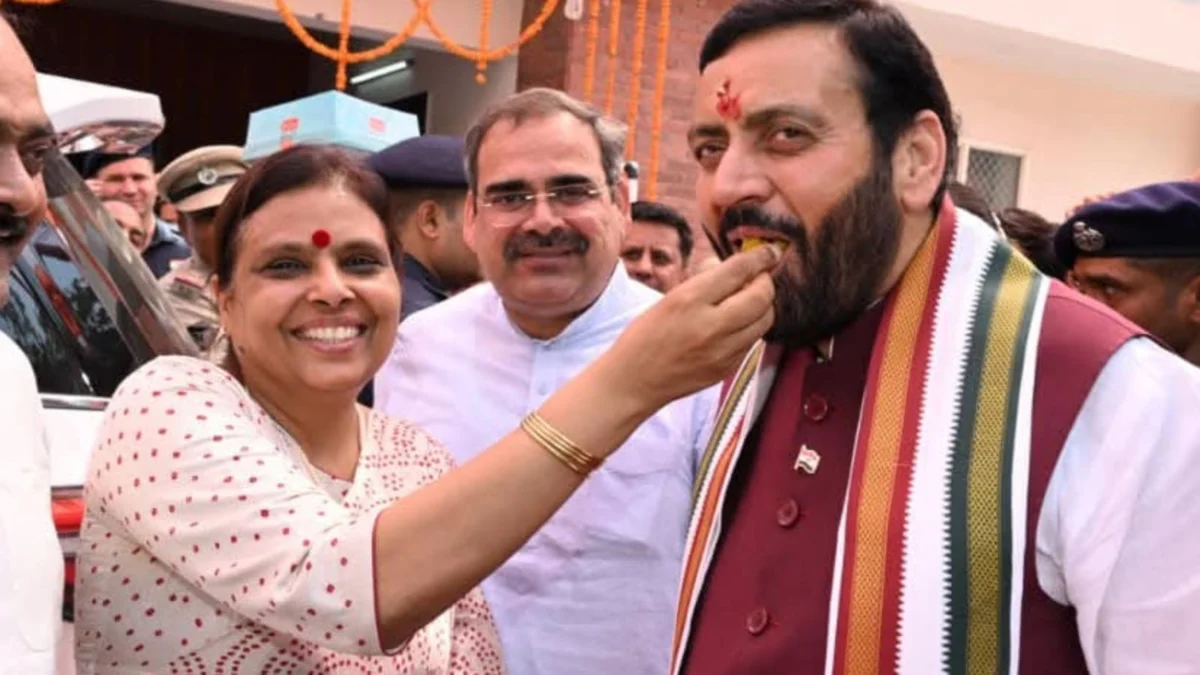
The announcement, made on Thursday, May 28, 2026, has been met with enthusiasm within party ranks, with Chief Minister Nayab Singh Saini personally extending congratulations and symbolically offering laddoos to the newly appointed chief. Dr. Gupta’s appointment comes at a crucial juncture, following the completion of party organizational elections up to the district level and the conclusion of outgoing president Mohan Lal Badoli’s tenure, which, at just under two years, was shorter than the customary three-year term. Badoli, a Brahmin community leader and a one-term MLA, had spearheaded the party to a record third consecutive term in the 2024 Haryana Assembly polls. Dr. Gupta, herself an accomplished professional and a respected figure within the party, brings a unique blend of intellectual acumen, grassroots experience, and a strong public service ethos to the forefront of Haryana’s political arena.
A Historic Appointment: Shattering a Four-Decade Ceiling
The appointment of Dr. Archana Gupta reverberates far beyond a mere change of leadership; it signifies a deliberate and strategic reorientation for the BJP in Haryana. For over four decades, the top echelons of the state party leadership have remained exclusively male, a stark reflection of the prevailing gender dynamics in a state often grappling with its image concerning women’s empowerment.
Dr. Kamla Verma, a formidable political figure of her time, was the trailblazer, serving as the state president from 1980 to 1983. Her tenure, though distant in memory, laid a precedent that has now been revisited. The long interval underscores the societal and political challenges that have historically limited women’s ascent to such influential positions in Haryana. The state, despite recent strides, continues to face scrutiny over issues like female feticide and gender-based discrimination, making Dr. Gupta’s elevation a powerful symbolic gesture. It is a tacit acknowledgment from the BJP high command that the time for incremental change is over, and a more decisive push for women’s representation is imperative.
Dr. Gupta, a radiologist by profession, embodies the modern Indian woman – educated, professionally successful, and politically astute. Her journey from the demanding world of medicine to the intricate corridors of state politics offers a compelling narrative of dedication and a commitment to public service. Her unique background is expected to resonate with a diverse demographic, particularly educated urban women who have traditionally been underrepresented in political leadership. This move is not merely about symbolism; it is about leveraging the credibility and appeal of a professional woman to connect with a wider electorate, particularly as the party looks ahead to future electoral battles.
Chronology of a Leader’s Ascent: From Clinic to Political Command
Dr. Archana Gupta’s journey to the helm of the Haryana BJP is a testament to her steadfast commitment to both her profession and public life, marked by a systematic progression through various organizational roles.
Born in Samalkha, Panipat, in 1968, Dr. Gupta defied conventional expectations within her family by pursuing higher education and embarking on a career in medicine. This early demonstration of breaking barriers set the stage for her future endeavors. She completed her MD in radiology from the prestigious Post Graduate Institute of Medical Sciences (PGIMS), Rohtak, in 1994, distinguishing herself as a gold medalist – an achievement that speaks volumes about her intellectual rigor and dedication.
While establishing a successful medical practice in Panipat, Dr. Gupta simultaneously nurtured a burgeoning interest in social service. Her initial foray into public life was through the Vishva Hindu Parishad (VHP), a socio-cultural organization often associated with the Sangh Parivar. Between 2010 and 2016, she steadily rose through the ranks of the VHP, serving in critical capacities such as district co-convener, convener, and eventually ascending to the position of state vice-president. This period provided her with invaluable experience in grassroots mobilization, organizational management, and public engagement, honing her leadership skills outside the clinical setting.
Her formal political career with the BJP began through the Mahila Morcha, the party’s women’s wing, where she gained insights into the specific challenges and aspirations of women in the state. Her dedication and organizational prowess did not go unnoticed, leading to her appointment as Panipat district BJP president in 2020 – a significant milestone as she was the first woman to hold that position in the district. This role allowed her to demonstrate her leadership capabilities at a critical local level, overseeing party activities and outreach efforts.
Building on her successful tenure as district president, Dr. Gupta was further elevated to the position of state BJP general secretary in 2023. In this capacity, she played a crucial role in the state unit’s operations, contributing to policy formulation, strategic planning, and coordination across various party wings. Her involvement in active campaigning for party candidates in both Lok Sabha and Assembly elections since 2019 further solidified her credentials as a committed and effective political worker, capable of connecting with voters and driving electoral success. Her consistent rise through these ranks, culminating in her current appointment, underscores a meticulously built political career founded on both professional excellence and dedicated party service.
Strategic Imperatives: Women, Urbanisation, and Caste Dynamics
Dr. Archana Gupta’s appointment is far from a mere administrative shuffle; it is a meticulously calculated strategic move by the BJP, designed to address several key electoral and social imperatives in Haryana. The rationale behind this decision is multifaceted, encompassing gender representation, urban outreach, and the intricate dynamics of caste-centric politics.
Mobilizing Wider Women’s Support: At the forefront of the BJP’s strategy is the explicit aim to mobilize wider women’s support. Haryana, despite its economic progress, has historically struggled with a deeply entrenched patriarchal society, reflected in a sex ratio that, while improving, still demands concerted efforts. The BJP’s national narrative, particularly under Prime Minister Narendra Modi, has increasingly emphasized women’s empowerment through schemes like "Beti Bachao, Beti Padhao" and the "Ujjwala Yojana." With the passage of the Women’s Reservation Act in 2023, guaranteeing 33% reservation for women in the Lok Sabha and state Assemblies, the political landscape is poised for a significant shift. Appointing a woman to the top party post in Haryana sends a clear signal that the BJP is serious about translating legislative intent into tangible political opportunities for women. This move is expected to energize the party’s Mahila Morcha and inspire greater female participation, not just as voters but as active cadres and potential candidates.
Strengthening Urban Presence: Beyond gender, Dr. Gupta’s appointment is also seen as a concerted effort to strengthen the BJP’s presence in urban areas. As a radiologist based in Panipat, a prominent urban center, she naturally appeals to the urban middle class and educated professionals. Urban constituencies in Haryana are becoming increasingly critical, with their unique socio-economic concerns and voter demographics differing from rural strongholds. Her professional background and modern outlook are likely to resonate with urban voters who often seek competent, educated, and progressive leadership. By placing a figure like Dr. Gupta at the helm, the BJP aims to consolidate its existing urban base and make inroads into segments that might be looking for more inclusive and forward-thinking representation.
Consolidating Agarwal (Baniya) Community Support: Haryana’s politics, like much of India, is deeply influenced by caste dynamics. The appointment of Dr. Gupta, who belongs to the influential Agarwal (Baniya) community, is a strategic move to consolidate support within this economically significant and traditionally BJP-leaning community. The Agarwal community has historically been a strong pillar of the BJP’s vote bank, and ensuring their continued allegiance is paramount. Rajiv Jain, Sonipat Mayor and president of the Haryana Pradesh Vaishya Mahasammelan, affirmed this sentiment, stating that the community has traditionally supported the BJP, and Gupta’s appointment would further reinforce their confidence in the party’s policies. This strategic alignment helps the BJP maintain its diverse social coalition, which is crucial for electoral success in a state with a complex caste matrix. The party’s ability to balance caste representation while also promoting gender diversity showcases its nuanced approach to state politics.
Organizational Restructuring and Electoral Preparedness: The early conclusion of Mohan Lal Badoli’s tenure, just under two years, signals an organizational restructuring designed to prepare the party for upcoming challenges. While Badoli successfully led the party to a third consecutive term in the 2024 Assembly polls, the appointment of a new president with a fresh perspective and renewed vigor is a common strategy to inject dynamism into the party machinery. With organizational elections up to the district units already completed, the new state president will have a well-defined structure to work with, allowing Dr. Gupta to focus immediately on strengthening grassroots outreach, streamlining operations, and preparing the party for future electoral contests, including the 2029 Lok Sabha and Assembly elections. This transition aims to ensure that the party remains agile and responsive to evolving political dynamics.
Official Responses and Endorsements
The announcement of Dr. Archana Gupta’s appointment was met with enthusiastic endorsements from key figures within the Haryana BJP, highlighting the party’s unified front behind the new leadership.
Chief Minister Nayab Singh Saini was among the first to extend his congratulations, underscoring the significance of the appointment. In a symbolic gesture of celebration and welcome, he offered her laddoos, signifying the sweet taste of success and the beginning of a new chapter for the state unit. This public display of support from the Chief Minister is crucial, as it signals a smooth transition of power and a collaborative working relationship between the state government and the party organization.
Haryana Power Minister and senior BJP leader Anil Vij, known for his candid remarks, also lauded the decision. "Archana Gupta is an active worker, and with her becoming president, wheels will be set in motion in the Haryana BJP," Vij stated, expressing confidence in her ability to invigorate the party. He further emphasized the historical importance of the appointment: "The appointment of a woman as state president is a good thing, and after quite some time, a woman has again been given the command. Earlier, former Yamunanagar MLA and Health Minister Kamla Verma had once become the state president. Now once again, a woman has been given the opportunity." Vij’s comments highlight the collective recognition within the party of the historical significance and the potential positive impact of having a woman at the helm after a prolonged gap.
Reacting to her elevation, Dr. Archana Gupta herself expressed profound gratitude to the party leadership "for reposing faith in a woman karyakarta." Her initial statements outlined a clear vision for her tenure, focusing on core BJP principles and women’s empowerment. She pledged to dedicate her efforts to women’s empowerment, aiming to ensure greater participation of women in both politics and the economy. Furthermore, she committed to strengthening the party organization by fostering an inclusive environment and taking all workers along, emphasizing unity and collective effort in achieving the party’s objectives.
Rajiv Jain, Sonipat Mayor and president of the Haryana Pradesh Vaishya Mahasammelan, provided a crucial perspective on the caste implications of the appointment. He reiterated that the Agarwal (Baniya) community has been a traditional supporter of the BJP, and Dr. Gupta’s elevation would undoubtedly "further reinforce its confidence in the party’s policies." Jain also connected the appointment to the broader national agenda, noting that it "comes at a time when the BJP is promoting women’s participation in politics, following the passage of the Women’s Reservation Act in 2023 to provide 33% reservation for women in the Lok Sabha and state Assemblies." His remarks underline the multi-pronged strategic value of Dr. Gupta’s leadership, appealing to both gender and community-specific considerations.
Implications: A New Political Landscape for Haryana
Dr. Archana Gupta’s appointment as the Haryana BJP chief carries significant implications, promising to usher in a new political landscape for the state. Her leadership is expected to influence not only the internal dynamics of the party but also its broader engagement with the electorate, particularly concerning gender, urban development, and regional power distribution.
Strengthening Women’s Role in Politics: The most immediate and profound implication is the reinforcement of women’s role in Haryana politics. Dr. Gupta’s ascension sends a powerful message that the BJP is committed to fostering female leadership. This is particularly relevant in the context of the Women’s Reservation Act, which will soon mandate increased female representation in legislative bodies. Her leadership will serve as an inspiration and a practical example, potentially encouraging more women to enter politics, seek party tickets, and actively participate in decision-making processes. Her focus on "women’s empowerment" and "greater participation in politics and the economy" will likely translate into specific party initiatives, training programs, and outreach efforts aimed at women across the state. This could fundamentally alter the gender balance in Haryana’s political sphere over time.
Focus on Urban and Professional Constituencies: As a medical professional with an urban base, Dr. Gupta is uniquely positioned to bridge the gap between the party and Haryana’s growing urban and professional classes. Her background suggests a potential shift in emphasis towards issues that resonate with these demographics, such as healthcare infrastructure, employment opportunities for educated youth, smart city initiatives, and sustainable urban development. This renewed focus could solidify the BJP’s appeal in cities and towns, which are increasingly becoming critical battlegrounds in state elections. Her ability to articulate policies with professional credibility could attract fence-sitters and independent voters in these key areas.
Consolidating the Karnal Power Centre: Dr. Gupta’s appointment further solidifies the Karnal Lok Sabha constituency as a significant power centre in Haryana politics. Her native Panipat falls within this parliamentary seat, which is already represented by Union Minister and former Chief Minister Manohar Lal Khattar. Additionally, two state Cabinet ministers – Mahipal Dhanda (Panipat Rural) and Krishan Lal Panwar (Israna) – and recently elected Rajya Sabha MP Sanjay Bhatia also hail from Assembly constituencies within this parliamentary area. This concentration of influential leaders from the Karnal region suggests a strategic consolidation of power and resources around this geographical hub. Dr. Gupta’s presence at the helm of the state party unit will likely enhance coordination and synergy among these leaders, potentially leading to more focused development and political activity in the region, thereby boosting the BJP’s electoral prospects there.
Policy Advocacy and Governance: Dr. Gupta has already demonstrated her strong support for the policies of the Saini-led BJP government in Haryana. She has actively praised key women-centric initiatives, indicating that these will remain central to the party’s agenda under her leadership. These include:
- Deendayal Lado Lakshmi Yojana: Launched in September 2025, this scheme provides Rs 2,100 per month to eligible women aged 23-60 years from families with annual incomes up to Rs 1.8 lakh. This direct benefit transfer aims to financially empower women and reduce economic vulnerabilities.
- "Lakhpati Didis" Initiative: A commitment to creating 3 lakh "lakhpati didis" (prosperous sisters) through various self-help group and entrepreneurial support programs. This initiative focuses on economic upliftment and skill development for women.
- Pink Cab Scheme: This innovative program trains women as drivers and offers interest-free loans of up to Rs 10 lakh to purchase taxis, promoting women’s entrepreneurship and creating safe transportation options.
- Rs 5-Crore Fund for Workplace Safety: A dedicated fund to ensure the safety and security of women in their workplaces, addressing a critical concern for working women.
Under Dr. Gupta’s leadership, the party is expected to vigorously promote these schemes, showcasing the government’s commitment to women’s welfare and using them as key planks for electoral outreach. Her background as a professional will add credibility to the advocacy of these social and economic policies.
Future Challenges and Opportunities: While Dr. Gupta’s appointment presents numerous opportunities, she will also face significant challenges. Navigating the internal dynamics of a large political party, managing diverse community expectations, and preparing for future elections in a politically vibrant state like Haryana will require immense skill and resilience. She will need to balance the traditional power structures with the progressive agenda she champions. However, her professional background, strong organizational experience, and clear vision position her well to meet these challenges.
In conclusion, Dr. Archana Gupta’s elevation is more than just a leadership change; it is a strategic maneuver by the BJP to adapt to evolving socio-political realities in Haryana. It signals a determined push for women’s empowerment, a focused approach to urban voter engagement, and a reinforcement of key political strongholds. As she embarks on this historic journey, all eyes will be on Dr. Gupta to see how she shapes the future of the Haryana BJP and, by extension, the political landscape of the state. Her tenure promises to be a pivotal chapter in Haryana’s political history, potentially redefining the role of women in public life and setting new precedents for inclusive leadership.
