

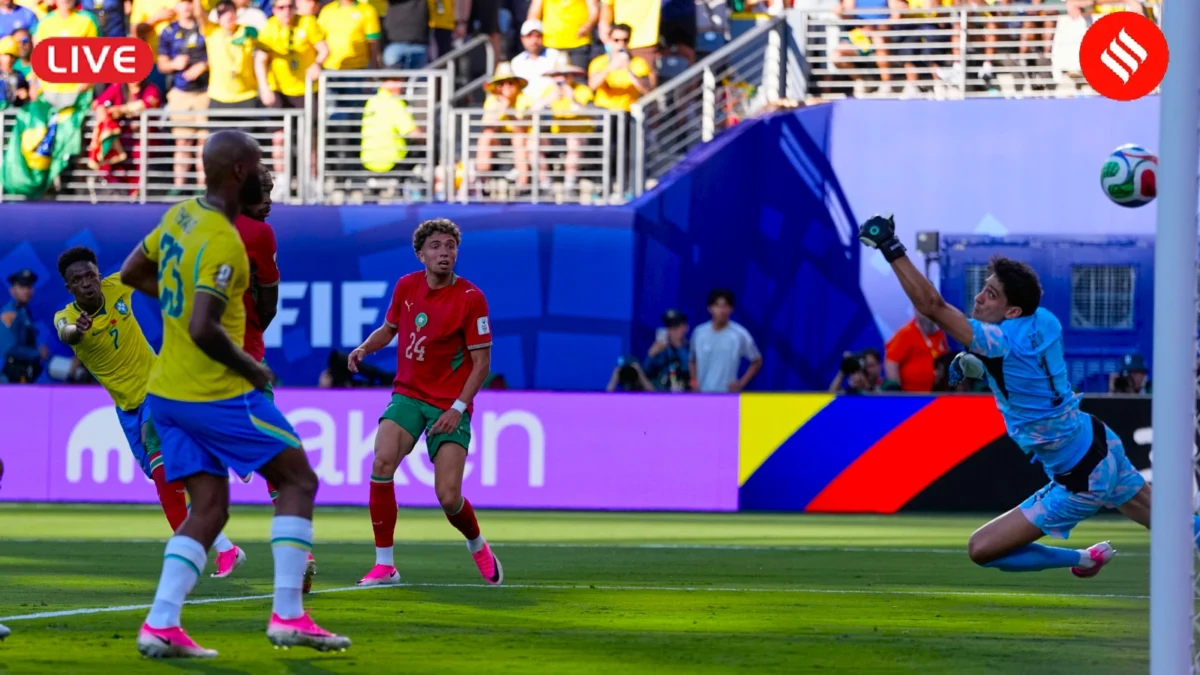
New Jersey, USA – June 2026 – The FIFA World Cup 2026 delivered its first true heavyweight showdown in Group C today, as footballing titans Brazil locked horns with the resurgent giant-killers Morocco. A pulsating first half at the state-of-the-art stadium in New Jersey concluded with the score finely balanced at 1-1, courtesy of a delightful chip from Morocco’s Ismael Saibari and a stunning equalizer from Brazil’s prodigious talent, Vinicius Junior. This highly anticipated encounter, pitting the World No. 6 against the World No. 7, lived up to its billing, offering a tantalizing glimpse into the drama that awaits fans throughout this tournament.
The match, a focal point of the opening rounds, captured the imagination of millions, not just for the quality on display but for the narratives each team carries into this global spectacle. Brazil, the undisputed record holders with five World Cup titles, are desperate to end a two-decade-long drought, while Morocco, fresh from their historic semi-final run in Qatar 2022, are keen to prove their previous heroics were no fluke.
Main Facts: A Tense First Half Unfolds
The opening 45 minutes of the Brazil vs. Morocco Group C fixture were a testament to tactical discipline, individual brilliance, and sheer determination from both sides. Moroccan midfielder Ismael Saibari broke the deadlock in the 21st minute with a moment of audacious skill, coolly chipping the ball over Brazil’s veteran goalkeeper Alisson Becker. The goal sent a wave of euphoria through the significant Moroccan support in the stadium, momentarily silencing the yellow-clad Brazilian faithful.
However, Brazil’s response was swift and emphatic. Just eleven minutes later, in the 32nd minute, Vinicius Junior showcased why he is considered one of the world’s most electrifying talents. Receiving the ball on the left flank, the Real Madrid star weaved past two defenders before unleashing a powerful, curling shot that left the Moroccan goalkeeper with no chance. The "wonder goal" not only leveled the score but also injected a renewed sense of urgency and belief into the Brazilian squad, restoring parity just before the interval.
This 1-1 half-time score reflects a tightly contested affair, with both teams demonstrating periods of dominance and resilience. The outcome of this fixture is poised to significantly impact the early standings in what promises to be a fiercely competitive Group C.
Chronology: From Early Jitters to Spectacular Equalizer
The atmosphere leading up to the Brazil vs. Morocco clash was electric, with fans from both nations creating a vibrant tapestry of colour and sound. The opening whistle heralded a cautious start, as both teams felt each other out, prioritizing possession and defensive solidity. Brazil, as expected, attempted to assert their attacking prowess early, with Raphinha and Vinicius Junior probing the Moroccan flanks. However, the Atlas Lions, renowned for their organized defence and rapid counter-attacks, held firm.
The breakthrough arrived unexpectedly in the 21st minute. A swift Moroccan transition caught Brazil’s defence slightly out of position. A precise through-ball found Ismael Saibari lurking at the edge of the box. With impeccable vision and technique, Saibari lifted the ball over the onrushing Alisson, watching it arc gracefully into the net. The goal was a masterclass in composure under pressure and a stark reminder of Morocco’s attacking potency.
Stunned but not deterred, Brazil immediately sought an equalizer. The tactical instructions from coach Carlo Ancelotti seemed to urge more direct play and higher pressing. The pressure eventually paid off in the 32nd minute. Vinicius Junior, who had been a constant threat, received the ball wide on the left, demonstrating his characteristic acceleration and close control. He cut inside, creating a sliver of space, and then unleashed an unstoppable shot that flew into the top corner, igniting wild celebrations from the Brazilian bench and their supporters.
The remainder of the half saw both teams trade blows, with neither willing to concede further ground. Morocco continued to look dangerous on the counter, while Brazil sought to exploit the flanks. The half-time whistle brought a temporary reprieve, leaving fans eagerly anticipating what the second period would bring.
Prior to this thrilling encounter, the day’s earlier Group C fixture between Qatar and Switzerland also provided its share of drama. The match, played in a different venue, concluded in a 1-1 draw. Switzerland had taken the lead in the 17th minute through a penalty expertly converted by Breel Embolo, giving them an early advantage. However, the host nation, Qatar, displayed remarkable resilience, snatching a crucial point in the 94th minute of added time thanks to a last-ditch goal from Boualem Khoukhi. This result means that both Qatar and Switzerland enter their next fixtures with a single point, adding further intrigue to the Group C dynamics.
Supporting Data: A Deep Dive into World Cup Legacies and Droughts
The Brazil vs. Morocco match is more than just a group stage fixture; it’s a collision of contrasting World Cup narratives.
Brazil’s Enduring Legacy and the Weight of Expectation:
Brazil’s pedigree in the FIFA World Cup is unparalleled. They are the only nation to have participated in every single edition of the tournament, a staggering 23 appearances, underscoring their consistent presence at the pinnacle of international football. Their five World Cup titles (1958, 1962, 1970, 1994, 2002) stand as a testament to their historical dominance. However, the current generation faces the immense pressure of ending what has become their longest title drought. The last time the Seleção lifted the coveted trophy was in 2002, marking a 24-year wait by the time this 2026 tournament commenced.
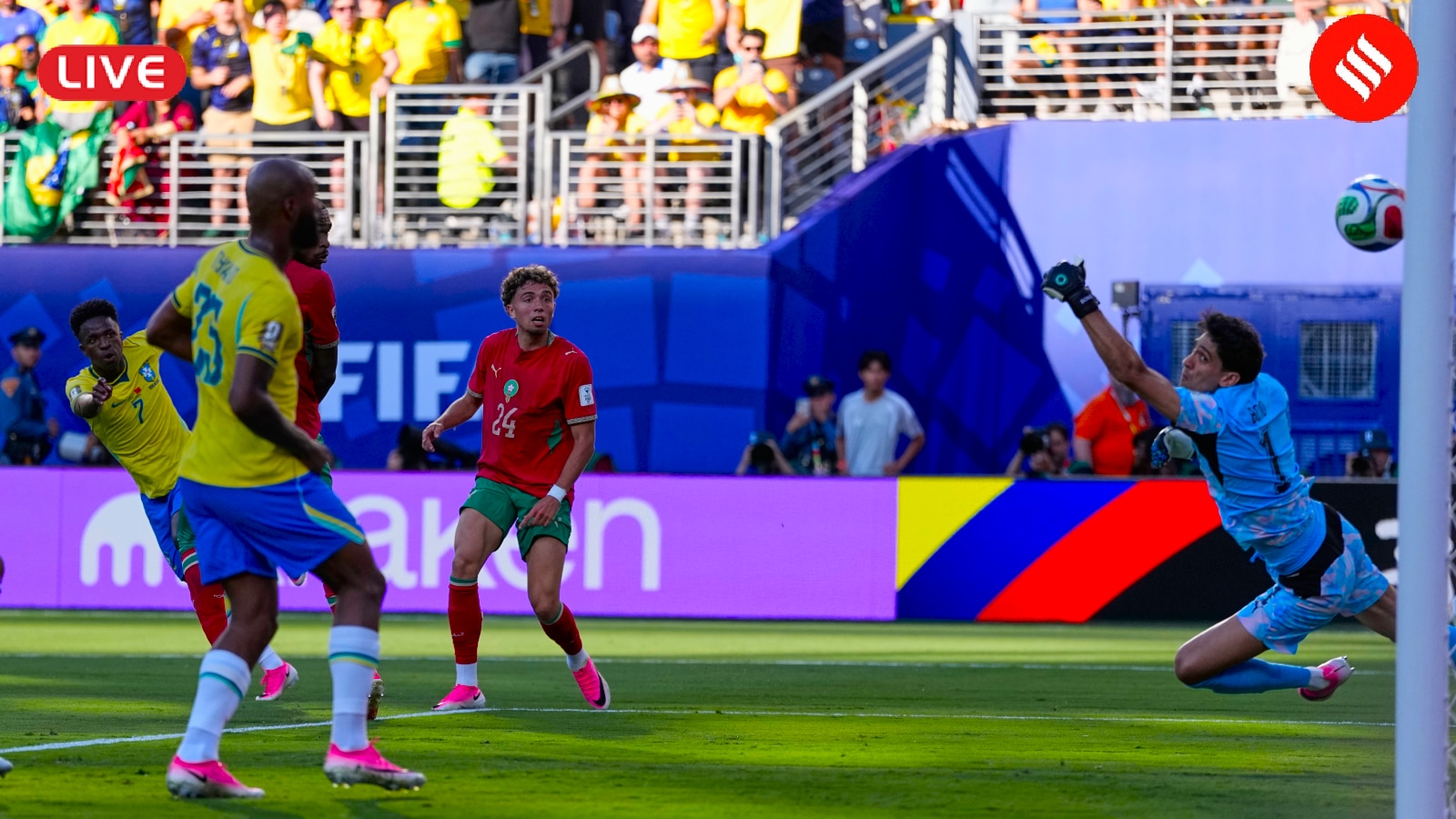
Coincidentally, Brazil experienced a similar 24-year drought between 1970 and 1994, a period that also ended on American soil when they triumphed in the USA ’94 World Cup. This historical parallel has fueled hopes of a "déjà vu" moment for Brazilian fans, who are clinging to any sign of destiny. Yet, the memory of their humiliating 7-1 semi-final loss to Germany on home soil in 2014 still haunts the nation, a stark reminder of how far they have fallen from their peak. Since their 2002 victory, Brazil has reached the semi-finals only once, a statistic that underlines their struggle to consistently compete at the very highest stages of the knockout rounds.
Morocco’s Ascendance: The Atlas Lions Roar:
In stark contrast to Brazil’s long history of success, Morocco’s World Cup journey has been one of gradual progress and recent explosive emergence. The "Atlas Lions," as they are affectionately known, are the reigning African champions, a title that signifies their continental dominance. Their participation in World Cups has been sporadic, and prior to 2022, they had won just five World Cup games in total across all their appearances.
However, their performance at the FIFA World Cup Qatar 2022 fundamentally reshaped their global perception. Morocco embarked on a truly historic run, becoming the first African and Arab nation to reach the semi-finals of a World Cup. They achieved this feat by topping a group that included Belgium and Croatia, and then eliminating footballing giants Spain and Portugal in the knockout stages, before ultimately falling to France. This "giant-killer" reputation is now firmly cemented, transforming them from plucky underdogs into a respected force capable of challenging any team in the world. Their current World No. 7 ranking is a testament to this remarkable rise, making them a formidable opponent for even the most established footballing nations.
Official Responses: Ancelotti’s Quiet Revolution and Morocco’s Unwavering Belief
While no immediate official statements were released at half-time, the impact of both coaching staffs is palpable. For Brazil, the appointment of Italian managerial maestro Carlo Ancelotti was a bold move designed to inject new life and a winning mentality into the national team. Ancelotti, renowned for his calm demeanour and tactical acumen, has been tasked with restoring belief and cohesion to a squad often prone to volatility under previous regimes.
As The Indian Express’s Sandip G noted in his pre-tournament analysis, Ancelotti has "resurrected belief and inspired faith, brought calm into a dressing room prone to volatility." His tactical choices, including a return to a dynamic front four, are aimed at maximizing Brazil’s offensive talent while ensuring defensive stability. The pressure on Ancelotti is immense; he arrived not as a tournament favourite, but as the man expected to break the 24-year curse. The half-time score, featuring a wonder goal from Vinicius, suggests his influence is beginning to bear fruit, yet the challenge from Morocco underscores that the path to glory remains fraught with obstacles. His task is to navigate Brazil through this current drought, mirroring the resilience that led them to triumph in 1994 after a similar period of waiting.
On the Moroccan side, their continued strong performances are a testament to the tactical discipline and unwavering team spirit fostered by their coaching staff. Following their Qatar heroics, there’s a collective sense of purpose and belief within the Atlas Lions’ camp. They know they are no longer just participants but genuine contenders. The half-time draw against a team of Brazil’s calibre reinforces their self-belief and validates their tactical approach, focusing on defensive solidity and exploiting counter-attacking opportunities. The confidence gained from their previous World Cup run allows them to face any opponent without fear, a quality that will be crucial in the second half and beyond.
Implications: Group C Heats Up, Narratives Intensify
The 1-1 half-time score in the Brazil vs. Morocco clash carries significant implications for both nations and the broader Group C landscape.
For Brazil: A draw, even at half-time, against a strong Moroccan side would be seen as a mixed result. While avoiding a loss is crucial, Brazil entered the tournament with expectations of dominating their group. If the match ends in a draw, it immediately puts pressure on them to secure convincing victories in their subsequent group games to top the group and potentially secure a more favourable draw in the knockout stages. More importantly, it adds another layer to the narrative of their 24-year drought. Every point dropped, every moment of struggle, will be scrutinized through the lens of their quest for a sixth title. The performance of key players beyond Vinicius, such as Raphinha, Rodrygo, and the midfield generals, will be under intense observation. The team needs to demonstrate that they can consistently break down well-organized defences and maintain their defensive shape against agile counter-attacking teams.
For Morocco: Holding Brazil to a draw, or even securing a point, would be an excellent start to their campaign. It would immediately signal their intent to replicate, or even surpass, their Qatar 2022 success. It reinforces their status as a genuine threat and validates their tactical approach against top-tier opposition. A strong performance against Brazil will inject immense confidence into the squad for their remaining group fixtures and send a clear message to other contenders that the Atlas Lions are here to compete. Their ability to score against Alisson and then hold off Brazilian attacks demonstrates their balanced capabilities.
For Group C: With Qatar and Switzerland having already played out a 1-1 draw, the half-time score of Brazil vs. Morocco means that all four teams could potentially be on one point if this score holds. This would make Group C incredibly tight and exciting, with every subsequent match becoming a must-win encounter. It ensures that the group stage will not be a mere formality for any team, promising captivating football for fans worldwide. The fight for the top two spots will be fierce, with goal difference potentially playing a critical role.
Looking Forward: The Second Half and Beyond
As both teams head into the dressing rooms for the half-time break, the stage is set for a thrilling second half. Brazil will undoubtedly push for a winning goal, driven by the desire to make a strong statement in their opening fixture and kickstart their campaign to end the long wait for World Cup glory. Ancelotti will likely tweak his tactics, perhaps introducing fresh legs or adjusting formations to exploit any perceived weaknesses in the Moroccan defence.
Morocco, on the other hand, will aim to maintain their defensive discipline while continuing to pose a threat on the counter. Their resilience and tactical astuteness will be tested to the maximum against Brazil’s relentless attacking prowess. The Atlas Lions will seek to capitalize on any Brazilian errors, hoping to secure a result that would send shockwaves through the tournament.
The implications of this Group C opener extend far beyond the final whistle. For Brazil, it’s about proving their credentials and overcoming historical burdens. For Morocco, it’s about cementing their place among football’s elite. The FIFA World Cup 2026 has begun with a bang, promising a tournament filled with drama, passion, and unforgettable moments. All eyes now turn to the second half, where the fate of this heavyweight clash will be decided.
