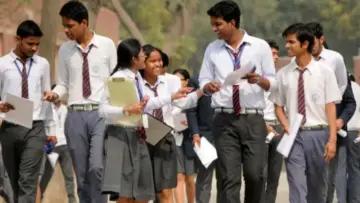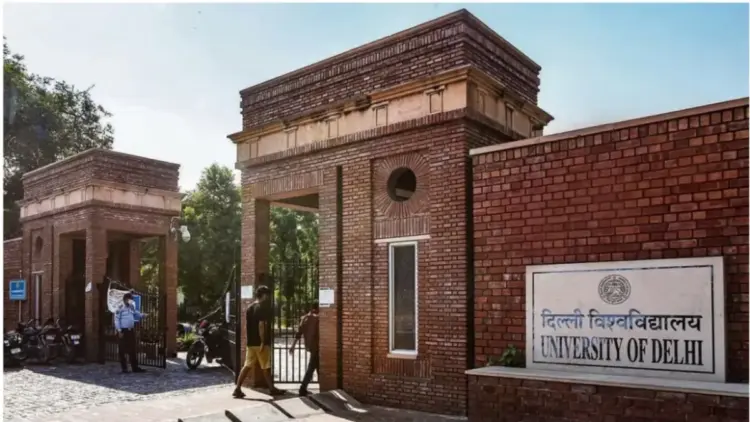
New Delhi, India – The Delhi University Students’ Union (DUSU), a body now synonymous with the vibrant, often contentious, landscape of student politics in India’s capital, began its journey not with a bang, but with a whisper of a proposal. In the nascent days of an independent India, as the nation grappled with its identity, a modest request for a Rs 150 grant in 1947 laid the foundation for what would become one of the most closely watched student elections in the country. The story of DUSU is not just an account of an institutional evolution; it is a microcosm of the changing tides of student activism, political engagement, and the evolving aspirations of young India.
From its inception, DUSU was envisioned as a representative voice for the burgeoning student population at Delhi University. The initial proposal, formally communicated to the university’s Executive Council on August 6, 1947, just weeks before India’s independence, spoke of establishing a "representative group of students" to form a union. This was met with an encouraging "acceptance in principle," with plans swiftly moving towards forming a committee to draft a constitution and operational procedures. The symbolic Rs 150 grant, intended for initial expenses, underscored the humble aspirations and limited resources of the time. Little did anyone then realize that this nascent student body would grow to become a significant political platform, a training ground for future leaders, and a bellwether for broader political currents.
A Chronology of Growth and Governance: Tracing DUSU’s Development
The early decades of DUSU were marked by a struggle for financial stability and the establishment of a robust governance framework. Records from March 27, 1953, reveal the union’s reliance on university aid, with the Executive Committee noting a disbursement of Rs 500 for the year and urging the union to strive for financial self-sufficiency. This plea for fiscal prudence was echoed a year later, when a March 14, 1954, report highlighted a stark deficit: the union had spent Rs 1,995 against an income of only Rs 815. These figures underscored the challenges of sustaining a student body with limited revenue streams.

It was during this period that DUSU witnessed a significant organizational milestone: the adoption of its first constitution and the conduct of its inaugural elections. However, the financial precariousness persisted, necessitating the formation of a caretaker committee to manage affairs until the subsequent academic year. A grant of up to Rs 1,100 was proposed to cover incurred expenses, subject to bill approval, illustrating the tight financial controls and the university’s cautious approach to supporting the nascent union.

The organizational structure of DUSU underwent a significant overhaul in 1973. On August 2, the Executive Council considered scrapping the existing constitution and introducing an interim framework. This move aimed to introduce stricter financial controls, with any expenditure exceeding Rs 100 requiring approval from the union’s Executive Committee. The new constitution also clarified administrative roles, designating the Delhi University Vice-Chancellor as the union’s patron and mandating the appointment of a staff advisor and treasurer from the university’s teaching faculty.

Crucially, the 1973 constitutional reforms formalized the elected positions within DUSU. The framework provided for four key office-bearers: President, Vice-President, Secretary, and Assistant Secretary, all to be directly elected by the DUSU members. This established a democratic electoral process that has largely persisted, albeit with variations in nomenclature for some posts over time.

The Pillars of Power: Understanding Key DUSU Positions
The contemporary DUSU elections revolve around four central posts, each carrying distinct responsibilities and significant influence within the university ecosystem.

- President: The foremost representative of the student body, the President is the public face of DUSU, responsible for articulating student concerns to university authorities and external stakeholders. They often lead negotiations, represent the union in official capacities, and champion major student welfare initiatives.
- Vice-President: Tasked with supporting the President, the Vice-President assumes the President’s duties in their absence. This role offers valuable experience in leadership and crisis management, often serving as a stepping stone to higher political office.
- Secretary: The administrative backbone of the union, the Secretary oversees the day-to-day operations, manages official correspondence, and ensures the smooth functioning of various DUSU committees and activities.
- Joint Secretary: In the current structure, the Joint Secretary plays a crucial role in communication, coordinating events, and addressing student grievances. This position acts as a vital link between the student population and the union’s executive body.
Beyond these elected roles, the Delhi University Vice-Chancellor continues to serve as the patron of DUSU, a position that symbolizes the university’s oversight and support. The union’s objectives, as outlined in its constitution, encompass representing student interests before university authorities, advocating for student welfare, and fostering a vibrant campus environment conducive to academic and personal growth.

The Evolving Cost of Representation: DUSU Membership Fees
The financial accessibility of DUSU membership has remained a consistent point of consideration. For decades, student subscription fees were remarkably low. Students paid a nominal Rs 5 until the 2012-13 academic year. Recognizing the need for increased operational funds, the fee was modestly revised to Rs 20 in 2013-14. Most recently, on June 21, 2024, the fee was further increased to Rs 40, a decision that, while necessary for the union’s functioning, is always closely scrutinized by the student community. This gradual increase reflects the growing operational costs and the expanding scope of DUSU’s activities and responsibilities.

From Campus Politics to National Spectacle: The Rise of DUSU Elections
Over the years, DUSU elections have transcended their collegiate origins to become a significant event in Delhi University’s academic and political calendar. These elections are not merely about selecting student representatives; they are a vibrant, often heated, contest that mirrors the broader political landscape of India. Student groups affiliated with major national political organizations, such as the Akhil Bharatiya Vidyarthi Parishad (ABVP) and the National Students’ Union of India (NSUI), alongside Left-backed student outfits like the All India Students’ Association (AISA) and the Students’ Federation of India (SFI), and a spectrum of independent candidates, vie for dominance.

The 2026 DUSU election, like its predecessors, was a keenly contested affair, with the four central posts being the focal point of intense campaigning. Voting took place on September 18, followed by the counting of votes on September 19 at the University Sports Stadium in North Campus. The election registered a voter turnout of 40.46%, a figure that, while not absolute, reflects a substantial segment of the student population actively participating in the democratic process.

Issues at the Forefront: The Campaign Landscape of 2026
The 2026 DUSU election campaign was characterized by a robust discourse on issues directly impacting the lives of students. Student safety, the perennial challenge of affordable accommodation, and the quality of campus facilities emerged as paramount concerns. The tragic collapse of a five-storey boys’ PG in South Delhi’s Satya Niketan, which claimed the lives of seven students, cast a somber shadow over the campaign, amplifying calls for stricter regulations and improved safety standards for off-campus student housing.

Beyond these critical issues, candidates and student organizations also addressed concerns related to public transportation, the enhancement of campus infrastructure, and the overall security environment within and around the university. These discussions highlighted the evolving priorities of student activism, moving beyond purely academic concerns to encompass broader socio-economic and safety imperatives.

The Contenders: A Look at the 2026 Candidates
The 2026 DUSU elections saw a formidable lineup of candidates representing the major student political factions:

- ABVP: Nominated Yash Dabas for President, Ishu Maurya for Vice-President, Riya Chhawadi for Secretary, and Lakshya Raj Singh for Joint Secretary.
- NSUI: Put forward Vijay Shankar Meena for President, Vir Chatrath for Vice-President, Namrata Chaudhary for Secretary, and Gopal Choudhary for Joint Secretary.
- AISA-SFI Alliance: Fielded Ananya Raturi for President, Akshat Shikhar for Vice-President, Stanzin Deskyong for Secretary, and B Parijaat for Joint Secretary.
As the counting of votes progressed on September 19, the electoral battle was characterized by fluctuating leads across the four posts, underscoring the close and unpredictable nature of the contest. This dynamic electoral landscape further solidified DUSU’s reputation as a significant political arena.

From a Rs 150 Proposal to a National Stage: The Enduring Significance of DUSU
The trajectory of the Delhi University Students’ Union from a nascent Rs 150 grant proposal in 1947 to a nationally recognized political entity is a testament to its enduring significance. Over nearly eight decades, DUSU has transformed from a rudimentary student body into a structured, democratically elected organization with a formal constitution and widespread representation across Delhi University’s diverse colleges and faculties.

Today, DUSU elections resonate far beyond the confines of the university campus. They serve as a crucial platform for student organizations to articulate and amplify issues pertinent to education, safety, accommodation, and the fundamental rights of students. The electoral process not only shapes the leadership within the university but also provides valuable insights into the political aspirations and concerns of India’s youth, making the story of DUSU an indispensable narrative in understanding the nation’s evolving socio-political fabric.