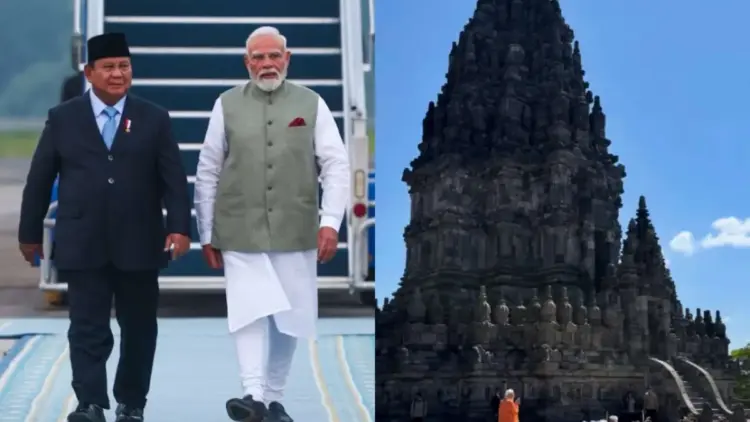
Yogyakarta, Indonesia – During his recent state visit to Indonesia, Prime Minister Narendra Modi made a profound and symbolic stop at the magnificent Prambanan Temple complex, a UNESCO World Heritage Site that stands as a monumental testament to the deep-rooted and centuries-old cultural, religious, and historical ties between India and Indonesia. The visit, imbued with spiritual significance, underscored the enduring influence of Indian civilization on the Indonesian archipelago and highlighted a shared heritage that transcends contemporary demographics.
A Beacon of Hindu Heritage in a Muslim Majority Nation
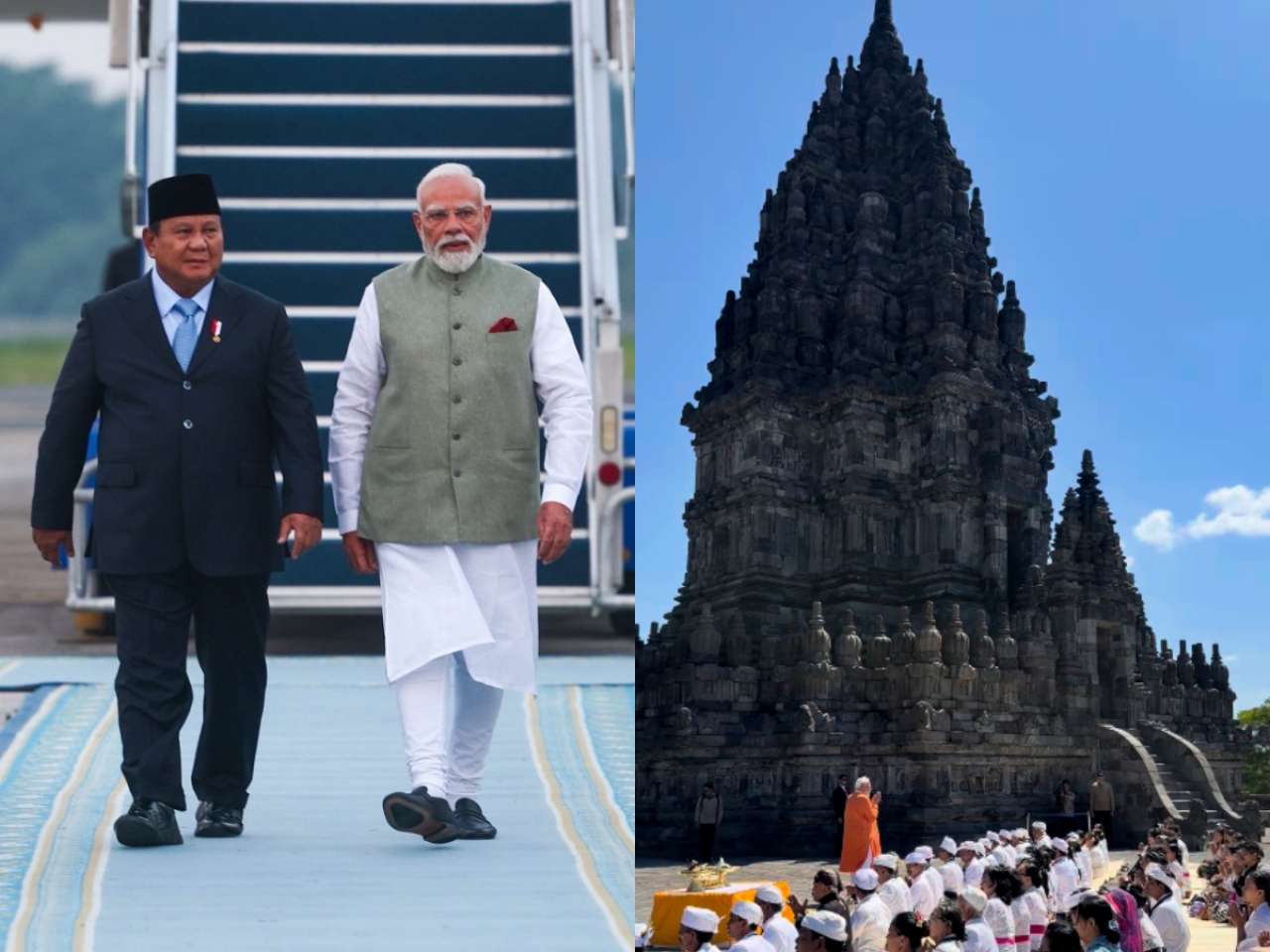
Prambanan, an architectural marvel nestled near the cultural heartland of Yogyakarta in Central Java, is not merely an ancient temple complex; it is a vibrant symbol of Indonesia’s rich Hindu past, a heritage that continues to resonate despite the nation being the world’s most populous Muslim-majority country. Prime Minister Modi’s presence at this sacred site served as a powerful affirmation of this shared legacy and a recognition of the historical tapestry that binds the two nations. The visit also signals potential collaborative efforts between India and Indonesia in the crucial area of preserving and conserving this invaluable UNESCO World Heritage Site, a task of global importance.
The Grandeur of Prambanan: A Chronology of Its Legacy
The story of Prambanan is a narrative etched in stone, spanning centuries of artistic, religious, and political evolution.

The Dawn of an Era: Construction and Dedication (9th-10th Centuries)
The genesis of Prambanan dates back to the 9th and 10th centuries, a period marked by the flourishing of the Sanjaya Dynasty of the ancient Mataram Kingdom. Under their patronage, this colossal Hindu temple complex was meticulously constructed. It was conceived as a grand dedication to the Hindu Trimurti – the supreme trinity of Lord Shiva, Lord Vishnu, and Lord Brahma – representing creation, preservation, and destruction, respectively. This architectural ambition reflects the profound spiritual and philosophical underpinnings of ancient Javanese society, heavily influenced by Indic traditions.
A Jewel in the Crown: Southeast Asia’s Hindu Architectural Prowess
Prambanan stands as the largest Hindu temple complex in Indonesia and ranks among the most significant in all of Southeast Asia. Its sheer scale and intricate design place it second only to Cambodia’s Angkor Wat in terms of regional prominence for Hindu temple complexes. The complex is characterized by its soaring spires, a distinct departure from the more rounded forms often seen in Indian temple architecture, showcasing a unique fusion of imported religious ideals with local artistic sensibilities.

The Majestic Core: Shiva, Vishnu, and Brahma Temples
At the heart of the Prambanan complex lie three towering temples, each dedicated to a member of the Trimurti. The central and tallest edifice is the Shiva temple, reaching an impressive height of approximately 47 meters. Within its hallowed chambers reside statues of Lord Shiva, his consort Goddess Durga, the elephant-headed deity Lord Ganesha, and the revered sage Agastya. The architectural layout of these main temples is a meticulously planned square, symbolizing the Hindu cosmological concept of the universe.
A City of Stone: Original Scope and Restoration Efforts
The original vision for Prambanan was breathtaking in its ambition. It is estimated that the complex once comprised around 240 temples, spread across an expansive area of nearly 40 hectares. Over centuries, many of these smaller structures succumbed to the ravages of time, natural disasters, and political upheavals, leaving behind a landscape of ruins. However, dedicated restoration efforts, particularly in the latter half of the 20th century and continuing to this day, have painstakingly brought the main shrines back to their former glory, allowing visitors to marvel at their architectural brilliance.

The Shadow of Borobudur: A Shared Heritage of Faith
Often drawing comparisons with the nearby Borobudur Temple, a monumental Buddhist structure, Prambanan embodies the dual pillars of ancient Javanese religious history. While Borobudur speaks of the Buddhist influence, Prambanan stands as a powerful testament to the Hindu faith that once held sway. Together, these two sites offer an unparalleled glimpse into the syncretic religious landscape of ancient Java, where different spiritual traditions coexisted and contributed to a rich and complex cultural milieu.
Recognition of Global Significance: UNESCO World Heritage Status (1991)
Recognizing its profound historical, cultural, and architectural significance, the United Nations Educational, Scientific and Cultural Organization (UNESCO) officially declared the Prambanan Temple Compound a World Heritage Site in 1991. This designation not only highlights its importance to Indonesia but also cements its status as a site of universal value, demanding global attention and preservation.

The Artistry of the Divine: Narratives Carved in Stone
Beyond its architectural grandeur, Prambanan is celebrated for its exquisite stone carvings, which transform the temple walls into an epic narrative canvas.
The Ramayana Etched in Bas-Reliefs
The walls of the Prambanan temples are adorned with intricate bas-reliefs that meticulously depict the epic Ramayana, one of Hinduism’s most revered scriptures. These detailed carvings guide visitors on a visual journey, narrating the heroic exploits of Lord Rama, his devoted wife Sita, the loyal Hanuman, and the formidable demon king Ravana. The tradition of circumambulating the temple in a clockwise direction mirrors the storytelling sequence of the Ramayana, allowing pilgrims and visitors to immerse themselves in the narrative.

A Fusion of Cultures: Indian Epics, Javanese Artistry
These stone narratives are a powerful embodiment of cultural diffusion. While the stories themselves originate from ancient Indian epics, their artistic rendering showcases a distinct Javanese style. The dynamic poses, the intricate details of attire and ornamentation, and the subtle nuances of expression reveal a sophisticated local artistic tradition that absorbed and reinterpreted external influences. This fusion of Indian narrative and Javanese artistry is a hallmark of Prambanan’s unique cultural significance.
The Echo of the Ramayana: Dance, Music, and Theatre
The legacy of the Ramayana at Prambanan extends beyond static carvings. To this day, the temple complex serves as the breathtaking backdrop for open-air Ramayana ballet performances. These vibrant spectacles, combining classical Javanese dance, evocative music, and dramatic storytelling, bring the ancient epic to life against the silhouette of the illuminated temples. These performances are not merely entertainment; they are a living testament to the enduring cultural resonance of the Ramayana in Indonesia.

The Legend of Princess Roro Jonggrang: Folklore and Faith
Prambanan is inextricably linked to a captivating Javanese legend that adds another layer of mystique to its historical narrative.
A Royal Bargain and a Midnight Race
According to local folklore, the temple complex owes its existence to the tale of Princess Roro Jonggrang and the formidable warrior Bandung Bondowoso. In a dramatic twist of fate, the princess, facing an unwanted marriage proposal from the powerful prince, agreed to wed him only if he could fulfill an impossible task: to construct a thousand temples in a single night. Driven by his desire and aided by supernatural forces, Bandung Bondowoso embarked on this monumental undertaking.

Tricks, Illusions, and a Cursed Princess
As the prince and his ethereal helpers neared completion, with only one temple remaining, the resourceful princess devised a cunning plan. She ordered the villagers to ignite bonfires and begin pounding rice, creating the illusion that dawn had broken and the task was impossible to finish. The spirits, tricked into believing their deadline had passed, vanished. Enraged by this deception, Bandung Bondowoso, in a fit of fury, cursed Princess Roro Jonggrang, transforming her into stone.
The Enduring Mystery: Folklore or Historical Echo?
Local tradition holds that the statue of Goddess Durga, enshrined within the Shiva temple, is none other than the petrified Princess Roro Jonggrang. While historians generally regard this story as folklore, it provides a compelling narrative that has become deeply embedded in the cultural consciousness surrounding Prambanan. It speaks to the enduring power of storytelling and its ability to weave myths around monumental structures, imbuing them with a rich cultural and spiritual aura.

From Obscurity to Global Acclaim: The Resilience of Prambanan
The journey of Prambanan from a forgotten ruin to a celebrated UNESCO World Heritage Site is a story of resilience and rediscovery.
The Descent into Ruin: Political Shifts and Natural Calamities
Following significant political shifts in the 10th century, the Mataram Kingdom’s focus shifted, and Prambanan, like many grand structures of its era, began to fall into disrepair. The forces of nature further compounded the neglect. Volcanic eruptions, powerful earthquakes, and the relentless passage of time took their toll, burying many of the smaller temples under ash and vegetation, effectively erasing them from the landscape for centuries.

A Rediscovery and the Dawn of Restoration
The 19th century marked a turning point with the rediscovery of the Prambanan complex. This resurgence of interest spurred ongoing restoration efforts, a long and arduous process of excavation, reconstruction, and preservation. These endeavors aimed to salvage what remained of the magnificent architecture and to bring the site back to its former splendor.
Enduring Challenges: The 2006 Earthquake and Continuous Preservation
Even in recent times, Prambanan has faced the challenges posed by natural disasters. The devastating earthquake that struck Yogyakarta in 2006 caused significant damage to the complex, necessitating further intensive restoration work. Despite these setbacks, the commitment to preserving this invaluable heritage site has remained unwavering. Ongoing conservation projects continue to safeguard its structural integrity and ensure its survival for future generations.

A Living Monument: Tourist Attraction and Cultural Icon
Today, Prambanan stands not only as a testament to a glorious past but also as one of Indonesia’s most significant tourist attractions. While the reconstruction of some smaller temples is still in progress, the meticulously restored main shrines draw millions of visitors annually, eager to witness its architectural brilliance, delve into its rich history, and connect with its spiritual significance.
The Enduring Tapestry: India’s Influence on Indonesian Culture
The visit of Prime Minister Modi to Prambanan is more than a diplomatic gesture; it is a poignant recognition of the deep and enduring cultural connections between India and Indonesia, connections that have shaped the very identity of the archipelago.

The Ancient Roots of Hindu Influence
The seeds of Hindu influence were sown in the Indonesian islands over 1,500 years ago, primarily through robust trade routes and vibrant cultural exchanges with India. Indian merchants, scholars, and religious emissaries brought with them their philosophies, religious practices, artistic traditions, and social structures, which gradually permeated the local cultures.
Kingdoms Shaped by Indic Traditions
This Indic influence led to the rise of powerful Hindu and Hindu-Buddhist kingdoms across various parts of the Indonesian archipelago, including Java and Sumatra. These kingdoms left behind a rich legacy of monumental temples, ancient inscriptions, and enduring cultural traditions that continue to be studied and revered. These rulers often adopted Sanskrit names, followed Hindu legal and administrative systems, and patronized arts and literature that drew heavily from Indian epics and scriptures.

Bali: The Modern Bastion of Hinduism
While Hindu traditions have left their indelible mark across Indonesia, the island of Bali stands today as the vibrant heart of Hinduism in the nation. Its unique cultural landscape, with its pervasive religious practices and iconic temples, is a living testament to the enduring strength of these ancient traditions.
Prambanan: A Sentinel of History
Monuments like Prambanan, alongside numerous other historical sites across the archipelago, serve as crucial custodians of Indonesia’s rich Hindu past. They are not merely relics of bygone eras but active reminders of a shared heritage that has profoundly shaped the cultural identity of both India and Indonesia, fostering a unique bond that continues to strengthen through such meaningful exchanges and recognitions. Prime Minister Modi’s visit to Prambanan was a powerful affirmation of this enduring connection, a bridge built across centuries of shared history and culture.