

NEW DELHI — When a supercharged monsoon batters an Indian metropolis or a record-breaking heatwave parches the Deccan Plateau, the immediate toll is counted in lives lost, bridges collapsed, and crops destroyed. However, as the floodwaters recede and the mercury stabilizes, a more insidious crisis emerges. Public health experts are increasingly warning that climate change is not merely a generator of extreme weather; it is a profound disruptor of disease ecology, shifting the boundaries of where, when, and how pathogens strike.
From the resurgence of waterborne cholera in urban centers to the migration of malaria-carrying mosquitoes into the once-protected heights of the Himalayas, the intersection of environmental volatility and crumbling infrastructure is creating a new public health frontier.
Main Facts: The Invisible Threat of a Warming Subcontinent
The relationship between climate and health is no longer a theoretical concern for the future. It is a present-day reality being reshaped by the "ecology of diseases." Extreme weather events—including erratic rainfall, flash floods, and prolonged droughts—alter the survival rates of pathogens, change the distribution of disease-carrying insects (vectors), and force humans, livestock, and wildlife into closer proximity.

A landmark 2025 study by international development consultancy IPE Global and GIS mapping firm Esri India provides a sobering forecast: by 2030, heatwaves in India’s major cities are projected to double in frequency. Furthermore, extreme rainfall events are expected to rise by 43% across the country. These are not just meteorological shifts; they are biological catalysts.
The Intergovernmental Panel on Climate Change (IPCC) has corroborated these findings, warning that the burden of waterborne and vector-borne diseases will intensify as the hydrological cycle becomes more chaotic. For India, a country already grappling with endemic diseases like dengue, malaria, and leptospirosis, the lack of climate-adaptive planning represents a significant vulnerability.
Chronology: A Decade of Disruption (2015–2026)
The evolution of climate-linked outbreaks in India follows a clear, accelerating trajectory over the last decade.
- 2018: The Kerala Catalyst: Following the century’s worst floods in Kerala, the state witnessed a massive spike in leptospirosis. Data from the Integrated Disease Surveillance Project (IDSP) recorded 1,318 cases and 53 deaths immediately following the deluge, highlighting how displaced wildlife (specifically rodents) and contaminated water systems create instant zoonotic hotspots.
- 1999–2019: The Kolkata Shift: A 21-year longitudinal study in Kolkata revealed a disturbing trend in cholera. Traditionally a seasonal disease, cholera began showing a biannual pattern, with peaks perfectly aligned with rising pre-monsoon temperatures and the subsequent onset of heavy rains.
- 2024: The Zika Surge: In Pune, heavy monsoon rains and subsequent urban flooding led to a surge in Zika virus infections, with the tally rising to 73 cases. This marked a significant shift in the virus’s footprint, linked directly to stagnant floodwaters in high-density urban areas.
- 2025–2026: The New Normal: By mid-2026, cities like Bengaluru, Delhi, and Mumbai were battered by rainfall exceeding 100 mm in 24 hours. These events, once considered "once-in-a-generation," have become annual occurrences, consistently overwhelming sewage systems and leading to year-round outbreaks of Hepatitis A and E.
Supporting Data: The Biological Mechanics of Climate-Driven Disease
To understand the threat, one must look at the specific environmental triggers that allow pathogens to thrive.

The Hydrological Trap: Floods and Waterborne Pathogens
"Heavy rainfall and flooding create ideal conditions for the emergence and spread of infections," explains Dr. Surya Prasad, a consultant physician at Manipal Hospital, Bengaluru. When floodwaters overwhelm sewage systems, human and animal waste is forced into drinking water sources. Warmer temperatures then act as an incubator, helping bacteria like Vibrio cholerae survive longer outside a host.
A study conducted in Chennai found that the risk of hospitalization for gastrointestinal illnesses jumped by 60% in the 15-day window following an extreme rainfall event. This "lag effect" is critical for public health planning but is often ignored in emergency responses.
The Zoonotic Connection: Leptospirosis and Rodent Migration
Leptospirosis serves as a primary example of climate-driven zoonosis. Rats are the primary hosts of the Leptospira bacteria, which is shed in their urine. During floods, these rodents are driven out of sewers and burrows into human dwellings. "Their urine contaminates water, food, and surfaces," says Dr. Prasad. Currently, more than 85% of annual leptospirosis cases in India occur during or immediately after the monsoon.
Vector Expansion: The Altitude Shift
The warming of the Himalayan foothills has removed the "thermal barrier" that once protected high-altitude populations from malaria and dengue. Rising temperatures allow Anopheles and Aedes mosquitoes to survive and breed at elevations previously considered too cold.

The Drought Paradox
It is a misconception that only "wet" extremes cause disease. Droughts lead to shrinking water sources, forcing humans and livestock to share the same limited, stagnant pools. This concentration increases the risk of cross-species pathogen transmission. Furthermore, when water is scarce, communities store water in large containers for long periods, creating perfect artificial breeding grounds for mosquitoes in the middle of a dry spell.
The Infrastructure Crisis: Building for the Past
A recurring theme among experts is that India’s infrastructure is designed for a climate that no longer exists.
- Archaic Drainage: The Central Public Health and Environmental Engineering Organisation (CPHEEO) guidelines historically designed stormwater drains to handle rainfall of 25 mm per hour. Recent events in Mumbai and Delhi have seen intensities four times that limit.
- Aging Systems: In cities like Mumbai and Kolkata, parts of the underground drainage network are over a century old. A 2022 report by the Comptroller and Auditor General (CAG) of India noted that many municipal authorities lack updated maps of these underground networks, making it impossible to manage modern flood loads.
- Assam’s Embankments: In the Northeast, over 4,800 kilometers of embankments are the primary defense against the Brahmaputra. However, nearly 60% of these structures are in need of urgent repair, leaving millions vulnerable to the contaminated runoff of flash floods.
"I do not think any part of India is safe," warns Sitara S.R. Ajjampur, Professor of Microbiology at Christian Medical College, Vellore. "Damaged water pipes, runoff from pit latrines, and contaminated groundwater are systemic failures that occur every time the weather turns extreme."
Official Responses: From NAPCCHH to Predictive Modeling
The Indian government has recognized the scale of the challenge, but implementation remains uneven.

- NAPCCHH: Launched in 2018, the National Action Plan for Climate Change and Human Health (NAPCCHH) aims to build climate-resilient healthcare. While all states have now established district-level teams, Upasona Ghosh of the Public Health Foundation of India notes that the program is "halfway there." She emphasizes that policymakers still struggle to understand the "complex pathways" of how a changing climate translates into a hospital admission.
- Surveillance and Risk Assessment: The National Centre for Disease Control (NCDC) has begun developing district-level risk assessments that integrate daily surveillance with weather data. The goal is to establish "local heat-health thresholds" that trigger public health alerts before an outbreak begins.
- Predictive Modeling: In a promising development, the Indian Institute of Tropical Meteorology (IITM) developed a model for Pune that can predict dengue outbreaks two months in advance. The model uses climate variables—specifically temperatures above 27°C and humidity between 60% and 78%—to forecast spikes in infection.
Implications: The Shift to Proactive Governance
The transition from a "reactive" to a "proactive" health system is the ultimate challenge for India. Experts argue that treating climate-related diseases as "unexpected" is a policy failure.
"India’s exposure to climate-sensitive disease is unusually high," says Gautam Menon, Professor of Physics and Biology at Ashoka University. "Endemic malaria, dengue, cholera, and kala-azar mean that gaps in preparedness matter a great deal. A fundamental gap is surveillance, which often detects outbreaks too late."
The implications are clear: India must integrate environmental and health data into a single, high-resolution stream. This requires:
- Data Integration: Merging weather satellite data with hospital admission records in real-time.
- Urban Overhaul: Redesigning city drainage to handle 100mm+ rainfall events rather than adhering to 20th-century standards.
- Ground-Truthing: Building the capacity of local health workers to use early-warning systems for "early action," such as preemptive vaccination or mosquito control.
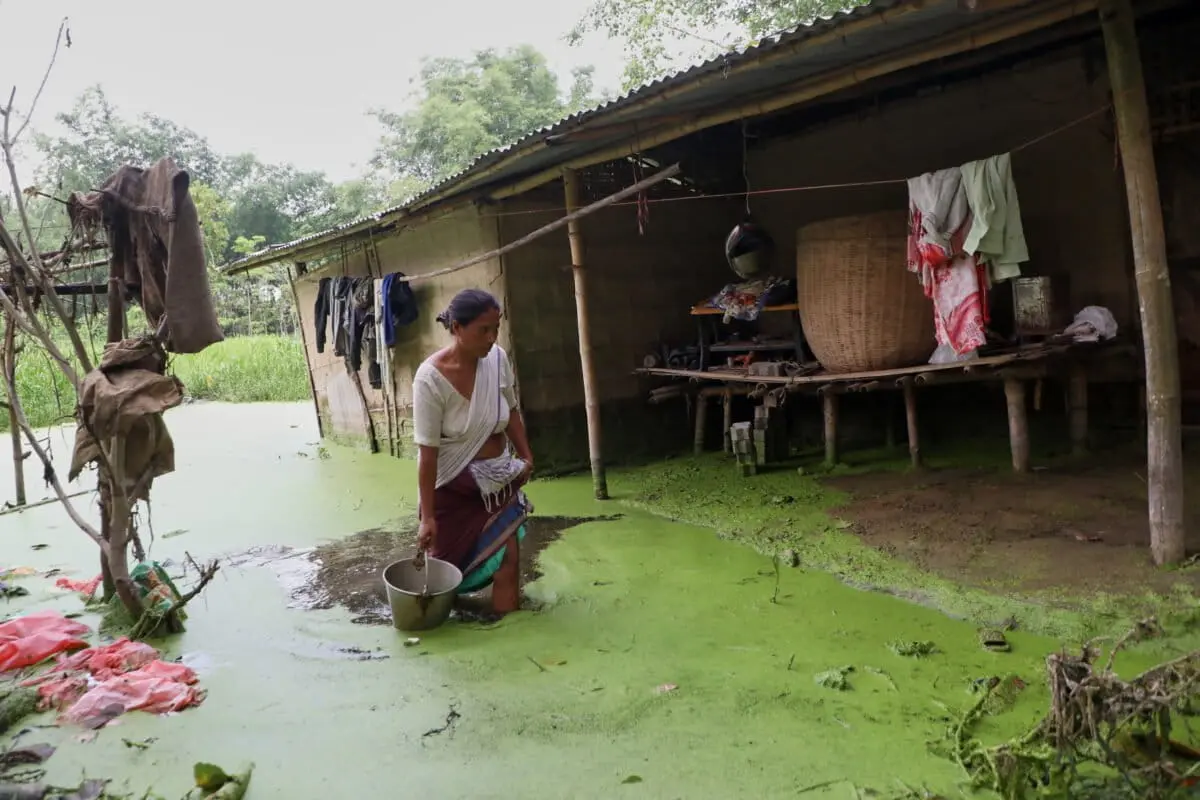
As the banner image of a woman wading through floodwaters in Jorhat, Assam, to collect drinking water illustrates, the human cost of these climate-health links is immediate. The goal, as Purvi Patel of the Sustainable Futures Collaborative puts it, must be to "prevent climate-related outbreaks rather than simply responding to them." Without a radical shift in infrastructure and surveillance, the "ecology of disease" will continue to outpace the country’s ability to heal.
