

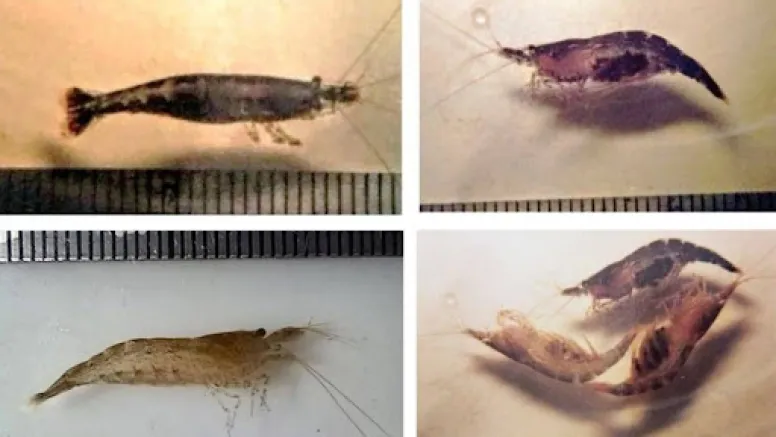
LUCKNOW – In a significant breakthrough for Indian carcinology—the study of crustaceans—researchers have announced the discovery of a previously unknown species of freshwater shrimp thriving within the waters of the Gomti River. This discovery, centered in the Lucknow region of Uttar Pradesh, marks a pivotal moment for regional biodiversity studies, as it represents the first time this specific type of crustacean has been formally documented in these waters.
The newly identified species, named Caridina sharmai, is a testament to the hidden biological wealth that persists even within urbanized river systems. The finding was the result of a collaborative effort between scientists from BSNV PG College, the University of Lucknow, and Navyug Kanya P.G. College. This tiny "master of disguise" is not merely a biological curiosity; it serves as a critical component of the river’s complex food web and a potential indicator of environmental health.
Main Facts: Introducing Caridina sharmai
The discovery of Caridina sharmai adds a new chapter to the taxonomy of the genus Caridina, a group of small, freshwater atyid shrimps found widely across tropical and subtropical regions of Asia, Oceania, and Africa. Measuring between 15 and 24 millimeters in length, these shrimps are diminutive in size but significant in ecological impact.
Key facts regarding the discovery include:
- Scientific Name: Caridina sharmai, named in honor of Professor U. D. Sharma.
- Location: The upstream reaches of the Gomti River, specifically the stretch between Kudia Ghat and Gaughat in Lucknow.
- Distinctive Features: A unique "knife-shaped" rostrum, specialized feeding hairs, and a lack of a median spine on the tail (telson).
- Behavioral Traits: Exceptional camouflage capabilities, social grouping, and a fascinating physiological reaction to captivity that turns their bodies transparent.
- Research Institutions: A multi-institutional effort involving BSNV PG College, University of Lucknow, and Navyug Kanya P.G. College.
The identification of this species is particularly noteworthy because the Gomti River, a tributary of the Ganges, has long faced significant anthropogenic pressures, including pollution and habitat fragmentation. The presence of a new, thriving crustacean species suggests that certain pockets of the river remain resilient biodiversity reservoirs.

Chronology of the Discovery: From Riverbed to Laboratory
The journey to identifying Caridina sharmai began in early 2023, as part of a broader initiative to document the overlooked macro-invertebrate life of the Gomti River. While larger fauna like the Ganges river dolphin or various fish species often capture public and scientific attention, the smaller organisms that form the base of the ecosystem are frequently ignored.
2023: The Field Surveys Begin
Between 2023 and early 2024, the research team conducted a series of extensive surveys along the Gomti’s banks. The focus was directed toward the upstream areas near Lucknow, where the river’s flow and vegetation provide a more varied habitat than the more polluted downstream sections.
The researchers adopted a participatory approach, collaborating closely with local fishing communities. These fishermen, who possess intimate knowledge of the river’s currents and hidden nooks, were instrumental in locating the shrimp. Using fine-mesh dragnets, the team sampled various micro-habitats, particularly areas dense with submerged aquatic vegetation.
Early 2024: Collection and Initial Observations
During these surveys, approximately 80 specimens were collected. At first glance, the shrimps appeared to be common varieties already known to science. However, initial field observations of their unique color patterns and the specific shape of their "beaks" (rostra) prompted the researchers to move the specimens to a controlled laboratory environment for more rigorous analysis.
Mid-2024: Microscopic Analysis and Confirmation
The definitive proof of the new species came through meticulous microscopic examination. In the laboratories of the participating Lucknow colleges, the team analyzed the morphology of the shrimps’ appendages, the arrangement of teeth on the rostrum, and the structure of the telson. By comparing these data points with existing taxonomic records of known Caridina species in India, such as Caridina jalihali and Caridina mathiassi, the team confirmed that they were looking at a species never before described in scientific literature.

Supporting Data: The Anatomy and Behavior of a Master Camouflager
The scientific description of Caridina sharmai rests on several morphological characteristics that distinguish it from its closest relatives. In the world of crustacean taxonomy, even the smallest variation in the number of "teeth" on a shell or the shape of a leg joint can signify a distinct evolutionary path.
Morphological Distinctions
The most defining feature of Caridina sharmai is its rostrum—the forward extension of the carapace. It is described as short and knife-shaped, reaching just to the end of the basal segment of the antennular peduncle. This rostrum features 15 to 22 teeth on the upper (dorsal) edge and 4 to 9 teeth on the lower (ventral) edge.
Furthermore, the research highlighted:
- The Telson: Unlike many other species in the genus, C. sharmai lacks a median spine on its tail, a feature used for defense and stability in other crustaceans.
- The Chelipeds (Legs): The first and second pairs of legs (chelipeds) feature a deep, distinctive hollow or excavation at the joints.
- Feeding Mechanisms: The tips of these legs are adorned with long, brush-like setae (hairs). These are highly specialized tools that the shrimp uses to scrape periphyton and algae from the surfaces of underwater plants, effectively acting as a "cleaner" for the river’s flora.
The Phenomenon of Transparency
One of the most striking behavioral observations made during the study involves the shrimp’s color. In their natural habitat, Caridina sharmai exhibit a dark brown or blackish hue, often highlighted by yellowish-grey stripes along their backs. This coloration allows them to disappear against the silty riverbed and shadows of aquatic weeds.
However, the researchers noted a remarkable physiological shift when the shrimps were moved into glass aquariums for study. Over a short period, the dark pigments began to fade, and the shrimps became almost entirely transparent. This "stress-induced" or "environment-matching" transparency is a common trait in some crustaceans, used to avoid detection when their usual camouflage (the dark riverbed) is no longer available.

Official Responses and Academic Significance: A Tribute to a Legacy
The naming of the species, Caridina sharmai, is a deliberate act of academic homage. The research team chose to honor Professor U. D. Sharma, a retired head of the Zoology Department at the University of Lucknow.
Professor Sharma is widely regarded as a pioneer of carcinology in Northern India. Throughout a career spanning several decades, he established the foundational frameworks for studying freshwater crustaceans in the Gangetic plain and mentored many of the scientists who were involved in this current discovery.
"This discovery is not just a win for biodiversity, but a tribute to the academic lineage of Lucknow," noted one of the researchers. "By naming this species after Professor Sharma, we acknowledge the importance of long-term mentorship and the foundational science that allows us to recognize new life forms today."
Representatives from BSNV PG College and Navyug Kanya P.G. College emphasized that this discovery underscores the importance of funding and supporting research in local colleges. Often, major discoveries are expected to come from large national institutes, but this project proves that local academic institutions are perfectly positioned to conduct the granular, ground-level fieldwork necessary for biodiversity mapping.
Implications for Conservation and the Future of the Gomti River
The discovery of Caridina sharmai carries profound implications for the conservation of the Gomti River and the broader management of urban freshwater ecosystems.

Bio-indicators of River Health
Freshwater shrimps are often considered "bio-indicators." Because they are sensitive to changes in water chemistry and oxygen levels, their presence—or absence—can tell scientists a great deal about the health of a river. The fact that Caridina sharmai is thriving in the Lucknow stretch of the Gomti suggests that despite the urban runoff, the river still maintains enough ecological integrity to support specialized life forms.
Meeting Global Conservation Targets
The study aligns with a growing body of research suggesting that urban institutional lands and the waterways that run through them act as vital "biodiversity reservoirs." As cities expand, these green and blue spaces become the last refuges for native species. Protecting the Gomti is no longer just about water security for humans; it is about meeting global conservation targets to prevent species extinction.
Future Research Directions
The research team believes that Caridina sharmai is likely just one of many undiscovered species in the region. They have called for:
- Expanded Surveys: Similar studies are needed in the downstream reaches of the Gomti and its tributaries to determine the full range of this new species.
- Genetic Mapping: While morphological analysis is definitive, the team hopes to conduct DNA barcoding to further understand the evolutionary relationship between C. sharmai and other Asian freshwater shrimps.
- Pollution Impact Studies: Research is needed to determine how current levels of heavy metals and microplastics in the Gomti might be affecting the reproductive cycles of these crustaceans.
Conclusion
The discovery of Caridina sharmai is a reminder that the natural world still holds secrets, even in the heart of a bustling metropolis like Lucknow. It challenges the narrative that urban rivers are "dead" and highlights the critical role of local scientists in documenting the planet’s disappearing biodiversity. As the Gomti continues to face the challenges of the 21st century, this tiny, camouflaged shrimp stands as a symbol of the river’s enduring life force and the urgent need to protect it.
