

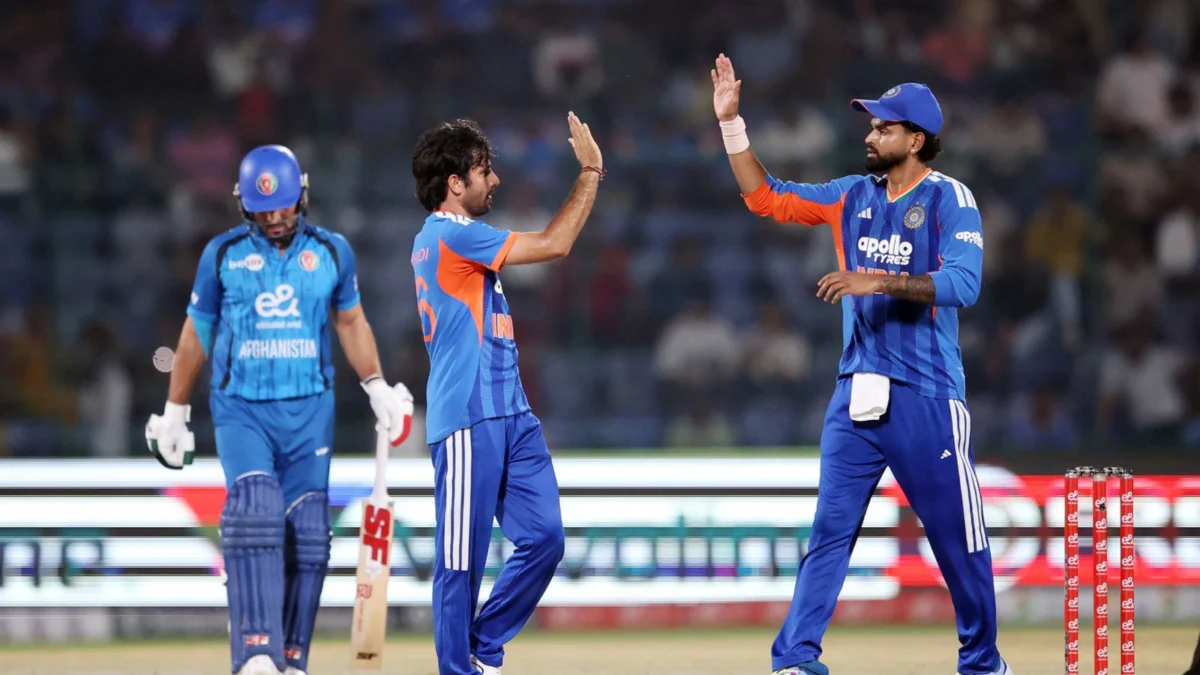
New Delhi, India – September 15, 2026 – India delivered a masterful performance at the Arun Jaitley Cricket Stadium on Tuesday, securing a resounding seven-wicket victory over Afghanistan and sealing the three-match T20 International series with a game to spare. A collective bowling effort, spearheaded by the returning Jasprit Bumrah and the prolific Arshdeep Singh, restricted Afghanistan to a modest total, which was then effortlessly chased down thanks to a blistering half-century from Sanju Samson and a rapid cameo from Abhishek Sharma. The win not only solidified India’s dominance but also provided crucial insights into their squad depth and strategic flexibility ahead of future T20 challenges.
Updated: Sep 15, 2026 11:32 PM IST
Main Facts
India’s decisive win in the second T20I against Afghanistan showcased a complete team effort, blending individual brilliance with shrewd strategic execution. The match, played under the lights of a buzzing Arun Jaitley Cricket Stadium, saw India clinch the series 2-0, underscoring their superiority in the format. Key to India’s triumph was the formidable bowling attack, which managed to contain the Afghan batsmen effectively, despite a valiant effort from captain Ibrahim Zadran. The return of pace spearhead Jasprit Bumrah from injury was a significant boost, as he opened the bowling with a maiden over, setting an immediate tone of intensity. Arshdeep Singh, India’s leading T20I wicket-taker, provided the early breakthrough, while young all-rounder Nitish Kumar Reddy delivered a career-best performance, claiming three crucial wickets.
Chasing a target of 160, India’s batting lineup, though missing some established stars, demonstrated explosive power and calculated aggression. Sanju Samson, under pressure and facing stiff competition for his spot, unleashed a breathtaking 22-ball 57, an innings characterized by its sheer boundary-hitting prowess and a sky-high strike rate. He was ably supported by Abhishek Sharma’s quickfire 39, which ensured India reached 82 runs in the Powerplay itself, effectively breaking the back of the chase. Despite a minor wobble, India overhauled the target with 31 deliveries to spare, reaffirming their status as a formidable T20 force. This comprehensive victory, while occurring in a "series of friendship" often devoid of high-stakes animosity, held significant implications for individual player assessments and team dynamics, particularly with the T20 World Cup on the horizon.
Chronology of Dominance
The narrative of India’s victory was meticulously crafted across two distinct phases: Afghanistan’s struggle against a disciplined Indian attack and India’s relentless pursuit of the target.
Afghanistan’s Innings: A Battle Against Indian Precision
The stage was set by the return of Jasprit Bumrah, a sight that sends shivers down the spines of even the most accomplished batsmen. Opening the bowling for India for the first time in his illustrious career, Bumrah delivered an opening over that, despite yielding no wickets, was a masterclass in controlled aggression and psychological warfare. A sharp outswinger left the bat swinging at thin air, an inswinger narrowly missed the inside edge, and a pinpoint yorker was just toe-ended to safety. Six deliveries, six illusions – a magician at work. This maiden over, on the cusp of his 100th T20I cap, not only marked his effective return from a knee injury but also instilled an immediate sense of unease in the Afghan camp, making batsmen "look like novices."
The early pressure soon translated into a breakthrough. Arshdeep Singh, living up to his reputation as India’s leading T20I wicket-taker, struck in his very first over, dismissing opener Rahmanullah Gurbaz. This early scalp, however, was the sole success in the initial eight overs, as Afghanistan captain Ibrahim Zadran began to stabilize the innings. Displaying the resilience expected of a leader, Zadran shouldered the burden, crafting a defiant 37 off 33 balls. His innings, characterized by a mix of sensible rotation and well-timed boundaries, was crucial in preventing a complete collapse. Yet, his determined stand was eventually curtailed by the burgeoning talent of Nitish Kumar Reddy, who claimed Zadran’s wicket, caught at deep midwicket.
Reddy’s performance was arguably one of the biggest "tick marks" for India on the night. His journey in T20I cricket had seen mixed fortunes; the last time he took a wicket in the format, the cricketing landscape was notably different, and the search for a reliable seam-bowling all-rounder to ease the burden on Hardik Pandya was still ongoing. Reddy’s figures of 3-0-24-3, his career-best in international cricket across all formats, showcased a remarkable turnaround from his expensive spell of 30 runs off two overs in the previous match. His ability to pick up crucial wickets, combined with his potential with the bat, makes him a valuable asset. Beyond individual performances, Captain Shreyas Iyer’s shrewd resource management was evident. Learning from the previous game where he might have overused his main wicket-takers too early, Iyer strategically held back both Arshdeep and Bumrah after their initial bursts, ensuring he had potent options for the death overs. This tactical flexibility prevented Afghanistan from capitalizing on the middle overs, leading to their eventual total of 159/8. The only minor blemish in an otherwise stellar bowling display was Shivam Dube’s lone over, which conceded 13 runs.
India’s Chase: A Boundary Blitz
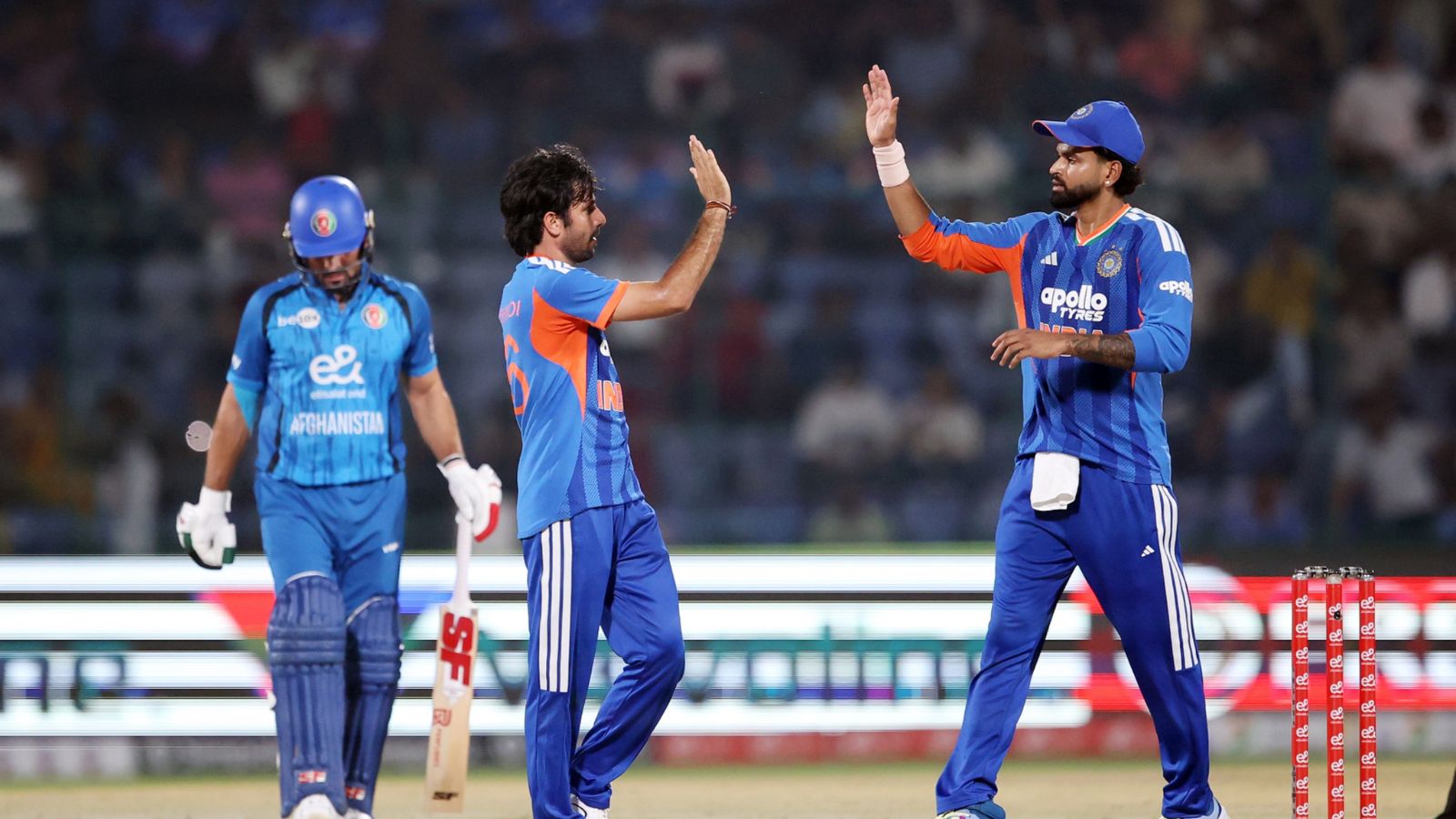
With a target of 160 on a pitch that offered no inherent demons, India’s batsmen were poised for an aggressive chase. Sanju Samson, whose recent T20I form had been a concern, delivered an innings that resonated with his T20 World Cup heroics. Having aggregated a mere 43 runs in his five subsequent T20Is after a phenomenal World Cup campaign, Samson had faced exclusion from the squad for the series against Zimbabwe in July, and now contended with the rising tide of young talent, including a much-talked-about 15-year-old prodigy. Tuesday’s 22-ball 57 was not only his seventh T20I half-century but also one of his most significant, marked by an astonishing 91.23% of his runs coming from boundaries alone. His strike rate of 259.09 was his highest ever in a knock exceeding 25 runs, a clear statement of intent and capability.
Matching Samson’s intensity was Abhishek Sharma, the protagonist from Sunday’s match, who continued his impressive form with a rapid 19-ball 39. Together, they decimated the Afghan bowling attack, particularly in the Powerplay. India stormed to 82 runs within the first six overs, transforming the remainder of the chase into what was largely "academic." This explosive start took all the pressure off the subsequent batsmen.
The only slight hiccup came with Shreyas Iyer’s dismissal, caught off a Rashid Khan delivery. Iyer’s run-a-ball 11 marked his sixth consecutive T20I knock where he failed to reach 30, a statistic that will undoubtedly be a point of discussion for the team management. However, the early onslaught meant his brief stay had little impact on the outcome. Ishan Kishan then ensured there were no further alarms, remaining unbeaten with a composed 23-ball 38, guiding India across the finish line with 31 deliveries to spare. The Afghan bowlers, particularly Rashid Khan (3/35), fought hard but were simply overwhelmed by the sheer pace and power of India’s top order.
Supporting Data and Key Statistics
The match was a statistical goldmine, highlighting both individual milestones and collective achievements.
Individual Milestones & Statistical Highlights
- Jasprit Bumrah: His maiden opening over for India marked a significant first in his career. His return from injury and nearing his 100th T20I cap underscore his enduring value to the team. The controlled aggression and precision he displayed immediately re-established his reputation as a formidable force.
- Arshdeep Singh: As India’s leading T20I wicket-taker, his early dismissal of Rahmanullah Gurbaz showcased his ability to deliver crucial breakthroughs in the Powerplay. His consistency remains a cornerstone of India’s T20 bowling attack.
- Nitish Kumar Reddy: The all-rounder’s figures of 3-0-24-3 were his best in international cricket across all formats. This performance is particularly significant given the ongoing search for a reliable seam-bowling all-rounder in the absence of Hardik Pandya. His improvement from the previous game (30 runs off 2 overs) demonstrates adaptability and potential.
- Sanju Samson: His explosive 22-ball 57 was his seventh T20I half-century. The innings was remarkable for its boundary percentage (91.23%) and an astonishing strike rate of 259.09, his highest in any T20I knock of more than 25 runs. This performance serves as a powerful reminder of his destructive capability and a strong claim for a consistent spot in the squad.
- Shreyas Iyer: His run-a-ball 11 marked his sixth consecutive T20I innings failing to reach 30. This consistent lack of substantial scores will be a point of concern for the captain himself and the team management.
- Team Powerplay: India’s blistering start of 82 runs in the Powerplay overs was a testament to their aggressive batting philosophy and the freedom given to the openers. This rapid scoring rate effectively demoralized the Afghan bowlers and set up the comfortable chase.
Series Context and Broader Implications
The series itself, often dubbed a "series of friendship" due to the cordial relations between the two cricketing nations and the relatively lower stakes compared to other bilateral encounters, has been largely one-sided. Afghanistan has faced significant "hardship," struggling to compete with the depth and quality of the Indian side. While the outcomes might seem predictable, such series offer invaluable opportunities for both teams. For India, it’s a platform to test bench strength, integrate returning players like Bumrah, and fine-tune strategies ahead of the T20 World Cup. For Afghanistan, it’s a crucial learning curve, exposing them to top-tier international competition and highlighting areas for improvement, especially in adapting to varied conditions and facing world-class bowling. The mention of Gautam Gambhir as India’s head coach, as noted in the original article, adds an intriguing layer, suggesting a focus on building a winning culture and tactical shrewdness within the team.
Official Responses and Team Perspectives
While specific quotes from the post-match press conference were not available in the original report, one can infer the likely sentiments and official responses from the respective camps, reflecting the tone of the game and the series.
From the Indian Camp: Confidence and Strategic Insight
Captain Shreyas Iyer (post-match interview, inferred): "This victory is a testament to the collective effort of the team. We wanted to set a strong tone, and Bumrah delivering a maiden first over right off his return from injury, that was just exceptional. It really put them on the back foot. Arshdeep followed up with a crucial wicket, and the way Nitish Kumar Reddy stepped up today, after the last game, shows his character and potential. His spell was a game-changer for us. In the batting, Sanju Samson’s innings was just phenomenal; the way he struck the ball was incredible, and it’s great to see him finding that rhythm again. Abhishek too, continued his good form. We’re trying to build a squad with depth, and performances like these, where different players are stepping up, are exactly what we’re looking for as we prepare for bigger tournaments."
Head Coach Gautam Gambhir (inferred from team strategy): "Our focus has always been on clarity of roles and execution. We saw some excellent bowling plans being implemented today, especially the way we managed our primary wicket-takers. It’s about optimizing resources. What’s particularly pleasing is to see young talents like Nitish Reddy seizing their opportunities and improving with each game. That’s crucial for our team’s balance. And the aggressive intent shown by our batsmen in the Powerplay was exactly what we discussed. We want to play fearless cricket, and today was a great example of that. We’re building towards something significant, and these wins, even in a friendly series, are important for building confidence and cohesion."
From the Afghanistan Camp: Resilience and Learning
Captain Ibrahim Zadran (post-match interview, inferred): "It was a tough game for us, no doubt. Facing bowlers like Bumrah and Arshdeep, especially in these conditions, is always a challenge. I tried my best to anchor the innings, but we lost wickets at crucial junctures. Their bowlers, especially Reddy, bowled very well today. We need to find ways to build bigger partnerships and accelerate in the middle overs. When India batted, Samson and Abhishek played incredibly well; their Powerplay was just too dominant for us to recover. We are learning a lot from playing against a world-class team like India. We have one more game, and we will try to come back stronger and finish the series on a positive note. These experiences are vital for our growth as a team."
Implications and Future Outlook
The series-clinching victory holds several implications for both teams, shaping their immediate strategies and long-term aspirations.
For India: Reinforcing Strengths and Addressing Concerns
The series win firmly establishes India’s dominance in this bilateral encounter and offers crucial insights into their T20 World Cup preparations. The return of Jasprit Bumrah in such emphatic fashion, delivering a maiden opening over after injury, is a massive boost, confirming his fitness and form. Arshdeep Singh’s consistent wicket-taking ability reinforces his position as a vital cog in the bowling attack. The emergence of Nitish Kumar Reddy as a reliable seam-bowling all-rounder is perhaps the biggest takeaway. His career-best figures and improved performance offer a promising alternative or support to Hardik Pandya, addressing a critical area of concern for India’s team balance.
Sanju Samson’s explosive innings, coming at a time when he faces intense competition from younger talents, is a strong statement of his capability and will certainly put him back in contention for a more consistent role. However, Shreyas Iyer’s run of low scores remains a concern for the captain and the team management, highlighting the need for more consistent contributions from the middle order. The aggressive Powerplay approach, yielding 82 runs, demonstrates a clear, fearless batting philosophy under Gautam Gambhir’s guidance, a strategy that could be pivotal in high-pressure tournaments. The series also allows for further experimentation and rotation in the final match, giving opportunities to other squad members.
For Afghanistan: A Learning Curve and Areas for Development
For Afghanistan, this series has been a stern test and a significant learning experience. While they have shown flashes of individual brilliance, particularly with Ibrahim Zadran’s captaincy and Rashid Khan’s bowling, the overall team performance has been outmatched. The "hardship" they’ve faced underscores the gap between them and top-tier cricketing nations like India. The primary implication for Afghanistan is the need for greater consistency, particularly in batting partnerships and adapting to the relentless pressure applied by world-class bowlers. Their dependence on a few key players is evident, and the series highlights the need to develop a broader pool of talent capable of performing at the international level. The final match of the series provides another opportunity to implement learnings, refine strategies, and showcase their fighting spirit. These experiences, though challenging, are invaluable for their long-term development in T20 cricket.
Overall Series Narrative: The Value of Bilateral Contests
In an increasingly packed international calendar, the "series of friendship" between India and Afghanistan, while perhaps lacking the intense rivalry of Ashes or Indo-Pak contests, serves a vital purpose. For India, it’s a platform to fine-tune strategies, test player form, and build squad depth in a relatively low-pressure environment. For Afghanistan, it’s an unparalleled opportunity to gain exposure against a top-ranked team, understand the demands of international cricket, and identify areas for growth. Despite the one-sided nature of the results so far, the series continues to offer valuable lessons and entertainment, with the promise of more competitive cricket in the future as Afghanistan continues its cricketing journey. The final 40 overs of the series will be another chance for both teams to consolidate their positions and prepare for what lies ahead.
Brief Scores: Afghanistan 159/8 in 20 overs (Ibrahim Zadran 37; Nitish Kumar Reddy 3/24) lost to India 163/3 in 14.5 overs (Sanju Samson 57; Rashid Khan 3/35) by seven wickets.
