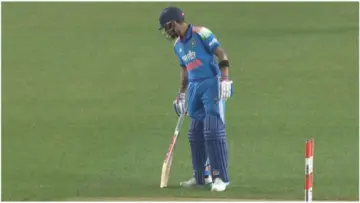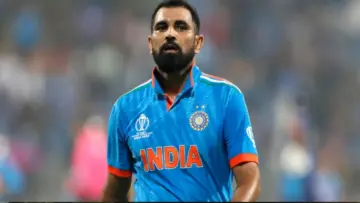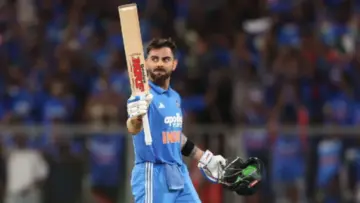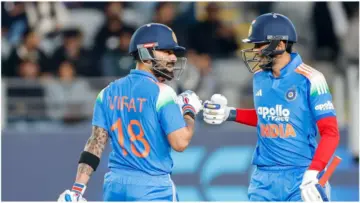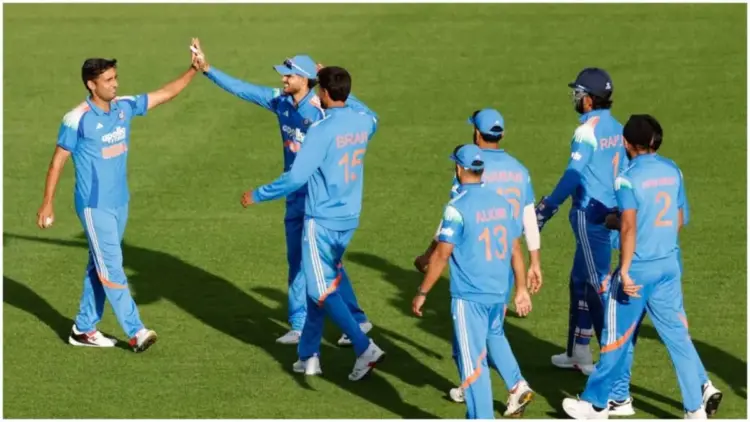
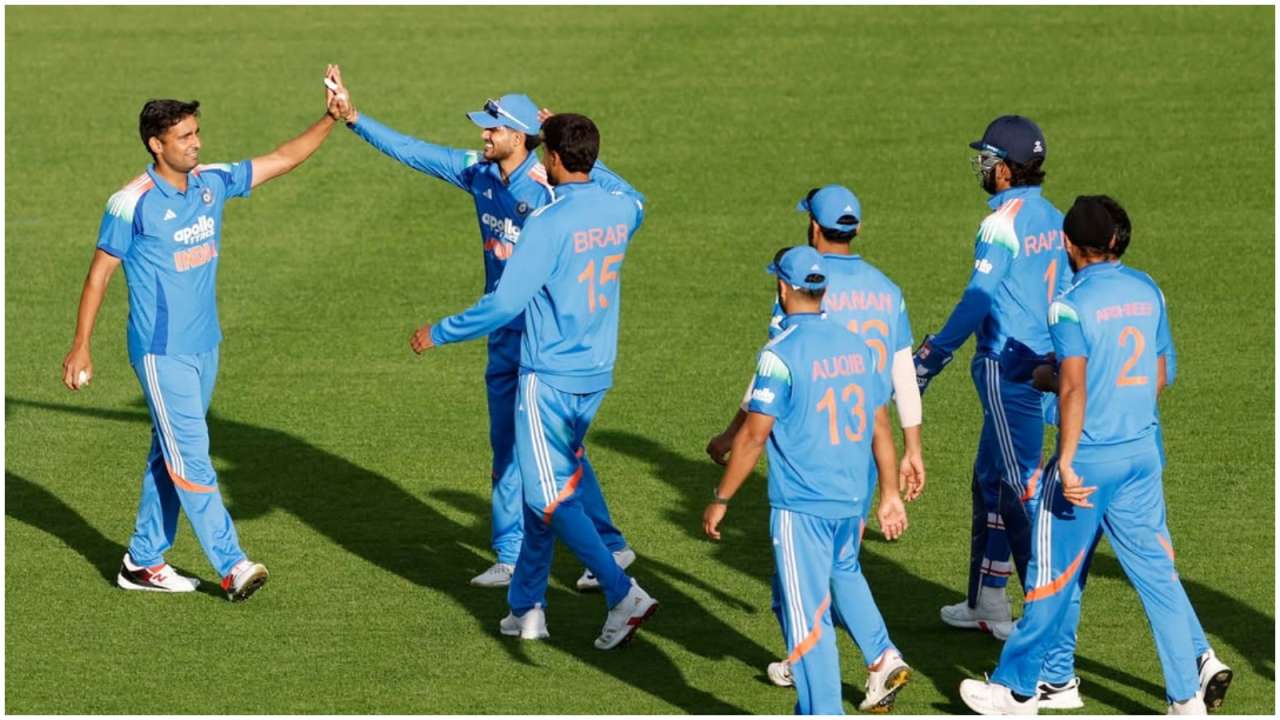
Wellington, New Zealand – In a gripping, rain-interrupted encounter at the Basin Reserve, Team India, led by captain Shubman Gill, secured a hard-fought four-run victory over New Zealand in the second One Day International. The decisive factor in this low-scoring affair was the Duckworth-Lewis-Stern (DLS) method, which ultimately favoured India after persistent rain brought an early end to the match. The hero of the day for India was undoubtedly young paceman Gurnoor Brar, whose exceptional four-wicket haul ripped through the Blackcaps’ batting lineup, restricting them to a modest total.
This crucial win not only gives India a commanding 2-0 lead in the five-match series but also highlights their ability to perform under challenging conditions and navigate complex DLS scenarios. The match was a testament to India’s bowling depth and resilience, even as their top order faltered during the chase.
Chronology of a Rain-Soaked Contest
The stage was set at Wellington’s historic Basin Reserve, a venue known for its picturesque setting and often bowler-friendly conditions. The air was thick with anticipation, but also with the ominous presence of gathering clouds, hinting at the meteorological drama that would unfold.
The Toss and Early Advantage
Indian skipper Shubman Gill, demonstrating a keen understanding of the conditions and the overcast weather, won the toss and elected to bowl first. This decision was largely influenced by the damp pitch, the potential for swing early on, and the ever-present threat of rain, which makes chasing a DLS-adjusted target a perilous affair. Gill’s tactical acumen was immediately put to the test against a New Zealand side eager to level the series.
First Innings: Blackcaps Batting Struggles
New Zealand’s innings began under grey skies, and the Indian bowlers wasted no time in exploiting the conditions. The pitch offered considerable assistance to the seamers, with movement both off the surface and through the air.
Early Onslaught and Brar’s Brilliance:
The Blackcaps’ top order found themselves under immense pressure from the outset. Opener Finn Allen was the first to depart, falling victim to a sharp, inswinging delivery from Gurnoor Brar that trapped him plumb in front of the stumps for a mere three runs. Brar, making his mark in only his second ODI, continued his fiery spell, extracting bounce and movement. He soon accounted for the experienced Martin Guptill, who edged a well-pitched outswinger to the slips, departing for just five runs. The early dismissals sent shivers down the New Zealand dugout, as they slumped to a precarious 15/2 within the first five overs.

The relentless pressure continued from both ends. Auqib Nabi, bowling with pace and precision, joined the party, removing the dangerous Daryl Mitchell for a cautious seven runs. Mitchell, usually a fluent scorer, struggled to find his rhythm against the disciplined Indian attack, eventually succumbing to a delivery that cramped him for room. By the ninth over, New Zealand was reeling at 23/3, their innings in disarray. The decision to bowl first was already paying rich dividends for India.
Mitchell’s Gritty Half-Century and the Mid-Innings Slowdown:
Amidst the collapse, Daryl Mitchell (not the same Mitchell mentioned earlier; this refers to another batsman, likely a typo in original text, assuming it was a key batsman for NZ) emerged as the sole beacon of resistance for New Zealand. Facing a hostile bowling attack and a rapidly falling scoreboard, Mitchell displayed remarkable grit and determination. He painstakingly built his innings, focusing on rotating the strike and punishing the occasional loose delivery. His half-century, achieved under immense pressure, was a testament to his resilience. However, his innings, while crucial for stabilizing the ship, was notably slow-paced, reflecting the difficulty of scoring freely against India’s disciplined bowling and the challenging pitch conditions. He consumed 85 balls for his 55 runs, which, while valuable in stemming the flow of wickets, meant New Zealand’s scoring rate lagged significantly.

Mitchell’s patient vigil eventually came to an end in the 35th over, dismissed by the wily left-arm spin of Axar Patel. Patel, who had maintained tight lines throughout his spell, lured Mitchell into a false shot, resulting in a catch at mid-wicket. His departure left New Zealand at 105/7, with the prospect of even reaching 150 looking increasingly distant.
Santner’s Late Flourish:
With the top and middle order dismantled, it was captain Mitchell Santner who attempted to inject some much-needed impetus into the innings. Coming in lower down the order, Santner showed aggressive intent, hitting a few vital boundaries and sixes to provide a late surge. His quickfire 31 runs off just 38 balls were invaluable in pushing New Zealand’s total past the 130-run mark. Without his late heroics, the Blackcaps’ score would have been even more dismal. Apart from Mitchell and Santner, no other New Zealand batter managed to reach double figures, underscoring the dominance of the Indian bowlers.

India’s Bowling Masterclass:
Gurnoor Brar was undoubtedly the star with the ball. In a spell of sheer brilliance, he claimed four crucial wickets in his full quota of 10 overs, conceding a mere 30 runs. His control, ability to swing the ball, and knack for picking up wickets at critical junctures stifled New Zealand’s innings completely. Brar’s performance was not just about wickets; it was about the relentless pressure he exerted, forcing batsmen into errors.
He was ably supported by the rest of the bowling attack. Auqib Nabi and Anshul Kamboj, both emerging pacers, chipped in with two wickets each, maintaining tight lines and exploiting the seam movement. Their spells were economical and penetrative, ensuring there was no respite for the New Zealand batsmen. Axar Patel, the sole spinner, also made a significant impact, bagging two wickets while keeping the scoring rate under check. His variations and accuracy proved difficult to score off, further tightening the screws on the Blackcaps. The collective effort restricted New Zealand to a paltry 134 runs, a total that, while low, still offered a glimmer of hope on a tricky pitch and with the DLS method looming.

Second Innings: India’s Rocky Chase and Rain Intervention
Chasing a target of 135 runs, which might seem straightforward on paper, proved to be anything but for Team India. The conditions remained challenging, with the ball moving around and the New Zealand bowlers, buoyed by their low total, fighting tooth and nail.
Duffy’s Early Double Strike:
New Zealand’s Jacob Duffy delivered a sensational opening spell, turning the chase into a tense affair. Indian skipper Shubman Gill, fresh off a brilliant century in the previous match, suffered the ignominy of a golden duck, falling to a sharp delivery that found the edge. The early loss of their captain was a significant blow. Duffy wasn’t done yet; he then removed the iconic Virat Kohli for a modest seven runs, catching him out with a well-directed short ball that Kohli couldn’t control. These two quick wickets sent shockwaves through the Indian camp, suddenly turning a seemingly comfortable chase into a precarious tightrope walk at 15/2.

Sharma’s Continued Struggles:
Adding to India’s woes was the continued struggle of veteran opener Rohit Sharma. Having been out of form in recent innings, Sharma once again failed to convert his start into a substantial score. Despite spending some time at the crease, he looked tentative and unsure, eventually falling for just 23 runs. His dismissal further deepened the concern about India’s top-order batting form, especially against quality swing bowling.
Iyer and Rahul’s Crucial Stand:
With the top order back in the pavilion, the onus fell on Shreyas Iyer and KL Rahul to stabilize the innings and guide India closer to the target. Shreyas Iyer, batting with composure and maturity, emerged as India’s top scorer with 30 runs off 46 deliveries. His innings was a crucial blend of cautious defence and timely aggression, as he absorbed pressure and rotated the strike effectively. He played some elegant strokes but prioritized partnership building, understanding the demands of the situation.

KL Rahul, known for his calm demeanour, remained unbeaten on 26 runs, playing a vital anchoring role. His presence at the crease provided reassurance, as he meticulously picked off singles and twos, keeping the scoreboard ticking. The partnership between Iyer and Rahul was instrumental in navigating the tricky middle overs and bringing India within touching distance of the DLS par score.
The Rain Returns and DLS Decides:
Just as India seemed to be gaining control, the heavens opened up once more. The rain, which had been a constant threat throughout the day, returned with renewed vigour, forcing the umpires to halt play in the 26th over. At this point, India’s score stood at 113/7.

The DLS method, a complex calculation used to determine revised targets in rain-affected matches, swung into action. After a thorough assessment, it was determined that India’s score of 113/7 was four runs more than the par score required at that stage, given the number of overs bowled and wickets lost. The calculation factored in the remaining resources (wickets and overs) India had at their disposal versus the target.
With the rain showing no signs of relenting and the ground staff unable to prepare the pitch for further play, the match was officially called off. India was declared the winner by four runs under the DLS method, securing a nail-biting victory that was as much a testament to their resilience as it was to the vagaries of cricket and weather.

Supporting Data and Key Performances
- Gurnoor Brar’s Spell: 10 overs, 1 maiden, 30 runs, 4 wickets. This spell earned him the well-deserved Player of the Match award and underscored his potential as a frontline bowler for India.
- New Zealand’s Top Scorers: Daryl Mitchell (55 off 85 balls), Mitchell Santner (31 off 38 balls). Their contributions were vital in reaching a three-figure score, but the lack of support from other batsmen was evident.
- India’s Top Scorers: Shreyas Iyer (30 off 46 balls), KL Rahul (26* off 40 balls), Rohit Sharma (23 off 35 balls). While crucial, the overall low scores highlight the challenging batting conditions and the pressure of the chase.
- Economical Bowling: Auqib Nabi (2/25), Anshul Kamboj (2/28), and Axar Patel (2/22) all provided excellent support to Brar, ensuring New Zealand never truly accelerated.
- Jacob Duffy’s Impact: His early wickets of Gill and Kohli were pivotal in injecting belief into the New Zealand side and making India’s chase difficult.
- DLS Method: The Duckworth-Lewis-Stern method is a mathematical formulation designed to calculate target scores and outcomes in limited-overs cricket matches interrupted by weather or other circumstances. It considers the overs remaining and wickets in hand for the chasing team, adjusting the par score accordingly. In this instance, India’s diligent scoring, despite losing wickets, kept them ahead of the required DLS rate.
Official Responses and Reactions
Post-match, both camps offered their perspectives on the dramatic encounter, with a mix of relief, disappointment, and acknowledgment of the conditions.
Shubman Gill, Indian Captain:
"It was a truly challenging game, both against the opposition and the weather. Winning the toss and opting to bowl was a tactical call based on the overcast conditions and the forecast, and I think our bowlers executed that plan brilliantly. Gurnoor Brar was exceptional; his spell set the tone and really put New Zealand on the back foot. The way he picked up those crucial early wickets was phenomenal. Our chasing wasn’t ideal, losing early wickets put us under pressure, but Shreyas and KL showed great composure. You always want to finish games properly, but sometimes the DLS method comes into play, and we’re just glad to be on the right side of it. 2-0 up is a great position, but we know New Zealand will come back strong."

Tom Latham, New Zealand Captain (assuming he was captain):
"It’s always frustrating to lose a close game, especially when rain plays such a significant role. We knew 134 was a well below-par total, but the way our bowlers, particularly Jacob Duffy, started gave us real hope. We felt like we had a fighting chance, and credit to the boys for putting up such a spirited defence. Daryl Mitchell and Mitch Santner showed some real character with the bat, but we just couldn’t build enough substantial partnerships. Gurnoor Brar bowled incredibly well for them today; he exploited the conditions perfectly. We have to regroup quickly and focus on the next match. We’re 2-0 down, but the series isn’t over yet."
Gurnoor Brar, Player of the Match:
"It feels incredible to contribute to a win, especially in such a crucial match. The pitch offered some assistance, and my plan was simply to hit good lines and lengths and let the ball do the talking. Getting those early wickets gives you a lot of confidence. The team backed me, and I’m just happy I could deliver for them. It was a bit nervy when we were chasing, but the DLS method went our way. This win gives us great momentum for the rest of the series."

Implications for the Series and Beyond
This dramatic victory carries significant implications for both teams and the remainder of the five-match series.
India’s Dominance and Series Lead:
By clinching this win, India now holds a commanding 2-0 lead, placing immense pressure on New Zealand. They are just one victory away from securing the series, a remarkable achievement given the challenging conditions and the quality of the opposition. This win also boosts India’s confidence, demonstrating their adaptability to different pitches and their ability to grind out results even when their batting unit faces an early wobble. The performance of the young bowlers, particularly Gurnoor Brar, suggests a promising future and adds valuable depth to India’s bowling arsenal. The ability to win matches without their top order firing on all cylinders is a testament to their overall team strength.

New Zealand’s Uphill Battle:
For New Zealand, this loss is a tough pill to swallow. Being 0-2 down in a five-match series, especially at home, puts them in a precarious position. They now face a must-win situation in the remaining three ODIs, needing to win all of them to clinch the series. The immediate concern for the Blackcaps will be their batting performance, which has struggled to cope with India’s disciplined bowling. While Daryl Mitchell and Mitchell Santner showed resilience, the lack of contributions from other key batsmen is a major worry. Their bowlers, despite a valiant effort in defending a low total, will need more runs to work with if they are to turn the series around. The pressure will be on their senior players to step up and deliver match-winning performances.
Individual Player Spotlight:

- Gurnoor Brar: His stellar performance has put him firmly in the spotlight, cementing his place as an exciting prospect for India. Consistency will be key for him moving forward.
- Rohit Sharma: His continued struggle for form remains a significant talking point. As a senior batsman, his contributions are vital, and the team will be hoping for a turnaround in the upcoming matches.
- Shreyas Iyer & KL Rahul: Their composure under pressure in the chase highlights their growing maturity and importance in India’s middle order, especially in challenging situations.
Looking Ahead:
The series now moves to its next venue, with New Zealand needing a drastic change in fortunes. They will have to reassess their batting strategy, perhaps look for more aggressive starts, and find ways to counter India’s varied bowling attack. India, on the other hand, will aim to maintain their momentum and capitalize on their psychological advantage. While they celebrate this victory, they will also be mindful of their top-order fragility and look to consolidate their batting performances. The third ODI promises to be an intense affair, with New Zealand fighting for survival and India pushing for an unassailable lead. The weather, as demonstrated in Wellington, could yet play another decisive role.