

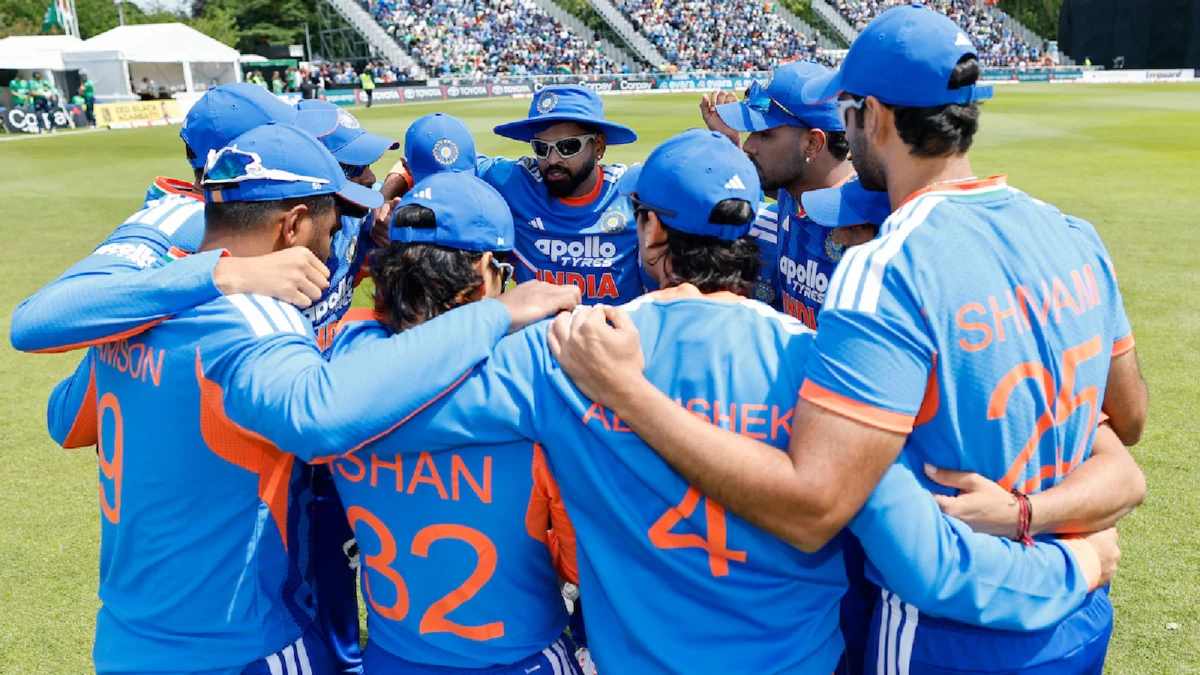
New Delhi, India – September 5, 2026 – In a move that has ignited considerable debate within Indian cricketing circles, the Board of Control for Cricket in India (BCCI) has announced a full-strength squad for the upcoming three-match T20 International series against Afghanistan, set to commence on September 13 in Delhi. The same formidable contingent is also slated to represent India at the Asian Games in Japan later this month, where they will aim to defend their gold medal. However, the decision has drawn sharp criticism, particularly concerning the inclusion of four key players—pace spearhead Jasprit Bumrah, Harshit Rana, Nitish Kumar Reddy, and Washington Sundar—who are returning from injuries and are yet to prove their full match fitness.
The selection committee’s choice to deploy what many consider India’s primary T20 ensemble, especially against an opponent often viewed as an opportunity for experimentation, has raised eyebrows. This strategy comes on the heels of a disappointing European tour where India, under the captaincy of Shreyas Iyer, suffered twin series defeats against Ireland and England, losing all six completed matches. This stark contrast to a dominant 3-0 whitewash of Zimbabwe by a second-string unit in July has fueled arguments that the selectors are prioritising immediate results and reputation over long-term player development and strategic squad rotation.
A Chronology of Recent Form and Controversial Decisions
The path leading to this contentious squad announcement is marked by a series of contrasting performances and evolving team strategies.
June 2026: The European Setback
The initial months of the 2026 cricketing calendar saw India embarking on a challenging tour of Europe. Led by Shreyas Iyer, a promising but relatively new captain in the T20 format, the team faced Ireland and England in back-to-back three-match T20I series. Expectations were high, but the results were far from satisfactory. India succumbed to a 0-3 defeat against Ireland, a team often considered an underdog, followed by another disheartening 0-3 whitewash against England. Across these six completed matches, the Indian squad struggled to find rhythm, with batting collapses and inconsistent bowling performances plaguing their campaign. These losses, particularly the clean sweep against Ireland, sent ripples of concern through the cricketing establishment and among the passionate Indian fan base.
July 2026: The Zimbabwe Redemption
In a stark contrast to the European debacle, a different narrative unfolded in July. The BCCI opted to send a second-string unit, comprising a mix of fringe players and promising youngsters, to Zimbabwe for another three-match T20I series. Free from the pressure of established stars and with a clear mandate to perform and stake their claims, this younger squad delivered an emphatic performance, sweeping the series 3-0. The comprehensive victory not only boosted the morale of the team but also highlighted the depth of talent within India’s cricketing pipeline, prompting many to advocate for more opportunities for these emerging players.
Early September 2026: The Squad Announcement
Against this backdrop of contrasting fortunes, the BCCI’s national selection committee unveiled the squad for the Afghanistan series and the Asian Games. The inclusion of stalwarts and returning injured players like Jasprit Bumrah, alongside other key figures, signaled a clear intent to field the strongest possible lineup. This decision, however, immediately sparked a fierce debate, with former players and pundits questioning the rationale, particularly in light of the previous European losses and the subsequent success of the second-string unit. The perceived U-turn from experimentation to a conservative, "win-at-all-costs" approach became the focal point of the criticism.
Krishnamachari Srikkanth Leads the Charge Against "Fear-Driven" Selection
Former India captain and chief selector, Krishnamachari Srikkanth, has emerged as one of the most vocal critics of the recent squad selection. Speaking passionately on his YouTube channel, Srikkanth minced no words, lambasting the decision as a "mistake" driven by apprehension rather than strategic foresight.
H3: A Reactionary Move Post-European Losses
Srikkanth unequivocally stated that the selection committee’s decision was a direct reaction to the team’s dismal performance in Ireland and England. "After the series losses in Ireland and England, the selectors have decided not to take a chance and picked a full-strength squad for Afghanistan. They are going all guns blazing, but this is a mistake. It’s against teams like Afghanistan that you should try out youngsters. Instead, you’ve picked a full-strength squad out of fear," he asserted. His strong words suggest that the selectors, perhaps under pressure to deliver immediate positive results and restore confidence, have veered away from a more progressive selection philosophy. He further noted the similarity of this squad to the one that toured England, implying a lack of fresh thinking or adaptation. "It feels like a desperation move after the Ireland and England losses. But this squad is almost the same as the one they picked for England."
H3: Missed Opportunity for Young Talent
A central pillar of Srikkanth’s critique revolves around the missed opportunity to blood youngsters. He argued that series against teams like Afghanistan, while competitive, traditionally serve as ideal platforms to test the mettle of emerging players, providing them with crucial international exposure without the intense pressure of a marquee series. By deploying a full-strength squad, the BCCI is, in his view, inadvertently stifling the development pipeline. The success of the second-string unit against Zimbabwe only amplified this argument, demonstrating that India possesses a deep bench capable of delivering results. Denying these promising talents further opportunities could impede their growth and delay the identification of future national team regulars.
H3: The Perilous Question of Match Fitness
Perhaps the most scathing aspect of Srikkanth’s criticism targets the inclusion of four players—Jasprit Bumrah, Harshit Rana, Nitish Kumar Reddy, and Washington Sundar—who are reportedly still recovering from injuries and have not yet proven their match fitness. "These four have not proved match-fitness. So on what basis are they subject to fitness? Just because you prove your fitness at the Bengaluru CoE, are you fit? That’s how Harshit Rana went to England, and then what happened to him there? So match-fitness is important," Srikkanth questioned pointedly.
He highlighted the crucial distinction between achieving fitness benchmarks at the National Cricket Academy (NCA) or Centre of Excellence (CoE) in Bengaluru and demonstrating actual match readiness. The physical and mental demands of competitive international cricket are vastly different from training simulations. The example of Harshit Rana, who reportedly struggled with fitness issues during the England tour despite prior CoE clearance, serves as a stark reminder of the risks involved. Rushing players back into action without adequate competitive mileage not only jeopardises their own recovery but also potentially compromises the team’s performance and risks aggravating existing injuries. While acknowledging the talent of players like Harshit Rana and Nitish Kumar Reddy, Srikkanth’s concern was purely about their readiness. "This is not a question of ability. Harshit Rana has proved to be a very good bowler in T20s, and Nitish Kumar Reddy is brilliant in the short format. But why pick them without match-fitness being proven is the question."
Supporting Data and Contextual Insights
The debate around player selection and fitness is not new in Indian cricket. Over the years, there have been numerous instances where players have been rushed back from injury, sometimes with adverse consequences. The rigorous demands of a packed international schedule, coupled with the pressure to perform, often create a challenging environment for both players and selectors.
The Match Fitness Conundrum:
Medical and sports science experts consistently emphasise that ‘match fitness’ is a multi-faceted concept that goes beyond simply passing a Yo-Yo test or completing rehabilitation exercises. It involves regaining game-specific strength, agility, endurance, and, crucially, the mental resilience to perform under pressure. A player might be physically fit but lack the rhythm, timing, and confidence that only competitive matches can provide. Including players who are "subject to fitness" introduces an element of uncertainty into the squad, potentially disrupting team combinations and strategy closer to the series.
The Dual Mandate: Afghanistan Series and Asian Games:
The decision to field the same squad for both the Afghanistan T20I series and the Asian Games adds another layer of complexity. The Asian Games, while not traditionally a premier cricketing event, carries significant national prestige, especially for defending a gold medal. This dual objective might explain the selectors’ inclination towards a more experienced and ‘stronger’ squad, aiming to secure success on both fronts. However, it also means that should any of the returning injured players suffer a setback during the Afghanistan series, it could jeopardise India’s Asian Games campaign. The "away" series against Afghanistan, though played in Delhi, offers a valuable opportunity for team cohesion and fine-tuning before the multi-sport continental event.
Shreyas Iyer’s Captaincy and Performance:
Shreyas Iyer, a talented middle-order batsman, has been at the helm during a challenging period. While his individual batting has often been commendable, the team’s collective performance under his leadership in Ireland and England has been a point of concern. This string of losses likely put immense pressure on the selection committee and team management to demonstrate a decisive return to winning ways. The decision to retain Iyer as captain for the upcoming assignments, despite the European setbacks, suggests continued faith in his leadership abilities, but it also places him under increased scrutiny.
Official Responses and Potential BCCI Rationale (Inferred)
As of the latest reports, the BCCI and the national selection committee have not issued a formal statement directly addressing Krishnamachari Srikkanth’s criticisms or providing an explicit justification for their selection choices. However, based on common cricketing wisdom and past precedents, several rationales can be inferred for the board’s approach:
H3: Prioritising the Asian Games Gold Medal Defense:
The Asian Games gold medal is a significant national honour, and defending it would be a major feather in the cap for Indian cricket. The BCCI might view the Afghanistan series as an essential preparatory ground for the Asian Games. Fielding a full-strength, cohesive unit allows the team to gel, fine-tune strategies, and build momentum ahead of the continental competition. The emphasis here would be on ensuring the best possible chance of securing the gold, making experimentation a secondary concern.
H3: Rebuilding Confidence and Momentum:
The back-to-back series losses in Ireland and England would have undoubtedly impacted team morale and public perception. The selectors might believe that fielding a strong team against Afghanistan is crucial to regain winning momentum and restore confidence, both within the squad and among fans. A decisive victory against Afghanistan could serve as a psychological boost, erasing the memory of the European tour and setting a positive tone for future assignments.
H3: Integrating Key Players Back into the Fold:
For players like Jasprit Bumrah, who are crucial to India’s long-term plans, the Afghanistan series offers a controlled environment to reintegrate them into international cricket. While match fitness is a concern, the selectors might be banking on the quality of opposition and the relatively shorter duration of the series to ease these players back without excessive strain. This approach allows them to assess the players’ form and fitness firsthand in a competitive setting before more high-stakes encounters. The CoE clearances would likely serve as a baseline, with the series acting as the final litmus test.
H3: Strategic Squad Cohesion for Future Challenges:
With various major tournaments on the horizon (though not explicitly mentioned in the original article, this is a general cricketing context), the BCCI might be looking to build a stable core T20 squad. Consistently playing the same group of players, especially the "full-strength" contingent, fosters better understanding, communication, and strategic alignment, which are vital for success in multi-nation tournaments.
Implications and Future Outlook
The current selection decision carries several significant implications for Indian cricket, impacting player development, team strategy, and the overall philosophy of squad management.
H3: Impact on Bench Strength and Youngsters:
The most immediate implication is the potential stagnation of the player development pipeline. If opportunities against teams like Afghanistan are consistently reserved for established players, the pool of internationally experienced youngsters will remain limited. This could create a gap between the senior team and the emerging talent, making future transitions more challenging. The success of the Zimbabwe tour demonstrated that India has a rich talent pool, and failing to nurture it through consistent international exposure could be a strategic misstep.
H3: Risk of Re-injury and Player Burnout:
Rushing players back from injury without adequate match practice poses a tangible risk of re-injury. For key players like Jasprit Bumrah, whose fitness has been a recurring concern, another setback could have severe long-term consequences for both the player and the team. Furthermore, maintaining a "full-strength" squad for an extended period across multiple series and tournaments increases the risk of burnout, especially for multi-format players.
H3: Pressure on the Selected Squad:
The decision to field a full-strength squad, particularly after recent losses, places immense pressure on the players and the captain, Shreyas Iyer. Anything less than a dominant performance against Afghanistan will likely intensify scrutiny and criticism. This "win-at-all-costs" mentality, while understandable, can sometimes stifle individual expression and tactical flexibility. The Asian Games also present a high-pressure scenario, where the expectation will be nothing less than gold.
H3: Redefining Selection Philosophy:
This episode could force the BCCI to re-evaluate its overarching selection philosophy for T20 cricket. Is the primary goal to win every series, regardless of the opponent, or to strategically build a robust, future-proof squad through calculated experimentation? The balance between immediate success and long-term vision is a perennial challenge, and the current debate highlights the tension between these two objectives. The outcome of the Afghanistan series and the Asian Games, both in terms of results and player fitness, will undoubtedly influence future selection strategies.
H3: Fan and Media Scrutiny:
The passionate Indian cricketing fanbase and an ever-vigilant media will be closely watching the performance of this squad. Any missteps, particularly regarding player fitness or a lack of decisive victories, will be met with intense scrutiny. The BCCI’s perceived lack of transparency or a clear, articulated strategy could further fuel public debate and criticism.
In conclusion, the BCCI’s decision to deploy a full-strength squad for the Afghanistan T20I series and the Asian Games is a high-stakes gamble. While it reflects a clear intent to secure immediate victories and defend national honours, it simultaneously invites questions about player welfare, the nurturing of young talent, and the overarching strategic vision for Indian cricket in the shortest format. As the series against Afghanistan draws near, all eyes will be on Delhi, not just for the cricketing action, but also for the unfolding implications of this contentious selection.
