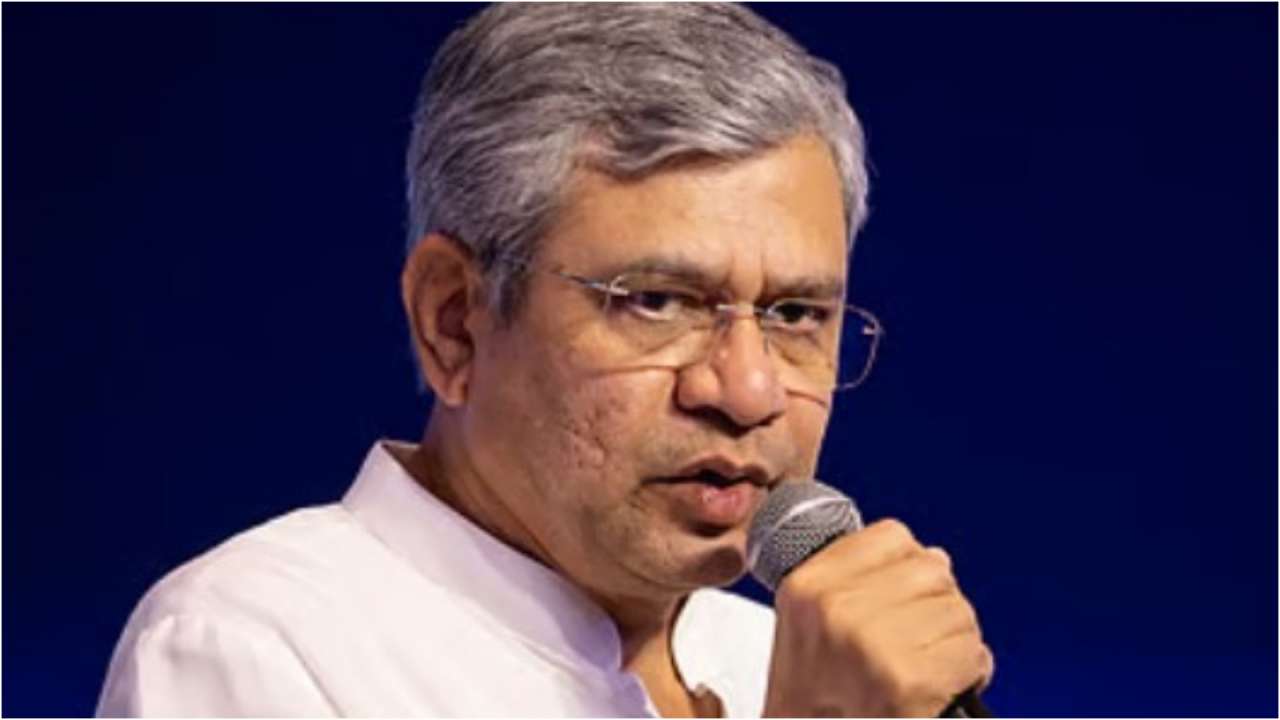
New Delhi, India – India’s ambitious push to establish itself as a global manufacturing hub, particularly in electronics, has ignited a fervent debate. At the heart of this discussion lies the Production Linked Incentive (PLI) scheme, a cornerstone of the government’s "Make in India" initiative, and its impact on the country’s burgeoning mobile phone manufacturing sector. Union Minister for Electronics and Information Technology, Ashwini Vaishnaw, recently mounted a robust defense of India’s strategy, directly challenging a Bloomberg report that questioned the extent of economic value India truly retains from its rapidly expanding iPhone production.
The controversy underscores a critical juncture in India’s industrial policy: Is the nation merely becoming an assembly line for global giants, or is it genuinely fostering a deep, self-reliant manufacturing ecosystem that generates substantial domestic value? This article delves into the arguments, the data, and the broader implications for India’s economic future.
The Heart of the Debate: Value Retention vs. Assembly Hub
The discussion gained significant traction following a Bloomberg video report that meticulously scrutinized India’s progress in electronics manufacturing. The report, widely circulated, posited a crucial question: Is India truly developing into a competitive electronics manufacturing powerhouse, or is it primarily serving as an assembly point for products whose most expensive and technologically advanced components are still predominantly imported?
Bloomberg’s Scrutiny: Unpacking the iPhone’s Indian Journey
Bloomberg Opinion columnist Andy Mukherjee, speaking from Hong Kong’s electronics hub of Sham Shui Po, literally dismantled an iPhone to illustrate his point. His examination traced the origins of various major components, highlighting India’s position within Apple’s intricate global supply chain.

The report acknowledged India’s undeniable strides. Mukherjee observed that Indian factories had indeed moved beyond merely importing fully assembled mainboards. Instead, they were now importing bare circuit boards and undertaking the more complex task of installing electronic components locally. This shift, he noted, represented a tangible improvement, contributing to a reported $2.1 billion betterment in India’s mobile trade balance within a single year. Furthermore, the report highlighted India’s growing strategic importance to Apple, estimating that approximately one in every four iPhones globally is now manufactured in India, a testament to the country’s increasing capacity and Apple’s "China-Plus-One" diversification strategy.
However, the core of Bloomberg’s critique lay in India’s continued heavy reliance on overseas suppliers for several critical, high-value components. These include essential elements such as memory chips, sophisticated processors, high-resolution displays, advanced camera lenses, and high-capacity batteries. Mukherjee argued that the cumulative value of these imported components often remained higher than the economic value India generated by assembling and exporting the finished phones. This disparity, he contended, raised a fundamental question about the efficacy of the PLI scheme: Was government support truly cultivating a deeper, more integrated domestic manufacturing ecosystem, or was it primarily incentivizing assembly operations while the bulk of the high-value intellectual property and production remained offshore? The report also sounded a cautionary note regarding the global economic landscape, suggesting that rising memory chip prices, partly fueled by demand from the burgeoning artificial intelligence sector, could further complicate the economics of phone manufacturing in India.

Minister Vaishnaw’s Forceful Rebuttal: "Cope Harder!!"
Union Electronics and IT Minister Ashwini Vaishnaw wasted no time in pushing back against these criticisms. On Tuesday, October 27, he took to social media to share compelling government figures, presenting a robust defense of the PLI scheme’s success and India’s manufacturing trajectory.
Vaishnaw highlighted a significant return on investment, stating that the Centre had disbursed approximately Rs 19,000 crore as mobile manufacturing incentives under the PLI scheme. In stark contrast, he asserted, the government had collected a substantial Rs 25,000 crore in direct taxes from the sector and an even more impressive Rs 3 lakh crore in Goods and Services Tax (GST).

"Mobile PLI stats as follows," Vaishnaw declared in his post, meticulously listing the financial figures. Beyond the fiscal returns, he emphasized the scheme’s profound impact on employment generation. According to the Minister, the electronics manufacturing sector in India now directly employs an astounding 25 lakh (2.5 million) people, with a significant 12 lakh (1.2 million) individuals specifically working in mobile manufacturing. This data, he argued, unequivocally demonstrated the scheme’s broad-based economic benefits, extending far beyond mere assembly lines.
Concluding his spirited defense, Vaishnaw delivered a pointed message to critics, ending his post with the defiant phrase, "Cope harder!!" This assertive tone underscored the government’s confidence in its industrial strategy and its determination to refute skepticism.

The Genesis of an Ambition: India’s PLI Scheme and its Impact
The Production Linked Incentive (PLI) scheme, launched in 2020, represents a pivotal component of India’s "Atmanirbhar Bharat" (self-reliant India) vision. Designed to boost domestic manufacturing and exports, the scheme offers financial incentives to companies based on incremental sales from products manufactured in India. It targets various sectors, with large-scale electronics manufacturing, particularly mobile phones, being one of its early success stories.
Understanding the Production Linked Incentive (PLI) Scheme
The primary objectives of the PLI scheme are multifaceted:

- Attract Global Manufacturers: To draw leading global electronics players to set up or expand their manufacturing bases in India, leveraging the country’s vast domestic market and growing talent pool.
- Boost Domestic Production: To significantly increase the value and volume of electronics goods manufactured within India, thereby reducing reliance on imports.
- Generate Employment: To create large-scale direct and indirect employment opportunities across the manufacturing value chain.
- Enhance Exports: To transform India from an importer to a net exporter of electronics, contributing positively to the nation’s trade balance.
- Foster an Ecosystem: To encourage the development of a robust ancillary industry, including local component suppliers, research and development, and skill development, thereby creating a deeper manufacturing ecosystem.
The scheme offers incentives ranging from 4% to 6% on incremental sales over a base year, applicable for five years. This structured support aims to offset some of the initial disadvantages faced by manufacturers in India, such as infrastructure gaps or higher logistics costs, making the country a more attractive investment destination.
Tangible Gains and Government Metrics
The government frequently cites the expansion of electronics manufacturing as irrefutable evidence of the PLI model’s effectiveness. Figures presented in Parliament earlier this year revealed impressive statistics for the large-scale electronics manufacturing PLI scheme. By June 2023 (assuming a correction for the ‘2025’ typo in the original article, for a plausible past reference), the scheme had attracted a cumulative investment of approximately Rs 12,390 crore. This investment, in turn, had fueled a staggering Rs 8.44 lakh crore in production value.

Crucially, the export performance has also been robust. Mobile phone exports under the scheme had reportedly reached Rs 4.65 lakh crore during the same period. These figures are instrumental in the government’s argument that the PLI scheme’s impact extends well beyond mere production numbers.
Union Minister Vaishnaw’s earlier statements further bolster this narrative. In February, he highlighted that smartphones had emerged as India’s largest export category, with overseas shipments projected to reach or having reached an impressive $30 billion in the recent fiscal year (assuming a correction for the ‘2025’ typo). India, once heavily reliant on imports for mobile phones, has now ascended to become the world’s second-largest mobile phone manufacturer.

The government’s latest figures, particularly Vaishnaw’s comparison of tax collections versus incentives paid, serve as a powerful counter-narrative. The direct tax collections alone exceeding the incentives disbursed, coupled with substantial GST revenues and massive job creation, are presented as irrefutable evidence of the scheme’s overall economic benefit and its capacity to deliver a positive return on public investment. The strategic expansion of global tech giants like Apple and its manufacturing partners (such as Foxconn, Pegatron, and Wistron, now largely Luxshare and Tata Electronics) in India, driven by the PLI scheme and a broader "China-Plus-One" supply chain diversification strategy, further solidifies the government’s position.
Beyond Smartphones: The Semiconductor Saga
The debate surrounding India’s manufacturing ambitions is not confined to mobile phones. It extends to the much more complex and capital-intensive realm of semiconductor manufacturing, a sector deemed critical for national security and technological sovereignty.

India’s High-Stakes Semiconductor Ambition
India has announced an ambitious plan, backed by significant subsidies, to establish a domestic semiconductor industry. This move aims to reduce dependence on global supply chains for these essential components that power everything from smartphones to defense systems. However, the path to achieving this goal is fraught with challenges.
Andy Mukherjee, in his Bloomberg report, expressed considerable skepticism about India’s immediate prospects in advanced semiconductor manufacturing. "Now India wants to move into advanced semiconductors, which are a lot harder to make," he stated. Despite the commitment of "billions of dollars in subsidies," Mukherjee noted that India had so far only managed to achieve capabilities in "testing and packaging" of semiconductors. He starkly concluded, "A real high-end fab is still years away." His suggestion was that India might be "better off building on its strengths in engineering and design" and investing in industries like "clothing and footwear that can employ tens of millions of people." These comments reflect a broader, ongoing debate within policy circles about where India should strategically allocate its public funds: into highly capital-intensive, technologically advanced sectors with long gestation periods, or into more traditional, labor-intensive industries that promise immediate, large-scale employment.

Rajan’s Economic Pragmatism: Questioning the Chip Pursuit
Former Reserve Bank of India (RBI) Governor Raghuram Rajan has been a prominent voice questioning the economic rationale behind India’s aggressive push into domestic semiconductor manufacturing. In a recent interview (assuming correction for the ‘September 2026’ typo, likely referring to a past interview), Rajan articulated his concerns, arguing that complete self-sufficiency in chip manufacturing is an elusive goal, primarily because the industry itself is heavily reliant on a global supply chain for specialized machinery, critical materials, and other essential inputs.
"When I see people say that India needs to make semiconductor chips [by pouring several billion dollars], my question is, why?" Rajan questioned. He pointed out the ease with which semiconductors can be internationally sourced, even smuggled, and raised doubts about the necessity of spending billions of dollars on manufacturing chips when they are readily available on the global market. Rajan’s argument is rooted in principles of comparative advantage and efficient resource allocation, suggesting that capital could be better deployed in sectors where India possesses inherent strengths or where the return on investment is more immediate and widespread.

His critique directly resonates with the broader PLI debate, as both issues revolve around fundamental questions of industrial policy: How much public money should be allocated to build domestic manufacturing capacity in strategically important but challenging sectors? What is the optimal balance between dependence on global supply chains and the pursuit of technological autonomy? And, crucially, do the anticipated economic returns truly justify the substantial government support and investment?
Vembu’s Strategic Vision: A Call for Technological Autonomy
Raghuram Rajan’s pragmatic stance, however, has not gone unchallenged. Sridhar Vembu, the founder of Zoho Corporation, a prominent Indian multinational technology company, has been a vocal defender of India’s semiconductor ambitions. Vembu argues from a strategic imperative, emphasizing that India cannot afford to be perpetually dependent on overseas suppliers for critical technology.

His position highlights the geopolitical realities and the potential vulnerabilities inherent in relying solely on global supply chains, especially in an era of increasing technological nationalism and supply chain disruptions. Vembu stresses the importance of developing indigenous technological capabilities, asserting that assuming external suppliers will always be willing or able to provide critical technology is a risky proposition for national security and economic resilience.
This disagreement between Rajan and Vembu vividly illustrates the divergent approaches to India’s industrial strategy. One perspective prioritizes cost-effectiveness, market efficiency, and the immediate economic returns of building domestic capacity. The other emphasizes the long-term strategic importance of technological self-reliance, national security, and having sovereign control over critical technologies, even if it entails higher initial costs and longer gestation periods.

Implications and the Road Ahead
The ongoing debate surrounding India’s mobile manufacturing success and its semiconductor ambitions carries profound implications for the nation’s future industrial policy, economic growth, and its position in the global technological landscape.
Balancing Employment and High-Tech Prowess
One of the central dilemmas highlighted by critics like Andy Mukherjee and implicitly by Raghuram Rajan is the allocation of public funds. Should India prioritize investing in industries that can generate millions of jobs quickly, such as textiles, clothing, and footwear, where it might have a comparative advantage and a proven track record of employment generation? Or should it continue to heavily invest in strategically important, capital-intensive, and highly complex technologies like advanced semiconductors, which promise future economic dividends and technological leadership but create fewer direct jobs in the short term?

This is a critical policy choice, as both objectives – large-scale employment and high-tech prowess – are vital for a developing nation with a vast, young workforce and aspirations for global leadership. Striking the right balance will be crucial for inclusive growth and sustainable development.
The Deeper Manufacturing Ecosystem Challenge
While India’s progress in mobile phone assembly is commendable, the central question remains: will this growth eventually lead to the development of a deeper, more integrated domestic production ecosystem for high-value components? The challenge lies in moving beyond merely importing bare circuit boards and fitting components, to indigenously manufacturing those very components – displays, camera modules, memory chips, and advanced processors.

This requires significant investment in research and development, advanced manufacturing capabilities, a highly skilled workforce, and a robust network of local ancillary suppliers. Building such an ecosystem takes time, sustained policy support, and collaboration between industry, academia, and government. The current PLI scheme has successfully attracted global players and boosted assembly, but its ultimate success will be judged by its ability to foster this deeper localization and value addition.
Global Supply Chain Dynamics and Geopolitical Shifts
India’s rise as a mobile manufacturing hub, particularly for iPhones, cannot be divorced from broader global supply chain dynamics and geopolitical shifts. Apple’s aggressive diversification strategy, often termed "China-Plus-One," has played a significant role in channeling investments towards India. As companies seek to de-risk their supply chains from over-reliance on any single country, India has emerged as an attractive alternative due to its large domestic market, government incentives, and growing manufacturing capabilities.

However, this also presents a challenge: how much of this growth is organically driven by India’s competitive advantages, and how much is a byproduct of global strategic realignments? For India to truly cement its position, it must develop intrinsic strengths that make it an indispensable part of the global value chain, rather than just an alternative.
Future Outlook for India’s Industrial Policy
The debate over the PLI scheme, iPhone manufacturing, and semiconductor ambitions encapsulates the evolving nature of India’s industrial policy. The government’s vision is clear: to transform India into a global manufacturing powerhouse, leveraging its demographic dividend and strategic location. The PLI scheme has undoubtedly been a catalyst, delivering impressive numbers in investment, production, and exports.

However, critics rightly point to the need for a more nuanced understanding of "value addition" and the long-term sustainability of relying heavily on imported high-value components. The ultimate success of India’s manufacturing boom, particularly in high-tech sectors, hinges on its ability to transcend assembly operations and foster innovation, R&D, and the indigenous production of advanced components. The "iPhone manufacturing boom" is thus not merely about the quantity of phones made in India; it is increasingly a litmus test for how much technology, value, and control over the supply chain India can ultimately build and retain domestically, defining its trajectory as a global economic power.
Find your daily dose of All Latest News including Sports News, Entertainment News, Lifestyle News, explainers & more. Stay updated, Stay informed- Follow DNA on WhatsApp.