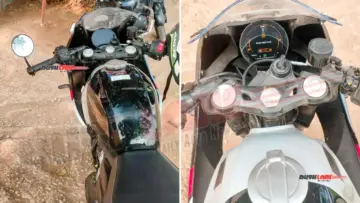
The Indian automotive landscape is currently undergoing a seismic shift, transitioning from internal combustion engines to electric propulsion at a pace that has surprised global analysts. While the passenger vehicle segment has seen steady growth, the real revolution is simmering in the commercial and two-wheeler sectors. Within this "electric umbrella," a new sub-genre is emerging: the dedicated electric cargo scooter. Leading this charge is a Pune-based startup, Qargos, with its flagship innovation, the Qargos F9. Recently spotted undergoing rigorous testing on public roads, the F9 is not merely a scooter with a basket; it is a fundamental reimagining of what a delivery vehicle can be.
Main Facts: A Paradigm Shift in Cargo Mobility
The Qargos F9 represents a radical departure from traditional scooter architecture. In a market where most "cargo" scooters are simply standard electric models fitted with aftermarket racks or reinforced pillion seats, the F9 is a purpose-built machine designed from the ground up to prioritize volume and utility.
The 225-Liter Breakthrough
The most striking feature of the Qargos F9—and the primary reason it has garnered significant attention during its testing phase—is its massive 225-liter integrated boot space. To put this into perspective, this volume exceeds the trunk capacity of the Maruti Suzuki Alto (approximately 177 liters) and rivals that of the Maruti Suzuki S-Presso. This is an unprecedented achievement for a two-wheeled vehicle.
Specialized Design and Load Capacity
Unlike traditional scooters where the rider sits at the front and cargo is balanced precariously at the rear, the Qargos F9 utilizes a "long-nose" configuration. The cargo compartment is situated directly in front of the rider, occupying the space where one would typically find the floorboard and apron. This design ensures that the weight of the cargo is distributed centrally and low, which is critical for maintaining stability when hauling its maximum rated payload of 120 kg.
Aesthetic and Functional Features
The spy shots reveal a vehicle that adheres strictly to the philosophy of "function over form." The F9 features:

- Unique Silhouette: A long wheelbase necessitated by the massive storage box.
- Lighting: A circular LED headlamp mounted at the leading edge of the cargo box, complemented by sleek LED turn indicators.
- Chassis and Suspension: Robust RSU (Right Side Up) telescopic front forks and large wheels (estimated to be 14 inches) to handle the increased weight and provide better stability over Indian road undulations.
- Braking: A front disc brake system to ensure adequate stopping power for a fully loaded vehicle.
Chronology: From Concept to the Streets of Pune
The journey of the Qargos F9 is a testament to the burgeoning hardware startup ecosystem in Pune, often referred to as the "Detroit of India."
The Inception Phase
Qargos Electric Mobility was founded with the specific intent of solving the inefficiencies of last-mile delivery. The founders identified that delivery partners often struggled with oversized bags that compromised safety and balance. The F9 was conceived as a solution that integrated the storage into the vehicle’s DNA.
Iterative Testing
The F9 has been in development for several years, moving through various prototyping stages. The initial designs focused on structural integrity—ensuring that a scooter with such a long front end could still navigate tight city traffic and maintain a reasonable turning radius.
Recent Sightings
The latest round of "spy shots" shows a vehicle that looks remarkably close to production-ready. Unlike earlier test mules, the current iteration features finished body panels, integrated lighting, and a sophisticated compartmentalization system within the boot. The frequency of these sightings suggests that Qargos is in the final stages of data collection before seeking ARAI (Automotive Research Association of India) certification.
Supporting Data: Technical Specifications and Performance
While the design is the talking point, the engineering under the skin of the Qargos F9 is what will determine its commercial viability.

Battery and Range
The F9 is equipped with a 6.1 kWh lithium-ion battery pack. This is significantly larger than the batteries found in premium passenger electric scooters like the Ather 450X or the Ola S1 Pro, which typically range between 3 and 4 kWh. This high capacity is necessary to offset the aerodynamic drag of the cargo box and the weight of the payload. Qargos claims a real-world range of approximately 150 km on a single charge—a crucial figure for delivery professionals who often cover 100-120 km in a single shift.
Powertrain
Powering the rear wheel is a 3.4 kW BLDC (Brushless DC) hub motor. While this might seem modest compared to high-performance electric motorcycles, it is tuned for high torque to ensure the scooter can climb inclines even when fully loaded with 120 kg of goods. The top speed is capped at 80 km/h, which is more than sufficient for urban logistics where traffic density usually limits average speeds to 25-30 km/h.
Versatility of the 225L Space
The storage area is not just a hollow box. The latest test mules show a compartmentalized interior with hinged doors, allowing for organized storage. Qargos has indicated that this space can be customized for various B2B (Business-to-Business) applications:
- Standard Logistics: For e-commerce giants like Amazon or Flipkart.
- Cold Chain: Modified with insulation and cooling units for the delivery of perishables or pharmaceuticals.
- Mobile Store: Configured for "retail on wheels" applications.
- Food Delivery: Insulated compartments to keep meals hot during transit.
Official Responses and Strategic Vision
While Qargos has remained relatively tight-lipped regarding the exact launch date and pricing, statements from the startup and industry insiders suggest a strategic focus on the B2B sector rather than individual consumers.
Targeting the Fleet Market
The company’s leadership has emphasized that the F9 is designed to lower the "Total Cost of Ownership" (TCO) for logistics companies. By providing a vehicle that can carry twice the volume of a standard scooter, companies can potentially reduce the number of trips required or consolidate two delivery routes into one.

Safety and Ergonomics
Qargos has addressed concerns regarding the unusual riding position. The handlebar is positioned further back, closer to the rider, creating an ergonomic triangle that resembles a cruiser motorcycle more than a traditional scooter. This allows the rider to sit upright, reducing fatigue during long shifts. The illuminated cargo box also ensures that delivery partners can find items easily during nighttime operations.
Implications: The Future of Urban Logistics in India
The introduction of the Qargos F9 could have far-reaching implications for the Indian economy and the environment.
1. Decarbonizing the Last Mile
The logistics sector is one of the largest contributors to urban air pollution. By providing a viable, high-capacity electric alternative to petrol-powered delivery bikes and small three-wheelers, the F9 could significantly reduce the carbon footprint of the e-commerce boom.
2. Bridging the Gap Between 2Ws and 3Ws
Historically, logistics companies had to choose between a nimble but low-capacity two-wheeler (scooter/bike) and a high-capacity but bulky three-wheeler (auto-rickshaw). The Qargos F9 creates a middle ground—it retains the lane-filtering capability and ease of parking of a scooter while offering the storage volume of a small car.
3. Impact on the Gig Economy
For delivery "partners" in the gig economy, the F9 offers a safer alternative to carrying 20-30 kg backpacks. By moving the load from the rider’s spine to the vehicle’s chassis, the F9 could reduce long-term health issues associated with delivery work, potentially leading to better rider retention for logistics firms.

4. Economic Efficiency
With a 150 km range and a 6.1 kWh battery, the cost per kilometer is expected to be a fraction of that of an internal combustion engine vehicle. In an industry where margins are razor-thin, the operational savings offered by the F9 could be the difference between a profitable and a loss-making delivery route.
Conclusion: A Bold Step Toward Specialized Mobility
The Qargos F9 is more than just a new electric scooter; it is a specialized tool designed for a specific economic purpose. Its "unusual" design is a brave rejection of aesthetic norms in favor of raw utility. As the vehicle nears its official launch, the eyes of the Indian automotive industry remain fixed on this Pune-based startup.
If the F9 successfully navigates the transition from test mule to production reality, it could set a new benchmark for commercial two-wheelers globally. In the crowded streets of India’s metros, where every inch of space and every drop of fuel counts, the Qargos F9 might just be the "right-sized" solution the logistics industry has been waiting for. The "box on wheels" is no longer a curiosity; it is a glimpse into the future of efficient, sustainable urban commerce.