

New Delhi, India – The landscape of India’s super-luxury residential market has undergone a seismic shift, with the ₹100 crore home emerging as the new aspirational zenith. This evolution signifies a dramatic departure from the past, where a ₹10 crore property was once the ultimate symbol of affluence, whispered about in hushed tones and associated with established wealth and sprawling estates. Today, the definition of ultra-luxury has been dramatically rewritten, driven by a new generation of buyers and an unprecedented elevation of amenities and exclusivity.
The Metamorphosis of Indian Luxury Real Estate
For decades, the pinnacle of Indian luxury real estate was synonymous with low-rise, sprawling bungalows. These coveted properties, often found in the leafy enclaves of Lutyens’ Delhi or along the scenic sea-fronts of Juhu, Mumbai, represented more than just a dwelling; they were a statement of legacy, a sanctuary from the world, and the embodiment of inherited wealth. The very notion of a ₹10 crore home conjured images of grandeur, of meticulously manicured gardens, long driveways, and imposing gates that demarcated a realm of profound status and privilege. Beyond this figure, real estate transactions often transcended mere commerce, entering the realm of myth and legend.
However, this long-held mythology has been decisively and rapidly rewritten. The Indian super-luxury residential market has quietly, yet decisively, crossed a threshold that even its most optimistic observers did not anticipate arriving so swiftly. The conversation that now dominates discussions among the country’s elite, often held in the discreet ambiance of upscale lounges over fine spirits, revolves around the ₹100 crore home. What is truly striking about this paradigm shift is not merely the astronomical price tag, but the extraordinary value proposition it now encompasses and, crucially, the evolving demographic of the buyers themselves.
From Bungalows to Sky-High Sanctuaries: The Evolution of Luxury Living
The traditional ideal of luxury, characterized by ample private space, a personal garden, a dedicated driveway, and a gate symbolizing a closed-off world, held sway for generations. Bungalows in prime locations like Lutyens’ Delhi and sea-facing residences in Mumbai’s Juhu were the ultimate symbols of aspiration for industrialists and scions of established fortunes. Yet, this exclusive club of inheritors no longer exclusively dictates the narrative of ultra-luxury.
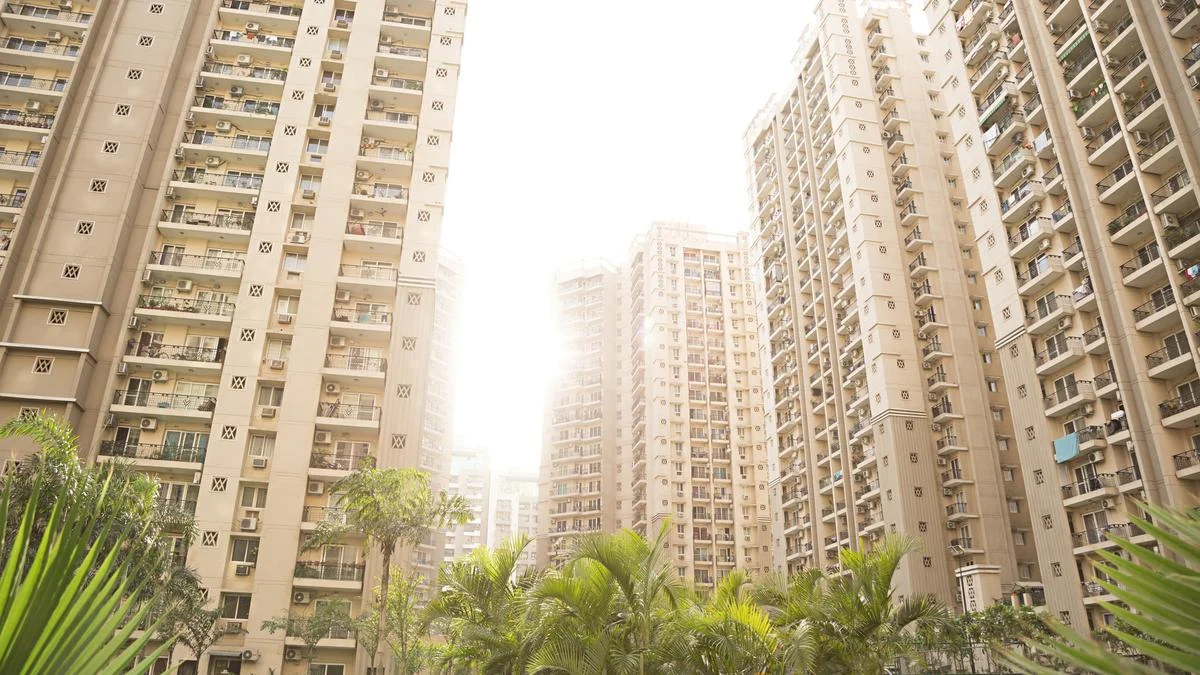
Today’s ₹100 crore homes are a stark departure from their bungalow predecessors. They are not low-rise structures but are instead sophisticated, sky-high residences occupying the uppermost floors of architecturally ambitious towers. These developments are engineered to create an immersive experience, where the world outside seems to recede, offering an unparalleled sense of elevation and seclusion. Imagine floor plates spanning an expansive 8,000 to 12,000 square feet, featuring private infinity pools that seemingly merge with the sky, climate-controlled wine cellars artfully concealed behind custom-built library walls, and smart home systems so advanced they can, with a touch of hyperbole, adjust the temperature of a perfectly chilled glass of whiskey.
The concept of mere "amenities" has been elevated to an entirely new stratum; they are now effectively "addresses within addresses." Residents can expect bespoke concierge services rivaling the finest five-star hotels globally, private cinema rooms for intimate screenings, dedicated wellness floors for holistic rejuvenation, and even helipads. Complementing these opulent features are elements catering to a more refined lifestyle, such as meticulously curated herb gardens and serene meditation pods. This holistic approach reflects the evolving needs and desires of the buyers, who are not simply wealthy but are often characterized by their restless energy, insatiable curiosity, and a profound zest for life.
A New Vanguard: The Rise of the Entrepreneurial Buyer
The defining characteristic of this new era of ultra-luxury real estate is the transformation of the buyer demographic. While the traditional bungalow offered expansive physical space, these contemporary towers provide a comprehensive ecosystem of luxury, convenience, and connectivity. A pivotal phrase that has quietly reshaped the very essence of India’s ultra-luxury housing market is "by invitation only."
When developers began implementing stringent vetting processes for access to certain projects, moving beyond mere financial capacity to a more qualitative selection, a significant shift occurred. These homes became undeniably more exclusive, but more importantly, the community of residents within them underwent a profound metamorphosis.
The long-standing monopoly of the "old guard" has been decisively broken. In their place stands a dynamic new cohort of buyers: the 35-year-old founder who successfully took a disruptive startup public, the entrepreneurial couple in their early forties who built a formidable direct-to-consumer brand from humble beginnings in a Gurugram garage, achieving an exit valuation that defied expectations, or the precocious young entrepreneur who, while thinking in quarterly growth metrics, possesses a long-term vision that spans decades.
These discerning buyers are not seeking a residence that resembles a static museum piece. Instead, they desire a dynamic space that serves as a potent catalyst, a "fuel" for their ambitions. They seek an environment where the palpable energy and momentum of their professional achievements seamlessly transition from their workplaces into their homes. They are not retiring into luxury; they are actively and vigorously accelerating into it, viewing their residences as extensions of their drive and success.
Gurugram Emerges as the Epicenter of the ₹100 Crore Market
When querying stakeholders in the Indian real estate sector about the current epicenter of the ₹100 crore market, the answer increasingly points towards Gurugram. Specifically, the Golf Course Road corridor has emerged as a transformative force, mirroring the impact of Mumbai’s Bandra-Kurla Complex on the financial landscape. Golf Course Road has transcended its geographical identity to become a "state of mind" for luxury living, drawing parallels with Dubai’s iconic Sheikh Zayed Road in its influence and prestige.
Mumbai’s Enduring Legacy and Shifting Dynamics
Historically, Mumbai’s Mumbai Metropolitan Region (MMR) has been the undisputed benchmark for India’s ultra-luxury real estate market, often standing as the nation’s sole credible player in this segment for an extended period. Even as recently as a decade ago, transactions exceeding ₹100 crore within the MMR were not an anomaly. However, the distribution of these high-value transactions has undergone a significant redistribution. In 2025, Mumbai’s luxury real estate market continued its upward trajectory, setting new records. Notable transactions include the acquisition of a ₹125 crore apartment at Oberoi 360 West in Worli by Rishubh Satiya, co-founder of Plix, and Piramal Realty’s successful closure of multiple deals exceeding ₹100 crore, including premium penthouses and duplex residences at its Piramal Mahalaxmi project in South Mumbai.
Bengaluru’s Nascent Steps and Gurugram’s Ascendancy
While Mumbai and Gurugram are leading the charge, Bengaluru is still in the nascent stages of its ultra-luxury market development. Even some of the city’s most high-profile recent transactions remain considerably below the ₹100 crore threshold. For instance, a luxury duplex penthouse at MAIA Estates’ 27 Summit project was acquired by Paresh Raja, CEO of Market Financial Solutions, for ₹54.38 crore. Similarly, in late 2024, Infosys founder N.R. Narayana Murthy purchased a second apartment in the same project for over ₹50 crore, underscoring that while Bengaluru’s luxury market is robust, it has yet to reach the ₹100 crore benchmark for individual residential sales.
In stark contrast, Gurugram has not only kept pace but has decisively surged ahead. DLF Camellias, a development that has quietly become the shorthand for the absolute pinnacle of Indian residential luxury over the past few years, has witnessed transactions that are rewriting the narrative of property values. Entrepreneur Rishi Parti is reported to have closed what is believed to be the highest-ever residential transaction in Gurugram within this project, a staggering ₹190 crore. This record-breaking sale not only set a new benchmark but unequivocally declared that Camellias operates in a league of its own, far surpassing existing market comparisons.
The Strategic Imperative: Value Over Vanity
Stripping away the superlatives and the sheer scale of the price tags, a fundamental observation emerges: the ₹100 crore home in contemporary India is not a mere display of vanity. It represents a meticulously considered, and often deeply strategic, investment made by individuals who have honed their careers by understanding the profound difference between mere price and intrinsic value.
These buyers are acquiring more than just bricks and mortar. They are investing in extraordinary real estate that offers spatial dimensions comparable to properties in Dubai or Singapore, finishes that rival the most sophisticated developments in London’s super-prime market, and amenities that have fundamentally redefined the very concept of residential living in India. Crucially, however, they are also investing in community. They are seeking proximity to a network of individuals who are actively building, innovating, and creating at a similar intellectual and professional altitude. In a nation where networks are paramount, the floor on which one resides has acquired a significance that extends far beyond the panoramic views it offers. Today’s luxury is no longer solely about exclusivity; it is about the potent combination of exclusivity with unparalleled excellence.
This, perhaps, is the most compelling and insightful aspect of the burgeoning ₹100 crore club. The door is indeed open, but it is a selective entrance, accessible only to those who truly comprehend the profound value and strategic implications of what they are stepping into.
The author is President and Country Head, eXp Realty India.
