

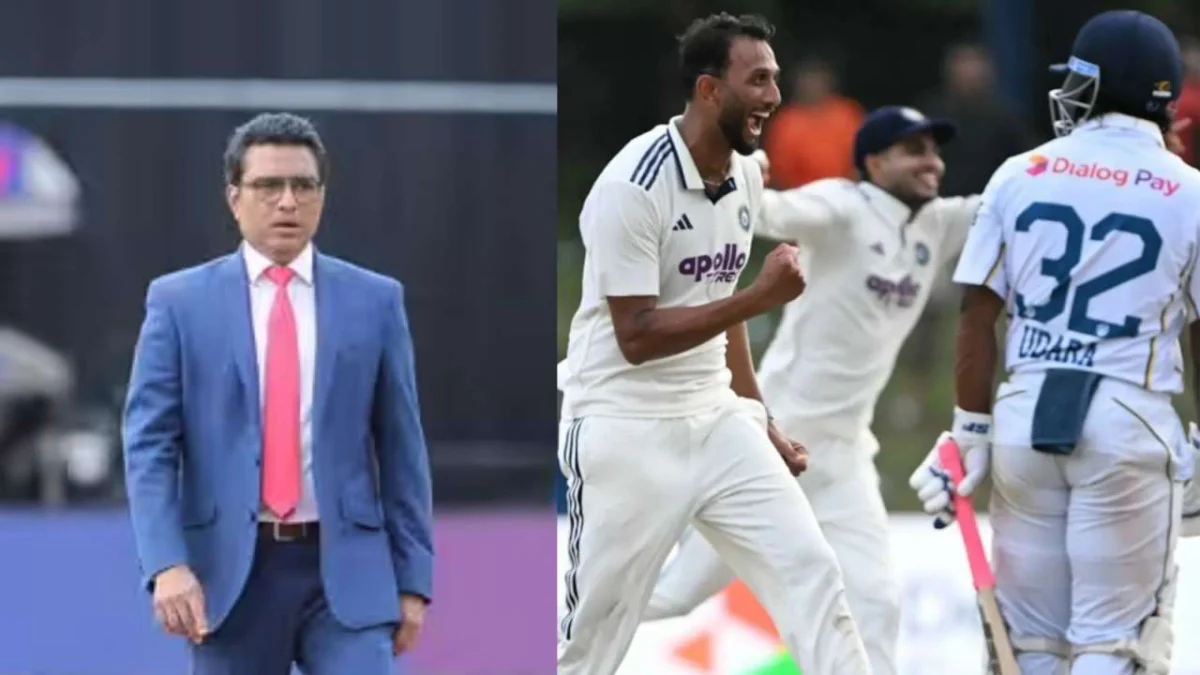
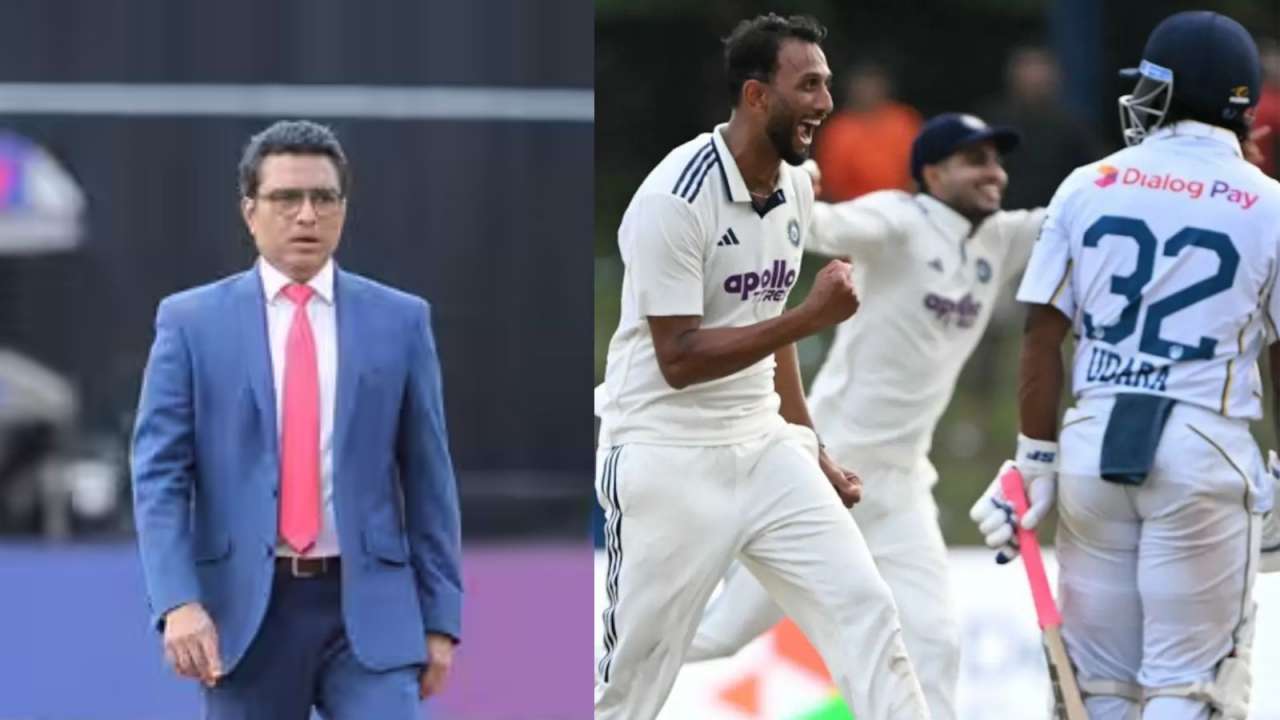
Colombo, Sri Lanka – Former Indian cricketer and renowned commentator Sanjay Manjrekar has sparked a debate following his strong criticism of the Sri Lankan cricket team’s conduct during the second Test against India in Colombo. On a rain-affected Day 2, as fading light became a contentious issue, Manjrekar publicly called Sri Lanka "unprofessional" for their persistent arguments with umpires, which he believed led to a crucial lapse in concentration and the subsequent dismissal of nightwatchman Prabath Jayasuriya. This incident has reignited discussions around player conduct, umpire discretion, and the psychological warfare inherent in Test match cricket.
The controversy unfolded as the day drew to a close, with Sri Lankan batters Prabath Jayasuriya and Kamil Mishara repeatedly expressing concerns about the deteriorating light conditions to the on-field umpires. Despite their appeals, the umpires opted to continue play, a decision that ultimately allowed India to press home an advantage, securing a vital wicket before stumps. Manjrekar, speaking on Sony Sports Network, did not mince words, suggesting that the Sri Lankan players’ focus had strayed from the game itself, leading to a critical error.
Chronology of Day 2: A Tense Battle Against Light and Rain
Day 2 of the second Test between India and Sri Lanka in Colombo was a stop-start affair, heavily influenced by intermittent rain and the eventual fading light. What began as a contest against the opposition soon evolved into a battle against the elements, testing the patience and strategic acumen of both teams.
Morning Session: Early Interruptions and Indian Resilience
The morning session commenced with an air of anticipation, but it wasn’t long before the familiar dark clouds gathered over the R. Premadasa Stadium. Rain, a recurring feature of subcontinental cricket, soon forced the players off the field, leading to an extended delay. These early interruptions, while frustrating for players and fans alike, often set the tone for the day, forcing teams to recalibrate their strategies. For India, who were likely in the field aiming to make inroads into Sri Lanka’s batting lineup (as per the context of taking late wickets), such delays can be a double-edged sword. While they offer a breather, they also break momentum. However, India’s approach, as later highlighted by Manjrekar, was one of proactive engagement, demonstrating an eagerness to resume play at the earliest opportunity. This subtle psychological pressure, according to Manjrekar, plays a significant role in influencing umpire decisions, especially when a "major player" like India is involved. Indian players were observed remaining on the field, signalling their readiness and desire to continue, even as ground staff diligently worked to remove covers and prepare the pitch. This visible determination, Manjrekar suggested, inadvertently put pressure on the umpires to consider every window of opportunity for play.
)
Afternoon Session: The Looming Darkness and Rising Tensions
As the rain eventually subsided and play resumed in the afternoon, the focus shifted back to the cricketing contest. Sri Lanka, likely battling to consolidate their innings and resist India’s bowling attack, found themselves increasingly challenged not just by the opposition’s skill but also by the rapidly dimming light. As the late afternoon progressed, the natural light began to fade, a common occurrence in day-only Test matches, particularly when rain has already eaten into playing time. It was during this period that the Sri Lankan batters, specifically Prabath Jayasuriya, who was likely playing a nightwatchman’s role, and Kamil Mishara, started to voice their concerns to the umpires. Their repeated appeals centred on the perceived inadequacy of the light, arguing that it had fallen below acceptable standards for safe and fair play. This back-and-forth between the players and officials began to build a palpable tension on the field, creating a distraction that Manjrekar would later pinpoint as a critical misstep. The umpires, however, maintained their stance, assessing the conditions to be still playable, thereby extending the session.
The Critical Juncture: Jayasuriya’s Dismissal Before Stumps
The decision by the umpires to continue play proved pivotal. With the light conditions remaining a point of contention, India’s bowlers pressed on, sensing an opportunity to exploit any perceived distraction or discomfort among the Sri Lankan batsmen. It was in these fraught circumstances that young left-arm spinner Manav Suthar delivered a crucial blow. The ball, reportedly a well-flighted delivery, found its mark, dismissing Prabath Jayasuriya shortly before the scheduled stumps. Jayasuriya, whose primary role as a nightwatchman is to shield frontline batters from the final overs of the day, failed to negate the delivery, falling victim to Suthar’s skill. This dismissal was not just another wicket; it was a moment deeply intertwined with the bad light controversy. Manjrekar’s subsequent critique heavily implied that Jayasuriya’s focus, perhaps influenced by the ongoing arguments over light and the frustration with the umpires, might have momentarily wavered, leading to the lapse that cost him his wicket. Manjrekar lauded Suthar for his "excellent delivery" and also praised pacer Prasidh Krishna for his efforts at the end of the day, highlighting India’s ability to capitalize on the challenging conditions and the mental state of the opposition. The late wicket served as a significant morale booster for India, concluding a rain-interrupted day on a high note and adding another layer of intrigue to the unfolding Test match.

Supporting Data: The Nuances of Bad Light in Cricket
The incident in Colombo underscores the complex and often subjective nature of bad light in cricket, a factor that has historically influenced outcomes and sparked countless debates. Understanding the rules and the psychological dimensions involved is crucial to appreciating Manjrekar’s strong stance.
ICC Regulations on Light Conditions
The International Cricket Council (ICC) Laws of Cricket provide guidelines regarding light conditions, but a significant degree of discretion remains with the on-field umpires. Law 2.7, which pertains to "Fitness for play," states that "the umpires shall be the sole judges of the fitness of the ground, weather, and light for play." While there isn’t a universally fixed lux (light intensity) level at which play must stop, the primary consideration is always player safety, particularly the batsmen’s ability to see the ball clearly and safely. Umpires typically use light meters to take readings throughout the day, establishing a benchmark. If the light subsequently deteriorates below a certain level from that benchmark, and batsmen express genuine concern for their safety or ability to play, play can be suspended. However, if the light is simply "poor" but not dangerous, or if it has been consistently poor throughout the day, umpires may choose to continue. The key is often the change in light and the perceived risk. The subjective element often arises when one team perceives the light to be genuinely dangerous or unfair, while the umpires, or the opposing team, believe it is merely challenging but playable. This creates a grey area where strategic appeals can sometimes blur with genuine safety concerns. Historically, bad light stoppages have been a feature of Test cricket, leading to frustration for fans and broadcasters, and calls for more objective measures or the wider use of floodlights even in day-only matches.
)
Manjrekar’s Expert Analysis: Focus vs. Frustration
Sanjay Manjrekar’s critique was rooted in his extensive experience as both a Test cricketer and a seasoned commentator. His primary argument revolved around the idea that while players are within their rights to report poor lighting to umpires, they should never allow that process to distract them from the immediate task of playing the ball. "That seems slightly unprofessional to me," Manjrekar stated. "You can’t take your eyes off the ball, even though I know you want to tell the umpire that the light is poor. I assumed they weren’t paying attention to the ball because of the horrible light circumstances and their frustration with the umpire."
This commentary highlights a crucial psychological aspect of high-stakes cricket. Playing in fading light is undoubtedly challenging, demanding intense concentration. However, Manjrekar suggested that the Sri Lankan batsmen, particularly Jayasuriya, might have allowed their frustration with the umpires’ decision to override their primary responsibility – watching the ball until it leaves the bat. He further noted that, in his assessment, the light conditions were not so egregiously poor that players couldn’t see the ball at all, implying that the threshold of genuine danger had not been crossed. The mental battle in Test cricket extends beyond just skill; it involves managing emotions, maintaining focus under pressure, and adapting to less-than-ideal circumstances. Manjrekar’s point was that the Sri Lankan team, in that moment, had perhaps lost that mental edge.
)
India’s Tactical Acumen: Capitalizing on Conditions
In stark contrast to his criticism of Sri Lanka, Manjrekar praised India for their shrewd handling of the rain-hit and light-affected day. He lauded the Indian players for strategically applying pressure on the umpires and demonstrating an unwavering desire to continue play. "He claimed that since India is now a major player in the game of cricket, the umpires are under pressure when they stand on the field thinking play can begin," Manjrekar observed. This statement hints at the broader influence that top-tier cricketing nations can exert, not just through their performance but also through their presence and intent on the field.
India’s visible eagerness to play, even as covers were being removed, sent a clear message to the officials that they believed conditions were suitable and they were ready to compete. This subtle form of psychological warfare can be highly effective. By staying on the field and signalling their readiness, India implicitly challenged the notion that the light was too poor to continue, potentially influencing the umpires’ final decision. Manjrekar commended India for making the most of a challenging day, particularly for securing the two late wickets. He highlighted the "excellent delivery" by Manav Suthar and the sustained pressure applied by Prasidh Krishna at the death, underscoring India’s ability to remain focused and exploit any cracks in the opposition’s concentration, even under adverse conditions. This strategic approach ultimately paid dividends, giving India a significant psychological advantage heading into the next day.
)
Official Responses and Team Perspectives
While no direct official responses from the Sri Lankan team or the umpires were immediately available regarding Manjrekar’s specific comments, their actions and the general dynamics of such situations allow for an inference of their likely perspectives.
Sri Lankan Camp: The Quest for Fairness
From the Sri Lankan perspective, the appeals regarding bad light were likely rooted in a genuine concern for player safety and the fairness of the playing conditions. Batting in fading light, particularly against a high-quality bowling attack, significantly increases the risk of injury and dismissal. For batters like Jayasuriya and Mishara, their pleas to the umpires would have stemmed from a belief that the conditions had indeed deteriorated beyond an acceptable standard, making it difficult to sight the ball and play safely. They would likely feel that continuing play under such conditions put them at an unfair disadvantage.
)
Furthermore, teams often use bad light as a legitimate tactic to break the opposition’s momentum or to protect vulnerable wickets, especially a nightwatchman, from the final overs of the day. The dismissal of Jayasuriya under these contested circumstances would undoubtedly add to their frustration, reinforcing their belief that play should have been suspended earlier. They might argue that the umpires’ decision not only compromised player safety but also directly contributed to a crucial wicket falling, potentially impacting the trajectory of the match. The "unprofessional" label, if it reaches them, would likely be seen as harsh, given their perceived legitimate concerns.
Indian Camp: Seizing the Advantage
The Indian team’s perspective, as indirectly supported by Manjrekar’s praise, would be one of satisfaction and strategic success. Their eagerness to continue play stemmed from a belief that the conditions, while challenging, were still playable. More importantly, they were acutely aware of the opportunity that fading light and a potentially distracted opposition presented. For India, pushing for play was a tactical decision to exploit any chinks in Sri Lanka’s armour. Securing two late wickets, especially that of a nightwatchman, would be considered a significant achievement on a rain-affected day. They would likely see it as a testament to their focus, resilience, and ability to perform under pressure. Their stance would be that they simply played by the rules, maintained their concentration, and capitalized on the circumstances presented to them, regardless of the light. The umpires’ decision to continue play validated their assessment of the conditions, allowing them to reap the rewards of sustained pressure.
)
Umpires’ Dilemma: Balancing Safety and Play
The on-field umpires, in situations involving bad light, face an unenviable and often thankless task. Their primary responsibility is to ensure the safety of the players while also striving to maximize playing time as per the match regulations. This requires a delicate balance and a subjective judgment call. They must weigh the batsmen’s concerns against their own assessment of the light, often using light meters as a guide but ultimately relying on their experience and discretion. The umpires would have assessed whether the light had fallen below a critical safety threshold or if it was merely challenging. Their decision to continue play suggests they believed the conditions, though dim, were not dangerous enough to warrant a stoppage. They are also under pressure from broadcasters and match officials to complete as many overs as possible, especially after rain delays. Being criticized by players for continuing play, and then indirectly by commentators for their decision’s impact, is part of the difficult role they play in the game, highlighting the inherent subjectivity and the fine line they walk in such contested scenarios.
Implications: The Broader Impact on Test Cricket
The incident involving Sanjay Manjrekar’s comments and the bad light controversy in Colombo extends beyond the immediate match, touching upon fundamental aspects of Test cricket, player conduct, and the future evolution of the game.
)
The Spirit of Cricket and Player Conduct
Manjrekar’s strong remarks inevitably bring the "Spirit of Cricket" into focus. While fiercely competitive, Test cricket is traditionally played with a certain decorum and respect for the game’s officials. The line between legitimate appeals for safety and tactical time-wasting or distracting antics can be blurry. Manjrekar’s accusation of "unprofessionalism" implies that, in his view, the Sri Lankan players crossed that line, allowing their frustration to compromise their focus and potentially undermine the authority of the umpires. This incident serves as a reminder of the constant tension between intense competition and upholding the game’s values. Commentators, as former players, often feel a responsibility to highlight instances where they perceive the spirit of the game being challenged, shaping public opinion and potentially influencing future player behaviour. The debate around player conduct in challenging situations, such as bad light or DRS reviews, remains a perennial topic in cricket.
Future of Light Rules and Technology
This controversy, like many before it, could reignite calls for a more objective and less subjective approach to bad light stoppages. The current reliance on umpire discretion, while allowing for flexibility, also leads to inconsistencies and disputes. The development of advanced light meters and other technological aids could potentially offer a more standardized and transparent method for determining when play should be suspended. However, purists often argue against over-reliance on technology, fearing it could strip the game of its human element and the umpires’ traditional role. The broader discussion about floodlights in traditional day Tests versus day-night Tests also comes into play. While not a day-night Test, the incident highlights the ongoing challenge of completing full days of play, especially in regions prone to weather interruptions. Moving forward, cricketing bodies might face renewed pressure to review and potentially refine the rules governing light conditions to minimize ambiguity and controversy.
)
Series Dynamics and Psychological Warfare
Finally, the incident has immediate implications for the dynamics of the ongoing Test series. For Sri Lanka, the late dismissal of Jayasuriya under contested circumstances, coupled with Manjrekar’s public criticism, could either galvanize them with a sense of injustice or further dampen their morale. The psychological impact of such moments in Test cricket is profound. If they perceive unfairness, it might fuel their determination; conversely, it could lead to lingering frustration and a loss of focus in subsequent sessions.
For India, the strategic success in securing late wickets and the validation of their aggressive intent will undoubtedly boost their confidence. It reinforces their belief in their ability to perform under pressure and exploit any perceived weakness in the opposition. This incident adds another layer of psychological warfare to the series, where every decision, every appeal, and every comment can contribute to the overarching narrative. The verbal sparring, both on and off the field, often becomes as critical as the cricketing skills themselves, shaping momentum and influencing the outcome of a tightly contested series. The fallout from Day 2 in Colombo is likely to resonate for the remainder of the Test, adding an intriguing subplot to an already gripping contest.
