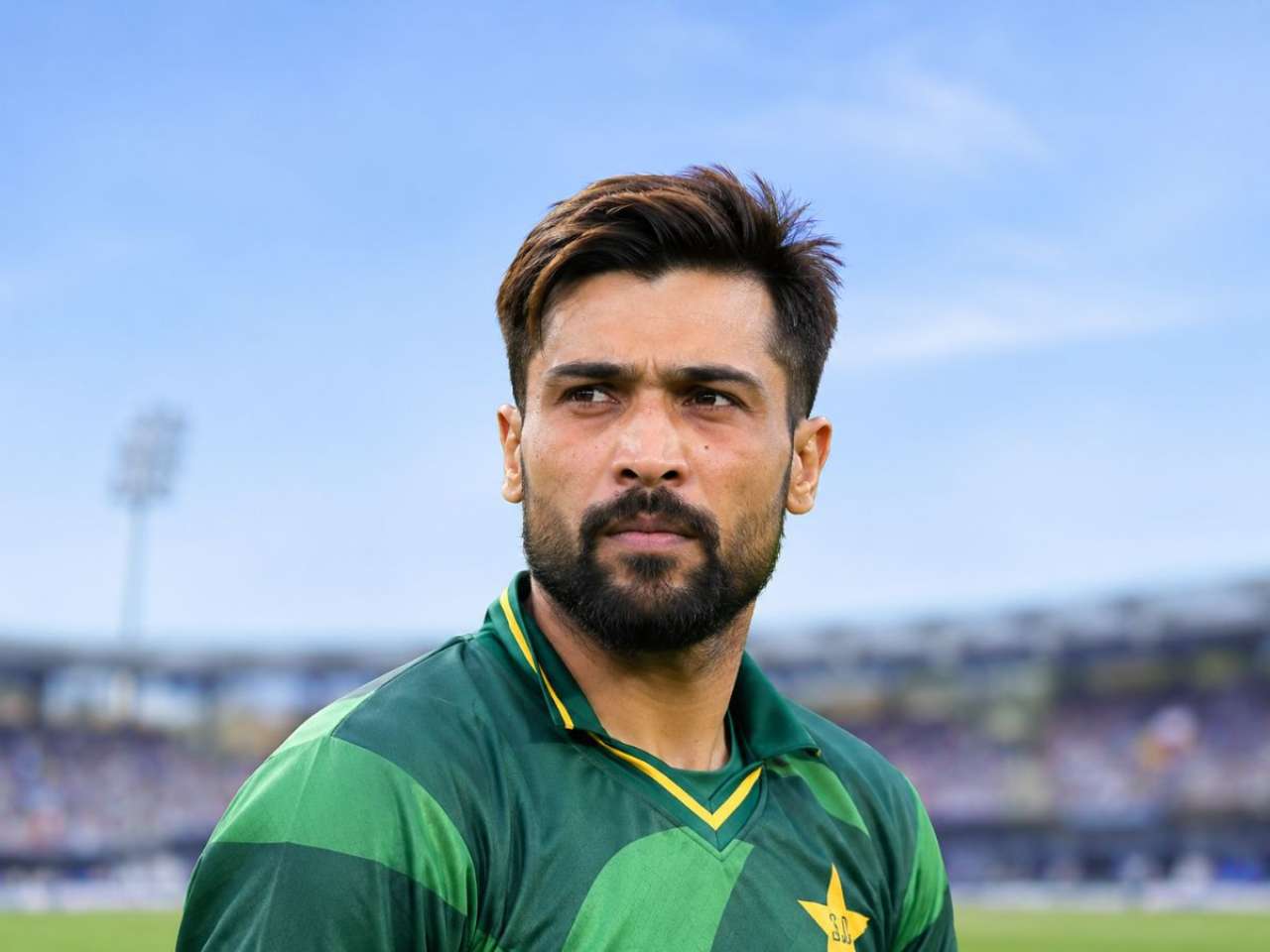
Mumbai, India – November 3, 2026 – The rumour mill in the cricketing world, often fuelled by the lucrative allure of the Indian Premier League (IPL), churned vigorously recently with speculation surrounding former Pakistan pace sensation Mohammad Amir. Reports suggested the left-arm quick, having acquired British citizenship, might be eyeing a groundbreaking entry into the IPL auction, potentially for the 2027 season. However, Amir himself has now decisively doused these flames, clarifying that he has no intention of registering for the world’s premier T20 league.
The 34-year-old, a prominent figure in franchise cricket globally, took to social media platform X (formerly Twitter) to address the widespread conjecture. His succinct denial puts to rest a narrative that had captivated fans and experts alike, triggering discussions about player eligibility, the precedent set by individuals like Azhar Mahmood, and the enduring geopolitical complexities that have historically barred Pakistani players from the IPL. Amir’s clarification underscores a personal choice, even as his new citizenship status opens doors to playing as a ‘local’ in various other international leagues.
Main Facts: The Nexus of Citizenship and IPL Dreams
The core of the recent speculation revolved around Mohammad Amir’s acquisition of British citizenship earlier this year. This significant personal development immediately triggered conversations about his potential eligibility for the Indian Premier League. The IPL, renowned for its stringent rules regarding player participation, particularly concerning nationality, has historically maintained a strict stance on players from Pakistan. However, a well-known precedent exists: former Pakistan all-rounder Azhar Mahmood successfully played in the IPL from 2012 to 2015 after acquiring British citizenship. This created a plausible pathway for Amir, leading many to believe he might follow suit.
Amir, who officially retired from international cricket for Pakistan following the 2024 T20 World Cup, has remained an active and sought-after commodity in global franchise leagues. His recent participation in The Hundred as a local British player, after initially going unsold as an overseas cricketer, further solidified the perception that his British passport was a strategic move to enhance his marketability and opportunities. His subsequent signing for the Afghanistan Premier League, again as a British citizen, only amplified the whispers about a potential IPL foray.
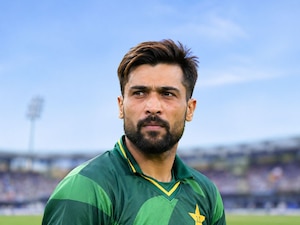
However, Amir’s clear statement on X – "Hi everyone, just wanted to clarify that the news regarding the IPL is not true" – leaves no room for ambiguity. He has categorically denied any intent to register for the IPL, effectively closing this particular chapter of speculation. While his British citizenship undoubtedly broadens his horizons in the world of professional cricket, an IPL appearance, for now, is not part of his immediate plans.
Chronology: A Timeline of Speculation and Clarification
The journey of Mohammad Amir’s career, marked by prodigious talent, controversy, redemption, and now a significant shift in personal status, provides crucial context to the recent IPL discussions.

Early Career & Rise (Pre-2010): Mohammad Amir burst onto the international cricket scene as a prodigious left-arm fast bowler for Pakistan. Hailed as a generational talent, his ability to swing the ball at high pace, coupled with exceptional control, quickly established him as one of the most exciting prospects in world cricket. He made his international debut in 2009 and rapidly ascended, becoming a vital component of Pakistan’s bowling attack across all formats.
The Spot-Fixing Scandal (2010-2015): Amir’s promising career suffered a devastating blow in 2010 when he, along with then-captain Salman Butt and fellow pacer Mohammad Asif, was implicated in a spot-fixing scandal during Pakistan’s tour of England. The trio was found guilty of bowling deliberate no-balls for financial gain. Amir received a five-year ban from all forms of cricket and served a prison sentence. This period marked a dark chapter, not just for Amir but for Pakistani cricket as a whole, raising serious questions about integrity and ethics in the sport.

Return to Cricket & International Comeback (2015-2016): After serving his ban, Amir made a much-anticipated return to competitive cricket in 2015. His talent remained undeniable, and he quickly regained his rhythm. In 2016, he made an emotional return to international cricket, playing for Pakistan in T20Is and ODIs. His redemption arc culminated in a stellar performance in the 2017 ICC Champions Trophy final, where his devastating opening spell against arch-rivals India secured a memorable victory for Pakistan.
International Retirement (2020-2024): In December 2020, citing mental torture from the Pakistan team management, Amir announced his retirement from international cricket at the age of 28. He continued to participate in various franchise leagues worldwide. This decision, though controversial, allowed him to focus solely on T20 franchise cricket, where his skills remained highly valued. His career with Pakistan officially concluded following the 2024 T20 World Cup, as mentioned in the original report.

Acquisition of British Citizenship (Earlier This Year, 2026): A pivotal development occurred earlier in 2026 when Mohammad Amir successfully acquired British citizenship through his wife, Narjis Khan. This move was widely seen as a strategic personal decision, opening up new avenues for him to play in UK-based leagues as a local player, rather than an overseas professional, thereby bypassing certain quotas and increasing his market value.
Participation in The Hundred (Mid-2026): Following his British citizenship, Amir participated in The Hundred, England’s innovative 100-ball tournament. Initially, he had gone unsold in the players’ draft list as an overseas cricketer. However, with his new British passport, he was able to sign up and compete as a local player, demonstrating the immediate benefits of his changed nationality.

Afghanistan Premier League (APL) Signing (Late 2026): Amir’s registration for the Afghanistan Premier League as a British citizen further intensified the IPL speculation. This move, similar to his Hundred participation, highlighted his status as a ‘local’ player due to his British passport, prompting comparisons to Azhar Mahmood’s journey to the IPL.
Amir’s IPL Denial (November 2, 2026): Amidst the swirling rumours, Mohammad Amir took to X on November 2, 2026, to unequivocally state: "Hi everyone, just wanted to clarify that the news regarding the IPL is not true." This direct and public statement served to dispel the mounting speculation, providing a definitive answer to the buzzing question of his potential IPL entry. The clarification was later reiterated by others on social media due to geo-restrictions for some users, ensuring the message reached a wider audience.

Supporting Data: Unpacking IPL Rules and the Azhar Mahmood Precedent
The discussion around Mohammad Amir’s IPL eligibility is deeply intertwined with the IPL’s operational guidelines and a significant historical precedent involving another former Pakistani cricketer.
IPL Eligibility for Foreign Players: The Indian Premier League operates under specific rules regarding the participation of foreign players. Typically, players must be registered with their respective national cricket boards and be approved by the Board of Control for Cricket in India (BCCI) to enter the IPL auction. Each franchise is allowed a maximum number of overseas players in their squad, and only a certain number can be fielded in a playing XI. Critically, players from Pakistan have been barred from participating in the IPL since the 2009 season, a decision rooted in geopolitical tensions between India and Pakistan. This blanket ban has been a steadfast policy, making any potential entry of a Pakistani-origin player a subject of intense scrutiny.

The Azhar Mahmood Precedent: This is where the case of Azhar Mahmood becomes paramount. Azhar Mahmood, a former Pakistan all-rounder, acquired British citizenship in 2011. This change in nationality proved to be a game-changer for his career. In 2012, he entered the IPL auction not as a Pakistani player, but as a British citizen. He was subsequently picked up by Kings XI Punjab (now Punjab Kings) and played for them for two seasons. Later, he also represented Kolkata Knight Riders. Mahmood’s participation marked a significant exception to the general ban on Pakistani players. Because his passport identified him as a British national, he bypassed the nationality restriction imposed on players from Pakistan. His ability to play in the IPL as a British citizen created a clear pathway that many believed Mohammad Amir could also exploit. Mahmood’s case demonstrated that the IPL’s ban was specific to Pakistani nationality, not necessarily Pakistani origin, provided the player held a passport from a country not on the restricted list.
Pakistani Players in IPL History: The IPL’s inaugural season in 2008 saw a contingent of Pakistani players participate, including prominent figures like Shoaib Akhtar, Shahid Afridi, Sohail Tanvir, Misbah-ul-Haq, and Kamran Akmal. Tanvir, in fact, was the leading wicket-taker for Rajasthan Royals in that season, playing a crucial role in their championship win. However, following the 2008 Mumbai terror attacks and the subsequent deterioration of diplomatic relations, Pakistani players were excluded from the IPL auction for the 2009 season onwards. This ban has remained in place ever since, making Azhar Mahmood’s entry, and the recent Amir speculation, particularly noteworthy.

The Allure of the IPL: The Indian Premier League is not just the richest T20 league in the world; it is also arguably the most competitive and globally watched. Participation in the IPL offers players unparalleled financial rewards, global exposure, and the opportunity to compete alongside and against the world’s best cricketers. For many, it represents the pinnacle of franchise cricket. The lucrative contracts and the platform it provides make it an incredibly attractive prospect for any professional cricketer, irrespective of their national commitments. This financial incentive is often a driving force behind players seeking opportunities in various leagues and, in some cases, considering changes in citizenship to broaden their eligibility.
The Global Franchise Cricket Landscape: The modern cricketing landscape is increasingly dominated by a proliferation of T20 franchise leagues around the world – from the Big Bash League (BBL) in Australia and the Caribbean Premier League (CPL) to the South African SA20 and the UAE’s ILT20. Players like Mohammad Amir, who have retired from international cricket, now primarily ply their trade in these leagues. The ability to play as a ‘local’ player, rather than an ‘overseas’ player, significantly enhances a player’s market value and increases their chances of being picked up by franchises. Many leagues have strict quotas for overseas players, and acquiring citizenship from a host nation (or a nation with reciprocal agreements) can bypass these restrictions, offering more playing opportunities and potentially higher earnings. Amir’s move to become a British citizen aligns perfectly with this global trend, maximizing his professional options in a post-international career.

Official Responses: Amir’s Categorical Denial
The definitive answer to the IPL speculation came directly from Mohammad Amir himself. His proactive clarification on X (formerly Twitter) was crucial in dispelling the rumours that had gained considerable traction.
Amir’s Direct Statement: On November 2, 2026, Amir posted: "Hi everyone, just wanted to clarify that the news regarding the IPL is not true." This simple yet powerful statement left no room for misinterpretation. It was a clear, unambiguous denial, directly addressing the core of the speculation. The widespread nature of the rumours necessitated such a public and direct response from the cricketer. The fact that the tweet was subsequently amplified by others, noting its inaccessibility in certain geo-regions and reaffirming Amir’s denial, highlighted the global interest and the need for his message to reach all corners of the cricketing world.

Explanation of British Local Player Status: Beyond the IPL denial, Amir has previously shed light on the implications of his British citizenship for his cricketing career. Discussing his status as a British local player, he stated: "I am a British local now. When you compete in tournaments like the County Championship and The Hundred as a local player, you must sign a document indicating that you cannot play for another country as a local. Therefore, the Pakistan chapter I had before is now closed." This statement is critical. It clarifies that his British citizenship is not merely a formality but entails a commitment to his new national status within the context of domestic cricket in the UK. While it doesn’t preclude him from playing for Pakistan internationally if he were to reverse his retirement (which seems unlikely given his earlier reasons), it does cement his identity as a British local player for specific leagues. This commitment to his British status is what opened the door for The Hundred and the Afghanistan Premier League, and hypothetically, the IPL, had he chosen that path.
The swiftness and clarity of Amir’s response helped to manage the narrative effectively. It prevented the speculation from escalating further and provided fans and media with a definitive stance from the player himself, putting an end to what had become one of the most talked-about potential transfers in franchise cricket.

Implications: The Future of Amir and the Evolving Cricket Landscape
Mohammad Amir’s decision not to pursue an IPL entry, despite acquiring British citizenship, carries several implications for his career, the broader franchise cricket landscape, and the ongoing debate surrounding player nationality and eligibility.
Impact on Amir’s Career Trajectory: Amir’s denial means his immediate future will continue to revolve around other global T20 leagues where his skills as a left-arm pacer remain highly valued. His British citizenship will continue to serve him well, allowing him to play as a local player in UK-based competitions like The Hundred and potentially county cricket, enhancing his marketability and bypassing overseas player quotas. His participation in the Afghanistan Premier League as a British citizen further underscores this strategy. While the IPL might be off the table, his status as a British local player opens doors to a wider array of opportunities globally, potentially securing him more consistent playing time and lucrative contracts than if he were restricted to being an overseas player from Pakistan. His focus will likely remain on maintaining his fitness and form to continue being a formidable force in the T20 circuit.

Broader Implications for IPL and Player Eligibility: The Amir saga, even with its denial, highlights a persistent discussion point within the IPL and international cricket: the fluidity of player nationality and its impact on eligibility. The Azhar Mahmood precedent remains a significant one, demonstrating that citizenship changes can bypass national-origin restrictions. While Amir has chosen not to activate this pathway for the IPL, his case reignited the conversation about whether the IPL’s ban on Pakistani players is robust enough against such individual changes in nationality. It forces stakeholders to consider the growing trend of players acquiring dual citizenship or changing nationality to enhance their professional opportunities. This phenomenon challenges traditional notions of national representation in sport and underscores the increasing professionalism and commercialization of cricket, where individual careers often take precedence over national allegiances outside of international duties.
The Debate on Nationality vs. Professionalism: The modern cricketer, particularly those specializing in T20s, often navigates a complex landscape where opportunities in franchise leagues might outweigh the prestige of national team duties. For players like Amir, who have retired from international cricket, the decision to acquire a new citizenship is a pragmatic one, designed to extend their playing careers and maximize earnings. This trend fuels a broader debate about loyalty, identity, and the evolving nature of cricket as a global sport. Is a player’s origin forever tied to their eligibility, or does a change in nationality truly redefine their status? Amir’s case, by choosing not to pursue the IPL route, perhaps offers a nuanced perspective, suggesting that while the opportunity exists, personal choices and potentially other considerations (which remain unstated) can still influence a player’s path.

Future of Pakistani Players in IPL: Amir’s denial, while conclusive for him, doesn’t entirely extinguish the hopes of some fans for the eventual return of Pakistani players to the IPL. The very fact that his potential entry was widely discussed shows the lingering interest and the acknowledgment that a loophole, via citizenship, exists. However, for a broader inclusion of Pakistani players, a significant shift in the geopolitical landscape between India and Pakistan would be necessary, a development that remains elusive. Until such a change occurs, the IPL will likely continue to operate under its existing framework, with any future cases similar to Azhar Mahmood’s being evaluated individually based on the player’s official nationality.
In conclusion, Mohammad Amir’s definitive statement has brought clarity to a swirling vortex of speculation. While his British citizenship has undoubtedly reshaped his professional options in global franchise cricket, the IPL remains, for now, an uncrossed frontier. His decision underscores the complex interplay of personal choices, professional ambitions, and geopolitical realities that continue to shape the careers of cricketers in the dynamic world of modern sport.