

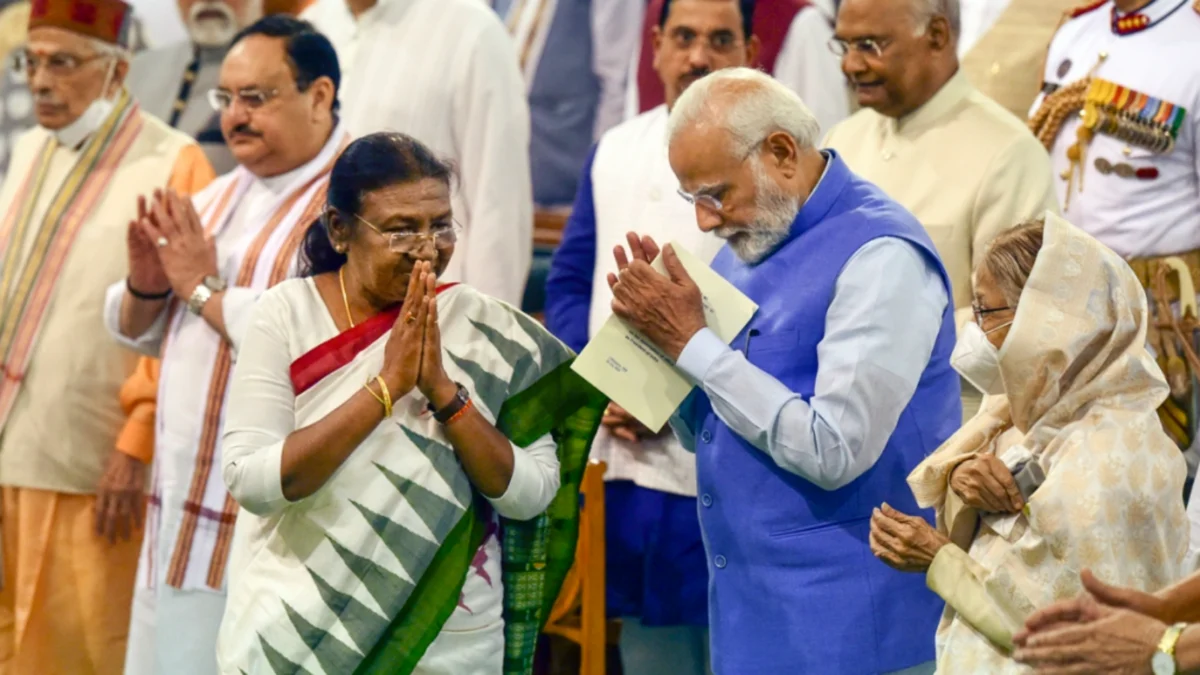
New Delhi | September 5, 2026 – On the auspicious occasion of National Teachers’ Day 2026, a significant dialogue unfolded at the Prime Minister’s Lok Kalyan Marg residence, where Prime Minister Narendra Modi engaged with a distinguished group of national award-winning teachers. The interaction, marked by a profound emphasis on the evolving role of educators, saw the Prime Minister issuing a vital call to action: urging teachers to remain vigilant against the rising tide of drug addiction among students and to actively promote a balanced lifestyle by mitigating excessive screen time through the engagement in extracurricular pursuits.
This year’s Teachers’ Day celebrations were imbued with a dual focus, with President Droupadi Murmu also articulating her vision for the nation’s educators through a deeply reflective article. Her address underscored the sacred responsibility of teachers in shaping not just academic minds but also well-rounded, ethically grounded citizens who embody national pride and a commitment to humanity. The President’s message resonated with the Prime Minister’s sentiments, highlighting a shared national imperative to nurture a generation capable of navigating the complexities of the modern world with integrity and purpose.
A Mandate for Deeper Engagement: Beyond Academics to Well-being
Prime Minister Modi’s address to the nation’s finest educators was a clear directive to look beyond the traditional metrics of academic achievement. He stressed that the contemporary challenges faced by students demand a more holistic and observant approach from teachers. "Teachers are required to look beyond the academic capability of students and notice their behaviour and everyday activities," the Prime Minister stated, emphasizing that a student’s well-being is intrinsically linked to their overall development.
The Prime Minister’s specific concern regarding drug addiction among students was a stark reminder of a growing societal challenge. He acknowledged the difficulty in identifying such issues, particularly in large urban centers and universities where anonymity can obscure the signs of distress. "In these circumstances, teachers should take the initiative for awareness and also observe minutely if any change (in behaviour) is witnessed in any child," he urged, positioning teachers as crucial frontline guardians in safeguarding the youth. This proactive stance, he implied, requires a keen eye for subtle behavioral shifts that might indicate a student is falling prey to substance abuse.
Reclaiming Childhood: The Power of Extracurricular Engagement
A significant portion of Prime Minister Modi’s interaction was dedicated to the pervasive issue of excessive screen time among students. He advocated for a conscious effort by teachers to redirect students’ attention away from digital devices and towards the enriching experiences of the physical world. "You should not allow the childhood of a student to die. The biggest contribution can be given by the teachers by keeping childhood alive in students’ lives," he declared, underscoring the irreplaceable value of play, creativity, and exploration during formative years.
The Prime Minister proposed a practical solution: actively engaging students in extracurricular activities. Sports, physical play, and creative hobbies were highlighted as potent antidotes to the sedentary and often isolating nature of excessive screen usage. By fostering an interest in these pursuits, teachers can naturally reduce the allure of digital distractions, allowing students to develop essential life skills, build resilience, and cultivate a healthier relationship with technology. This approach not only combats screen addiction but also contributes to the physical and mental well-being of young individuals.
President Murmu’s Vision: Cultivating Character, Heritage, and National Service
On this significant day, President Droupadi Murmu shared her profound insights in an article titled "Shaping Minds; Building the Future." Her address resonated with the spirit of Teachers’ Day, framing the educator’s role as a sacred responsibility to inspire students to become not just knowledgeable individuals but also good human beings.
President Murmu’s vision extended to fostering a generation that cherishes India’s rich cultural heritage and traditions while embracing a scientific outlook for the welfare of humanity. She articulated a desire for students to uphold the ideal of Antyodaya – the upliftment of the poorest – and to become stewards of the environment and all living creatures. Her emphasis on striving for individual and collective excellence, guided by the motto "nation first," paints a comprehensive picture of the ideal citizen that educators are tasked with nurturing.
The President also acknowledged the immense trust parents place in teachers. "Parents and guardians dispose their highest trust in teachers when they send their children to school. They believe that the teachers will treat the children as their own and take utmost care of the child’s safety and development. It is the dharma of every teacher to uphold this sacred trust placed in them," she stated, reinforcing the ethical imperative of the teaching profession. Furthermore, she cautioned against any pedagogical approach that instills fear or diminishes a student’s morale, emphasizing the importance of fostering a supportive and encouraging learning environment.
A Legacy of Excellence: Recognizing the Nation’s Top Educators
The National Teachers’ Awards, a prestigious recognition of outstanding contributions to education, were presented by President Droupadi Murmu on this occasion. A total of 82 teachers and educators from across three key departments were honored, signifying the breadth of excellence within the Indian education system. These included 48 teachers from the Department of School Education and Literacy, 21 from higher educational institutions and polytechnics, and 13 skilled trainers from the Ministry of Skill Development and Entrepreneurship.
The awardees represent a diverse spectrum of pedagogical innovation and dedication. Stories such as that of Mohd Mustafa, whose childhood experiences during the Kargil War seemingly shaped his innovative approach to classroom teaching, and KC Shu, an IIT Hyderabad professor who found his path to education through challenging circumstances, underscore the resilience and passion that drive India’s educators. These narratives, highlighted in accompanying reports, serve as powerful testaments to the impact a dedicated teacher can have on the lives of students and the nation at large.
Implications for the Future of Education
The pronouncements from the highest echelons of the Indian government on National Teachers’ Day 2026 carry significant weight and portend crucial shifts in the educational landscape. The dual emphasis on combating drug addiction and addressing excessive screen time, coupled with a renewed focus on character building and national values, suggests a move towards a more comprehensive and responsive education system.
Key Implications:
- Enhanced Teacher Training and Support: The Prime Minister’s call for vigilance and intervention implies a need for enhanced training programs for teachers. These programs should equip them with the skills to identify early signs of drug abuse, provide basic counseling, and understand the psychological impact of excessive screen time. Furthermore, robust support systems, including access to mental health professionals and counselors, will be crucial for teachers to effectively address these complex issues.
- Curriculum Reform and Pedagogical Innovation: The push for holistic development necessitates a re-evaluation of existing curricula. There should be a greater integration of activities that promote physical fitness, creativity, and emotional intelligence. Pedagogical approaches that encourage critical thinking, problem-solving, and ethical reasoning will be paramount in preparing students for the challenges of the future.
- Parent-Teacher Collaboration: The President’s emphasis on the trust placed in teachers by parents highlights the critical role of strong parent-teacher partnerships. Regular communication channels, workshops for parents on relevant issues like digital well-being and substance abuse, and joint initiatives to support student development will be essential.
- Investment in Extracurricular Infrastructure: To effectively promote sports, physical play, and creative hobbies, there needs to be a significant investment in the infrastructure required for these activities, both within educational institutions and in communities. This includes playgrounds, sports equipment, art studios, and facilities for various creative pursuits.
- Technological Integration with Caution: While acknowledging the benefits of technology, the discourse suggests a balanced approach. The focus should shift from passive consumption of digital content to active, creative, and educational uses of technology, with clear guidelines and parental oversight.
- Reinforcing National Values and Cultural Heritage: President Murmu’s vision underscores the importance of instilling a strong sense of national identity, cultural pride, and civic responsibility in students. Educational institutions will need to actively promote Indian traditions, values, and the principles of inclusive development.
In conclusion, National Teachers’ Day 2026 has served as a powerful platform for national leaders to articulate a vision for education that goes beyond academic excellence. The messages from Prime Minister Modi and President Murmu highlight the critical role of teachers not just as instructors but as mentors, guardians, and architects of a brighter future for India. The onus is now on educators, policymakers, parents, and society at large to translate these calls to action into tangible initiatives that foster well-rounded, resilient, and responsible citizens.
