

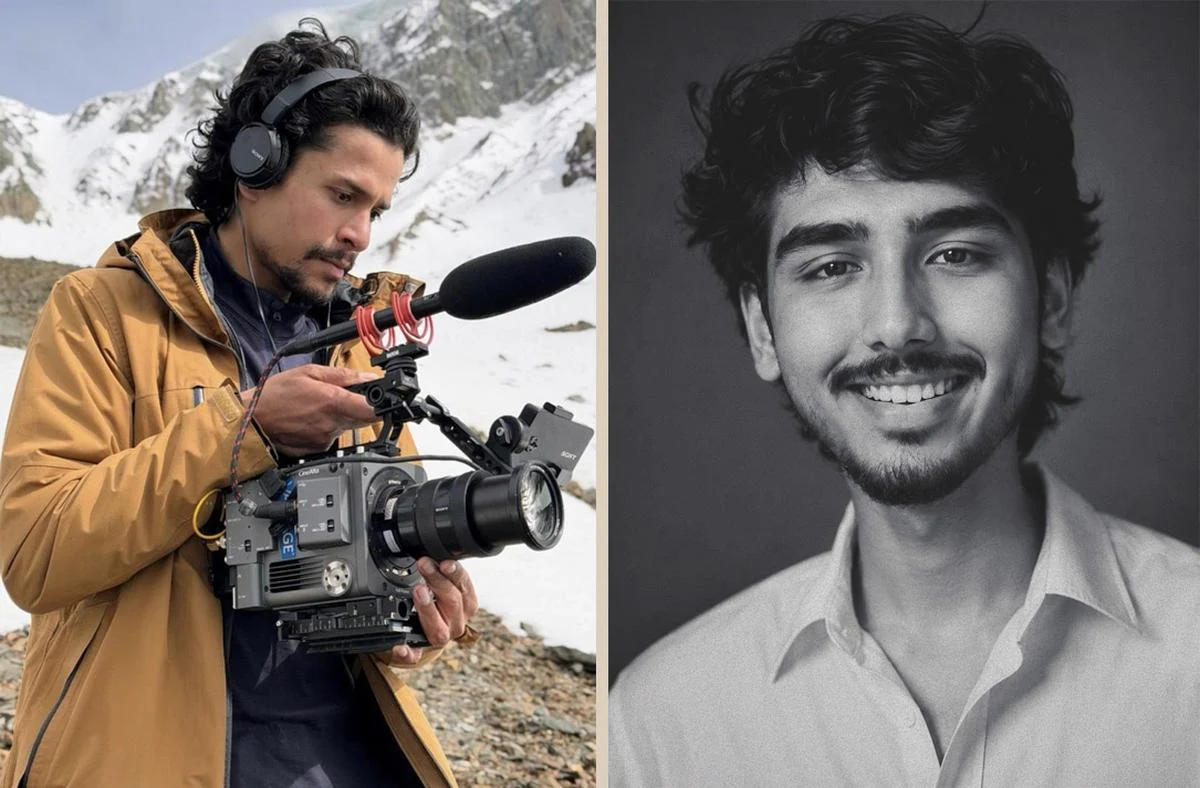
The silence of the Himalayas is rarely peaceful; it is often a heavy, pressurized quiet that precedes a storm. For Telangana-born mountaineer Yashwanth Naik, that silence lasted six days. Stranded in a precarious bivouac near the summit of Reo Purgyil, Naik and his team of guides found themselves at the mercy of the elements, caught in a whiteout that threatened to turn an ambitious expedition into a tragedy. This harrowing interval forms the emotional core of Reo: The Dangerous Peak, a 28-minute documentary that has recently begun to capture the attention of the international film festival circuit.
Directed by 20-year-old Shourya Sreekere, the film is more than a mere travelogue of an ascent. It is a psychological portrait of resilience, documenting the thin line between ambition and survival. As the film secures its place in the competitive section of the Dadasaheb Phalke International Film Festival (DPIFF) 2026 and the non-competitive section of the International Documentary and Short Film Festival of Kerala (IDSFFK) 2026, it marks the emergence of a new voice in Indian documentary filmmaking.
Main Facts: A Story of High-Altitude Grit
Reo: The Dangerous Peak follows Yashwanth Naik’s attempt to summit Reo Purgyil, the highest peak in Himachal Pradesh. Standing at 6,816 meters, the mountain is located in the remote Kinnaur district near the Tibetan border. While it may not share the height of the eight-thousanders, its technical difficulty and isolation make it a formidable challenge even for seasoned climbers.
The documentary is a bilingual production, utilizing both English and Hindi to capture the authentic dialogue between Naik and his mountain guides—Rency Thomas, Yogi Raj, and Raina. The film’s narrative is driven by the raw, unscripted tension that arose when the team was pinned down by inclement weather. Unlike many adventure films that rely on reenactments, Sreekere’s work utilizes footage captured in real-time, providing a visceral look at the physical and mental toll of high-altitude waiting.
The production team is notably young, led by Sreekere, a second-year mass communication and journalism student at St. Joseph’s Degree College, Hyderabad. The crew includes cinematographer Akshat Jain, editor Chandan Sai Madineni, and music composer Sudha Srinivas P, all of whom are in their early twenties. This "youth brigade" has managed to produce a work that critics are calling a sophisticated entry into the niche genre of Indian mountaineering cinema.

Chronology: From Basecamp to the Big Screen
The journey of Reo: The Dangerous Peak began long before the first frame was shot. The timeline of the project reflects a blend of meticulous planning and the chaotic unpredictability of nature.
August 2025: The Expedition
The primary footage for the documentary was captured during Naik’s expedition in August 2025. The team traveled to the Kinnaur-Tibet region, a restricted area that requires special permits. The climb was intended to be a swift ascent, but the Himalayan weather had other plans. The team spent nearly a week immobile at high altitude, a period during which cinematographer Akshat Jain continued to film despite the grueling conditions.
Late 2025: Post-Production and Challenges
Following the descent, the project entered a rigorous post-production phase. Sreekere, who had to stay back from the final summit push due to health complications arising from the altitude, worked closely with Jain to piece together the narrative from hours of drone footage and handheld shots. The challenge was to maintain the "unmanufactured drama" of the conversations while ensuring the technical quality met festival standards.
Early 2026: Public Premiere
The film held its first public screening in Tirupati early in 2026. The audience, a mix of independent filmmakers and mountaineering enthusiasts, responded positively to the film’s focus on the "human cost" of the climb rather than just the physical achievement.
Mid-2026: Festival Recognition
By August 2026, the film had secured its official selections at DPIFF and IDSFFK. These selections serve as a significant milestone for Sreekere, who began his filmmaking journey at the age of 13 with a dream of acting before finding his true calling behind the camera.

Supporting Data: The Technicality of Reo Purgyil
To understand the stakes of the documentary, one must understand the mountain itself. Reo Purgyil is often referred to as a "vertical desert." Located in the rain shadow of the Himalayas, the terrain is characterized by loose scree, brittle rock, and extreme temperature fluctuations.
- Historical Context: The mountain has a sparse history of successful ascents. The first recorded successful climb was by an Indo-Tibetan Border Police (ITBP) team in 1971. Since then, the peak has seen far fewer visitors than the more popular peaks in the Garhwal or Everest regions, largely due to its proximity to the sensitive Line of Actual Control (LAC).
- Cinematic Difficulty: Filming at 6,000+ meters presents unique technical hurdles. Akshat Jain, specializing in mountaineering cinematography, had to manage:
- Battery Depletion: In sub-zero temperatures, lithium-ion batteries can lose 50% of their charge in minutes.
- Weight Management: Jain functioned as a "one-man army," carrying the camera gear, drones, and essential survival kit without the luxury of a dedicated film crew.
- Oxygen Deprivation: Operating complex equipment like drones requires cognitive precision that is difficult to maintain in the "death zone" where oxygen levels are significantly lower.
- The Influences: Sreekere cites modern classics of the genre as his inspiration. Poorna (2017) provided a blueprint for telling a local story with global appeal; Meru (2015) influenced the film’s focus on the "impossible" climb; and 14 Peaks: Nothing Is Impossible (2021) set the standard for high-altitude cinematography and pacing.
Official Responses: Perspectives from the Frontline
The director and the subject of the film offer two different but complementary views on what Reo represents for the future of Indian adventure media.
Shourya Sreekere emphasizes the authenticity of the project. "All the drama in the film is not manufactured," Sreekere stated during a recent press interaction. "These conversations reflect the genuine fear and the eventual resolve that Yashwanth felt. My goal was to highlight that being a mountaineer isn’t just about strength; it’s about what you do when you are forced to stop."
Yashwanth Naik, who has previously scaled Mount Kilimanjaro and Mount Elbrus, noted that Reo Purgyil was a different beast entirely. "On Kilimanjaro, you have a set path. On Reo, you are often making the path yourself. Being stranded for six days tests your mind more than your lungs. I am glad Shourya captured those moments of doubt because that is the reality of the mountain."
Cinematographer Akshat Jain reflected on the isolation of the shoot: "There were moments where the camera was the only thing keeping me focused. When you’re looking through a viewfinder, you’re a filmmaker first and a climber second. It helps distance you from the cold, just for a moment."

Implications: A New Era for Indian Documentaries
The success of Reo: The Dangerous Peak carries several implications for the Indian film industry and the adventure sports community.
The Rise of the Gen-Z Filmmaker
Sreekere’s success at age 20 suggests a democratization of filmmaking. With access to high-quality digital cameras, drones, and global distribution platforms, young Indian directors are bypassing traditional "assistant" roles and heading straight into the director’s chair. His ability to navigate the complex logistics of a high-altitude shoot while still a student points to a shift in how cinema is taught and practiced in India.
Representation of Indigenous Mountaineering
Historically, high-altitude mountaineering documentaries have been dominated by Western perspectives or focused on the Everest "industry." Reo shifts the lens toward the domestic climbing scene in India. By focusing on a mountaineer from Telangana—a state not traditionally associated with high-altitude climbing—the film expands the narrative of who can be an adventurer in modern India.
Encouraging Independent Cinema
The film’s selection for DPIFF and IDSFFK provides a roadmap for other independent creators. It demonstrates that a 28-minute short documentary, if handled with technical care and emotional honesty, can stand alongside feature-length commercial films.
Psychological Resilience as a Universal Theme
Ultimately, the documentary’s primary implication is its message of perseverance. By showing a seasoned climber like Naik giving in to "moments of fear and doubt," the film humanizes the hero. It serves as a metaphor for any endeavor where progress is stalled by forces beyond one’s control. In a post-pandemic world where "waiting" has become a collective experience, the story of being stranded on a Himalayan peak resonates far beyond the mountaineering community.

As Reo: The Dangerous Peak prepares for its festival screenings in 2026, it stands as a testament to the power of persistence—both on the mountain and in the edit suite. For Shourya Sreekere, this is just the beginning. With aspirations for a feature film on the horizon, the young director has already proven that no peak is too dangerous if you have the vision to capture it.
